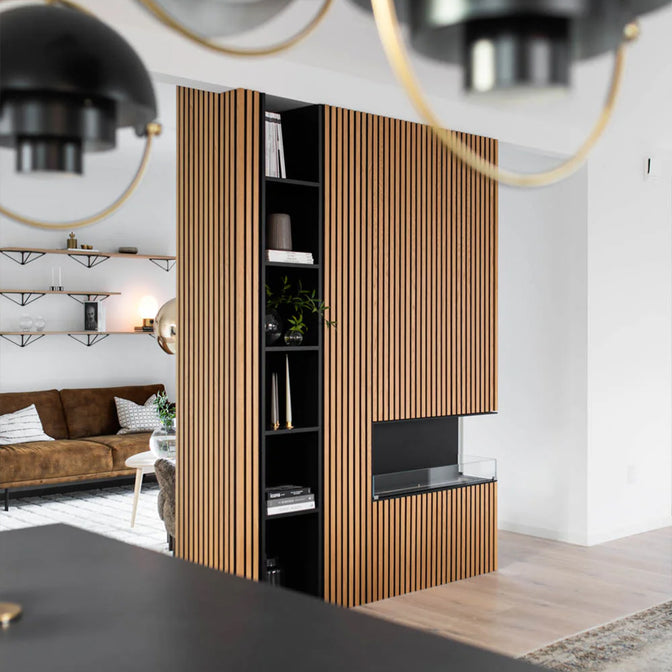
Inspired by the Finnish word for “smooth correction,” the boutique centers around an organic, curved core wrapped in warm oak slats, with cozy green velvet seating and a welcoming counter made of tiled and oak materials.

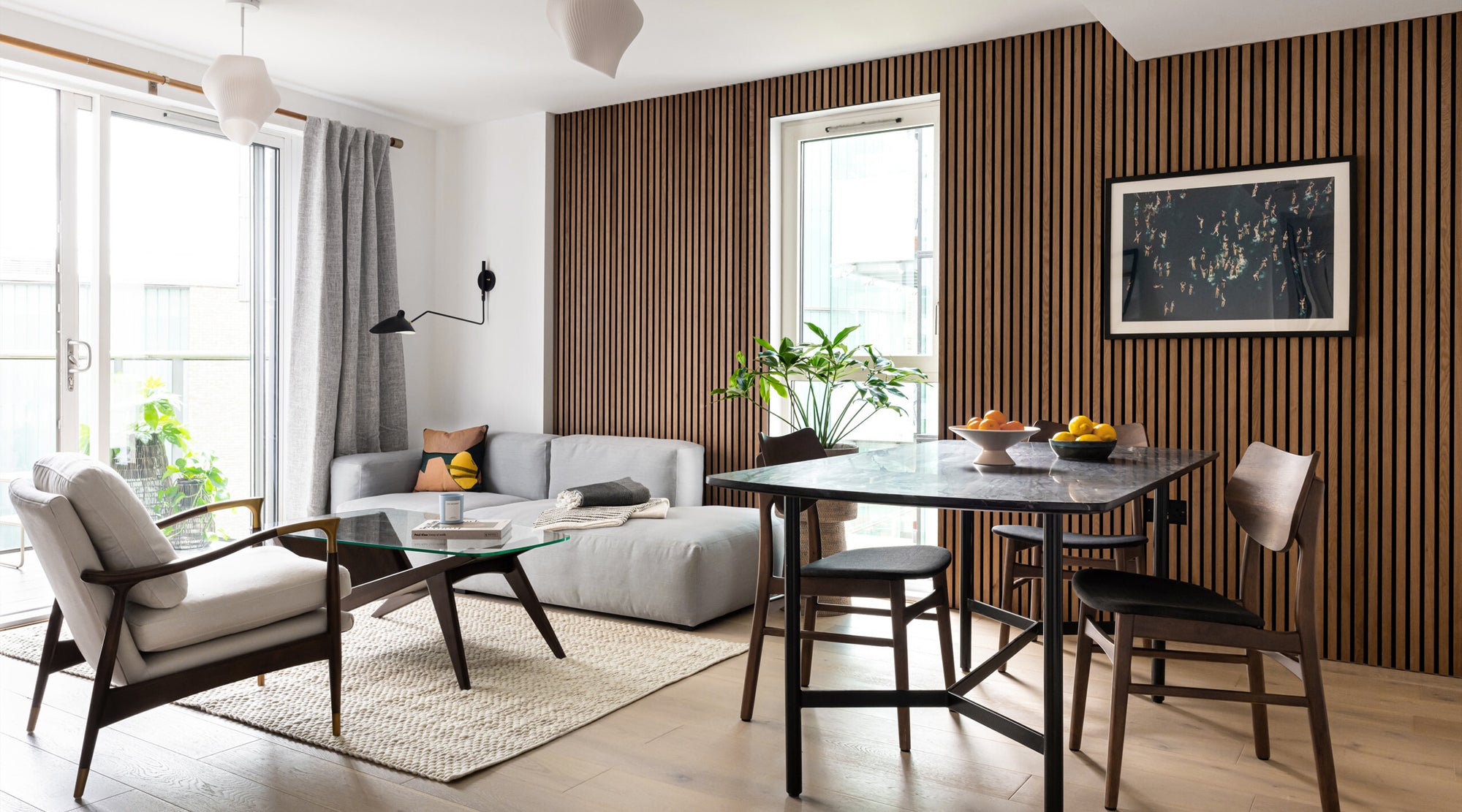

Celebrate the timeless beauty of natural wood with TPH™ walnut-colored veneer wall panels. Known for their deep, warm tones and intricate grain patterns, these walnut wall panels instantly elevate any interior with a sense of organic refinement. Our acoustic wood wall panels feature an industry-leading 3-sided veneer with smooth edges. This design ensures clean, architectural lines with no exposed MDF.
Beyond aesthetics, our walnut-colored acoustic wall panels are built to meet rigorous professional standards. Each panel is FSC®-certified and features Acufelt™ technology for superior echo control and sound absorption. With a Class A fire rating and moisture-resistant, scratch-resistant surfaces, these panels are a reliable choice for both commercial and residential projects. Enjoy peace of mind with factory-direct pricing, fast shipping, and a comprehensive 5-year warranty.
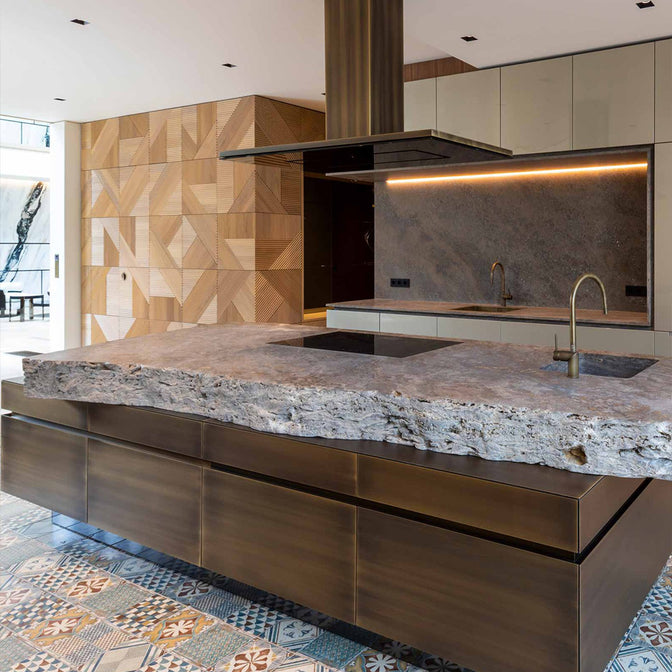
Step into a realm of sophisticated natural beauty with the 3D Concentric Square Wood Wall Panel. Meticulously crafted and exuding intricate eleganc...
View full detailsTriangle Wood Wall Panel shows off the spirit of modern elegance. This amazing work of architecture turns your space into a stunning show of modern...
View full details
Experience the timeless charm of walnut with panels that bring warmth, depth, and sophistication to your interiors. Crafted from real veneer, each panel highlights the rich tones and natural grain of walnut, turning plain walls into elegant designer features that instantly elevate any room.
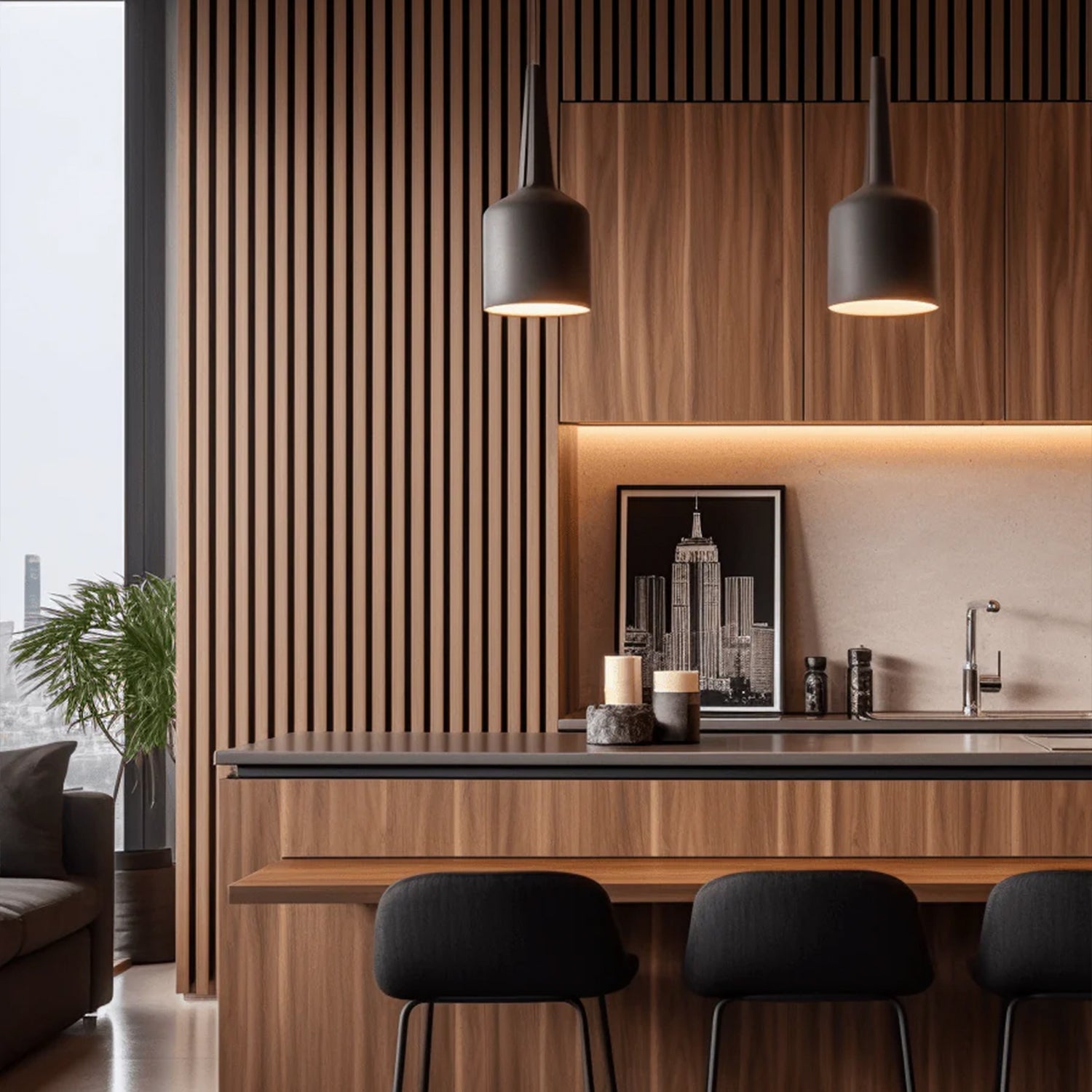
Our walnut wall panels are engineered with FSC® certified MDF and a smooth, full-cover veneer finish that resists scratches, stains, and moisture. Designed to withstand daily use while maintaining their beauty, they offer a long-lasting upgrade for both residential and commercial interiors.
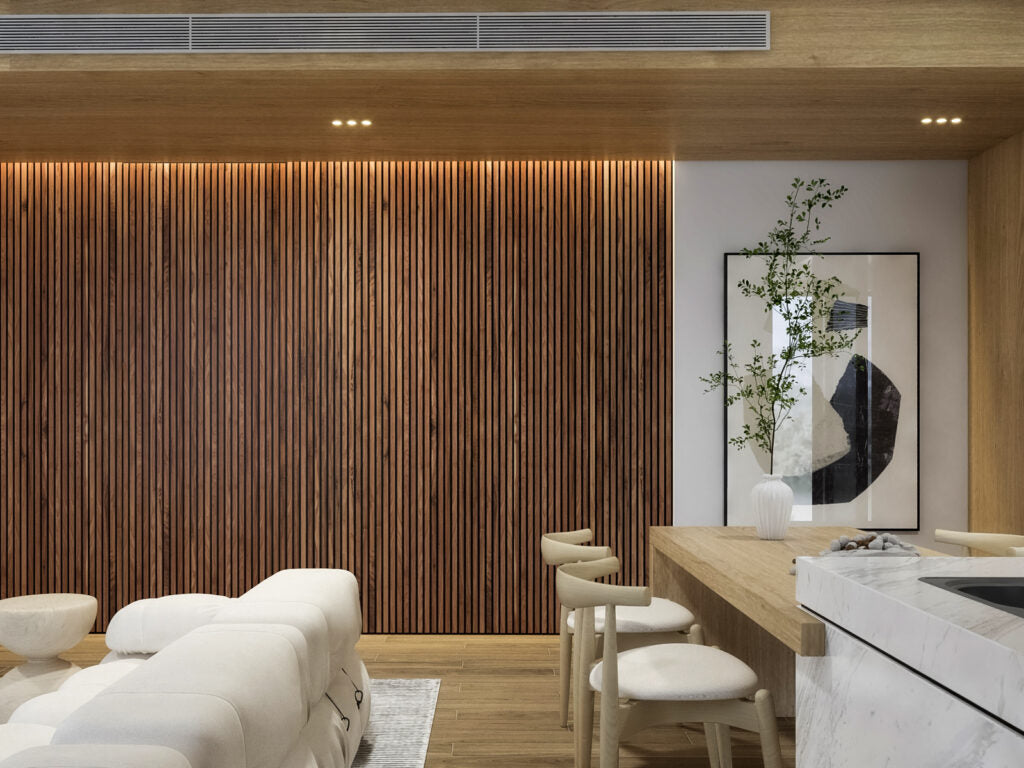
Transform your space without the hassle of complex renovations. Each panel is made for simple, DIY-friendly installation with minimal tools required, so you can refresh your walls in just a few hours. Backed by a 5-year warranty, these panels combine style with peace of mind.

Walnut should feel natural, but it also needs to stay consistent across panels. Each slat uses real wood veneer, selected and finished to keep tone variation controlled across the wall. You still get the grain, the warmth, the subtle variation, but without panels clashing once installed. The result is a wall that reads clean from a distance and detailed up close.

Walnut works in both accent wall behind a bed, desk, TV, or full walls in offices, bedrooms, or larger spaces. It can be a single focal point or carry an entire room without feeling repetitive. If you are planning a larger layout, explore the full walnut wall panel collection to compare sizes and coverage.

We offer more than just acoustic wood wall panels, our collections are designed to suit a wide range of styles and functional needs. If you're looking to create bold visual impact, our geometric wood panel collection introduces striking patterns and dimensional design. For a more traditional and natural aesthetic, our solid wood panel collection delivers timeless appeal with rich, organic character. You can also explore our faux stone wall panel collection to achieve a textured, architectural look without the weight and complexity of real stone.
Inspired by the Finnish word for “smooth correction,” the boutique centers around an organic, curved core wrapped in warm oak slats, with cozy green velvet seating and a welcoming counter made of tiled and oak materials.
The fitout reflects Fonterra’s connection to the region with design elements that incorporate environmental features, such as geothermal-themed glass panels and glowworm formations.
Built in just five months using 13 prefabricated modules, the house features a main residence with fluid spaces for cooking, relaxing, and working, and a guest house with.
These thoughtfully integrated acoustic timber slats not only enhance the aesthetic appeal of the space but also provide effective sound absorption, creating a comfortable and inviting atmosphere.
Both residences feature 4 bedrooms with two living zones, a spacious open plan kitchen, living and dining space and luxuriously appointed bathrooms. Stylish materials specifications include feature brickwork.
TPH™ ships direct from our factory network so you pay for materials and craftsmanship, not dealer markups. Save up to 75% versus dealer-route wall panels of similar quality.
SEE OUR STORYAt TPH™, you get real wood, smooth edges, acoustic performance without marked-up middlemen pricing or settling for low quality.

Superior Sound Absorption

Factory-Direct Pricing

DIY-Friendly. Simple Setup
Superior Sound Absorption
Factory-Direct Pricing
DIY-Friendly. Simple Setup
★★★★★ 4.9/5 by 1,000+ reviews
Show off your TPH™ wall upgrade — tag @thepanelhub.official!


Our customer support is available 24/7 to answer your inquiries.
Average answer time: 2hWalnut sits at the visual sweet spot between light oak and dark wood. It's warm without being orange (like older honey-toned woods), rich without being heavy (like dark walnut or black oak), and pairs with almost every interior style. Mid-century modern, Scandinavian, transitional, and contemporary all accommodate walnut without forcing the room into a single aesthetic. For homeowners who can't decide between light and dark, walnut is usually the right answer.
Yes, more reliably than darker tones. Walnut absorbs less light than dark walnut or black oak, so it doesn't shrink small rooms the way deeper tones can. In large rooms, walnut adds warmth without overwhelming the space. For very small bedrooms or hallways with limited natural light, smoked oak is the lighter alternative. For everything from a 10x10 bedroom to a 20x30 great room, walnut scales well.
Walnut is available across SoundPanel acoustic slats (NRC 0.85 with 15mm AcuFelt backing) and GroovePanel decorative styles including 3D Geometric, Concentric Square, Crossing Lines, and the Walnut Triangle mosaic. Same wood tone across both product families, so you can mix acoustic and decorative walnut in the same project for a unified look. This is one reason walnut shows up most often in TPH project galleries.
Usually not. Walnut is one of the easier wood tones to pair with mixed-wood interiors because it sits in the middle of the brown spectrum. Light oak floors with walnut panels reads as intentional layering. Maple furniture with walnut panels works because the tones are different enough to look chosen rather than mismatched. The combination to avoid is walnut panels with red-toned cherry furniture because the undertones fight each other.
Walnut tends to lighten slightly with sustained sun exposure, opposite to most woods which darken. The change is gradual and minor in interior wall installations because walls don't get the direct UV that floors or window-side furniture do. For most installs, the color is stable for years. If your room gets strong afternoon sun, walnut may shift toward a slightly lighter brown over time, which most people find pleasant. Avoid placing dark objects against the panel for years because the contrast can leave a visible outline if the surrounding wood lightens.
Yes, one of the best. Walnut reads well on camera because the mid-tone gives skin tones a flattering warm backdrop without competing for attention. Light oak can wash out under standard webcam exposure. Black oak creates a stark contrast that some find too dramatic. Walnut sits in the middle and is the most common choice among podcasters, video creators, and remote professionals who specify TPH for their work spaces.
Match closely or contrast clearly. If your floors are walnut, walnut panels create a unified tonal feel that looks intentional. The other strong option is contrasting with light oak panels or black oak for a clear visual separation between floor and wall. The trap is picking a walnut that's close-but-not-quite identical to your floor because the slight tonal difference looks accidental rather than designed. Samples help you decide.