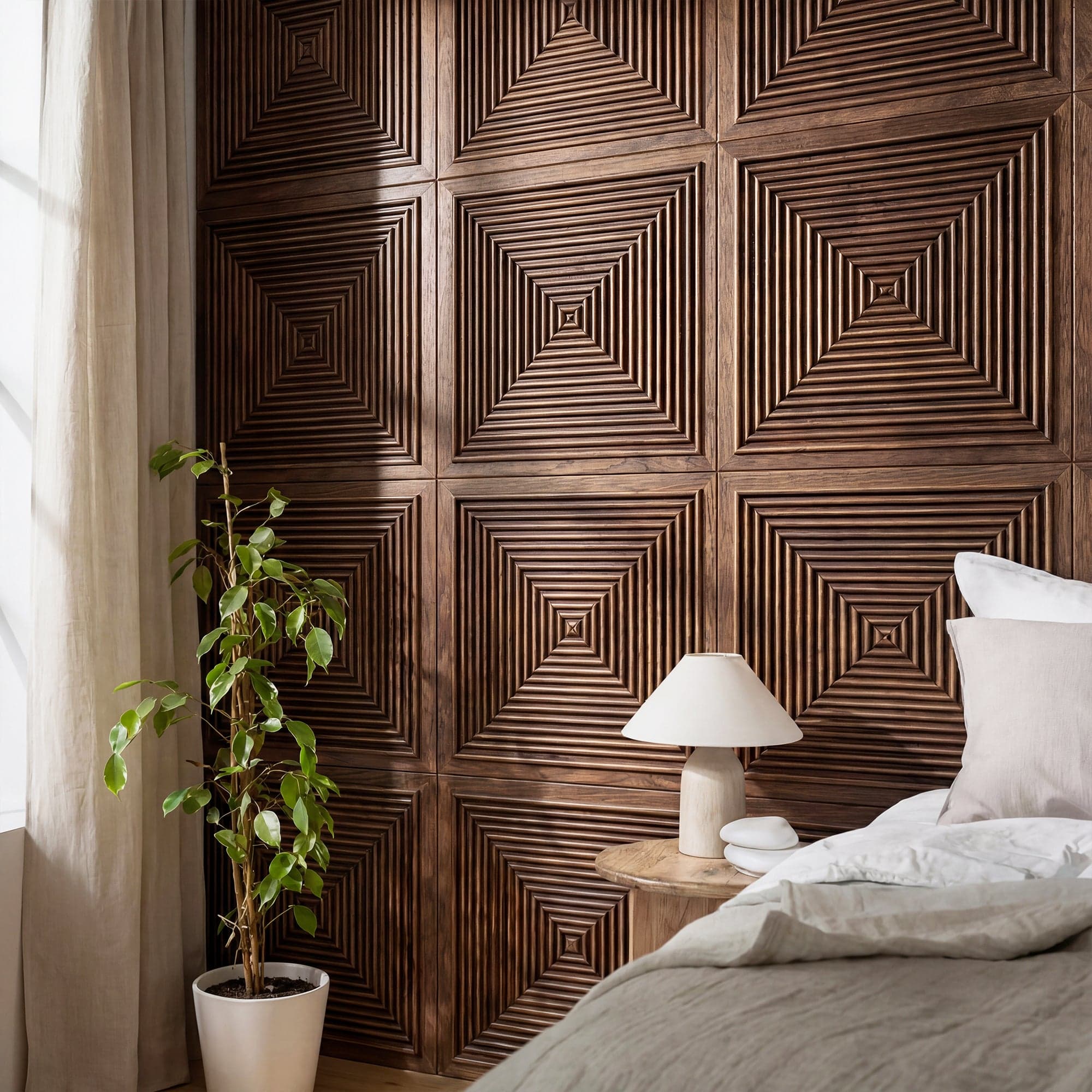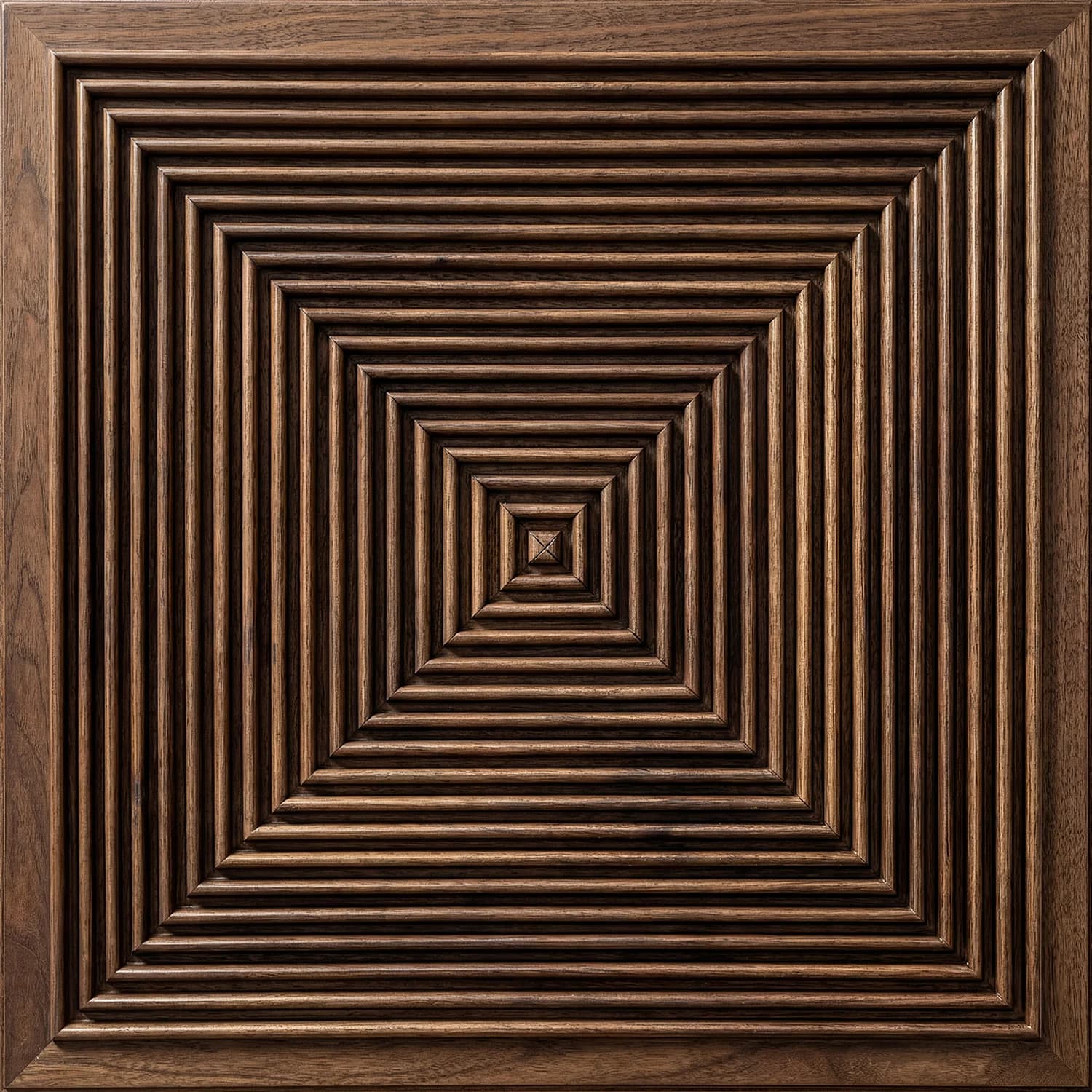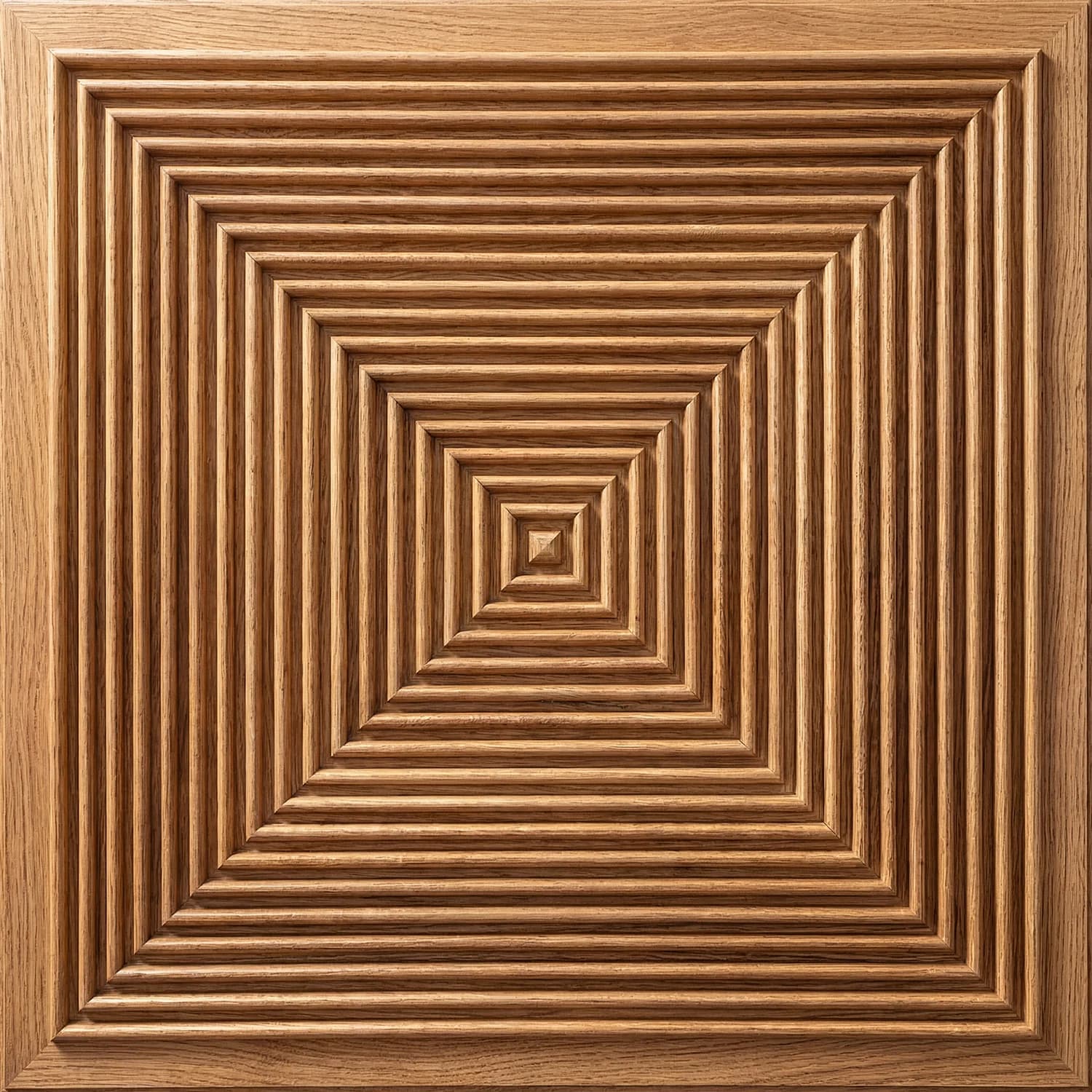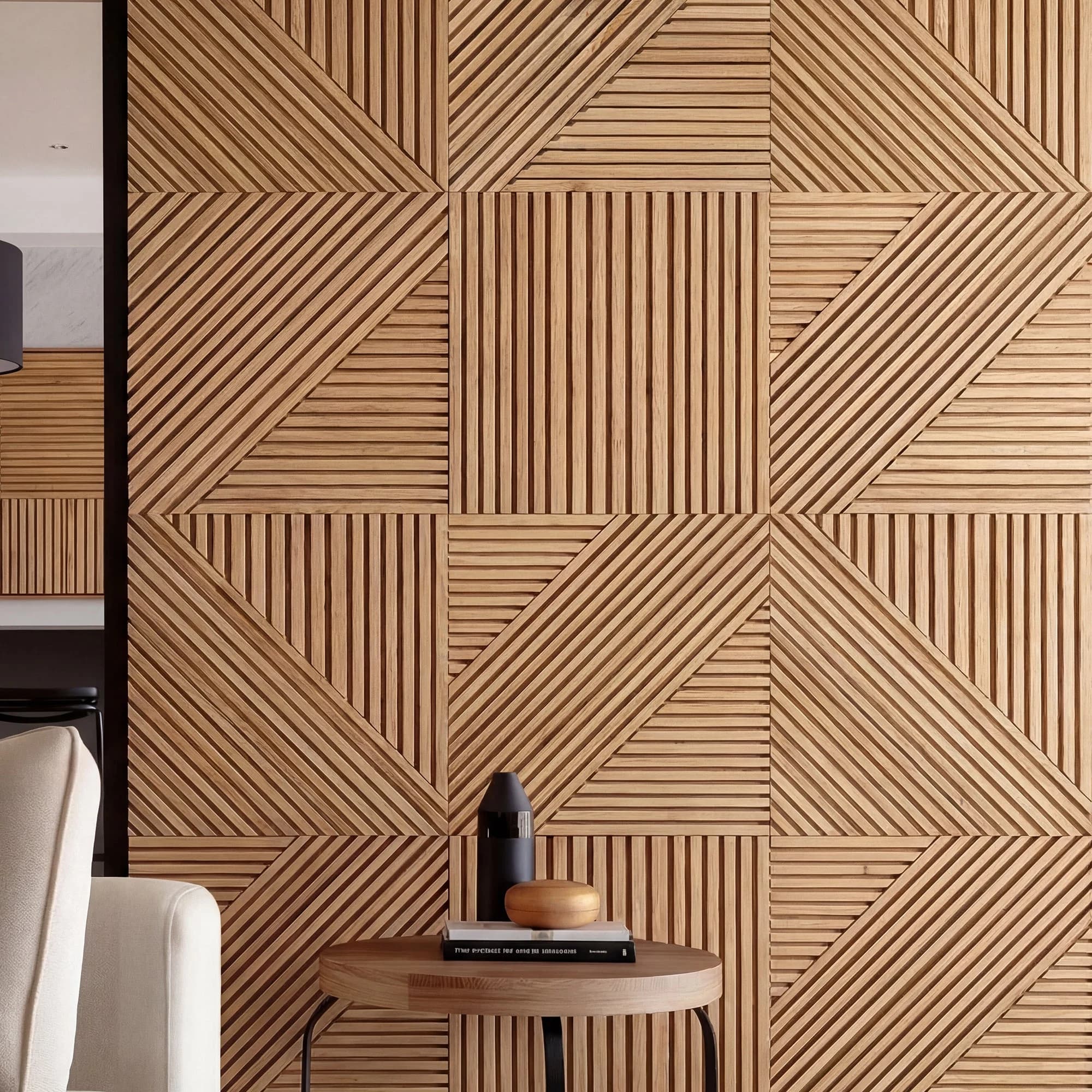
Why The Panel Hub | 15mm AcuFelt™ vs. Standard 9mm Panels
Skip to content

Need help deciding? Call us now: +1 (833) 500-0988

🚚 Enjoy Free Shipping — Code: FREESHIP

Returning? Your 10% is Waiting Log in

Trustpilot

Returning? Your 10% is Waiting Log in

Why TPH®

Superior Acoustic Panels You Won't See Anywhere Else

When you choose to transform a room with wood slat panels, you are making a long term investment in the architecture of your home. In a market flooded with mass produced imitations, The Panel Hub stands apart by prioritizing material science over manufacturing shortcuts. Our 2026 collection is built on three pillars: superior acoustic density, authentic timber aesthetics, and American based fulfillment.

This guide explains the technical reasons why interior designers and professional contractors choose our 15mm AcuFelt systems over standard retail alternatives.

1. The Mechanics of Superior Acoustic Wall Panels

The performance of our The SoundPanel Collection is a result of structural engineering, specifically centered on the mechanical transition of sound energy. This is how it works:
  • Wavelength Capture and Frequency Filtering. Sound waves behave according to their wavelength. Standard 9mm panels act as "high-pass" filters but failing to engage with the longer wavelengths of the human voice (typically 250Hz to 2,000Hz). By increasing the material depth to 15mm, we create a physical trap for these longer waves, resulting in a more significant soundproofing.
  • Density vs. Porosity: Mass is the primary enemy of sound reflection. A low-density felt (1,100g/m2 or less) is too porous, allowing sound energy to pass through the panel, strike the substrate (drywall), and bounce back into the environment (a phenomenon known as "transflective bypass"). By engineering the AcuFelt™ at a high-density 1,500g/m2 threshold, we provide the necessary mass to stop the wave, resulting in a Class A Sound Absorption rating (0.85 NRC).
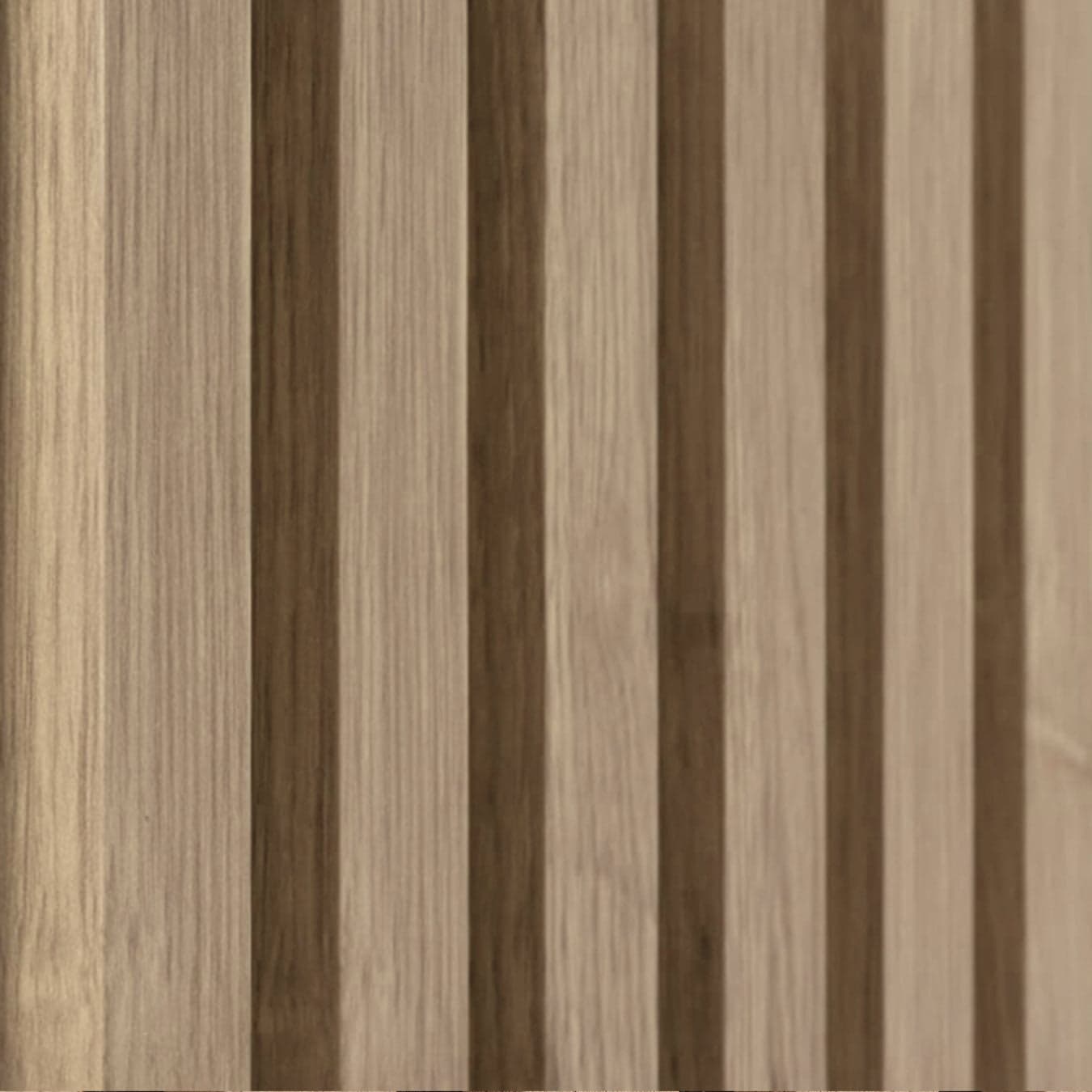
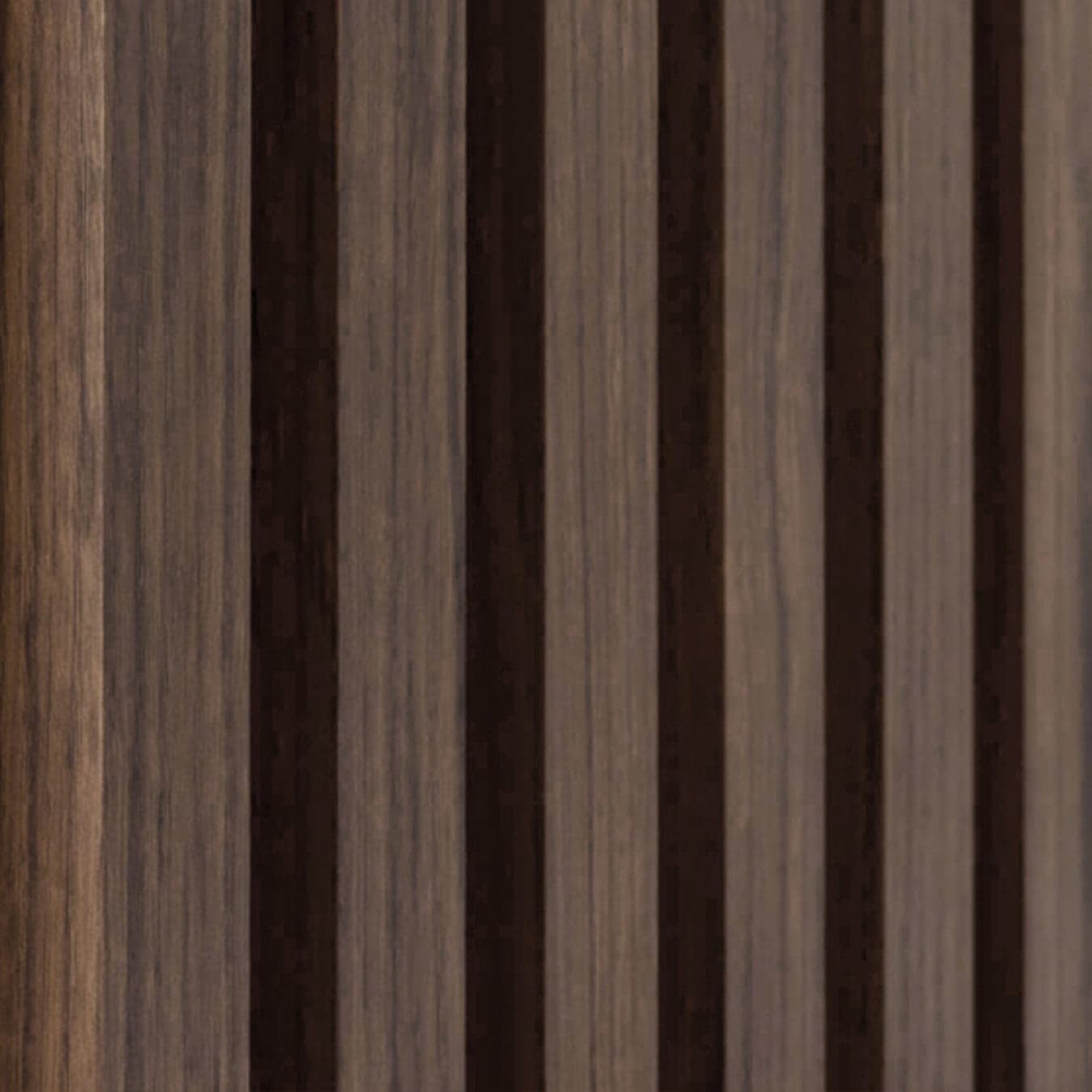
American Smoke Acoustic Slat Wall Panels | 3-Sided Veneer | SoundPanel®-Indoor-The Panel Hub

2. 100% Real Wood Veneer vs. Synthetic Laminates

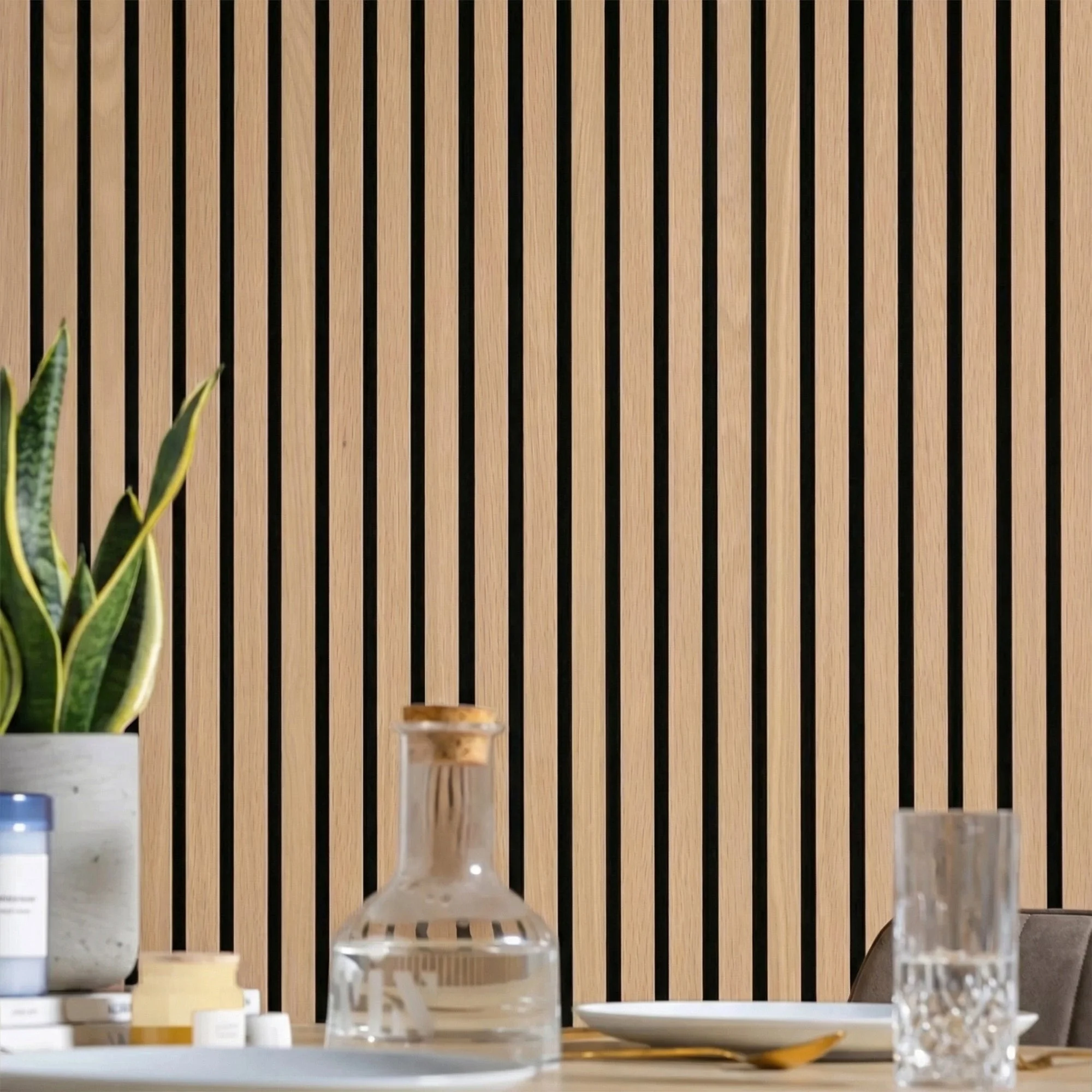
The quality of a TPH™ panel starts with what you see and touch: the wood surface itself. While many panels on the market use PVC foils or high-pressure laminates (HPL), The Panel Hub uses 100% Grade-A real wood veneers.

Laminates and foils are essentially printed images of wood applied to plastic. Because they’re flat, artificial surfaces, they can look convincing at first, but they lack the depth, warmth, and variation of real timber.
  • Why real wood looks different: Real wood veneer is made from natural wood fibers. When light hits a TPH™ panel, it doesn’t just bounce off the surface, it enters the wood’s microscopic pores, creating a subtle depth, natural sheen, and movement as you walk past it. This is why real oak, walnut, and ash look alive in changing light, while synthetic panels look static.
  • Why real wood veneer is built to last: Thin foil wraps can peel, bubble, or separate over time, especially when exposed to heat or sunlight. TPH™ panels avoid this entirely. Our real wood veneers are permanently bonded to the CoreShield™ substrate using high-pressure thermal adhesives, creating a long-lasting, stable surface designed for real interiors.

3. Individual 3-Sided Precision Wrapping

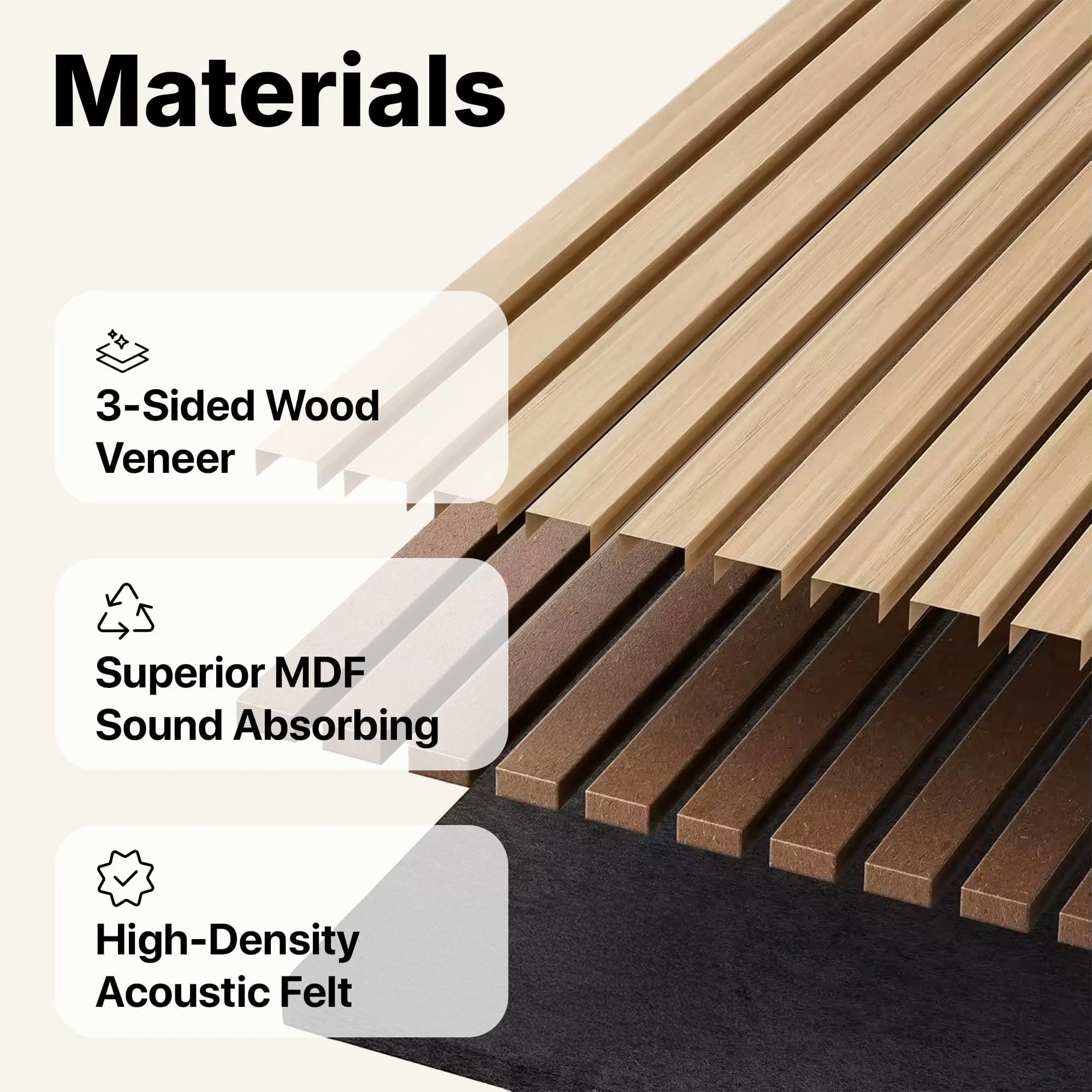
One of the biggest design flaws in standard slat panels is something most brands never mention: the exposed sides of each slat. In mass-produced panels, a single wood veneer is glued onto a large MDF board. That board is then cut into narrow slats. It’s fast and efficient, but it creates problems:

  • The visible issue: Because the board is cut after veneering, the sides of each slat are left as raw MDF instead of real wood. From straight on, the panel may look fine. But as soon as you move through the room or view the panel from an angle, the illusion breaks. You start to see alternating lines of wood faces and grey-brown MDF edges.
  • Why this matters: Walls are rarely viewed head-on. In real spaces, light shifts and people move. When the exposed core becomes visible, the panel loses its architectural integrity and starts to look mass-produced instead of intentional.
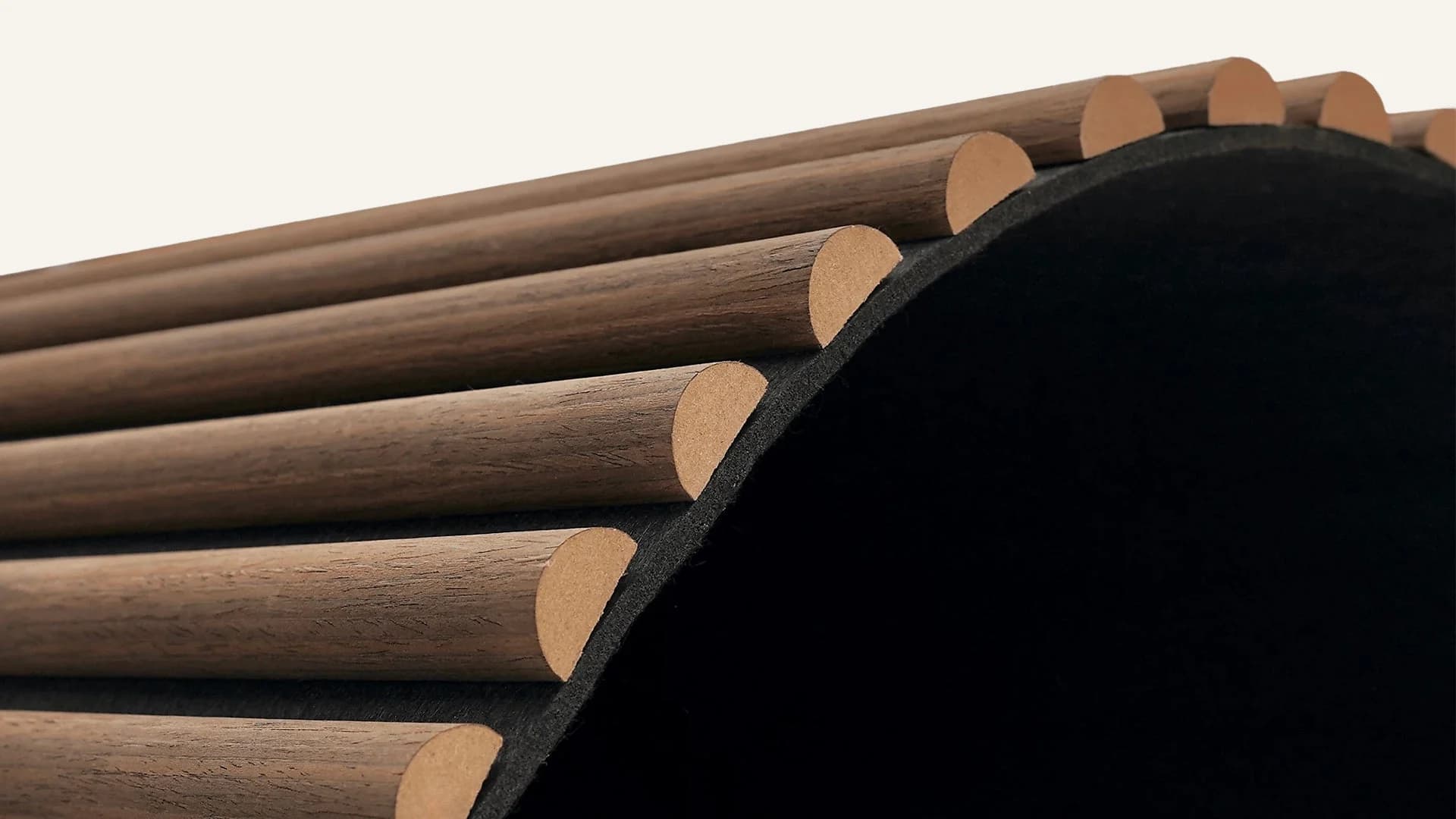
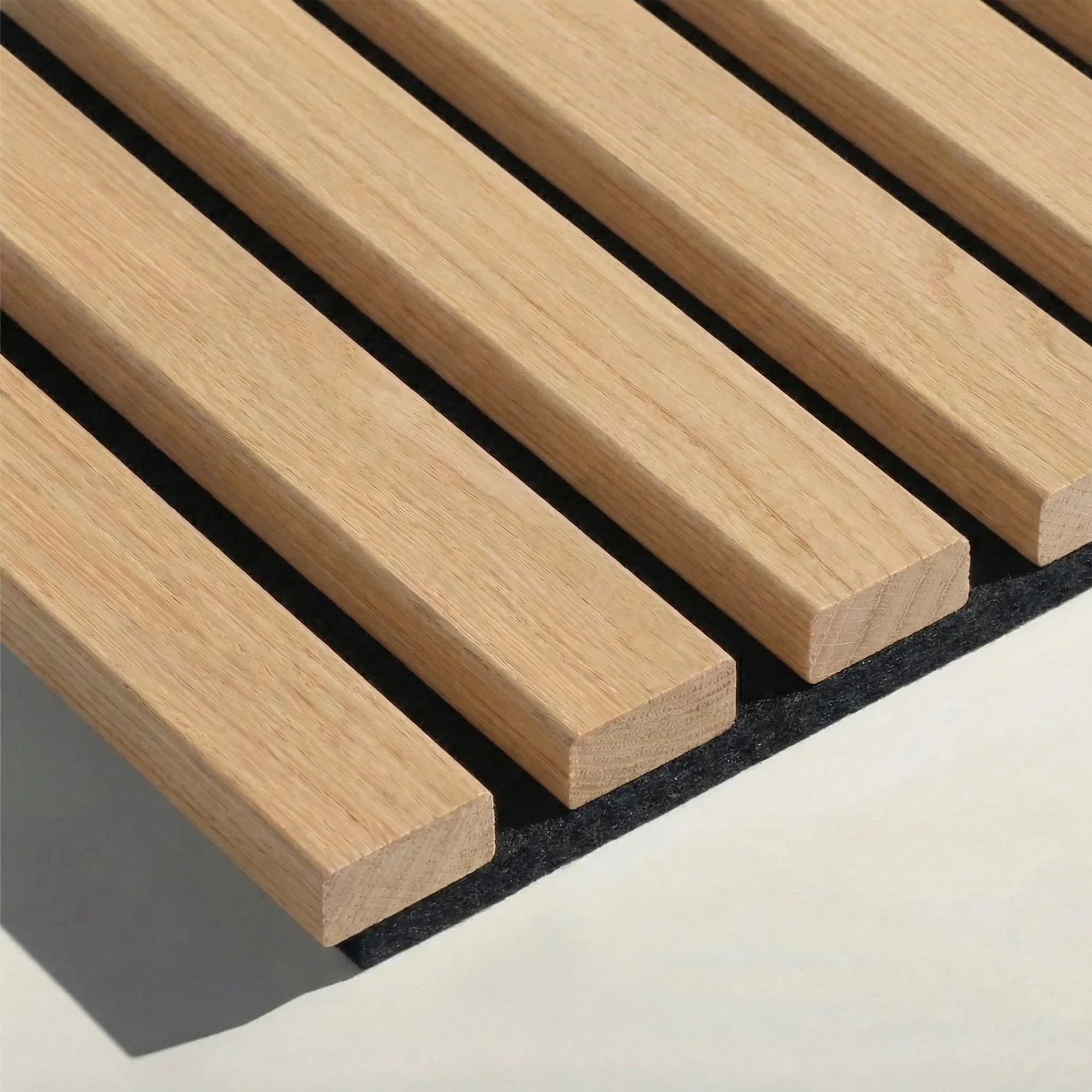
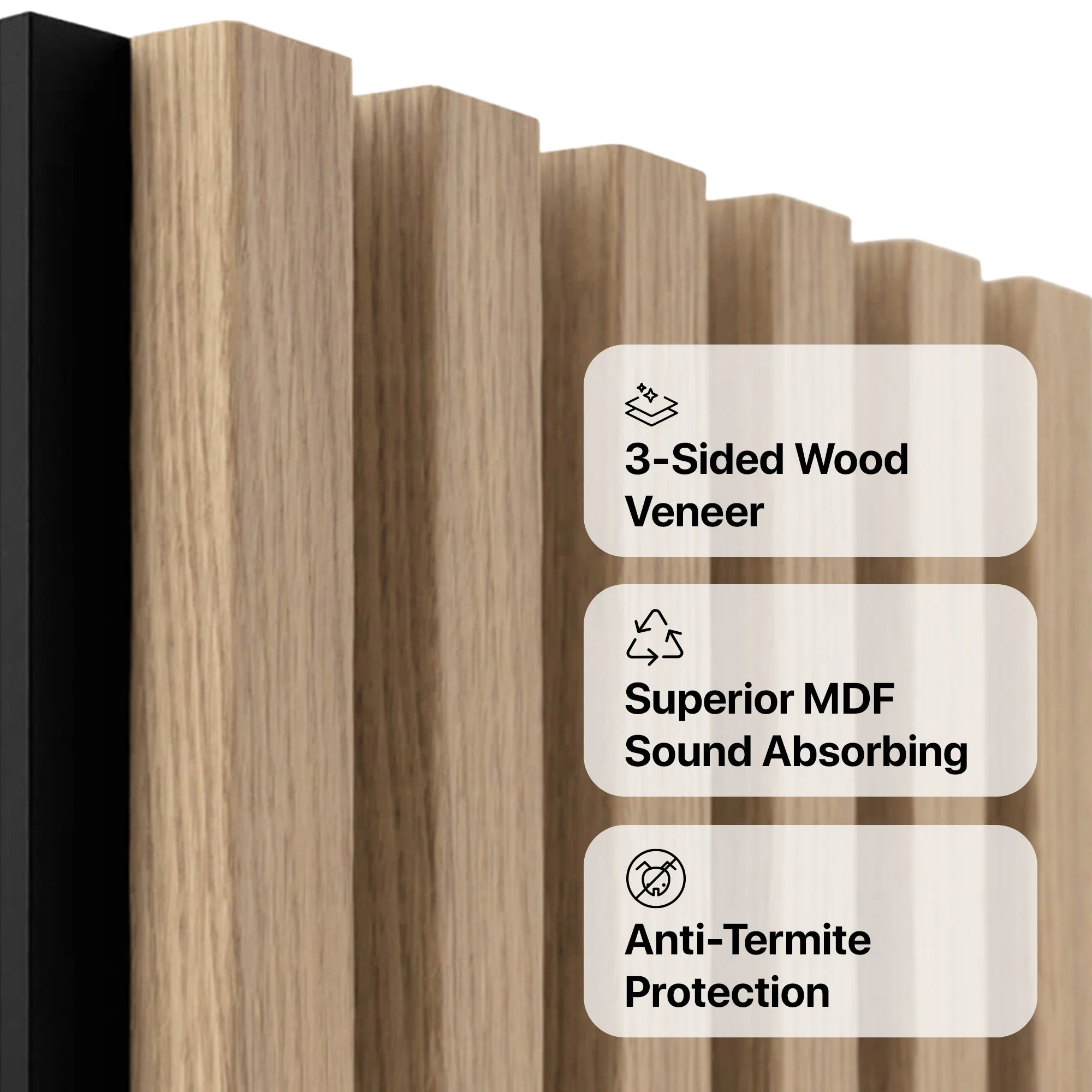
  • The TPH Solution: Individual Slat Processing. Instead of sawing a pre-veneered board, we precision-mill each MDF slat into its final geometry before it enters the wrapping station. Using specialized "wrap-around" machinery, we bond the real wood veneer to the front face and both lateral sides simultaneously. By concealing the MDF core on three sides, we maintain a consistent architectural appearance. 

4. CoreShield™ for Water-resistant Panels

One of the most common reasons decorative wall panels fail over time is moisture absorption. Wood naturally pulls moisture from the air, which causes it to swell. Standard MDF is especially vulnerable to this, and the pressure can eventually force the veneer to lift or peel.

How our CoreShield™ solves this:
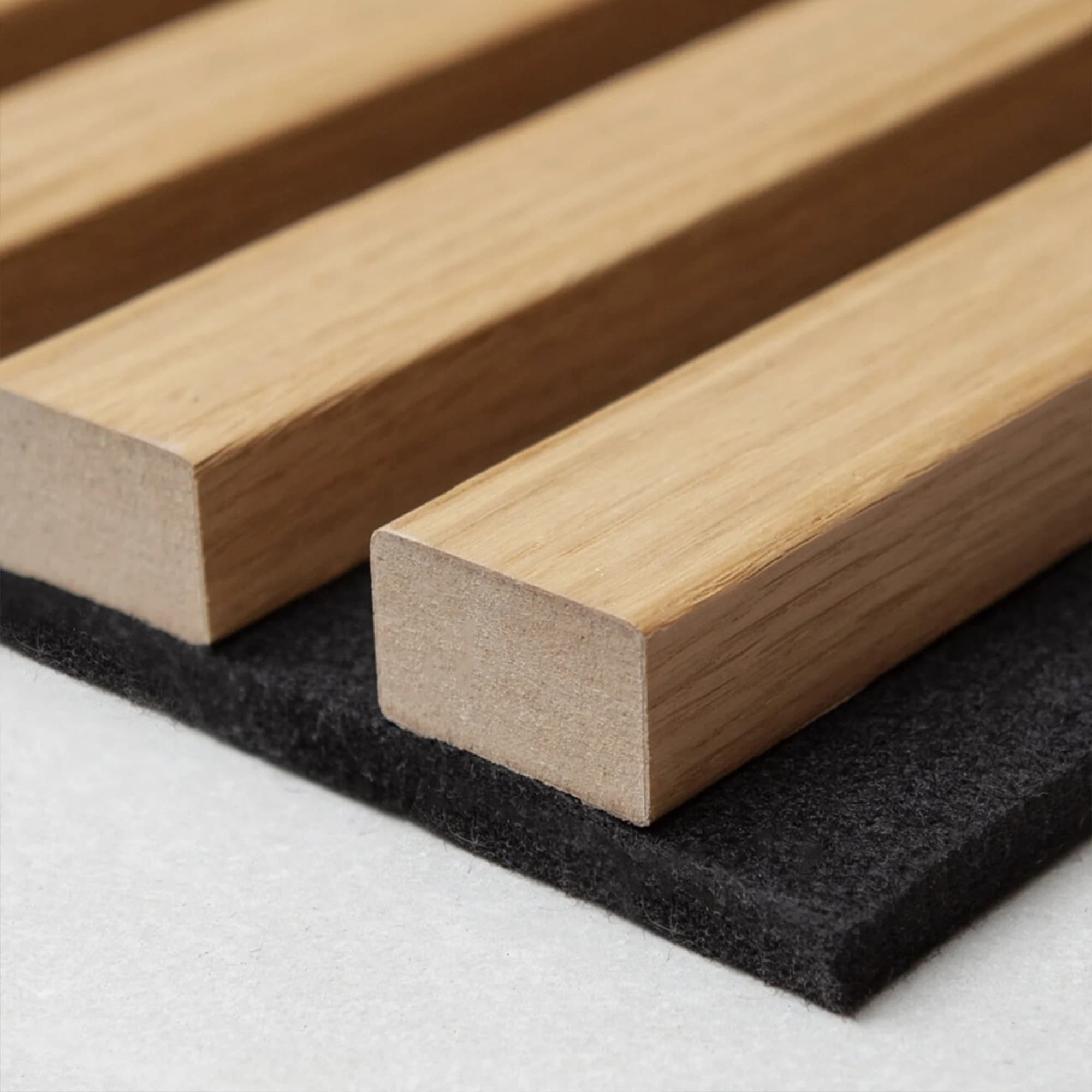
  • Moisture-resistant fibers: Instead of using standard interior MDF, TPH panels are built around CoreShield™ MDF, which is engineered to resist moisture from the inside out. During manufacturing, the wood fibers are treated with specialized resins before the board is fully formed. These resins penetrate the entire core, not just the surface.
  • Built-in moisture barrier: Once cured, the resins create an internal barrier that dramatically reduces how much moisture the board can absorb compared to ordinary MDF. By limiting how much the core can expand and contract, CoreShield™ keeps the veneer tightly bonded and the panel shape stable.

5. Smooth Rounded Profiles

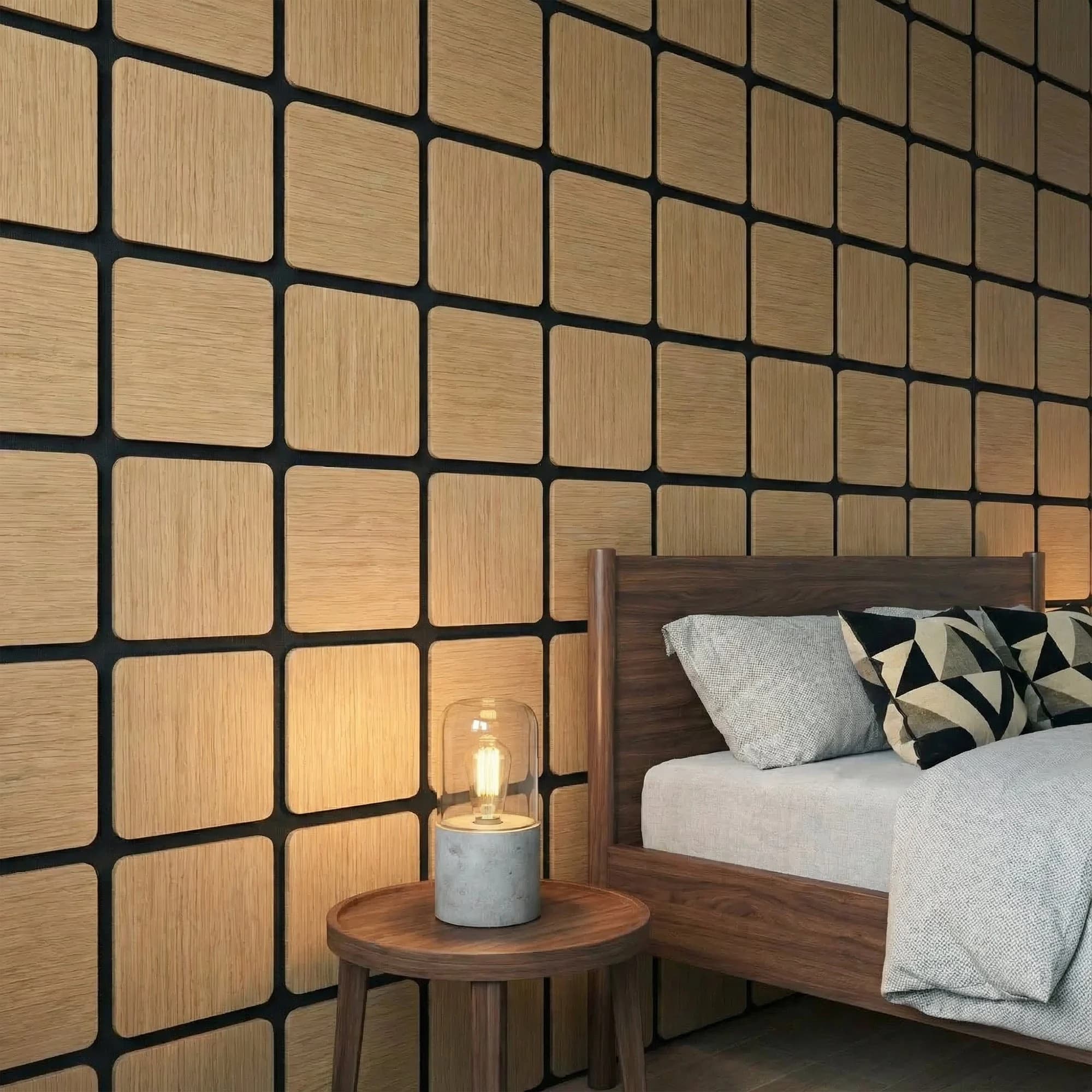
Most slat panels on the market use square-cut slats with sharp 90° edges. This is faster and cheaper to manufacture, but it comes with clear drawbacks, including sharp edges that create harsh, jagged shadows, and walls look flat, rigid, and industrial. Not to mention edges that feel sharp to the touch can be unsafe in high-traffic areas.

Why and how TPH creates smooth rounded edges:

  • More organic appearance: The wall feels integrated into the space, not layered on top of it. Instead of cutting straight, square strips from a large board, each slat is individually machined using precision milling equipment. As the result, light rolls off the curved edge, creating a gentle gradient instead of hard shadow lines.
  • Improved safety: No sharp corners, making them ideal for hallways, living spaces, and children’s rooms. Rounded edges also feel natural to touch. Most brands don’t do this because rounded profiles require additional machining steps and tighter quality control.

Our American Acoustic Collection showcases the most refined examples of this craftsmanship, where texture, safety, and touch work together as one.
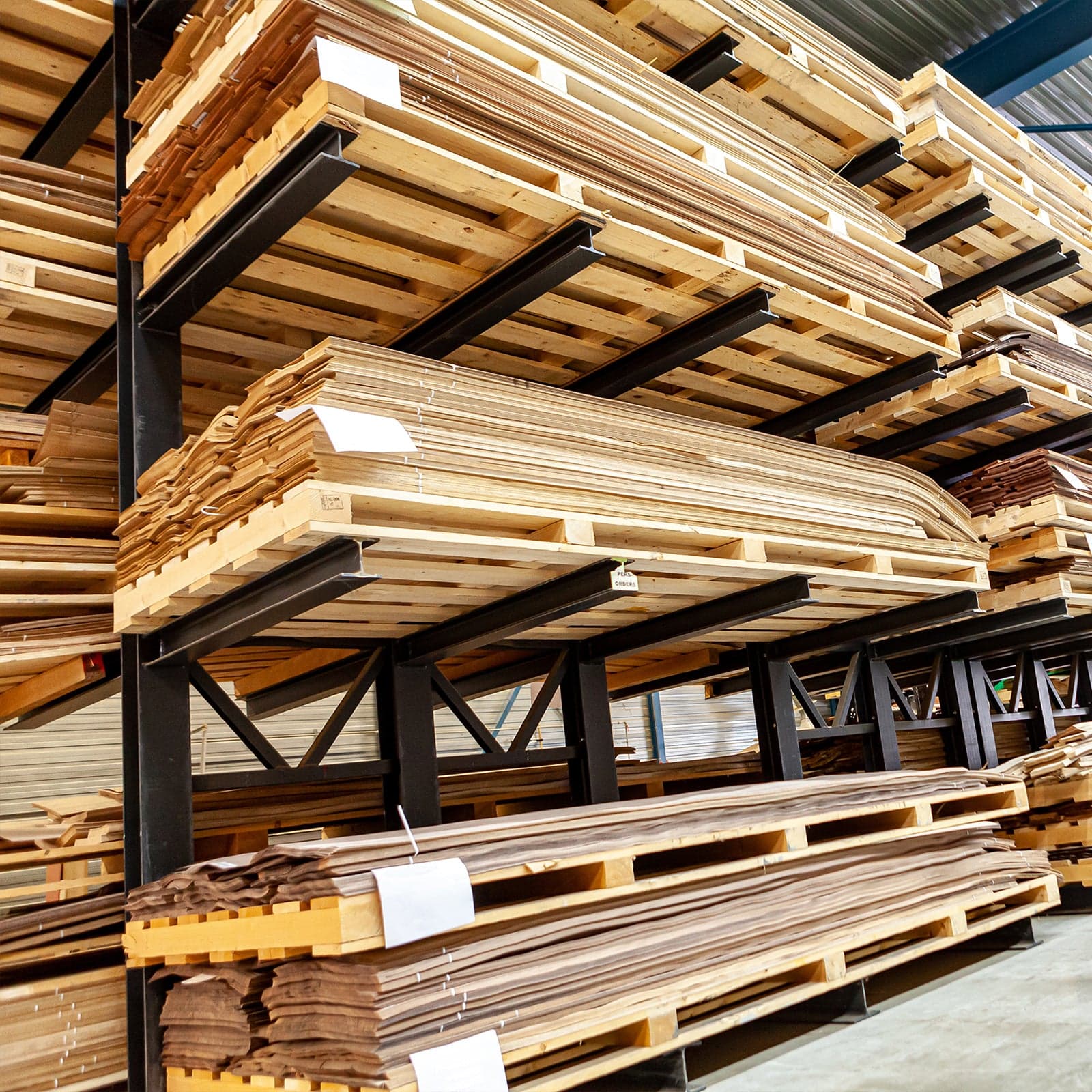
6. Reliable US Stocking

The most frustrating part of home renovation is being told to wait 8-12 weeks for materials to arrive. This usually happens because many online panel brands are just middlemen, so they take your order, then wait for a shipment to arrive from overseas.

The Panel Hub works differently. What that means for you:
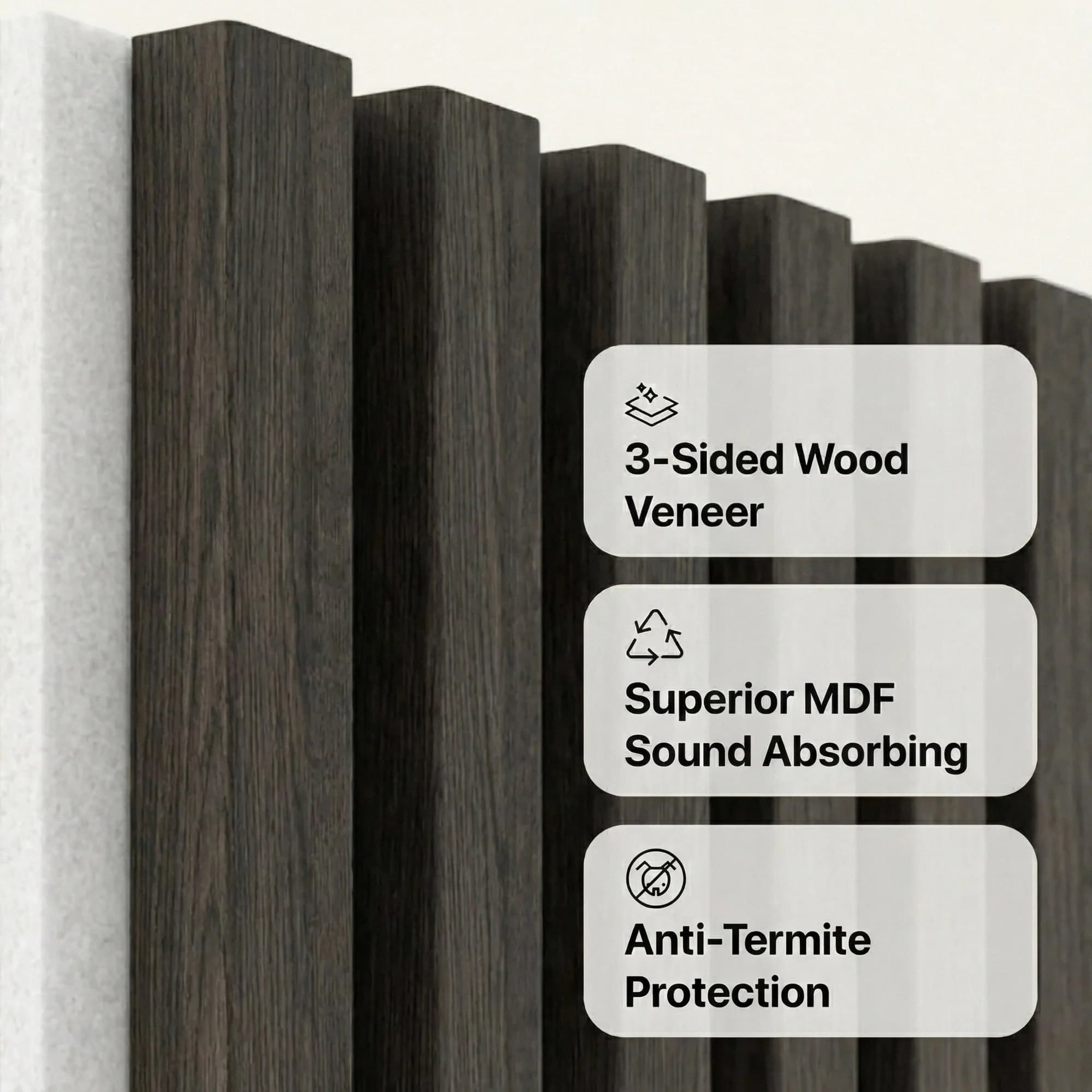
  • U.S.-based stocking operation: We keep thousands of panels in our U.S. warehouse, ready to ship at all times.
  • Fast, predictable delivery: Order at the start of the week, and your panels can arrive in as little as 2-7 business days for ready stock products.
  • No container delays: No waiting on ports, customs, or overseas production schedules.
  • Project timelines you can trust: This reliability is why contractors and commercial developers choose The Panel Hub. Delays cost money, and we don’t create them. When you’re ready to start a project, your materials should be ready too.

7. Commercial-Grade MDF

At the core of every panel is commercial-grade MDF, selected for its strength, uniformity, and long-term durability. Unlike lightweight or low-density boards, this core resists warping, cracking, and structural fatigue over time. It provides the stability required for precise cuts, secure mounting, and consistent performance in both residential and professional installations. This is the same grade trusted in commercial interiors where reliability is non-negotiable. This quality means:
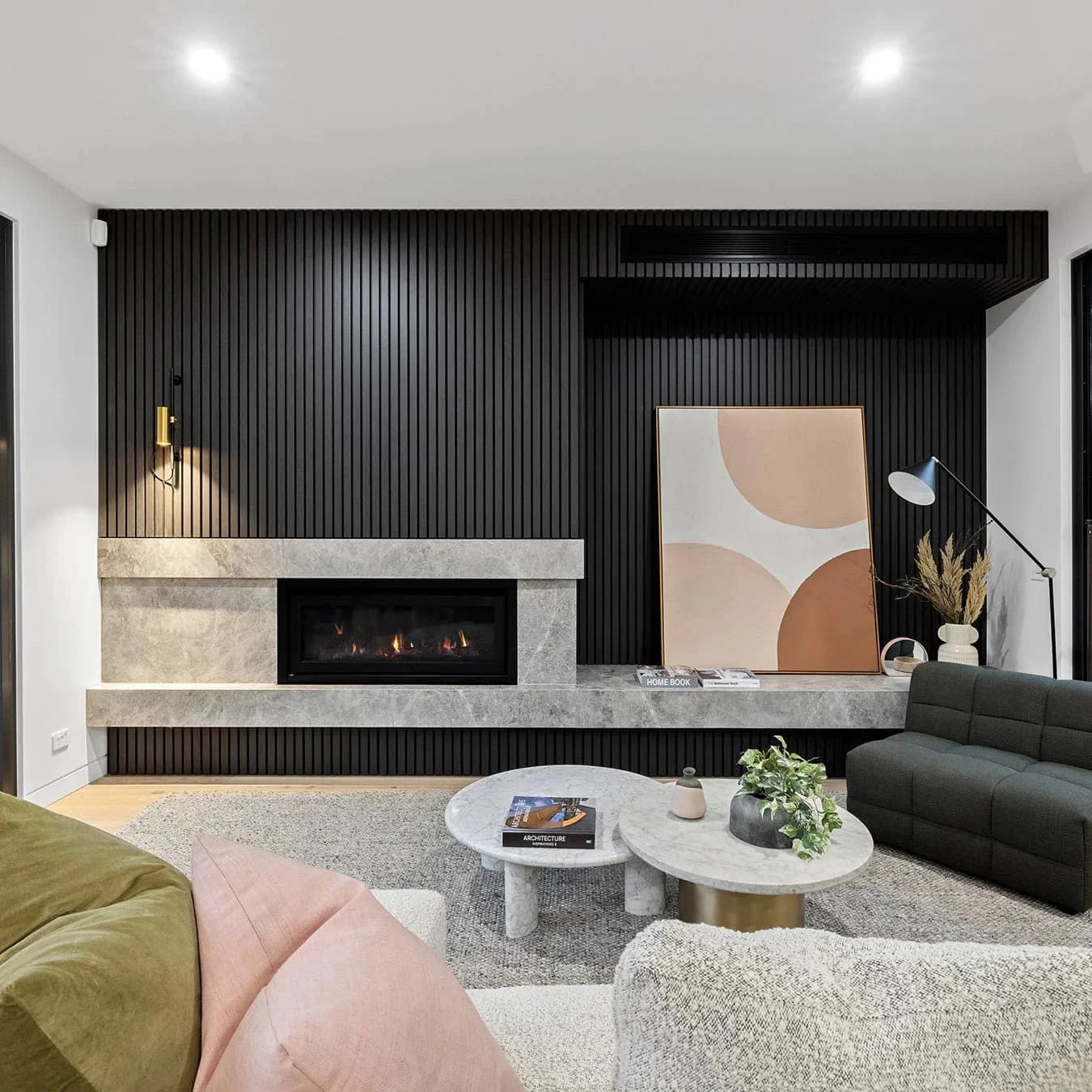
  • The panels shrug off dents, dings, and daily wear that's ideal for high-traffic spaces like offices, schools, or busy family homes.
  • The heavier MDF core adds stability and reduces vibrations, and when paired with our denser felt backing, delivers superior sound dampening.
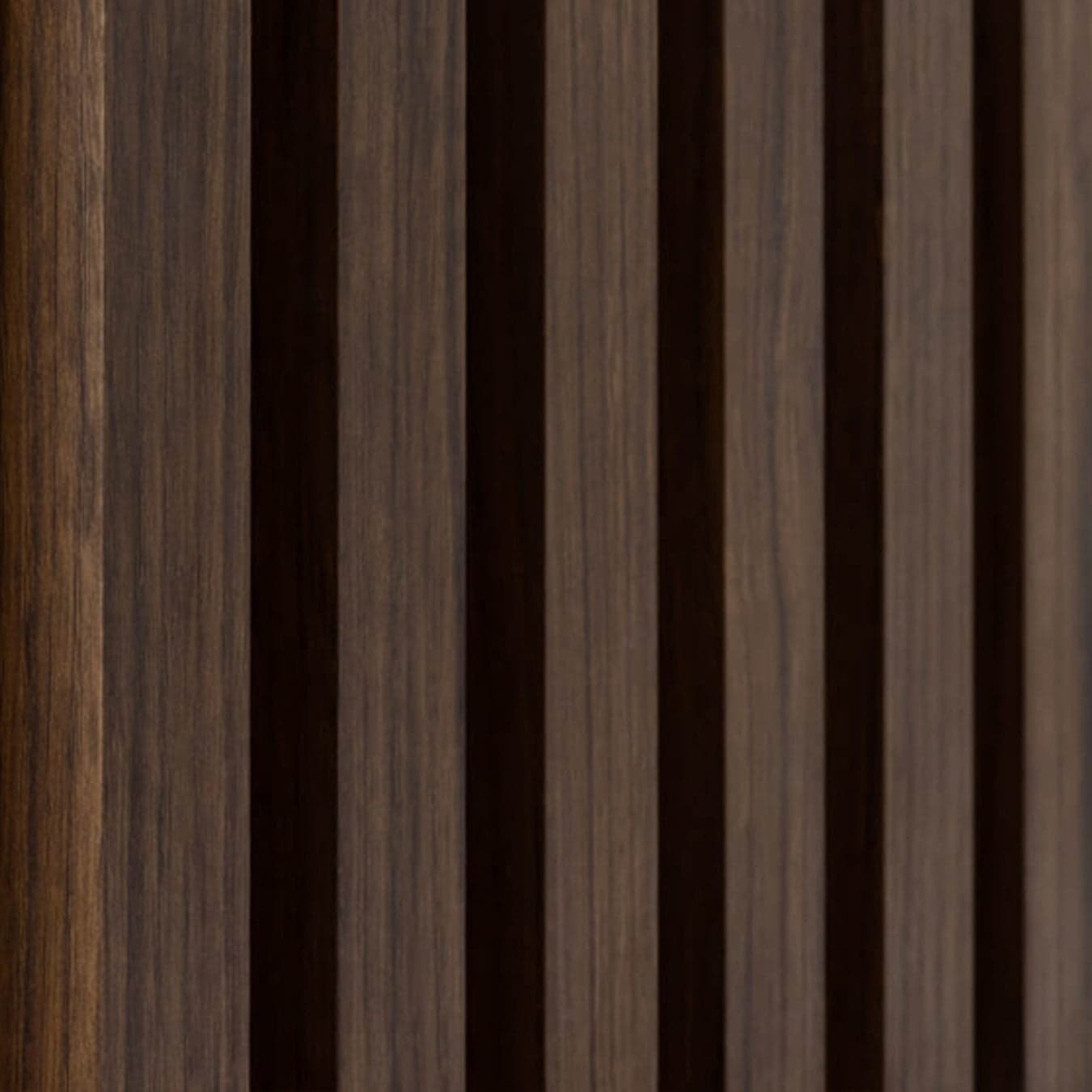
America Walnut Acoustic Wall Panels | 3-Sided Wood Veneer | SoundPanel®.

8. 60-day Return Window

TPH stands behind its craftsmanship with a 60-day return window, giving customers the confidence to purchase without pressure. This generous policy reflects trust in the product and respect for the customer’s decision-making process. It allows time to see the panels installed, experienced, and appreciated within the space, ensuring satisfaction is not rushed or compromise.

Why this matters:

  • Extended 60-day return window for added flexibility and peace of mind.
  • Time to test in your space before fully committing.
  • Customer-first policy designed to reduce risk and uncertainty when buying online.
Timber Brown Outdoor Wall Panel | LineaPanel®.

9. 5-year Warranty

Every panel is further supported by a 5-year warranty, reinforcing TPH’s commitment to long-term quality. This warranty is not a marketing gesture but a clear statement of confidence in materials, construction, and performance. It ensures customers are protected well beyond installation, with support that matches the product’s intended lifespan. 

Here’s how it benefits our customers:
  • From warping and delamination to finish inconsistencies and structural issues, our warranty covers the things that actually matter, not just the fine print.
  • Experience fast, transparent support if you ever need help. No third-party claim systems, no call centers, just direct access to our in-house team.

10. Independently Tested and Certified

Finally, TPH panels are independently tested and certified, validating their performance, safety, and acoustic effectiveness through recognized standards. Third-party testing ensures transparency and accountability, confirming that what is promised is consistently delivered. For customers who value verified quality over assumptions, this independent certification provides reassurance that TPH panels meet stringent commercial and residential benchmarks. Our certificates are:

  • CE Certified (EN 13986:2004+A1:2015) for construction and safety.
  • SGS Certified with NRC 0.82 for proven sound absorption.
  • FSC Certified wood sources for responsible material sourcing.
  • Fire Rating: D-s2,d0 (EN 13501-1).

(EN 13986:2004+A1:2015) for construction and safety

NRC 0.85 for proven sound absorption

Wood sources for responsible material sourcing

D-s2,d0 (EN 13501-1)

(EN 13986:2004+A1:2015) for construction and safety

NRC 0.85 for proven sound absorption

Wood sources for responsible material sourcing

D-s2,d0 (EN 13501-1)

See How The Panel Hub Compares

Feature The Panel Hub (TPH) Standard Industry Panels
Acoustic Felt Denser, thicker AcuFelt engineered for real sound absorption Thin felt, often decorative only
Surface Material 100% real wood veneer (Grade-A) PVC foil or laminate print
Veneer Coverage 3-sided veneered slats (face + both edges) Front face only; raw MDF edges
Core Technology CoreShield™ moisture-resistant MDF Standard interior-grade MDF
Edge Profile Smooth rounded edges for softer light and safer touch Sharp 90° square cuts
Stock & Fulfillment In-stock in the U.S. Made-to-order overseas
Shipping Time 2-7 business days 8-12 weeks typical
MDF Grade Commercial-grade MDF Basic residential MDF
Certifications SGS, ISO, CE, and additional certifications Often uncertified or unclear
Return Window 60-day returns Only 30-45 days

The Problem With Most Wood Slat Panels

They Look Like Wood, but Are Not Actually Wood

Most wood slat panels on the market rely on printed paper, plastic laminate, or foil wraps designed to imitate wood grain. While they may look acceptable from a distance, they lack the depth, texture, and warmth of real timber and often reveal their artificial nature up close. Over time, these surfaces peel, bubble, or fade unevenly. TPH panels use 100% real wood veneer, delivering genuine grain variation, natural texture, and the quiet confidence of authentic materials that age gracefully instead of deteriorating.
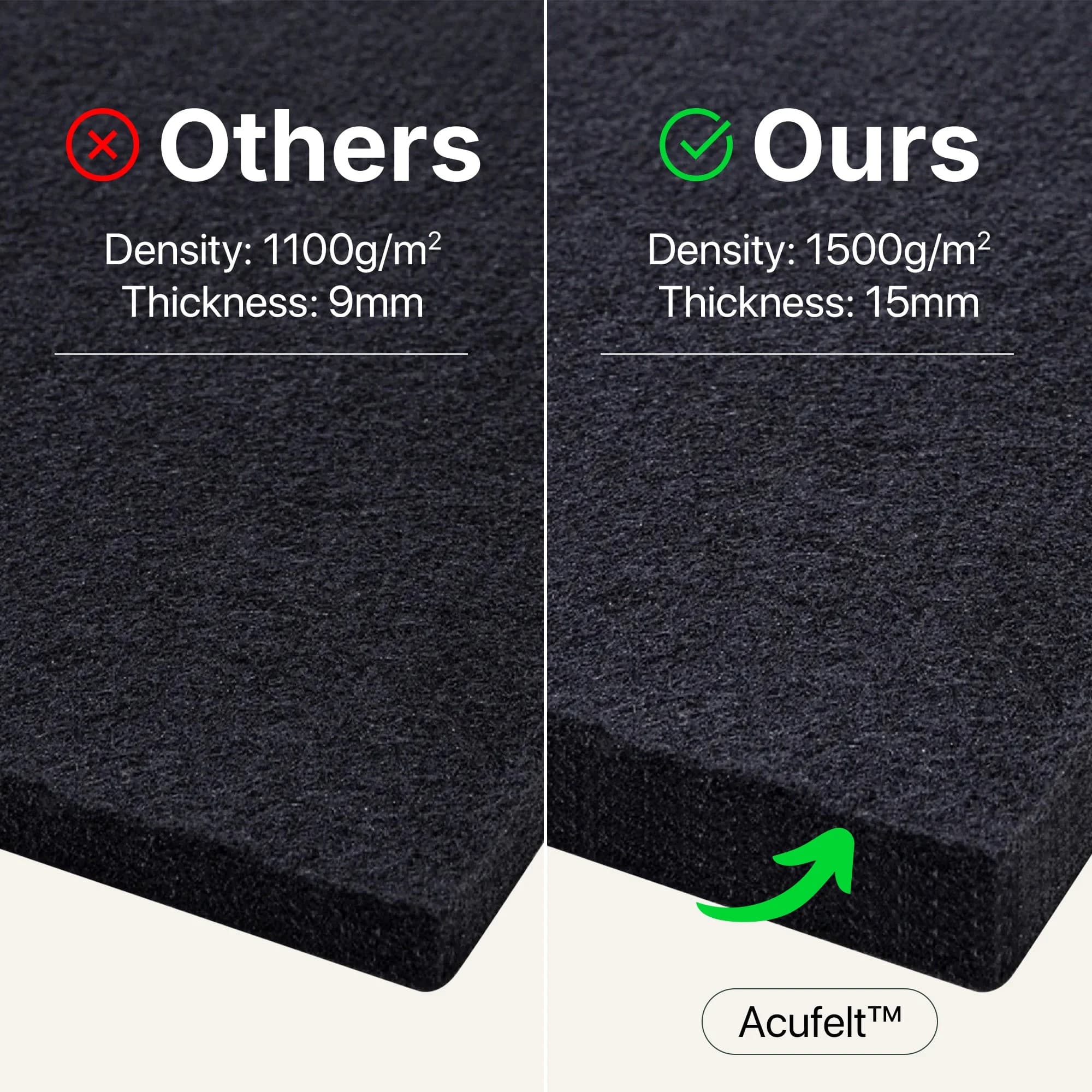
Thin Felt That Is Decorative, Not Functional

Many panels use 9mm felt to keep costs down, marketing them as “acoustic” when in reality they only absorb high-frequency noise. The result is a room that looks finished but still sounds hollow and echoey. TPH panels use 15mm AcuFelt™, providing the depth required to absorb mid and low frequencies where most sound fatigue lives. This creates a noticeably calmer, more balanced acoustic environment you can actually feel, not just see.
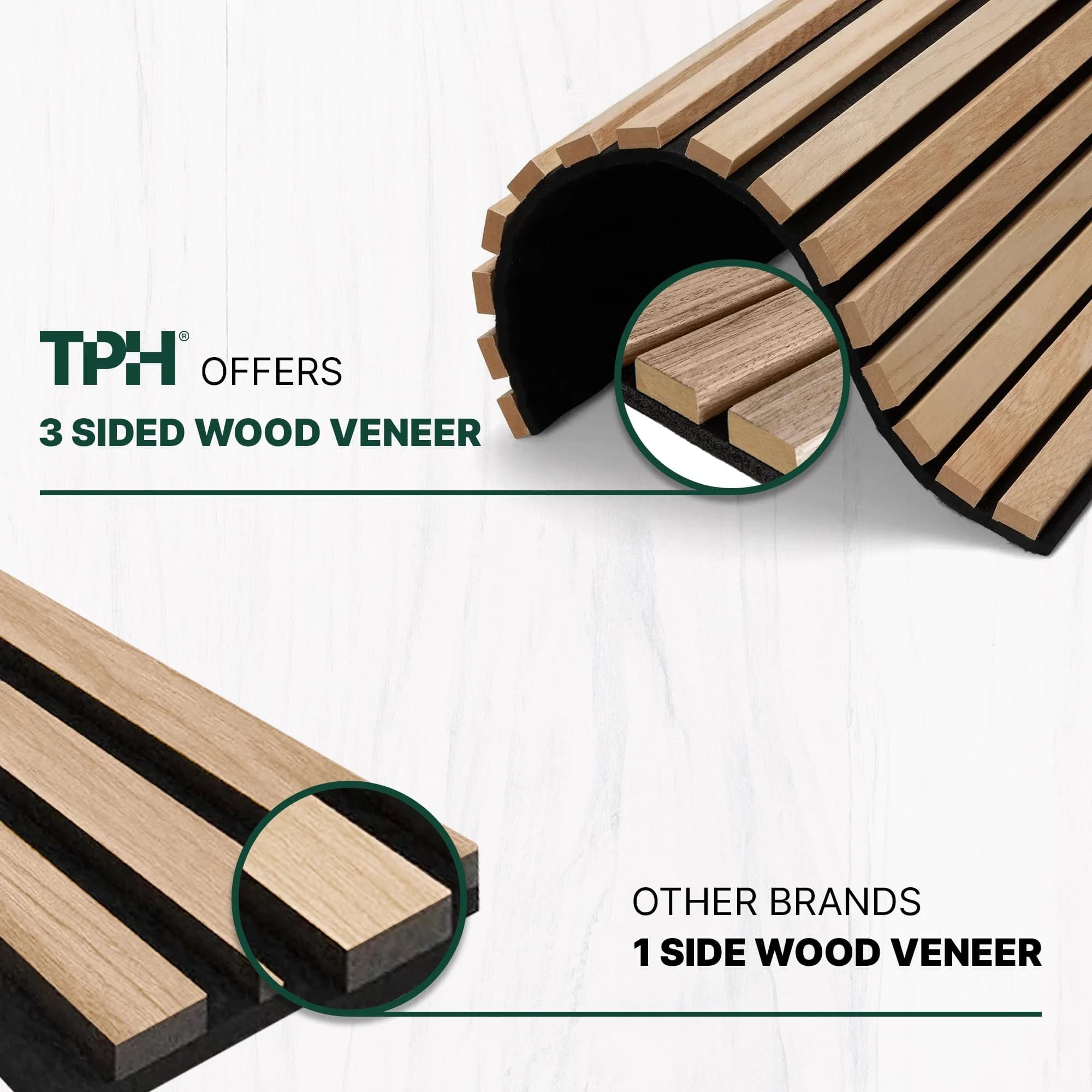
3-Sided Acoustic Slat Smoke Oak Wood Wall Panel | SoundPanel®.

Unfinished Sides That Ruin the Final Look

Most panels are only finished on the front face. Once installed on feature walls, corners, or open-ended sections, raw edges and exposed cores become visible, instantly breaking the illusion of quality. TPH panels feature a true 3-sided finished design, wrapping the veneer across the front and both edges of every slat. This delivers a clean, furniture-grade appearance from every angle, even in exposed installations.
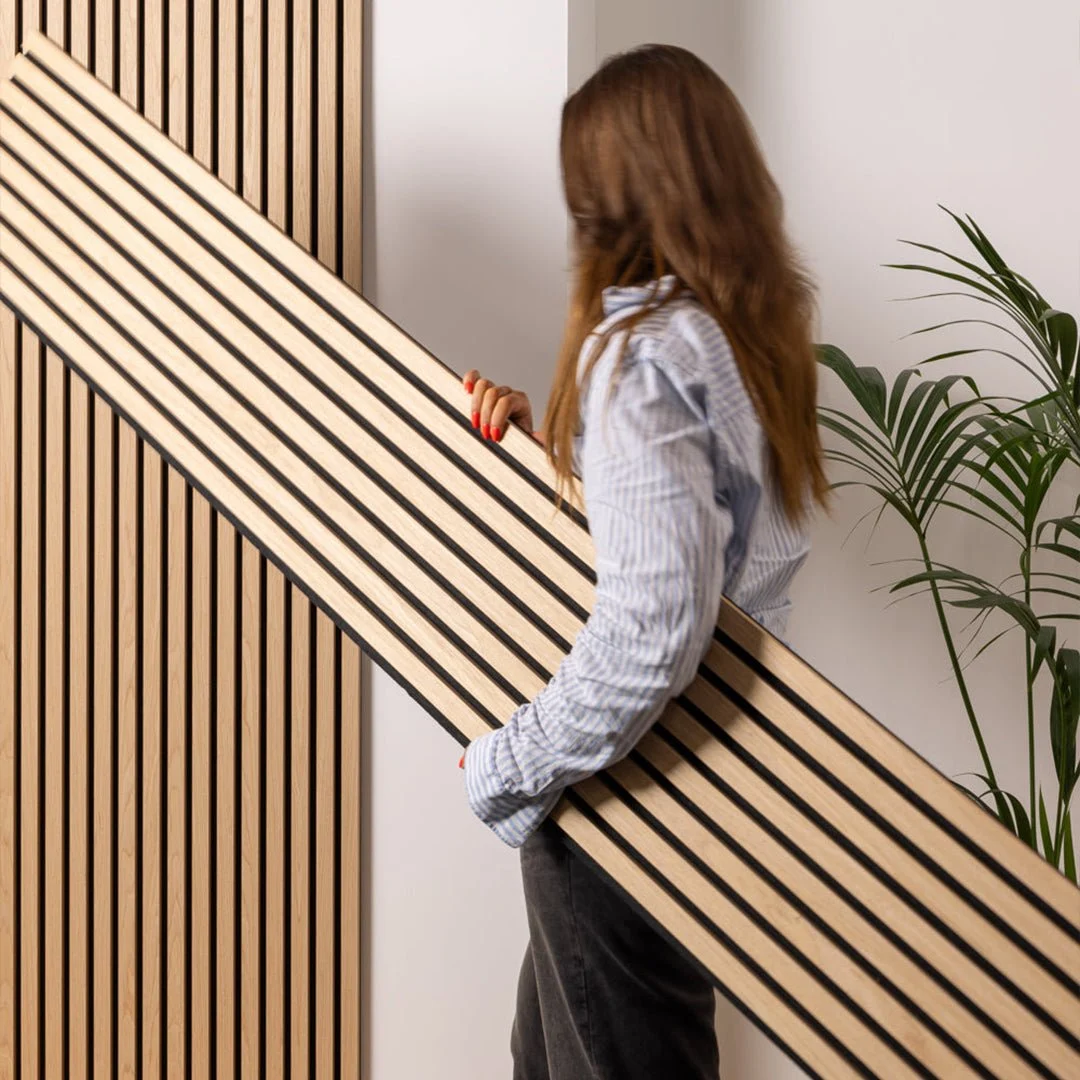
America Golden Acoustic Wall Panels | 3 - Sided Wood Veneer | SoundPanel® - The Panel Hub

Sharp Edges That Chip, Splinter, and Feel Cheap

Square-cut slats are common in mass-produced panels. These sharp edges chip easily during installation, splinter over time, and feel harsh in real living spaces. TPH panels are precision-milled with smooth, rounded edges, reducing damage, improving durability, and creating a softer, more refined visual profile that feels intentional rather than industrial.
American Golden Acoustic Slat Wood Wall Panels | 3-Sided Veneer | SoundPanel®-Indoor-The Panel Hub

Low-Density Cores That Warp Over Time

Many panels use lightweight or low-density MDF that struggles with structural stability. Changes in temperature or humidity can cause warping, cracking, or separation from the felt backing. TPH panels are built with commercial-grade MDF, chosen for its density, uniformity, and long-term stability. This ensures straight lines, consistent spacing, and reliable performance year after year.
Acoustic Claims That Are Not Verified

Many brands make bold performance claims without third-party testing to support them. Customers are left trusting marketing language rather than measurable standards. TPH panels are independently tested and certified, with verified acoustic performance, fire ratings, and material compliance. This provides transparency, accountability, and confidence backed by data rather than assumptions.

(Testing) America Walnut Acoustic Wall Panels | 3-Sided Wood Veneer & Rounded Edges | SoundPanel®.

Built for Showrooms, Not Real Homes

Many panels are designed to look good under showroom lighting or online photos but fail under real-world conditions like daily noise, sunlight, humidity, and wear. TPH panels are engineered for real living, balancing aesthetics, durability, and acoustic performance. They are designed to perform in homes, offices, and commercial spaces where materials are expected to work hard, not just look good on day one.

The Preferred Choice for Homes and Commercial Projects

TPH panels are designed to meet the expectations of two very different audiences and that overlap is intentional. Homeowners choose TPH for its warmth, visual impact, and ease of installation, while architects, interior designers, and contractors specify TPH because the panels meet technical, material, and performance standards required for real-world projects, including office spaces. When a product satisfies both groups, it is rarely by accident. It is usually because it performs consistently, installs predictably, and holds up over time.
Installation Confidence Timeline (From Unboxing to a Finished Wall)

Most customers finish in under three hours, especially when the wall is flat and the cuts are minimal. The process is simple because it is repeatable, forgiving, and designed for real people using everyday tools, not contractors with specialty equipment.
Step 1: Unbox and stage the panels (5 to 10 minutes)

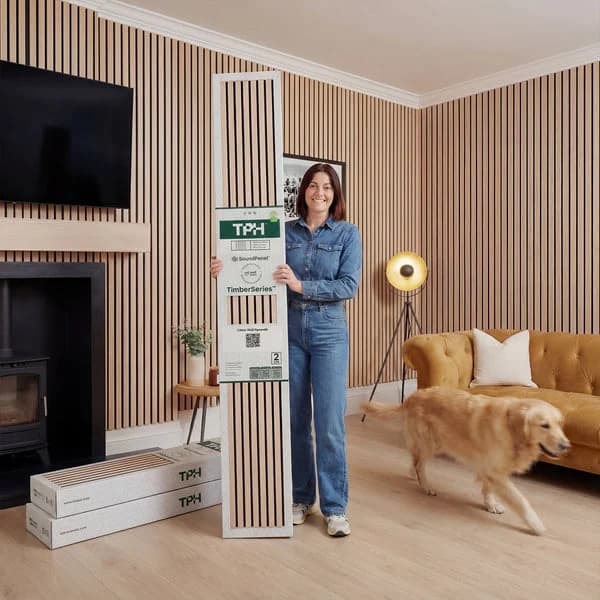
The first confidence boost happens immediately. When you unbox TPH panels, you can see and feel that they are built like a finished interior product, not a flimsy décor sheet. Lay the panels flat in the room where they will be installed, keeping the wood grain direction consistent. This quick staging step makes the rest of the install smoother because you are not stopping later to reorganize panels or re-check alignment.

American Golden Acoustic Slat Wood Wall Panels | 3-Sided Veneer | SoundPanel®-Indoor-The Panel Hub
1

Step 1: Unbox and stage the panels (5 to 10 minutes)

The first confidence boost happens immediately. When you unbox TPH panels, you can see and feel that they are built like a finished interior product, not a flimsy décor sheet. Lay the panels flat in the room where they will be installed, keeping the wood grain direction consistent. This quick staging step makes the rest of the install smoother because you are not stopping later to reorganize panels or re-check alignment.

American Golden Acoustic Slat Wood Wall Panels | 3-Sided Veneer | SoundPanel®-Indoor-The Panel Hub
1

Step 1: Unbox and stage the panels (5 to 10 minutes)

The first confidence boost happens immediately. When you unbox TPH panels, you can see and feel that they are built like a finished interior product, not a flimsy décor sheet. Lay the panels flat in the room where they will be installed, keeping the wood grain direction consistent. This quick staging step makes the rest of the install smoother because you are not stopping later to reorganize panels or re-check alignment.

American Golden Acoustic Slat Wood Wall Panels | 3-Sided Veneer | SoundPanel®-Indoor-The Panel Hub

Step 2: Confirm your wall plan and coverage (5 to 10 minutes)

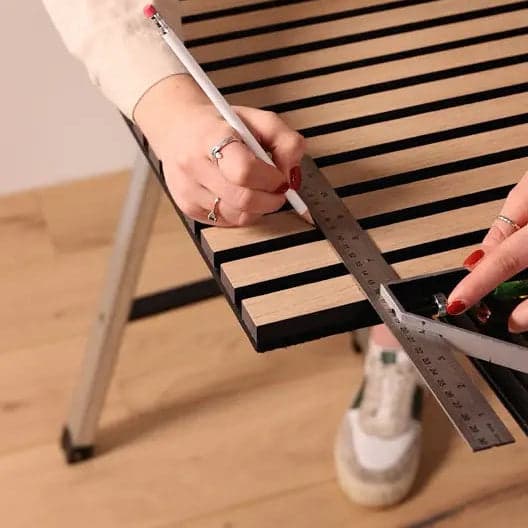
Measure the width and height of your wall, then confirm your panel count and layout. Because each panel is 24 inches wide, the math stays simple and predictable. This is also the moment to decide where you want your first panel to start so the last cut panel lands cleanly at the edge. If the wall has outlets, switches, or trim details, mark them now so you do not have to pause mid-install.

2

Step 2: Confirm your wall plan and coverage (5 to 10 minutes)

Measure the width and height of your wall, then confirm your panel count and layout. Because each panel is 24 inches wide, the math stays simple and predictable. This is also the moment to decide where you want your first panel to start so the last cut panel lands cleanly at the edge. If the wall has outlets, switches, or trim details, mark them now so you do not have to pause mid-install.

2

Step 2: Confirm your wall plan and coverage (5 to 10 minutes)

Measure the width and height of your wall, then confirm your panel count and layout. Because each panel is 24 inches wide, the math stays simple and predictable. This is also the moment to decide where you want your first panel to start so the last cut panel lands cleanly at the edge. If the wall has outlets, switches, or trim details, mark them now so you do not have to pause mid-install.

Step 3: Find your level line (5 minutes)

DIY installs fail when the first panel is slightly off and every panel after it amplifies the mistake. This is why a simple level line changes everything. Use a level to draw a straight vertical guide where your first panel will sit. Once the first panel is straight, the rest of the wall becomes a repeatable, stress-free pattern.

3

Step 3: Find your level line (5 minutes)

DIY installs fail when the first panel is slightly off and every panel after it amplifies the mistake. This is why a simple level line changes everything. Use a level to draw a straight vertical guide where your first panel will sit. Once the first panel is straight, the rest of the wall becomes a repeatable, stress-free pattern.

3

Step 3: Find your level line (5 minutes)

DIY installs fail when the first panel is slightly off and every panel after it amplifies the mistake. This is why a simple level line changes everything. Use a level to draw a straight vertical guide where your first panel will sit. Once the first panel is straight, the rest of the wall becomes a repeatable, stress-free pattern.

Step 4: Dry fit the first panel (5 minutes)

Hold the first panel in place without adhesive or screws. This is where most customers realize how forgiving the system is. You can check the top and side edges, confirm your spacing, and visualize the final look before committing. If you are installing around baseboards, crown molding, or a corner return, this dry fit helps you decide if you want to trim the panel height or scribe it for the cleanest finish.

4

Step 4: Dry fit the first panel (5 minutes)

Hold the first panel in place without adhesive or screws. This is where most customers realize how forgiving the system is. You can check the top and side edges, confirm your spacing, and visualize the final look before committing. If you are installing around baseboards, crown molding, or a corner return, this dry fit helps you decide if you want to trim the panel height or scribe it for the cleanest finish.

4

Step 4: Dry fit the first panel (5 minutes)

Hold the first panel in place without adhesive or screws. This is where most customers realize how forgiving the system is. You can check the top and side edges, confirm your spacing, and visualize the final look before committing. If you are installing around baseboards, crown molding, or a corner return, this dry fit helps you decide if you want to trim the panel height or scribe it for the cleanest finish.

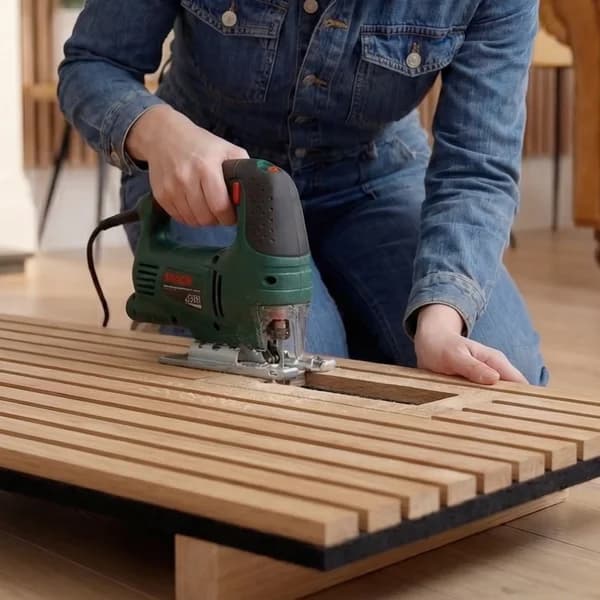
Step 5: Make any height cuts first (10 to 20 minutes)

If your wall height requires trimming, cut the panels to height before you start mounting. The felt backing can be cut neatly with a sharp utility knife, and the wood slats cut cleanly with a fine-tooth saw or jigsaw. For the best edge quality, cut from the back of the panel. Doing all height cuts upfront keeps the install moving fast once mounting begins.

5

Step 5: Make any height cuts first (10 to 20 minutes)

If your wall height requires trimming, cut the panels to height before you start mounting. The felt backing can be cut neatly with a sharp utility knife, and the wood slats cut cleanly with a fine-tooth saw or jigsaw. For the best edge quality, cut from the back of the panel. Doing all height cuts upfront keeps the install moving fast once mounting begins.

5

Step 5: Make any height cuts first (10 to 20 minutes)

If your wall height requires trimming, cut the panels to height before you start mounting. The felt backing can be cut neatly with a sharp utility knife, and the wood slats cut cleanly with a fine-tooth saw or jigsaw. For the best edge quality, cut from the back of the panel. Doing all height cuts upfront keeps the install moving fast once mounting begins.

Step 6: Apply adhesive or prep screws (5 to 10 minutes)

Choose your method based on your wall type and preference. Many customers use construction adhesive for a clean, fast install. Others prefer screws for a more mechanical hold, especially for ceilings or high-traffic commercial spaces. Either way, TPH panels are designed to work with common DIY tools and standard installation methods. You do not need specialty hardware, complicated rails, or professional-only systems.

Professional Installation & White Glove Delivery - The Panel Hub
6

Step 6: Apply adhesive or prep screws (5 to 10 minutes)

Choose your method based on your wall type and preference. Many customers use construction adhesive for a clean, fast install. Others prefer screws for a more mechanical hold, especially for ceilings or high-traffic commercial spaces. Either way, TPH panels are designed to work with common DIY tools and standard installation methods. You do not need specialty hardware, complicated rails, or professional-only systems.

Professional Installation & White Glove Delivery - The Panel Hub
6

Step 6: Apply adhesive or prep screws (5 to 10 minutes)

Choose your method based on your wall type and preference. Many customers use construction adhesive for a clean, fast install. Others prefer screws for a more mechanical hold, especially for ceilings or high-traffic commercial spaces. Either way, TPH panels are designed to work with common DIY tools and standard installation methods. You do not need specialty hardware, complicated rails, or professional-only systems.

Professional Installation & White Glove Delivery - The Panel Hub

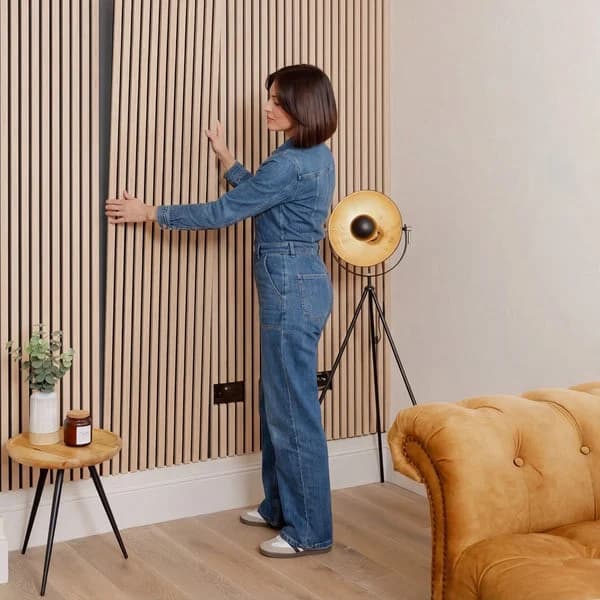
Step 7: Mount the first panel and lock in the straight start (10 minutes)

Place the first panel onto your level line, press it firmly, and double-check alignment. This is the anchor point of the entire wall. Once this panel is straight and secure, the installation becomes a simple repeat process. The visual impact starts immediately, which is why customers often say this is the moment they stop feeling nervous and start feeling excited.

Professional Installation Service.
7

Step 7: Mount the first panel and lock in the straight start (10 minutes)

Place the first panel onto your level line, press it firmly, and double-check alignment. This is the anchor point of the entire wall. Once this panel is straight and secure, the installation becomes a simple repeat process. The visual impact starts immediately, which is why customers often say this is the moment they stop feeling nervous and start feeling excited.

Professional Installation Service.
7

Step 7: Mount the first panel and lock in the straight start (10 minutes)

Place the first panel onto your level line, press it firmly, and double-check alignment. This is the anchor point of the entire wall. Once this panel is straight and secure, the installation becomes a simple repeat process. The visual impact starts immediately, which is why customers often say this is the moment they stop feeling nervous and start feeling excited.

Professional Installation Service.

Step 8: Repeat panel placement for fast progress (45 to 90 minutes)

Continue panel by panel, checking alignment occasionally. Because TPH panels are consistent and stable, they install predictably. The felt and core are structured enough to hold their shape, and the panels align cleanly without fighting you. Most feature walls come together surprisingly quickly at this stage because it becomes a rhythm: place, press or secure, check, and move on.

Professional Installation Service.
8

Step 8: Repeat panel placement for fast progress (45 to 90 minutes)

Continue panel by panel, checking alignment occasionally. Because TPH panels are consistent and stable, they install predictably. The felt and core are structured enough to hold their shape, and the panels align cleanly without fighting you. Most feature walls come together surprisingly quickly at this stage because it becomes a rhythm: place, press or secure, check, and move on.

Professional Installation Service.
8

Step 8: Repeat panel placement for fast progress (45 to 90 minutes)

Continue panel by panel, checking alignment occasionally. Because TPH panels are consistent and stable, they install predictably. The felt and core are structured enough to hold their shape, and the panels align cleanly without fighting you. Most feature walls come together surprisingly quickly at this stage because it becomes a rhythm: place, press or secure, check, and move on.

Professional Installation Service.

Step 9: Make outlet and switch cutouts (10 to 20 minutes)

For outlets and switches, mark the cutout location directly on the panel, then cut carefully with a jigsaw or multi-tool. TPH panels are designed to be workable with standard cutting tools, so you do not need specialized equipment. Once the cutout is done and the panel is mounted, these areas look intentional and built-in rather than patched together.

Professional Installation & White Glove Delivery - The Panel Hub
9

Step 9: Make outlet and switch cutouts (10 to 20 minutes)

For outlets and switches, mark the cutout location directly on the panel, then cut carefully with a jigsaw or multi-tool. TPH panels are designed to be workable with standard cutting tools, so you do not need specialized equipment. Once the cutout is done and the panel is mounted, these areas look intentional and built-in rather than patched together.

Professional Installation & White Glove Delivery - The Panel Hub
9

Step 9: Make outlet and switch cutouts (10 to 20 minutes)

For outlets and switches, mark the cutout location directly on the panel, then cut carefully with a jigsaw or multi-tool. TPH panels are designed to be workable with standard cutting tools, so you do not need specialized equipment. Once the cutout is done and the panel is mounted, these areas look intentional and built-in rather than patched together.

Professional Installation & White Glove Delivery - The Panel Hub

Step 10: Finish the edge panel and final trims (10 to 25 minutes)

The last panel is where most DIY installers expect frustration. With TPH, it is straightforward. Measure the remaining gap, cut the final panel to width, and mount it like the rest. This step is also where the TPH difference shows most clearly, because the finished look stays clean and intentional rather than revealing rough edges or unfinished sides.

Professional Installation Service.
10

Step 10: Finish the edge panel and final trims (10 to 25 minutes)

The last panel is where most DIY installers expect frustration. With TPH, it is straightforward. Measure the remaining gap, cut the final panel to width, and mount it like the rest. This step is also where the TPH difference shows most clearly, because the finished look stays clean and intentional rather than revealing rough edges or unfinished sides.

Professional Installation Service.
10

Step 10: Finish the edge panel and final trims (10 to 25 minutes)

The last panel is where most DIY installers expect frustration. With TPH, it is straightforward. Measure the remaining gap, cut the final panel to width, and mount it like the rest. This step is also where the TPH difference shows most clearly, because the finished look stays clean and intentional rather than revealing rough edges or unfinished sides.

Professional Installation Service.

Step 11: Quick clean-up and final reveal (5 to 10 minutes)

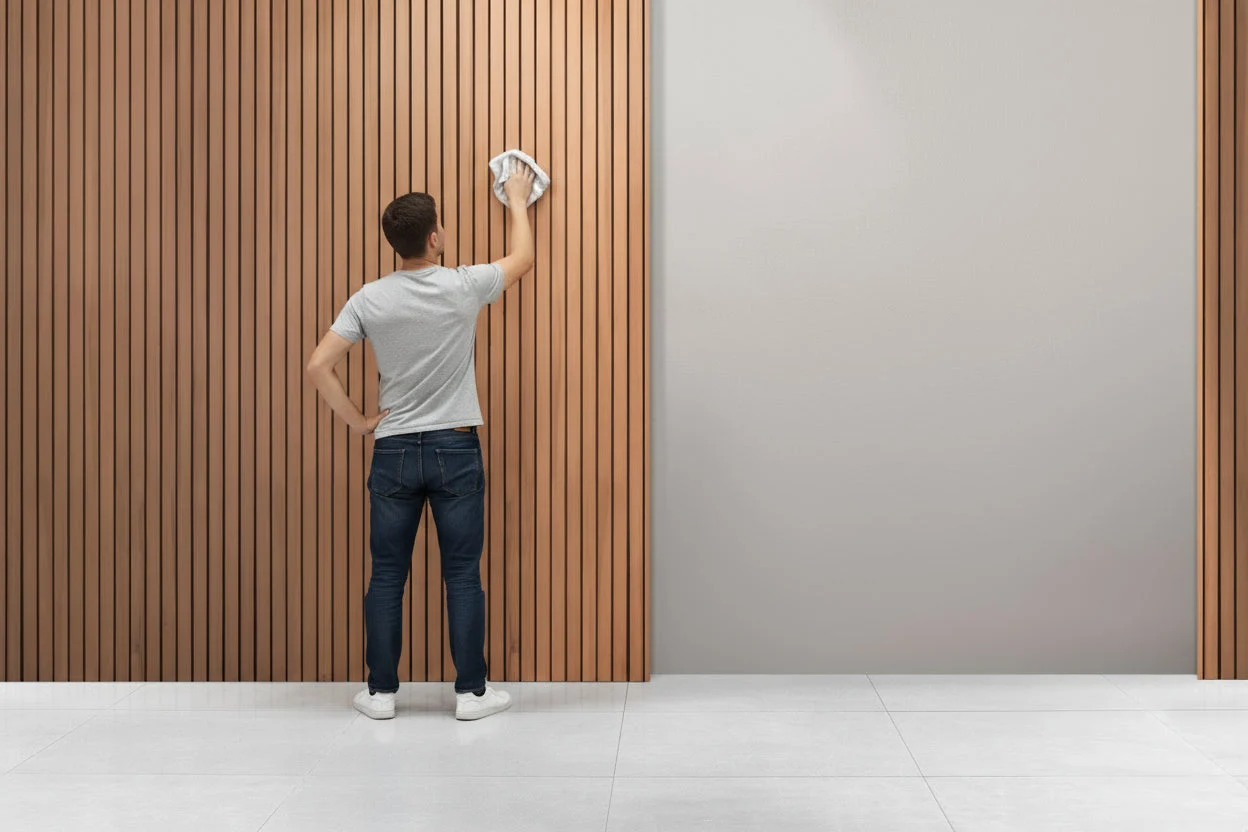
Vacuum the felt with a soft brush attachment to remove any sawdust, then wipe the wood surface with a microfiber cloth. Step back and you will immediately notice two things: the wall looks professionally finished, and the room feels calmer. The install is done, but the benefit continues every day through improved acoustics and a wall feature that looks built, not temporary.

11

Step 11: Quick clean-up and final reveal (5 to 10 minutes)

Vacuum the felt with a soft brush attachment to remove any sawdust, then wipe the wood surface with a microfiber cloth. Step back and you will immediately notice two things: the wall looks professionally finished, and the room feels calmer. The install is done, but the benefit continues every day through improved acoustics and a wall feature that looks built, not temporary.

11

Step 11: Quick clean-up and final reveal (5 to 10 minutes)

Vacuum the felt with a soft brush attachment to remove any sawdust, then wipe the wood surface with a microfiber cloth. Step back and you will immediately notice two things: the wall looks professionally finished, and the room feels calmer. The install is done, but the benefit continues every day through improved acoustics and a wall feature that looks built, not temporary.

FAQ: Why Choose TPH™

  • Why is 15mm felt better than 9mm?

    The difference is not subtle. 15mm felt provides the depth required to absorb mid and low frequency sound, which is where most echo, reverb, and room fatigue actually live. Thinner 9mm felt panels mainly address high frequencies only, meaning the space may look finished but still sound hollow.

  • Is the wood veneer real or a print?

    Our panels are made with 100% real wood veneer. We do not use printed paper, foil wraps, laminate, or synthetic films. What you see is genuine timber grain with natural variation, texture, and warmth. 

  • Can I install these in a bathroom?

    Yes. Thanks to our CoreShield™ Water-Resistant MDF core, TPH panels are engineered to handle humidity and moisture-prone environments such as bathrooms and powder rooms. The core is designed to resist swelling and internal breakdown caused by moisture in the air. That said, the panels should not be installed in direct contact with water, such as inside a shower or splash zone. Installed correctly, they perform reliably where standard panels fail.

  • How many panels do I need?

    Each panel is 23.6 inches wide. Measure your wall width in inches and divide by 23.6 to find the number of panels needed. We also offer an on site box calculator for precise estimates. 

  • Can I install them myself?

    Absolutely. TPH panels are designed as a Worry-Free Installation product. You do not need specialized tools or professional experience. With basic tools such as a saw, level, and construction adhesive or screws, most customers complete a full feature wall in under three hours. 

  • How do I cut the panels to height?

    Cutting is straightforward. The felt backing can be trimmed cleanly using a sharp utility knife. The wood slats should be cut with a fine-toothed power saw or jigsaw. For the cleanest, most precise finish, we recommend cutting from the back of the panel, which helps prevent surface chipping and ensures crisp edges.

  • Do you offer trade discounts?

    Yes. We offer a dedicated Trade Program for architects, interior designers, builders, and contractors. Members receive exclusive pricing, priority support, and access to project-level assistance. Apply for Trade Pricing directly through our website. Apply for Trade Pricing Here.

  • Are TPH panels fire rated?

    Yes. Our panels meet EN 13501-1 Fire Classification standards, making them suitable for residential and most commercial applications. Independent fire testing ensures compliance with recognized European safety benchmarks.

  • Can I mount things on top of the panels?

    Yes. TVs, shelving, and wall art can all be mounted over TPH panels. For safety and stability, mounting hardware must pass through the panel and anchor directly into wall studs or appropriate structural supports. 

  • How do I clean the wood and felt?

    Maintenance is minimal. Use a vacuum with a soft brush attachment to keep the felt dust-free. For the wood surface, a slightly damp microfiber cloth is all that is needed. Avoid harsh cleaners, abrasives, or chemical sprays to preserve the natural finish and longevity of the veneer.

  • Can I use these on a ceiling?

    Yes. TPH panels can be installed on ceilings to enhance both acoustics and visual impact. For ceiling applications, we recommend securing the panels with black screws through the felt directly into ceiling joists. This creates a strong, permanent mechanical bond for long-term safety and stability.

  • What is the return policy?

    We offer a 60-Day Satisfaction Guarantee. If the product does not meet your expectations, you may return it within 60 days in its original packaging. This policy reflects our confidence in the quality of our panels and gives customers time to see them installed and experienced in their space.

  • Are these panels soundproof?

    TPH panels are designed for sound absorption, not full soundproofing. They significantly reduce echo and reverberation within a room, creating a more comfortable acoustic environment. 

  • Do the panels smell?

    No. Our panels are low-VOC and emit only a faint, natural wood scent when first unboxed. This scent dissipates quickly after installation and does not linger, making the panels suitable for homes, offices, and enclosed spaces.

  • Which is your most popular color?

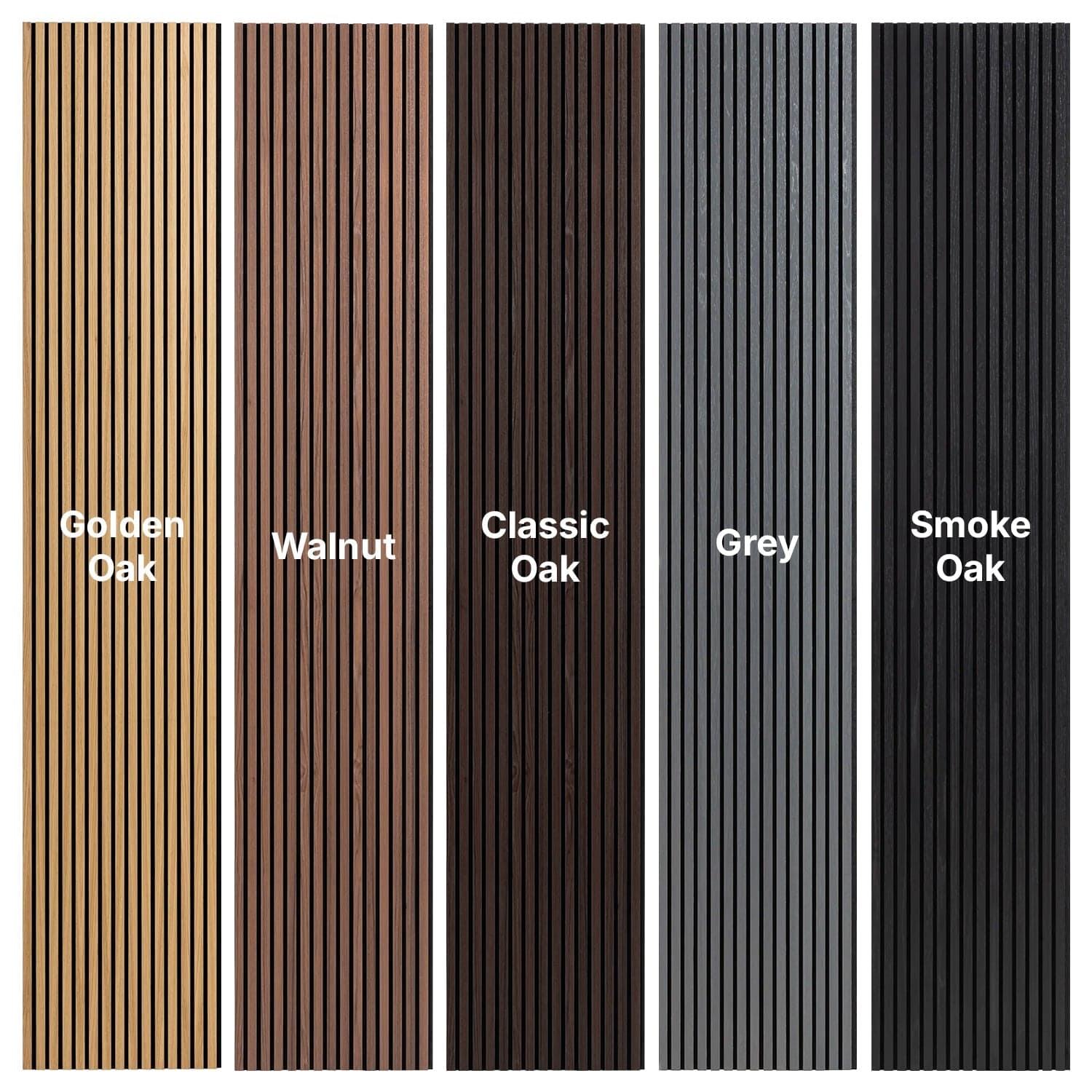
    Our Classic Oak and American Walnut are our top sellers, these tones work seamlessly with modern, Scandinavian, minimalist, and contemporary interiors, making them versatile choices that complement a wide range of color palettes and design styles.

5
reviews
See all reviews