
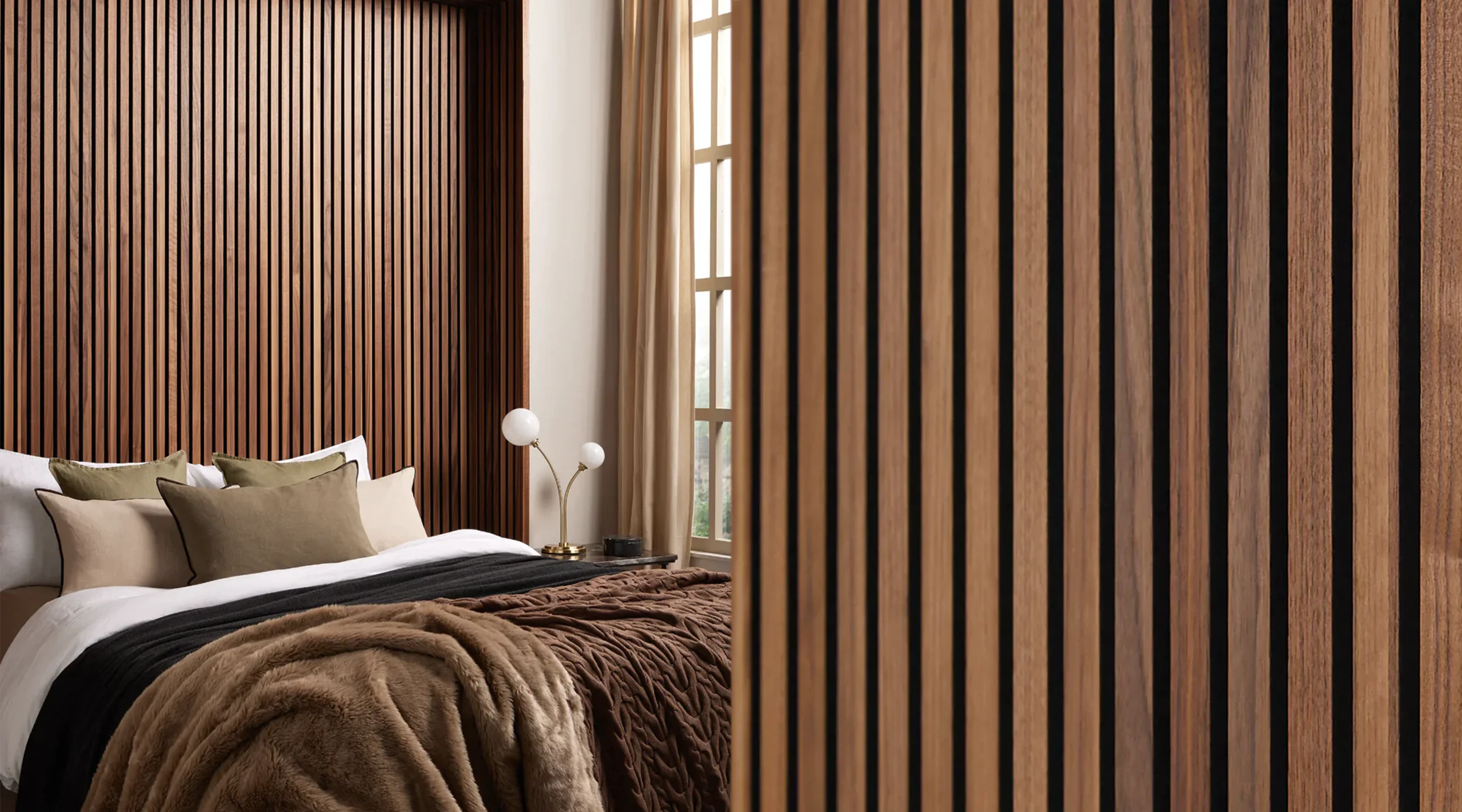
Technical Specs & Materials
The Panel Hub (TPH™) designs and manufactures high-performance architectural panel systems engineered for long-term durability, acoustic efficiency, and visual consistency. This document serves as the master technical reference for the SoundPanel™ and GroovePanel® collections, outlining the material engineering, structural composition, and performance standards behind every panel.
Panel Specifications at a Glance
| Category | Detailed Specification | Technical Advantage |
|---|---|---|
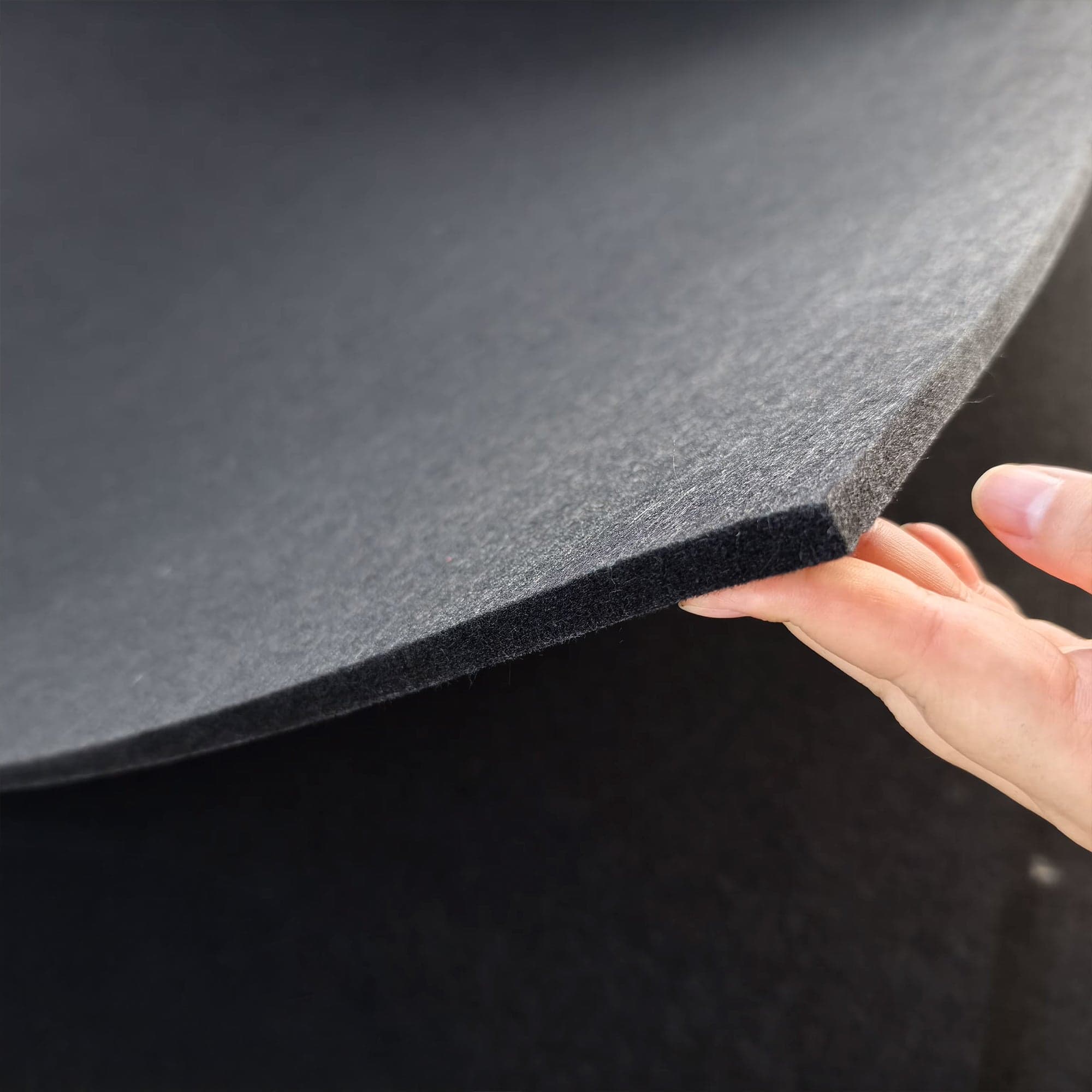
| Acoustic Substrate | 15mm AcuFelt™; 100% Recycled PET; Formaldehyde-Free. | Over 50% thicker than standard 9mm felt for superior low-frequency absorption. |
| Wood Finish | ChromaShield™ UV-Guard; Industrial grade water-based topcoat. | Prevents photo-oxidation, bleaching, and yellowing of wood grain. |
| Slat Core | CoreShield™ MDF Technology | Moisture-stable core that resists warping in variable humidity climates. |
| Veneer Quality | A-Grade Authentic Timber; 3-Sided Seamless Wrap. | Ensures natural grain continuity visible from all viewing angles. |
| Acoustic Rating | NRC: 0.85 (Class A Sound Absorption). | Engineered for home theaters, studios, and high-traffic offices. |
| Fire Safety | Class A / Class 1 Options Available; ASTM E84 Tested. | Meets strict commercial building codes for fire spread and smoke. |
| Environmental | Low-VOC; CARB Phase 2 Compliant; 100% Recyclable Felt. | Safe for schools, hospitals, and LEED-certified projects. |
| Dimensions | Standard: 94.49" x 23.62" x 0.78" (2400mm x 600mm x 20mm). | Modular format designed for seamless vertical or horizontal tiling. |

Real Wood Veneer Surface
The surface of a panel defines how it looks, feels, and ages over time. At The Panel Hub, we specify A-Grade real wood veneers (not printed laminates or plastic foils) to ensure long-term visual integrity and architectural realism. Our veneers are sliced from carefully selected timber logs, preserving the natural grain structure and character of the wood. We use:
- A-Grade authentic timber: Made from 100% real wood fibers, not synthetic overlays. This results in natural variation in grain, tone, and texture. No repeating patterns. Species include oak, walnut, and ash, chosen for stability and finish quality.
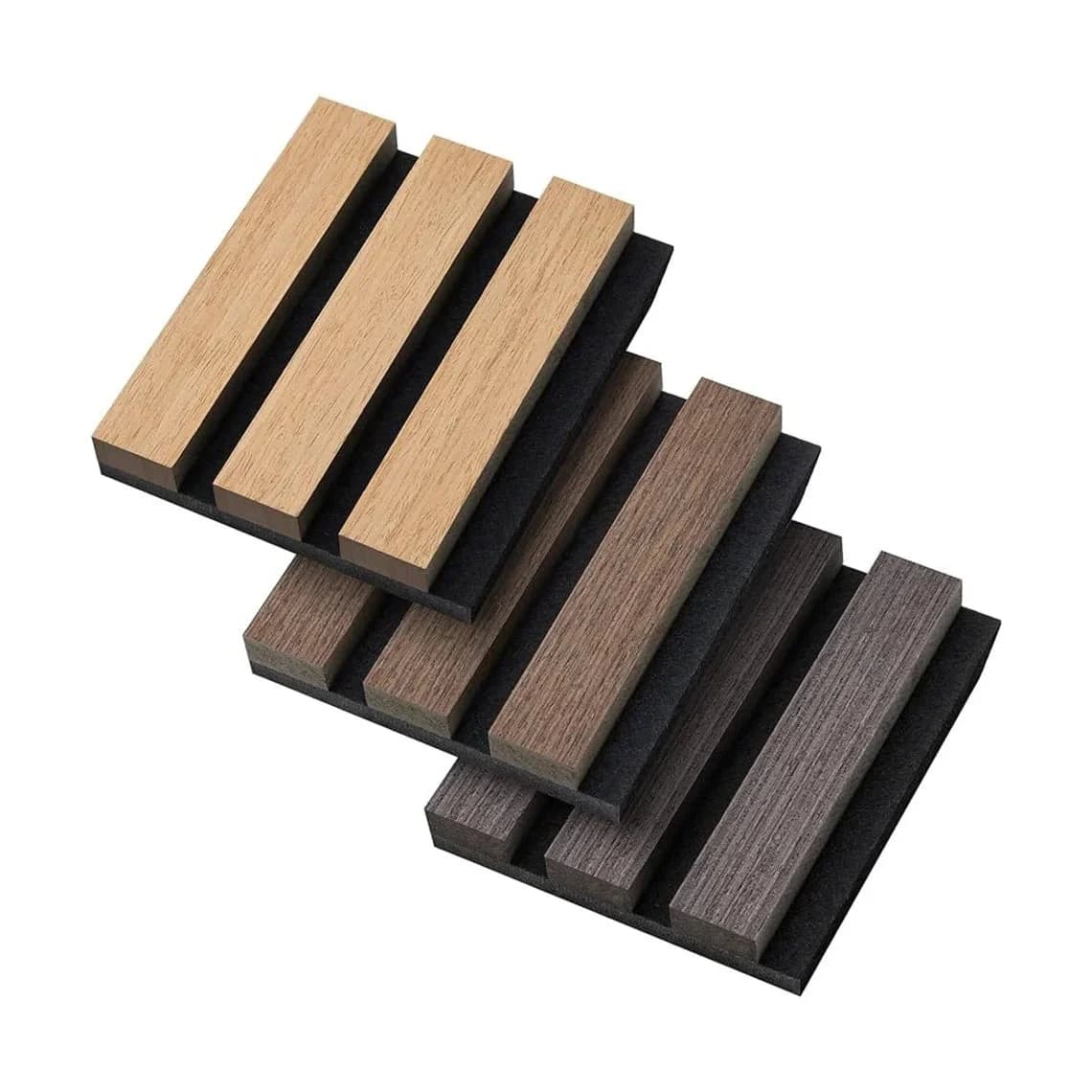
- 3-sided seamless veneer wrap: Most slat panels are veneered only on the front face, leaving the edges exposed or finished with raw MDF. TPH™ wood slat acoustic panels are different. Veneer wraps the front and both side edges of each slat. No visible MDF core from any viewing angle. This 3-sided veneering process ensures the panel looks intentional and refined, not mass-produced.
Acoustic Felt Core (AcuFelt™)
Many panels in the market rely on 9mm or 10mm PET felt to reduce cost and shipping weight. While visually similar, thinner substrates limit the panel’s ability to absorb problematic sound frequencies. By standardizing on 15mm AcuFelt™, TPH increases material mass by over 50%. This performance advantage is especially noticeable in:
- Open-plan areas, including living room and dining area
- Home theaters and media rooms
- Offices with hard reflective surfaces
- Hospitality and retail interiors
Construction Grade MDF Core and Structural Compliance
At the core of every TPH panel is construction-grade MDF, manufactured to meet EN 13986 certification, the European standard certification that governs wood-based panels used in building and architectural applications.
- What EN 13986 actually governs: It regulates wood-based panels intended for use in construction, including MDF, particleboard, and OSB. This standard covers mechanical strength and load behavior, dimensional stability under changing humidity, and controlled manufacturing and quality testing.
- Why this matters: Compliance with EN 13986 confirms that TPH panels are appropriate for interior architectural use, including residential and commercial wall installations. This means the core material is stable enough for long-term wall mounting and maintain shape and alignment over time.
Core Board and Moisture Resistance
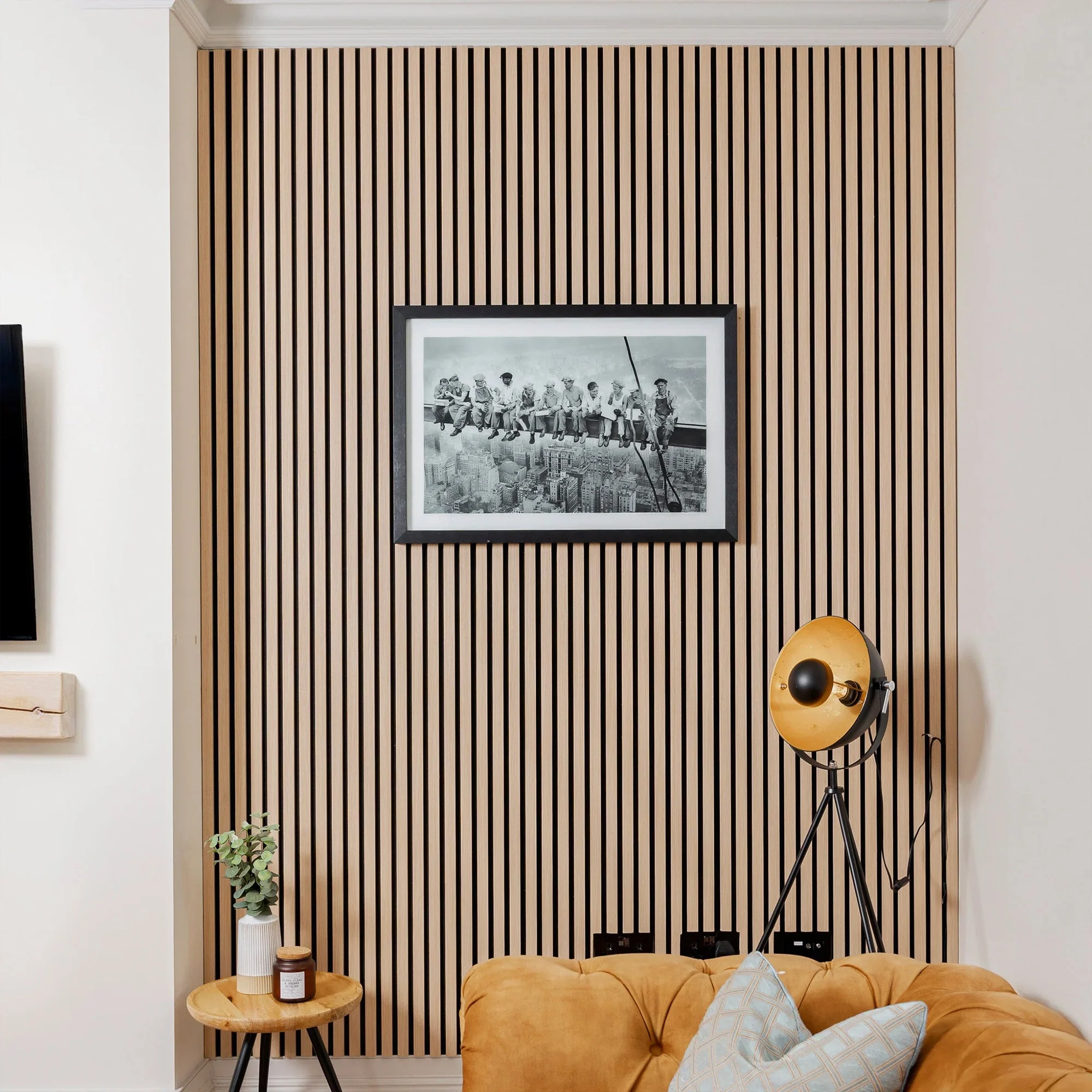
TPH panels are engineered from the inside out. Optimizing both the internal core and external surfaces to deliver long-term stability, safety, and architectural finish for interior environments.
- The interior (what you don’t see): This is where long-term performance is determined. Our CoreShield™ core controls moisture absorption at the fiber level. This improves dimensional stability that prevents warping, bowing, and delamination. Construction-grade MDF ensures structural reliability and compliance.
- The exterior (what you see and touch): This is where visual and tactile quality is defined. To further protect the panel, each slat is finished with an industrial-grade ChromaShield™ UV-Guard topcoat. This helps preserve natural wood color and tone, reduces surface degradation caused by UV exposure, and adds an extra layer of moisture resistance without sealing the wood unnaturally.
Acoustic Performance and NRC Ratings
To prove our panels work, we put them through rigorous testing. Based on SGS testing conducted in accordance with ISO 354:2003, TPH™ acoustic wall panels achieved an NRC rating of 0.85. In plain English, this means that 85% of the sound energy that hits the panel is absorbed and trapped, while only 15% bounces back into the room.
In the world of slat wall systems, most standard panels use a thin 9mm felt backing, which often struggles to reach an NRC of 0.50 or 0.60. By engineering our panels with a 15mm AcuFelt™ core, we provide the extra depth needed to trap "mid-range" frequencies.

Fire Safety and Compliance
At The Panel Hub, we believe in compliance-focused engineering, not "fireproof" marketing. No wood-based product is completely fireproof, but it can be engineered to behave safely in a fire. Our wood wall panels are tested under the EN 13501-1 standard and received a D-s2, d0 rating. This means:
- D (The Material): This tells you how much the panel contributes to a fire. A "D" rating is a standard, safe classification for wood-based interior products. It means the panels are suitable for use as decorative wall linings.
- s2 (The Smoke): This measures how much smoke is produced. "s2" means there is a moderate amount of smoke. In safety terms, this is designed to ensure that if a fire occurs, the smoke doesn't immediately "blind" the occupants.
- d0 (The Droplets): This is a crucial safety metric. It stands for "Zero Flaming Droplets." It guarantees that the panel will not melt or drop flaming pieces of plastic or wood onto the floor, which is a leading cause of fires spreading rapidly.

Environmental and Health Certifications
The Panel Hub doesn't use "greenwashing" or empty sustainability words like "eco-friendly" without proof. Instead, we rely on Responsible Management through the FSC (Forest Stewardship Council). What our FSC certification really guarantees:
- The entire forest is managed to protect water quality, prohibit the harvest of rare old-growth forests, and prevent the loss of natural forest cover.
- Our FSC certification applies directly to our real wood veneers (the Oak, Walnut, and Ash). This ensures that the premium timber you see on your wall hasn't contributed to illegal logging or deforestation in sensitive regions.