

How to Install Wood Slat Acoustic Panels
Your New Space Happens in A Few Steps
 1
1Visualize Your Room
Use our Room Visualizer to preview how real wood panels will look in your room.
 2
2Measure & Order
Use our Box Calculator or consult with one of our Panel Specialists to find the most accurate panel measurements for your project.
 3
3Install with Ease
Our panels can be easily installed with standard, everyday tools commonly found at home. No specialized equipment required.
 4
4Enjoy Your Upgraded Space
Your space will feel quieter, look more refined, and offer more privacy, all without the mess of renovation.
SoundPanel™ & GroovePanel® Installation Guide
All of the wood wall panels from The Panel Hub share the same alignment logic, cutting methods, edge detailing options, and installation preparation steps. Where installation techniques differ, this guide clearly identifies panel-specific fastening and support requirements to ensure a safe, accurate, and professional result. Here’s the step-by-step methodology for installing our panels on walls or ceilings in various spaces, including living rooms, dining rooms, and offices.
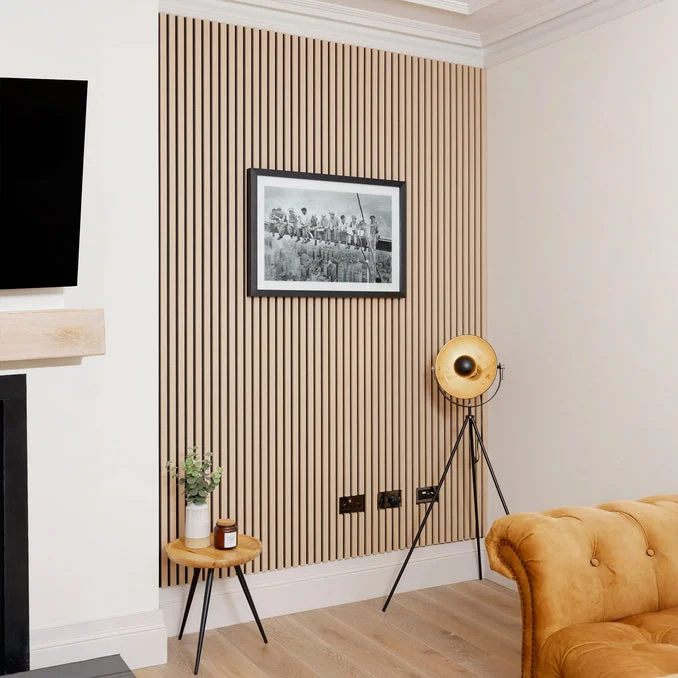
SoundPanel™
SoundPanel™ is a felt-backed acoustic wood panel system designed to improve sound absorption within a space. Each panel consists of real wood slats mounted onto a dense 15mm AcuFelt™ backing, which functions as both an acoustic absorber and a concealed fastening layer. This felt backing allows panels to be installed using a combination of construction adhesive and mechanical fixings driven discreetly through the felt, making SoundPanel™ suitable for both wall and ceiling applications where acoustic performance is required.

GroovePanel®
GroovePanel® is a rigid, grooved panel system designed primarily for decorative wall applications. Instead of a felt backing, GroovePanel® uses a solid engineered core with precision-cut rear grooves that support direct mechanical fastening or batten-based installation.
Wall Substrate Requirements
Both SoundPanel™ and GroovePanel® are designed to accommodate minor surface imperfections, but they must be installed on a substrate that is structurally sound, clean, and dry. If the wall surface is uneven, dusty, or unstable, panels may not sit flush, fasteners may loosen over time, and adhesive bonds can fail.
Drywall and Plaster
Ensure the wall is dry and free of loose paint or wallpaper. If you are using the adhesive-only method, wipe the wall down with a damp cloth to remove dust that could prevent the glue from bonding. If the wall isn’t perfectly straight, use small shims behind the felt so the wood slats stay level and vertical.
Masonry and Concrete
When installing on brick or concrete, use a high-tack construction adhesive that’s specifically designed for masonry surfaces. For basement or exterior walls, install a moisture barrier first to protect the back of the 15mm AcuFelt™ from damp conditions.
Tools for a Smooth Installation
Oscillating multi-tool (12-volt)
For precise cuts and small adjustments.
Cordless drill
For securing panels to studs or anchors.
Box cutter
For fine trimming and scoring.
Sandpaper sheets
To smooth edges for a clean finish.
Hand saw
Space-saving option for manual cutting.
Finish nails
Extra support for a firm hold.
Hot glue
Quick tack for initial placement.
Construction adhesive
Creates a strong, long-lasting bond.
Installing Your SoundPanel™
Step-by-Step Wood Panels Installation
Step 1: First Panel Alignment
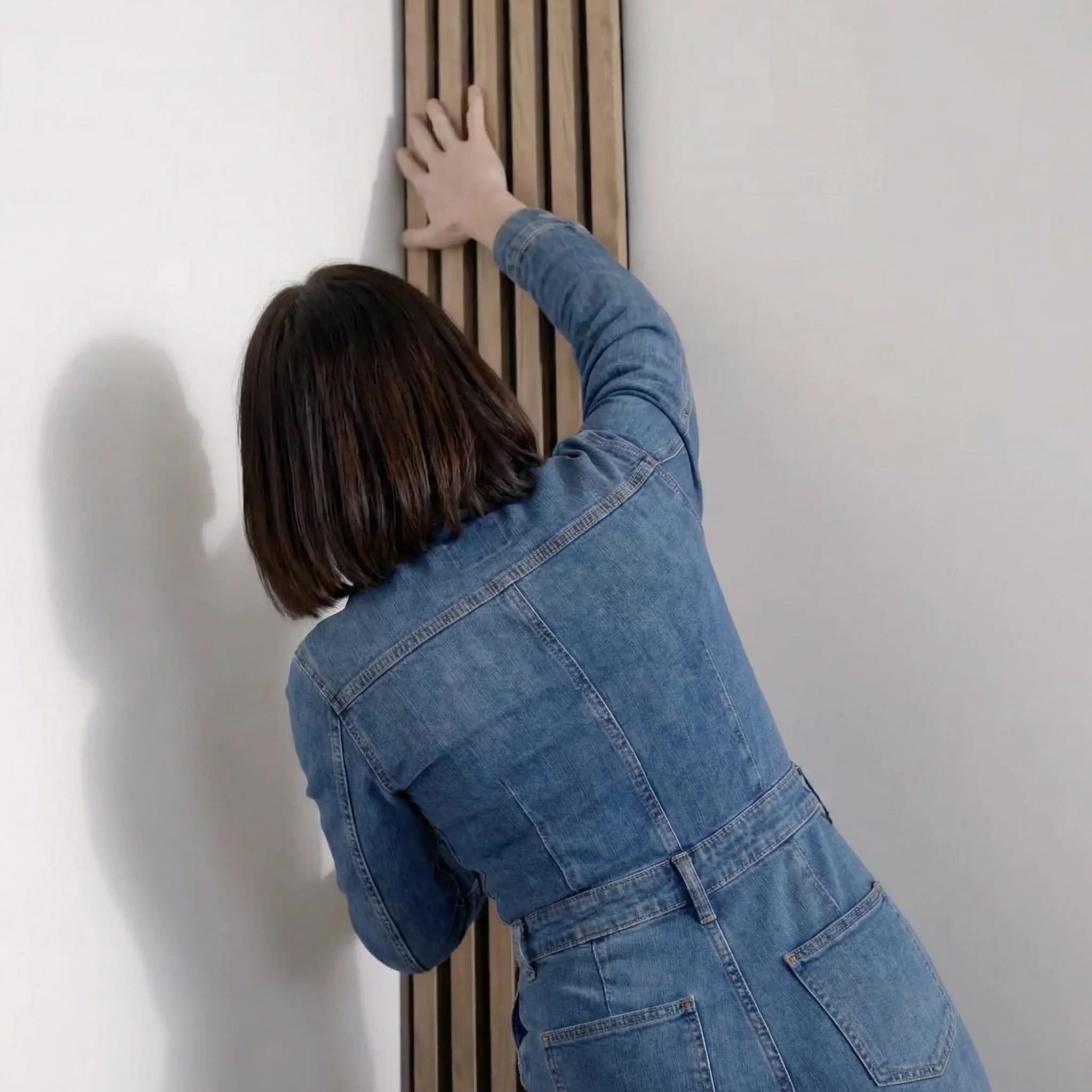
Before installing the first panel, use a laser level or long spirit level to project a true vertical reference line on the wall. Do not rely on ceiling lines, baseboards, or wall corners as alignment guides. Position the first panel so the wood slats align exactly with this reference line.
Fastening Method: SoundPanel™
For SoundPanel™, ensure the felt edge is positioned correctly so the overlap side faces the direction of the next panel. If starting from a corner, it may be necessary to trim the felt lip to allow the first wood slat to sit flush against the adjacent wall.
Fastening Method: GroovePanel®
For GroovePanel®, alignment is equally important because the rigid grooved core does not allow for adjustment once fastened. The first panel must be square and plumb before screws are driven through the rear grooves or mounting battens. Any misalignment at this stage will transfer directly to every subsequent panel.
Step 2: Applying Adhesive and Screws
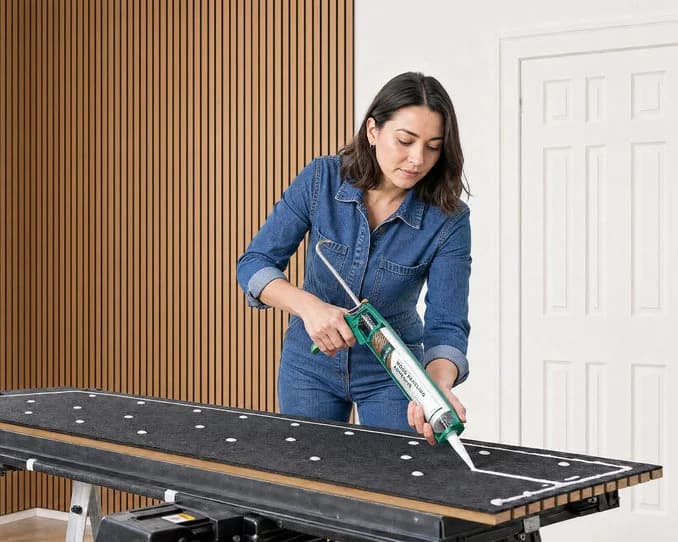
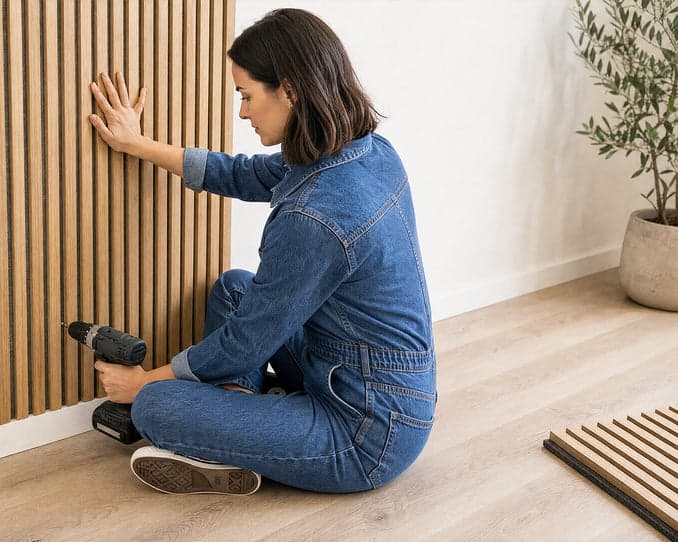
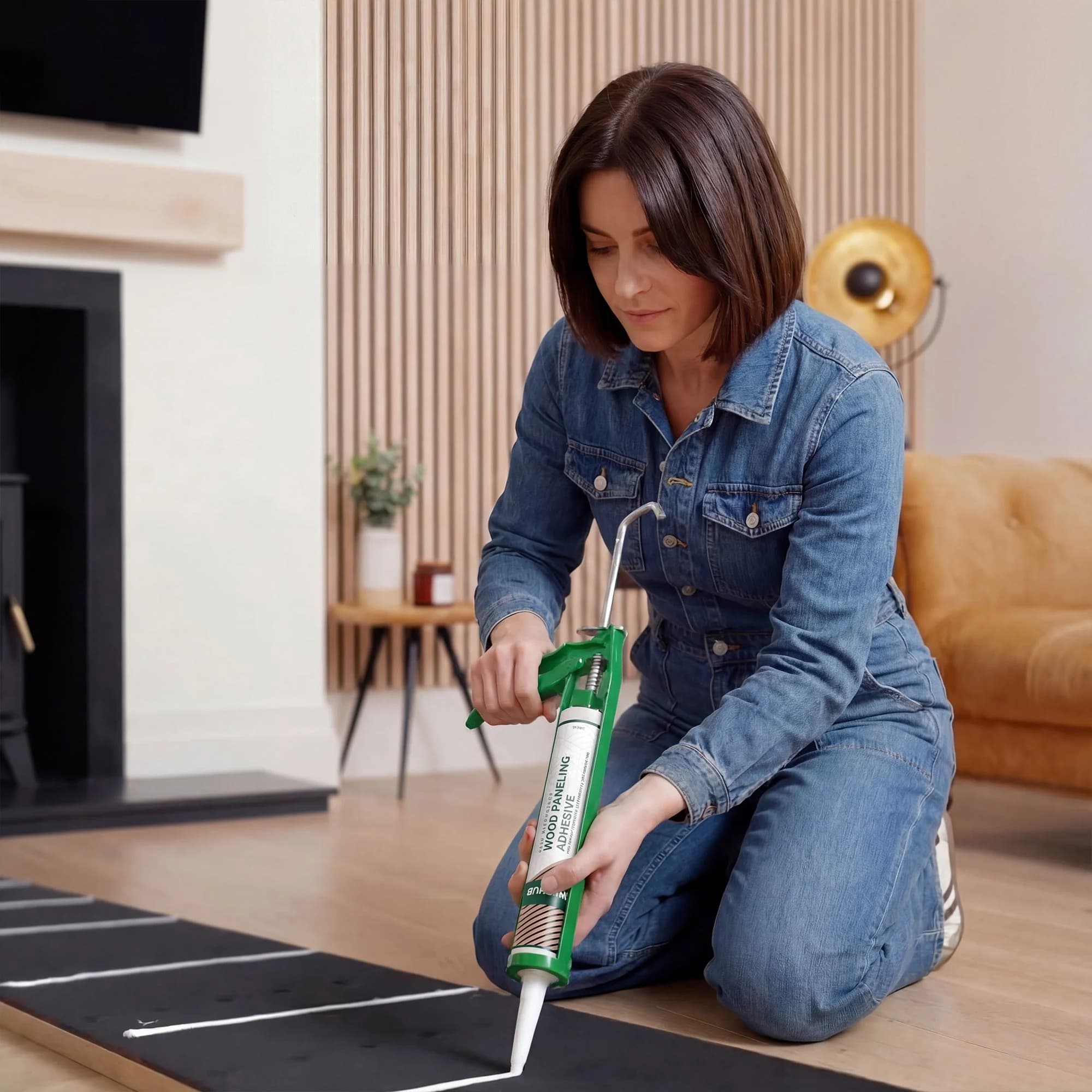
SoundPanel™ Installation: We recommend a “belt and braces” approach using both adhesive and screws. Apply a serpentine bead of high-tack construction adhesive to the back of the 15mm AcuFelt™. Press the panel firmly against the wall. While the adhesive provides the long-term bond, use black finish screws to provide immediate mechanical support. Drive the screws directly through the black AcuFelt™ between the wood slats.
GroovePanel® Installation: GroovePanel® panels are secured primarily through mechanical fastening. Once the panel is aligned, drive screws through the rear grooves or into mounting battens, depending on the substrate. Construction adhesive may be used as a secondary support but should not replace mechanical fixings.
Step 3: Joining Panels (The Invisible Seam)
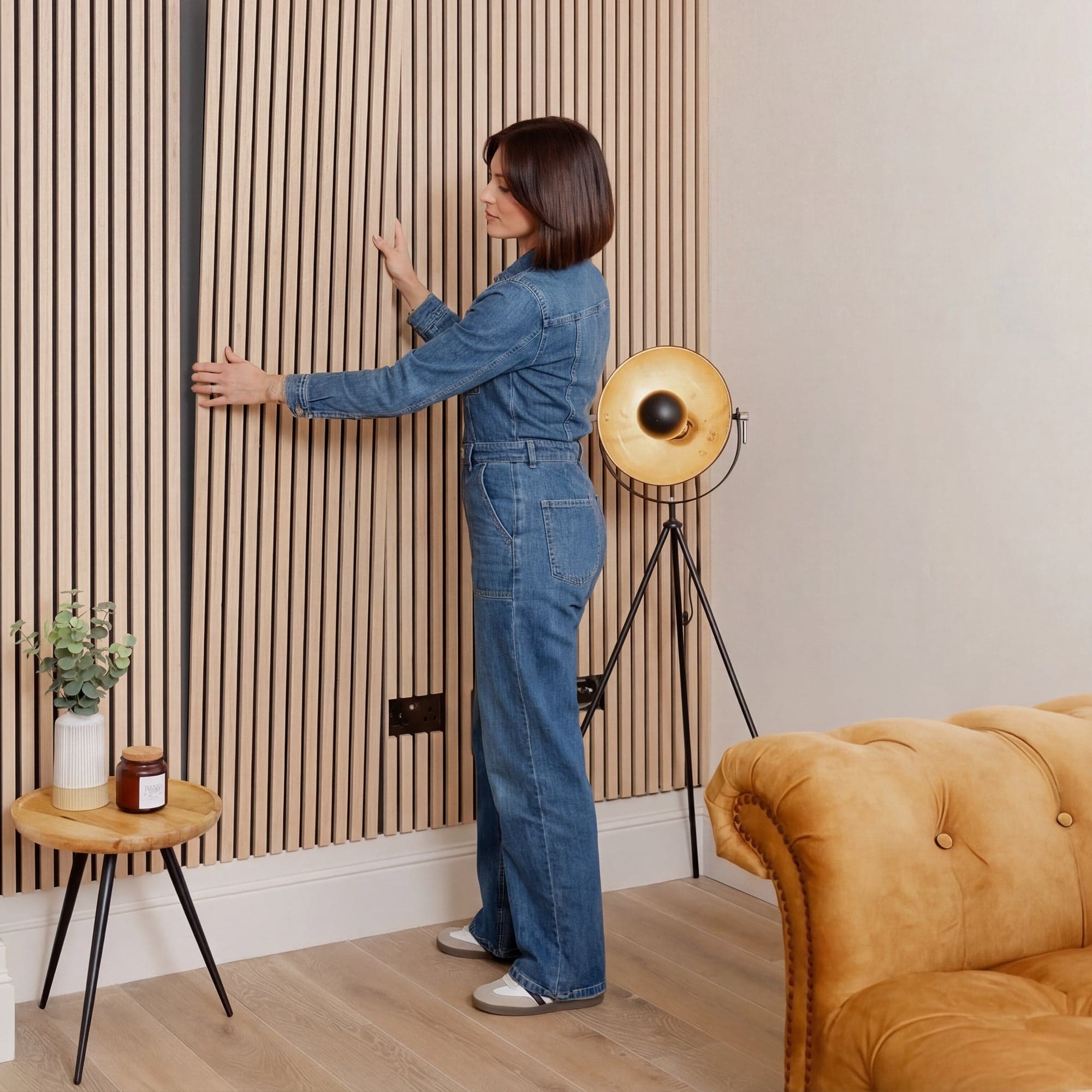
SoundPanel™ Installation: When installing the next panel, the felt lip of the new panel should slide behind the protruding wood slat of the previously installed panel. Once secured, panel joints are virtually undetectable, resulting in a continuous slat wall with no visible board breaks.
GroovePanel® Installation: GroovePanel® panels rely on precise edge alignment rather than a felt overlap. When positioning the next panel, ensure the slats align perfectly with the previous panel before fastening. Proper alignment at this stage preserves consistent slat spacing and minimizes visible seams.
Have a question? We are here to help.
Our customer support is available 24/7 to answer your inquiries.
Average answer time: 2h
FAQ
Can I install the acoustic wood wall panels over wallpaper?
If the wallpaper is firmly bonded, yes. However, if the wallpaper is old or peeling, the weight of the acoustic panels may pull it off the wall. We recommend removing the wallpaper or using screws through the panels into the wall studs for safety.
How many screws do I need per panel?
We recommend 9 to 12 screws per 8-foot panel: three rows of three or four screws. This ensures the 15mm AcuFelt™ remains tight against the substrate and prevents any buzzing or vibration.
Can I use a hand saw to cut the panels?
Yes, a fine-toothed hand saw will work, but it requires more physical effort and a very steady hand to keep the lines straight. For the best results, a power saw is always preferred.
Do I need to paint the wall black before installing?
One of the benefits of our 15mm AcuFelt™ is its density. Unlike thinner felts, you cannot see through it. You do not need to paint the wall black, though doing so can provide an extra layer of "shadow" depth in the gaps if you prefer. Learn more about our technical specifications and materials.
What if my wall is longer than the panels?
You can easily stack the panels vertically. Because of our precision manufacturing, the slats will align. We recommend staggering the horizontal seams (like a brick-laying pattern) if you want to make the joins even less visible across a very large wall. If you'd prefer a professional help, visit our Pro Installation page.
How do I install acoustic wood wall panels on drywall?
Six steps. Plan your layout and mark a level reference line on the wall. Cut any outlet or edge cuts before you start mounting. Apply heavy-duty construction adhesive to the back of the felt backing in S-curves. Press the panel firmly to the wall, starting from your reference line. Hold for 30 seconds for adhesive to grab. Repeat across the wall, butting panels tight against each other. Total time for a full wall: about 2 hours.
Can I install panels on concrete or brick walls?
Yes, but the install method changes. On concrete or brick, you'll need to either install furring strips first (1x2 wood battens anchored with masonry screws) and mount panels to the strips, or use a heavy-duty masonry construction adhesive rated for porous surfaces. Furring strip method gives you cleaner finish and better acoustic performance because it creates an air gap behind the panel.
Can I install panels on the ceiling?
Yes, but always use screws plus adhesive (not adhesive alone). Mount screws into ceiling joists every 12-16 inches through the felt backing. Apply construction adhesive between joists for full hold. Ceiling installs work especially well for media rooms and home theaters because ceiling-mounted acoustic panels absorb the sound waves bouncing down from above. Plan the install with one person on a ladder and one passing panels up.