

The 2026 Wood Slat Wall Panel Buying Guide | Quality vs. Convenience
Skip to content

Need help deciding? Call us now: +1 (833) 500-0988

🚚 Enjoy Free Shipping — Code: FREESHIP

Returning? Your 10% is Waiting Log in

Trustpilot

Returning? Your 10% is Waiting Log in
The_Panel_Hub_-_Hero_Banner_6_Desktop_00abcbbc-594b-48ee-bebd-86caf96f8a61-The Panel Hub The_Panel_Hub_-_Hero_Banner_6_Desktop_00abcbbc-594b-48ee-bebd-86caf96f8a61-The Panel Hub

The Ultimate 2026 Wood Slat Wall Panel Buying Guide

Choosing Quality Over Convenience

Choosing the right acoustic wall panels in 2026 is no longer a purely decorative decision. It’s not enough for a wall to simply look good on installation day or photograph well for social media. This guide is designed to provide a clear, technical, and practical framework for those working on wood slat wall panelling or decorative wall panels beyond surface appearance. 

Rather than focusing on trends or marketing claims, this guide breaks down the specific material and construction decisions that determine whether soundproof wall panels continue to feel premium years after installation. 
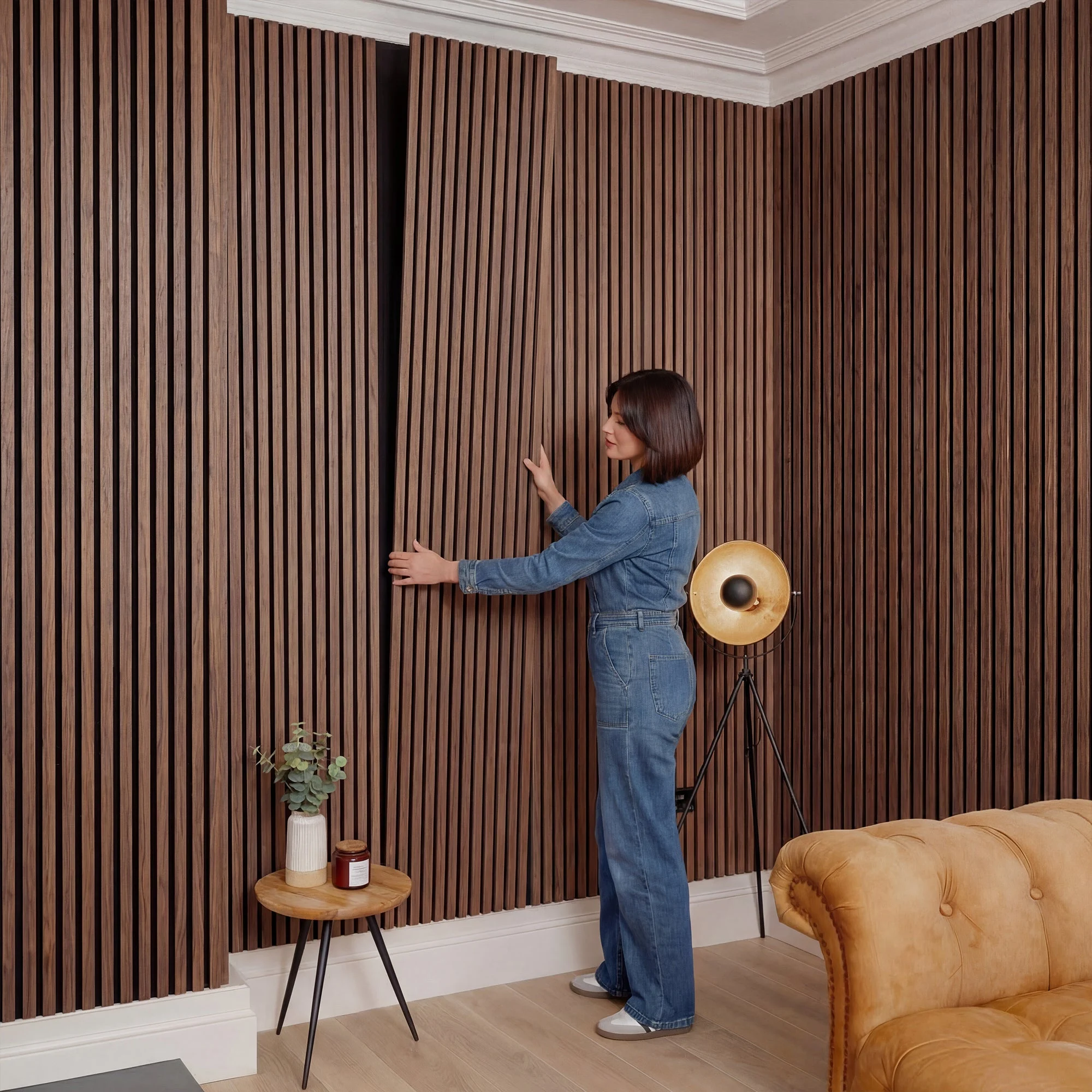
Why Wall Panelling is the #1 Interior Upgrade in 2026

Why Wall Panelling is the #1 Interior Upgrade in 2026

People are moving beyond basic paint and wallpaper. Wall panelling offers texture, depth, and architectural interest that instantly transform a room. This is why designers and homeowners alike are choosing panelling for its visual richness.

Another reason wall panelling dominates interior upgrades is its flexibility. It suits almost every interior style customers have, from modern and contemporary, classic and traditional, to luxury and statement. 

In recent years, wood wall panelling is more accessible than ever due to advances in materials and manufacturing. DIY-friendly wood wall panels like the ones in The Panel Hub help homeowners achieve high-end looks with lower cost and hassle. They look for easy installation interior upgrades, and wall panels come as the answer.

More than visual appeal, wall panelling also adds real practical value to a home:

  • Durability: Protects walls in high-traffic spaces
  • Insulation & Acoustics: Helps moderate temperature and reduce noise
  • Conceals Imperfections: Hides uneven surfaces or repairs
  • Easy Upgrades: Works with lighting, shelving, and hardware accents
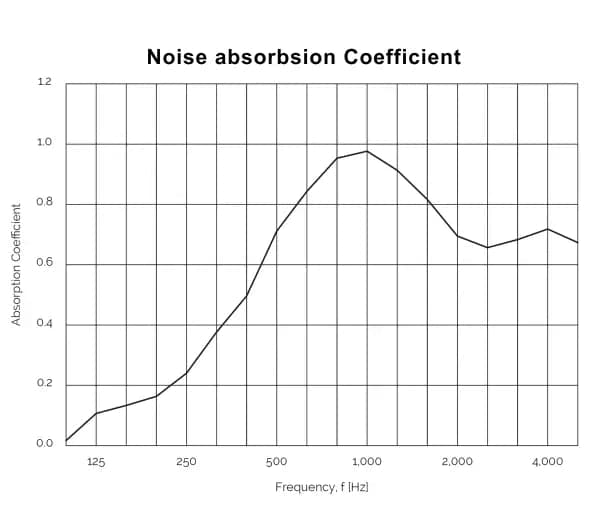
The Science of Sound: Understanding Acoustic Engineering

What is the Noise Reduction Coefficient (NRC)?

NRC (Noise Reduction Coefficient) is a single-number rating that shows how well a material absorbs sound, rather than reflecting it back into a space. It applies to any material that absorbs sound, and acoustic panels are one the most common and most transparent about it. Other products that can have NRC rating include carpet, flooring, and perforated architectural surfaces.

NRC rating is measured on a scale from 0.00 to 1.00. The higher the number, the more sound the material absorbs. The panels must be tested in a lab using a recognized acoustic test method by an authorized organization, such as the SGS (Société Générale de Surveillance). SGS is the Swiss multinational company headquartered in Geneva, focusing on providing inspection, verification, testing and certification services for businesses worldwide.

Here’s the breakdown of the NRC ratings and what it means:

  • NRC 0.00: reflects almost all sound (glass, concrete)
  • NRC 0.30 - 0.50: mild sound absorption
  • NRC 0.60 - 0.80: good acoustic control
  • NRC 0.90 - 1.00: high-performance acoustic treatment

Many acoustic panels on the market offer limited sound absorption or are marketed as “acoustic” without verified NRC testing. This means that their wall panels don’t have enough density on the acoustic backing, thus don’t meaningfully change how a room sounds.

In contrast, The Panel Hub panels deliver proven acoustic performance, with an NRC rating of 0.85, tested and inspected by SGS in 2023 under recognized acoustic testing standards. 

Choosing the Right Density

Not all acoustic panels improve sound in the same way. Many mass-market panels rely on lightweight felt that does not significantly reduce noise levels. Density determines whether sound is absorbed or reflected. Sound absorption only happens when a panel has enough mass and resistance to convert sound energy into heat.

Low-density materials let sound pass through or bounce off, which means:

  • Less echo reduction
  • Minimal improvement in clarity
  • “Acoustic” panels that don’t actually change how a room sounds

Many mass-market panels are thin and lightweight. Acoustically, these panels often diffuse sound rather than absorb it, which limits their effectiveness, especially in living rooms, offices, and meeting spaces where speech clarity matters.

To meaningfully reduce echo and improve speech clarity, panels need density and thickness, the qualities that allow them to absorb sound energy instead of letting it bounce back into the room.

That is why The Panel Hub panels use a denser Acufelt™ formulation at 1,500 g/m², paired with a thicker 15 mm Acufelt™ layer, compared to the standard 9 mm or 1,100 g/m² felt commonly found in mass-market panels. The added mass and depth translate into better sound absorption, clearer acoustics, and a more comfortable listening environment, especially in real-world living and working spaces.

Feature The Panel Hub (TPH) Standard Industry Panels
Material Acufelt™ high-density acoustic felt Standard acoustic felt
Density 1,500 g/m² ~1,100 g/m²
Thickness 15 mm Acufelt™ ~9 mm
Sound Absorption Potential Higher absorption (better real performance) Lower absorption (primarily diffusion)
NRC Performance 0.85 NRC Rating Often low or unknown NRC values
Real-World Effect Reduces echo, improves clarity, controls reverberation May soften reflections with limited impact
Typical Use Case Performance-driven acoustic environments Decorative or light noise softening

How to Choose Materials & Quality That Go Beyond the Surface

The choice of material is as important as prioritizing the aesthetic. In 2026, the distinction between a "pretty wall" and an "architectural solution" lies in the substrate, the finish, and the environmental footprint. 

Learn more about our Materials & Specifications
Sustainability & High Construction Standards

Choosing certified panels means you care about long-term safety, environmental responsibility, and confidence that the materials behind the design perform as well as they look.

In a market where many panels rely on unverified claims, TPH certification sets a higher benchmark for both sustainability and construction quality. Our panels are CE certified, meaning they meet strict European standards for safety, performance, and structural reliability.

CE-Certified: Construction & Safety Compliance

CE certification confirms that the panels meet European standards for construction materials, including mechanical strength, dimensional stability, and safety requirements. This means the panels are fit for permanent interior installation, perform consistently over time, and comply with recognized building regulations. It’s a mark of reliability, especially important for large wall applications, commercial spaces, and projects where safety and durability cannot be compromised.

FSC-Certified: Responsible Wood Sourcing

FSC certification ensures that the wood used in the panels comes from responsibly managed forests, where environmental impact, biodiversity, and ethical labor practices are protected.

When you choose TPH, you choose panels that align with sustainable building practices without sacrificing quality or aesthetics.

Fire Rating: Fire Safety Performance

Our panels are also rated D-s2, d0 (EN 13501-1). This fire classification indicates how the panels behave in the event of a fire:

  • D: Limited contribution to fire growth
  • s2: Moderate smoke production
  • d0: No flaming droplets

For customers, this translates to safer interior materials that meet European fire safety standards, particularly relevant for residential developments, hospitality, offices, and public spaces where fire performance is a key compliance requirement.

See Our Latest Environmental Certification

The Planning Phase: Measurements, Sizing, & Logistics

TPH Panel Sizes

TPH American Acoustic Slat Wood Wall Panels are available in two standardized sizes, designed to accommodate most ceiling heights while minimizing waste and unnecessary cuts. The Regular size measures 94.5″ (H) × 23.6″ (W) × 0.07 ft (D), making it ideal for standard residential spaces. For taller walls and full-height feature installations, the Tall size measures 118″ (H) × 23.6″ (W) × 0.07 ft (D), allowing for seamless vertical coverage without visible joints.

Use Box Calculator

To simplify the planning process, we provide a box calculator directly on the product page. By entering your wall dimensions, you can quickly determine how many panels you’ll need,removing guesswork and helping you order with confidence. This tool is especially useful for larger walls, multiple surfaces, or projects where precision matters.

Shipping Fee & Delivery

All TPH panels are shipped via doorstep delivery, ensuring they arrive safely and conveniently at your location. Shipping fees are calculated at checkout based on order size and destination, so there are no surprises after purchase. For customers who prefer a turnkey solution, professional installation is available as an optional add-on, providing expert handling and a flawless finish from start to finish.

Read Our Shipping & Delivery Policy

The Panel Hub for Professionals & Businesses

In the commercial sector, a wall finish is more than an aesthetic choice; it’s a technical specification. The Panel Hub provides a streamlined ecosystem for architects, developers, and interior designers. By opening a Trade account for wall panels, your business gains a partner dedicated to the rigors of commercial-grade interiors. Our commercial wall coverings are engineered for high-traffic durability, ensuring that luxury aesthetics meet the longevity required for modern fit-outs.

Volume Procurement & Large-Scale Project Logistics

Managing a commercial site requires precision timing and strict budget control. We support your bottom line with competitive volume pricing on all bulk orders. Unlike retail-only suppliers, we prioritize project management as a core service. We provide granular data on lead times for large projects, allowing for "just-in-time" delivery that minimizes on-site storage risks and keeps your installation schedule moving without delay.

Trade Accounts for Design & Commercial Partners

For architects, interior designers, contractors, and commercial buyers, TPH offers a dedicated Trade Account program designed to support professional projects at every stage. Registered trade partners receive priority service, exclusive pricing, and access to special offers, along with dedicated handling for larger or time-sensitive orders. This ensures smoother coordination, faster response times, and greater flexibility when managing multiple projects or client deadlines.

By registering for a TPH Trade Account, businesses gain a more efficient purchasing experience backed by professional support, helping projects move from planning to installation with confidence.

Create a Trade Account

Benefit With Trade Account Without Trade Account
Priority Service Dedicated support and faster response times Standard support
Exclusive Pricing & Offers Access to special trade pricing and promotions Standard retail pricing only
Order Handling Personalized handling for large or time-sensitive orders Standard processing and shipping
Project Support Assistance with planning, sizing, and logistics for professional projects Limited guidance, general support only
Account Management Dedicated trade account manager No dedicated contact
Professional Collaboration Streamlined purchasing for multiple projects Individual orders only
Installation Options Guidance and access to professional installation services Standard installation info only

Installation Masterclass: DIY vs. Professional

The success of an architectural feature is determined by the final 5% of the installation. For The Panel Hub collection, the "best" installation method depends on two factors: your functional goals (acoustic vs. aesthetic) and your comfort level with power tools.

The DIY Path: The "High-Grab" Aesthetic

For most residential feature walls—such as bed headboards or living room accents, the DIY approach is not only possible but highly efficient.

  • The "No-Drill" Method: If you are installing over a flat, plastered surface, a high-quality MS Polymer construction adhesive is your best tool. This provides an instant "tack" that prevents the panels from sliding while the bond cures.
  • Skill Level: Beginner to Intermediate.
  • Time Investment: Approximately 2–3 hours for a standard 3-meter wide wall.
  • Pro Tip: Use a spacer block (a small off-cut of a slat) to ensure the distance between two joining panels remains perfectly consistent. This hides the "seam" and makes the wall look like one continuous piece.

The Professional Path: Acoustic Specification (Class A)

When the goal is Professional Acoustic Treatment, such as in a home cinema, recording studio, or open-plan office, the installation requires a "Mechanical Fix."

  • The Baton System: To maximize the NRC (Noise Reduction Coefficient), panels should be screwed onto 45mm timber batons.
  • The "Air Gap" Advantage: By filling the space between the batons with mineral wool insulation before mounting the panels, you transition from "Surface Absorption" to "Deep Cavity Absorption," achieving a Class A Acoustic Rating.
  • Skill Level: Advanced DIY or Professional Joiner.
  • Tools Required: Laser level, mitre saw (for skirting bypass), and a rhythmic screw pattern through the felt backing to ensure a flush finish.

To make installation as straightforward as possible, TPH provides a dedicated installation guide page with step-by-step instructions to support confident DIY installation. For customers who prefer a fully hands-off approach, professional installation is also available. Simply contact our team to discuss your project, and we’ll help coordinate the right solution for your space.

Whether you choose to install it yourself or work with professionals, we’re here to ensure the process is smooth from start to finish.

Have a question? We are here to help.

cs-ava cs-ava cs-ava cs-ava cs-ava

Our customer support is available 24/7 to answer your inquiries.

Average answer time: 2h

FAQ

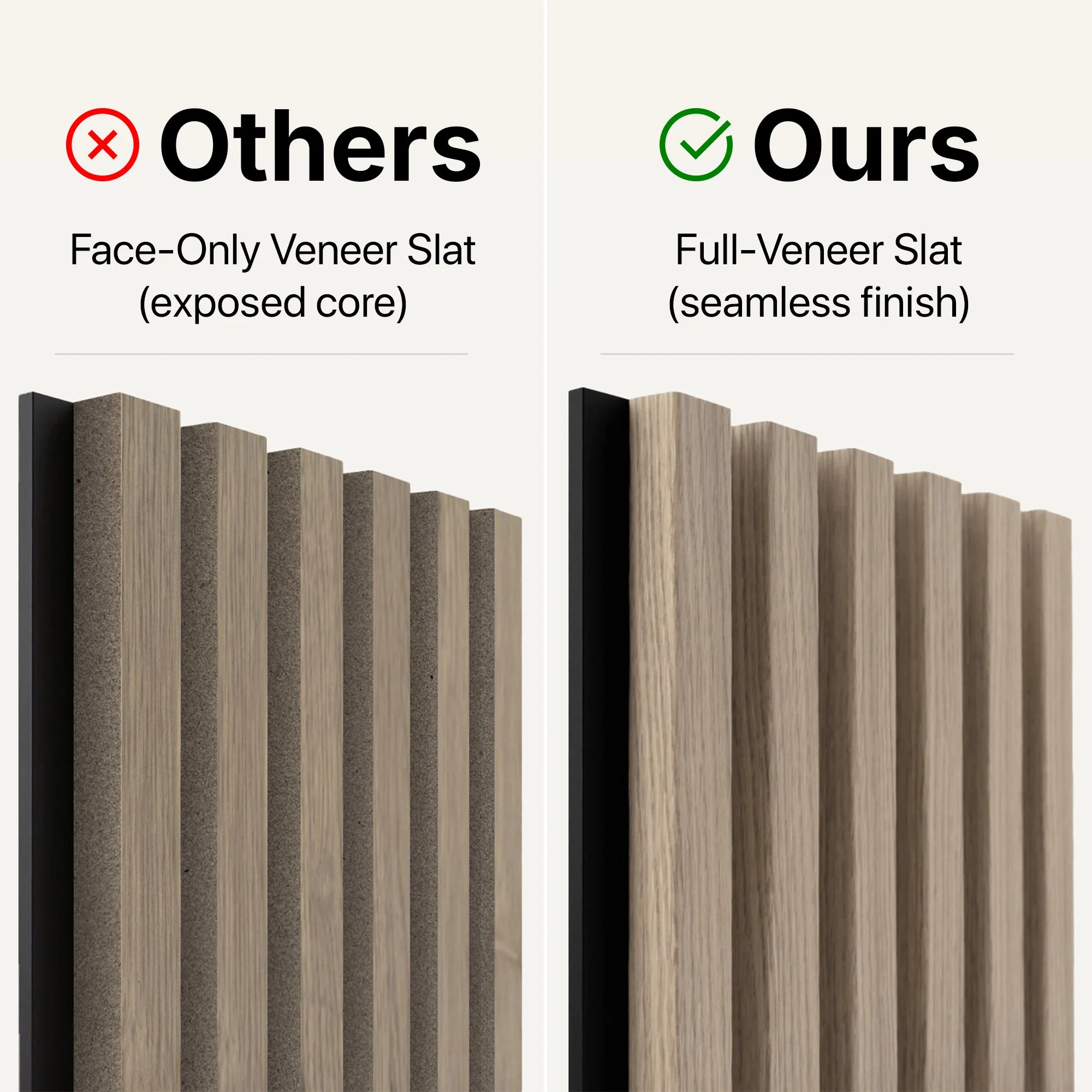
We use 100% Real Wood Veneer over an MDF core. This provides the authentic look of solid wood with the superior stability of an engineered core. Solid wood slats are prone to warping, whereas our veneered CoreShield MDF stays perfectly straight. This construction ensures long term visual consistency across large wall installations. It delivers the visual depth of solid wood without the movement issues that typically appear over time.

For regular maintenance, use a vacuum with a soft brush attachment to remove dust from the felt. For the wood slats, a damp microfiber cloth is sufficient. Avoid harsh chemical cleaners that can dry out the natural wood veneer. Gentle cleaning helps preserve both the finish and the natural texture of the wood. Minimal maintenance is required to keep the panels looking new for years.

Yes. While vertical installation is the most popular, horizontal installation can make a small room feel wider. Ensure you are screwing into wall studs if you choose a horizontal orientation. Proper fastening is important to maintain long term stability. Both orientations deliver the same acoustic performance when installed correctly.

Yes. The 15mm AcuFelt can be cut with a sharp utility knife. The wood slats should be cut with a fine toothed power saw or a jigsaw to ensure a clean finish without splintering the veneer. Accurate measuring before cutting will help maintain a seamless final appearance. Taking time to measure carefully will result in professional looking edges and transitions.

No. Our panels are designed for interior use only. Exposure to direct rain or extreme temperature changes will damage the real wood veneer and the felt backing. Outdoor environments require materials specifically engineered for weather exposure. Using them outdoors will significantly shorten their lifespan.

Yes, but only on our unfinished or natural wood options. Pre-finished panels already have a protective coating and will not absorb stain evenly. We recommend testing a small area or ordering a sample box before applying paint to a full installation. This helps ensure the final color meets your expectations. This approach prevents uneven color and irreversible mistakes.

Yes. Our panels carry an EN 13501-1 Fire Classification issued by SGS. This makes them suitable for most commercial environments, including offices and restaurants. Always confirm local building requirements before installation. Fire ratings are especially important for commercial approvals and inspections.

Yes. However, the TV mount should be secured through the panels directly into the wall studs. Do not rely on the panels themselves to hold the weight of a television. This ensures safety and prevents damage to the panels. The panels act as a finish layer, not a structural support.

Yes. Like a TV mount, ensure the hardware for shelves or heavy light fixtures reaches the wall studs or uses appropriate anchors behind the panels. Proper load support is essential for long term performance. This protects both the wall system and the mounted items over time.

Yes. We highly recommend ordering a sample box to see the three sided veneer and feel the 15mm AcuFelt™ in your own home before making a full purchase. This allows you to evaluate color, texture, and quality in your actual space. Seeing the materials in your own lighting makes decision making far more confident. Order a Sample Box Here.

A standard 94.5 inch panel weighs approximately 28 pounds. This weight reflects the high density of our 15mm AcuFelt™ and CoreShield™ MDF. The added mass contributes directly to acoustic performance. Heavier panels generally absorb sound more effectively than lighter alternatives.

Yes. For ceiling installations, we strictly recommend the screw method to ensure the panels are mechanically fastened to the ceiling joists. This prevents sagging and ensures long term security. Ceiling applications require stronger fastening than wall installations.

Each panel is 24 inches wide. Measure your wall width in inches and divide by 24 to find the number of panels needed. We also offer an on site box calculator for precise estimates. Ordering slightly extra panels is recommended for cutting adjustments. Extra panels help avoid delays caused by cutting errors or layout changes.

Yes. TPH acoustic wall panels provides a layer of thermal resistance, helping to keep rooms warmer in the winter and cooler in the summer by reducing heat transfer through walls. This can contribute to overall comfort in the space. While not a replacement for insulation, it offers a noticeable comfort benefit.

Yes. Our panels are made with non toxic materials and are FSC certified. The smooth rounded edges also reduce the risk of scrapes compared to sharp edged budget panels. This makes them suitable for family focused environments. They are designed to be safe for everyday living spaces.

The 15mm AcuFelt™ is flexible enough to absorb minor wall imperfections. For significantly uneven walls, we recommend using the screwmethod to pull the panels flush against the surface. This ensures a clean and consistent finish. Proper installation helps prevent visible gaps or waviness.

Yes. We ship from our US warehouse and typically deliver to the lower 48 states within 2 to 7 business days. Shipping times may vary slightly based on location and order size. Domestic shipping significantly reduces wait times compared to overseas suppliers.

We offer a 60-Day Satisfaction Guarantee. If you are not happy with the quality of your panels, you can return them in their original packaging. This allows customers to purchase with confidence. This policy reflects our confidence in long term product quality.

Yes. Our AcuFelt™ is made from recycled PET plastic bottles. Each box of panels recycles dozens of bottles that would otherwise end up in a landfill. This supports more responsible material use. It balances performance with environmental responsibility.

The glue method is best for a permanent, seamless look on flat drywall. The screwmethod is better for ceilings, uneven walls, or renters who want to remove the panels later. Choosing the right method ensures both performance and flexibility. Installation method should match both the wall condition and long term plans.

5
reviews
See all reviews