
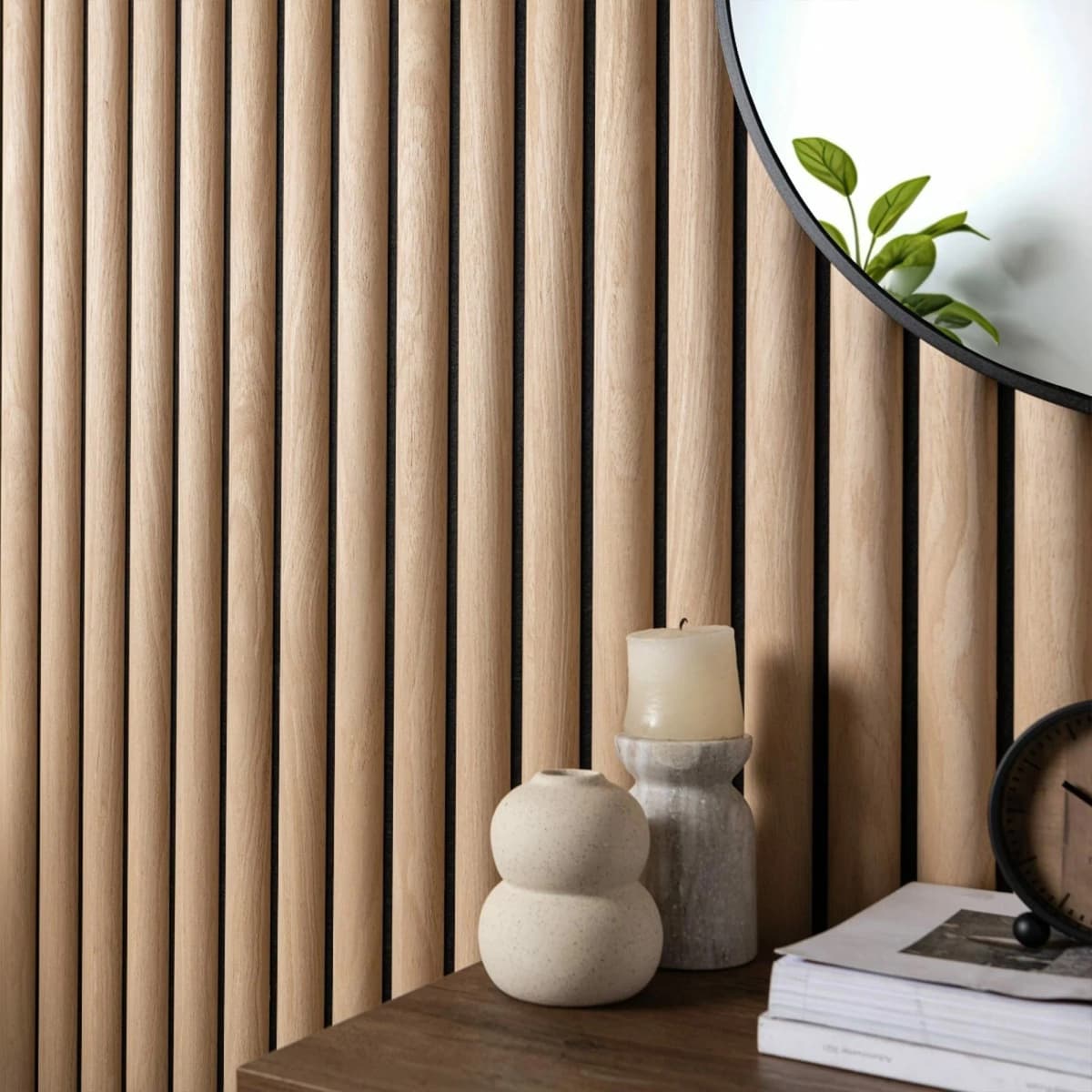
For some buyers, checking on acoustic wall panel specification is an important step before buying. Acoustic wall panels are increasingly specified across residential, commercial, and hospitality projects — not just in recording studios and auditoria. The growing awareness that open-plan living, hard flooring, and glass surfaces create acoustically uncomfortable spaces has driven demand for attractive acoustic treatment that integrates with interior design rather than compromising it.
For architects and designers specifying acoustic wall panels, understanding the performance metrics, their limitations, and how to integrate them into a specification is essential for delivering projects that meet acoustic targets as well as aesthetic ones.
Understanding Sound Absorption Metrics
NRC (Noise Reduction Coefficient)
NRC is the most commonly cited acoustic performance metric for wall panels. It expresses the average sound absorption of a material across the frequency range 250Hz–2000Hz on a scale of 0 (perfect reflection) to 1.0 (perfect absorption). An acoustic panel with an NRC of 0.65, for example, absorbs 65% of incident sound energy across that frequency range.
αw (Weighted Sound Absorption Coefficient)
The European equivalent metric, αw, is calculated differently and expressed as a single number (0 to 1.0) with an application class suffix (A, B, C, D, E, or F) that indicates the shape of the absorption curve. For most commercial acoustic specifications in UK projects, both NRC and αw values are relevant — verify which standard your project’s acoustic consultant is using.
Where Acoustic Panels Make the Most Impact
Open-Plan Offices and Co-Working Spaces
Reverberation times in open-plan offices directly affect speech intelligibility and cognitive performance. Research consistently shows that reducing reverberation in open-plan workspaces improves concentration, reduces perceived noise levels, and lowers stress. Acoustic wall panels on the perimeter walls of open-plan floors contribute significantly to reducing reverberation time (RT60).
Hospitality: Restaurants, Bars, and Hotel Lobbies
The “restaurant noise problem” — an open-plan dining environment with hard surfaces creating a loud, fatiguing experience — is a well-documented design challenge. Acoustic treatment on wall surfaces reduces the background noise level and improves the dining experience. The SoundPanel™ range provides an acoustic solution that’s also a premium visual feature.
Residential Open-Plan Living
The open-plan kitchen-dining-living room is acoustically one of the worst domestic environments. Hard flooring, hard kitchen surfaces, and the absence of soft furnishings in circulation zones create reflective rooms where conversation is tiring and television is too loud. A single acoustic panel feature wall can measurably improve the acoustic comfort of an open-plan residential space.
How Much Coverage Is Needed?
Acoustic panels don’t need to cover every wall surface to be effective. As a rule of thumb, covering 20–30% of the total wall and ceiling surface area with acoustic-rated material (NRC 0.5 or above) typically achieves a meaningful reduction in reverberation time in a typical room. Your acoustic consultant can calculate the specific coverage required to meet a target RT60 for any given space.
Integrating Acoustic Panels into the Specification
Acoustic slat panels from the SoundPanel™ range are designed to be specified as primary wall surface materials, not as add-on acoustic treatment. They install the same way as standard wall panels — adhesive to a prepared substrate, no specialist acoustic contractor required — and provide acoustic performance alongside the visual quality expected of a premium wall finish.
Request acoustic test data, including NRC or αw values and the test standard used, or bulk order wood wall panels from The Panel Hub!