
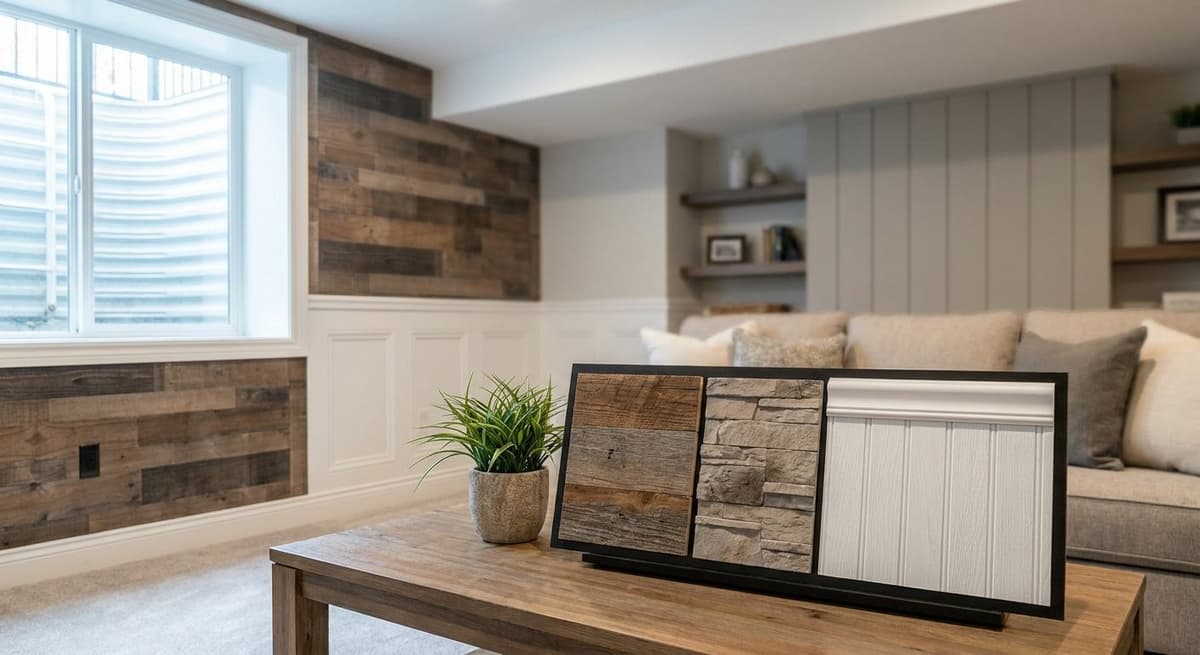
Basement walls take on moisture, sound, and temperature swings that living-room walls never see, and that changes which wall panel actually holds up down there. The best wall panels for basement walls in 2026 are the SoundPanel American Acoustic Slat Wood Wall Panels for media rooms and home gyms, the Highland Rock Wall Panel for damp or below-grade accent walls, and the Hexagon Acoustic Wood Wall Panels for playrooms that need both noise control and impact resistance.
- SoundPanel Acoustic Slat Wood Wall Panels rate NRC 0.85 and suit basement home theaters and gyms.
- Highland Rock Wall Panel handles basement humidity better than solid wood thanks to its faux-stone surface.
- Hexagon Acoustic Wood Wall Panels fit basement playrooms needing sound control and impact resistance.
- Every panel in this best wall panels for basement walls guide installs in under 2 hours per section.
- 3D Geometric Pattern Wooden Panels and Crossing Lines Solid Wood Wall Panels round out accent-wall options.
Why this matters
A basement wall panel has three jobs a bedroom panel doesn't: survive humidity swings from concrete or cinder block, muffle mechanical noise from furnaces and sump pumps, and still look finished under artificial light since most basements get little daylight. Get the material wrong and you're re-doing the wall in 18 months.
The five picks below cover the real use cases: home theaters, damp accent walls, playrooms, home offices, and bars. None of them are generic "good for basements" — each one solves a specific basement problem, which is the only honest way to rank basement wall panels in 2026.
What makes the best basement wall panels
- Moisture tolerance — does the panel's core and finish resist warping against concrete or cinder block
- Sound performance — NRC rating matters if the room doubles as a theater, gym, or office
- Installation fit — compatibility with basement wall surfaces and a realistic install time
- Material durability — real wood veneer versus faux-stone surface versus MDF core
- Warranty coverage — a baseline of 5 years protects against below-grade wear
- Light performance — finish tone matters more in rooms with little or no natural light
Best wall panels for basement walls at a glance
| Panel | Best for | Standout feature | Key limitation |
|---|---|---|---|
| SoundPanel American Acoustic Slat Wood Wall Panels | Home theaters and gyms | NRC 0.85 sound absorption | Real wood needs a stable humidity range |
| Highland Rock Wall Panel (RockSurface) | Damp or below-grade accent walls | Faux-stone surface resists moisture swings | Reads heavier, not ideal for small basements |
| Hexagon Acoustic Wood Wall Panels | Playrooms and family rec rooms | Geometric shape hides seams and impact marks | Installation takes more layout planning |
| 3D Geometric Pattern Wooden Panels | Basement home offices | Deep relief pattern adds texture without color | Best under direct or accent lighting |
| Crossing Lines Solid Wood Wall Panels | Basement bars and lounges | Diagonal grain pattern reads upscale | Solid wood core, less forgiving of humidity |
1. SoundPanel American Acoustic Slat Wood Wall Panels: best basement wall panel for home theaters and gyms
This is a real wood veneer slat panel bonded to an acoustic core rated NRC 0.85, built to cut echo in rooms where sound bounces off concrete and drywall. Installation runs under 2 hours per section, and the panel carries a 5-year warranty like the rest of The Panel Hub's acoustic line.
SoundPanel Acoustic Slat pros:
- NRC 0.85 rating cuts flutter echo in home theaters and workout spaces
- Under 2 hours to install per section, no specialty tools required
- 5-year warranty backs the panel against normal wear
SoundPanel Acoustic Slat cons:
- Real wood veneer still wants a basement dehumidifier running in humid climates
- Slat pattern is a stronger design statement, not a neutral background wall
Best for: basement media rooms, home gyms, and any space where echo is the actual complaint. Verdict: Buy.
2. Highland Rock Wall Panel (RockSurface): best basement wall panel for damp or below-grade walls
The Highland Rock Wall Panel replicates natural stone texture on a faux-stone surface rather than a wood veneer, which matters directly against a basement's concrete or cinder block. It skips the wood-grain warping risk that comes with real wood in a humid below-grade room.
Highland Rock Wall Panel pros:
- Faux-stone surface tolerates humidity swings better than solid wood
- Reads as a finished accent wall without paint or plaster repair
- Installs in under 2 hours per section, same as the wood line
Highland Rock Wall Panel cons:
- Visual weight is heavier, so small basement rooms can feel closed in
- Not the pick if the goal is sound absorption, not moisture resistance
Best for: unfinished basement accent walls near laundry areas, utility rooms, or anywhere humidity is the bigger risk than noise. Verdict: Buy.
3. Hexagon Acoustic Wood Wall Panels: best basement wall panel for playrooms and rec rooms
The Hexagon Acoustic Wood Wall Panels pair the same acoustic core as the slat line with a geometric hexagon shape that hides seams and minor impact dents better than a flat panel. That matters in a basement rec room where toys, furniture, and foot traffic hit the wall.
Hexagon Acoustic pros:
- Geometric shape disguises scuffs and small impacts common in family spaces
- Real-wood-veneer surface bonded to an acoustic core, same sound-dampening logic as SoundPanel
- 5-year warranty matches the rest of the acoustic lineup
Hexagon Acoustic cons:
- Hexagon layout takes more planning time than a straight slat wall
- Pattern is busier, which competes with other decor in a small room
Best for: basement playrooms, family rec rooms, and shared spaces that need noise control without a corporate-theater look. Verdict: Buy.
4. 3D Geometric Pattern Wooden Panels: best basement wall panel for a home office
The 3D Geometric Pattern Wooden Panels are cut from 100% real solid wood with deep relief geometry that adds texture without introducing new color into a windowless basement office. Under accent lighting the shadow lines do the visual work paint alone can't.
3D Geometric pros:
- Solid wood construction, no MDF core hidden under veneer
- Deep relief pattern adds texture that reads well under artificial light
- Neutral tone options fit a basement office without overwhelming the room
3D Geometric cons:
- Pattern depth is wasted without at least one accent or task light angled on it
- No acoustic core, so it won't cut conference-call echo the way SoundPanel does
Best for: basement home offices and studies where the wall needs texture, not sound absorption. Verdict: Buy.
5. Crossing Lines Solid Wood Wall Panels: best basement wall panel for a bar or lounge
Crossing Lines is a solid wood panel with a diagonal grain pattern built for a rustic-meets-modern look, the kind of accent wall that works behind a basement bar or lounge seating area. It's the most design-forward pick on this list and the least basement-specific in terms of moisture handling.
Crossing Lines pros:
- Diagonal grain pattern gives a basement bar wall a built-out, custom look
- Solid wood construction holds up well once humidity is controlled
Crossing Lines cons:
- No faux-stone or acoustic core, so it's a design pick, not a moisture or sound pick
- Best paired with a dehumidifier if the basement runs damp
Best for: basement bars, lounges, and finished spaces where humidity is already under control. Verdict: Buy if your basement is dry; hold if you haven't tested for moisture yet.
How we ranked these basement wall panels
Each panel above earned its slot against the six criteria up top: moisture tolerance, sound performance, installation fit, material durability, warranty coverage, and how it reads under basement lighting. No two panels compete for the same "best for" slot, which is why this reads as a decision tree instead of a single leaderboard.
Which basement wall panel should you choose?
If sound is the complaint — a home theater, a gym, a podcast corner — the SoundPanel American Acoustic Slat Wood Wall Panels win on NRC 0.85 alone. If moisture is the bigger risk, the Highland Rock Wall Panel is the safer material choice since its faux-stone surface doesn't carry the same warping risk as solid wood against concrete. Everyone still undecided in 2026 should default to whichever risk is higher in their specific basement: pick for sound if the room is already dry, pick for moisture if it isn't.


FAQ
What’s the best wall panel for a basement in 2026?
The SoundPanel American Acoustic Slat Wood Wall Panels are the best overall pick for basements in 2026 thanks to an NRC 0.85 sound rating, best suited to home theaters and gyms. For damp or below-grade walls, the Highland Rock Wall Panel’s faux-stone surface is the safer material choice.
Are wood wall panels okay for basements?
Real wood wall panels work in basements once humidity is controlled, ideally with a dehumidifier running in damp climates. In consistently humid basements, a faux-stone surface panel like the Highland Rock Wall Panel handles moisture swings with less warping risk.
Do acoustic wall panels actually reduce basement noise?
Yes — acoustic wood wall panels rated NRC 0.85, like the SoundPanel line, absorb flutter echo that bounces off concrete and drywall in basements. They’re most effective in home theaters, gyms, and rooms used for calls or recording.
Can wall panels be installed directly on concrete basement walls?
Panels typically install on furring strips or a mounting track rather than directly on bare concrete, since concrete holds moisture. Each panel in this basement wall panels list installs in under 2 hours per section once a mounting surface is prepped.
Is PVC or wood better for a damp basement?
A faux-stone surface panel like the Highland Rock Wall Panel tolerates humidity swings better than solid wood, making it the safer pick for a damp, below-grade basement wall. Solid wood panels like Crossing Lines are better reserved for basements where humidity is already under control.
How long does it take to install basement wall panels?
Most panels in this guide install in under 2 hours per section, though total basement time depends on wall prep and square footage. Uneven concrete or cinder block adds time for furring strips before the panels go up.
Do basement wall panels need a vapor barrier?
Basements prone to moisture generally need a vapor barrier or furring strip gap behind any wall panel, wood or faux-stone. Testing a wall for moisture before installing avoids warping issues later.
What NRC rating do you need for a basement home theater?
An NRC rating around 0.85, like the SoundPanel Acoustic Slat line, is strong enough to cut flutter echo in a basement home theater or gym. Lower NRC panels still help but absorb less reflected sound.
One last thing
Before buying any basement wall panel in 2026, tape a square of plastic sheeting to the bare wall for 24 hours — condensation underneath means the wall is still releasing moisture and a faux-stone panel like the Highland Rock Wall Panel is the safer bet over solid wood. Skip that test and even a 5-year warranty won't stop a real wood panel from cupping against a damp basement wall.
Related guides