
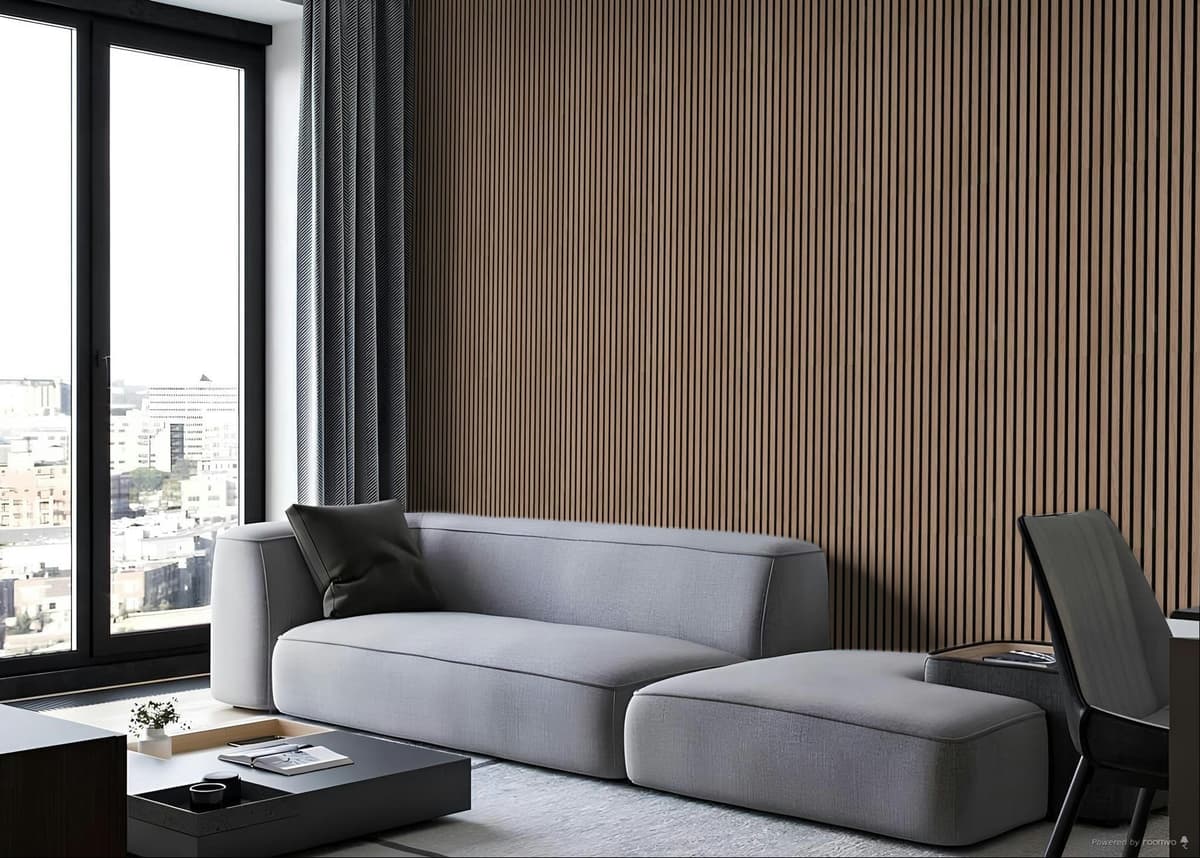
Wellness design used to mean a yoga mat in the corner and a plant on the windowsill. In 2026 it means something different. It means your house actually lowers your heart rate when you walk in the door.
The real wellness home design ideas 2026 aren’t about aesthetics. They’re about how a room sounds, how it lights, how it smells, and how it lets your nervous system settle. Here’s what’s actually working.
Table of Contents
Sound is the one everyone ignores
Your body responds to ambient noise even when your brain tunes it out. Echoey rooms keep your nervous system on low alert all day. That’s why a big modern living room with hard floors and tall ceilings can feel strangely exhausting, even when nothing loud is happening.
Acoustic wood slat panels are the most common wellness upgrade in 2026 for exactly this reason. The felt backing absorbs the echo, drops reverberation time, and the room goes from “loud even when quiet” to actually restful. You feel the difference in the first week.
Natural materials, not just natural colors
Beige paint isn’t nature. Real wood is nature. There’s a growing body of research on biophilic design showing that exposure to natural textures (real wood grain, stone, linen) measurably reduces cortisol. The look matters less than the material. A real wood wall does more for your nervous system than a photo of a forest.
This is why the real wood wall panel leans so hard into veneer over printed laminate. Your eye can tell the difference even if you can’t articulate why.
Light that changes with the day
One overhead fixture burning 4000K cool light from 8am to 10pm is a wellness disaster. Your body needs warmer light at night to signal wind-down. Add at least two light sources per room, one warm (2700K) for evening and one neutral for daytime. Use a plug-in smart bulb if you don’t want to rewire.
One textured wall per room
A room with four flat walls reads as static. A room with one textured wall, the eye lands there and settles. It’s the design equivalent of a focal point in meditation.
Slat panels work in bedrooms. Geometric patterns work in living rooms. Stone texture works in bathrooms where you want spa energy.
Space for nothing
The most overlooked wellness move is leaving a corner empty. One chair, one lamp, one small side table. No TV, no laptop, no purpose other than sitting. Every room needs one of these. If yours doesn’t, that’s your weekend project.
What to skip
Skip the wellness trend stuff that’s mostly aesthetic. Essential oil diffusers on every surface. Crystal grids. Affirmation prints in sans-serif. None of these change the underlying sensory load of the room.
Focus on sound, light, and real material. The rest is decor.
Wellness Design Principles: A Practical Room-by-Room Summary
Bedroom: Prioritise material warmth and acoustic softness. A real wood panel wall on one side of the room, combined with thick curtains and a soft rug, reduces ambient noise and creates the sensory quiet needed for genuine rest. Keep all light sources warm (2700K or below) and avoid screens on the wall — the visual associations of a bedroom are as important as the physical conditions.
Home office: Acoustic treatment is the most impactful wellness investment in a work environment. Slat panels with felt backing behind a desk wall reduce reverberation and lower the cognitive load of background noise by several decibels. A single plant, positioned within the field of vision but not directly in front of the monitor, provides a biophilic reference point that reduces eye strain during long sessions. Natural light from the side rather than directly in front or behind the screen prevents glare without sacrificing daylight.
Living room: Create a visual destination — one textured wall or a clearly defined seating area with a single material focus — that gives the nervous system a place to land when entering the room. Homes with no clear visual hierarchy in the main living area are unconsciously more tiring to inhabit. A wood panel wall, a stone fireplace surround, or even a single very carefully chosen piece of large-format art serves this function better than a room where every surface has equal visual weight.
Bathroom: Temperature and texture. Warm-toned wall panels (warm wood, warm stone) shift a bathroom from a functional utility space to something genuinely restorative. PVC panels in warm wood-grain finishes are the practical choice — they are waterproof, easy to clean, and warm to the eye in the way that cold-grey ceramic tiles are not.
Wellness Home Design FAQs
Do wall panels genuinely improve wellbeing, or is this just marketing?
The evidence for biophilic design — the use of natural materials like real wood in interior spaces — improving measurable wellbeing outcomes is reasonably robust. Studies published in environment and behaviour research consistently find reductions in reported stress and physiological markers (heart rate, cortisol) in spaces with natural material exposure. The caveat is that these effects are associated with authentic materials rather than printed replicas, and that they work as part of a broader sensory environment rather than in isolation.
What is the single most cost-effective wellness upgrade for a home?
Acoustic treatment — specifically reducing echo and reverberation in the main living areas. Hard-surfaced rooms with no soft furnishings create ambient noise conditions that are measurably more fatiguing. Adding a rug, heavy curtains, and slat panels with felt backing to a hard-surfaced room produces a noticeable improvement in how restful the space feels within days of completion. The investment is modest; the difference is significant.
Can wellness design principles work in a small flat?
Yes — and in some respects small spaces respond more dramatically to wellness design interventions than large ones, because the proportion of wall, floor, and ceiling to the volume of air is higher. A single real wood panel wall in a small bedroom can transform the sensory character of the entire room. Keep the treatment focused: one textured wall, one warm light source, one plant. Crowding a small space with too many wellness gestures creates visual noise that works against the intended outcome.
How important is smell in a wellness home?
More important than most interior design guidance acknowledges. Real wood panels off-gas low levels of volatile organic compounds that are positively associated with natural environments — the same compounds that make a forest feel calming. This is part of why authentic wood panels produce a different atmosphere to synthetic alternatives, even when they look identical. Avoid artificial fragrance products in wellness-oriented spaces; they trigger a different olfactory response than natural materials and can interfere with the calm atmosphere you are trying to create.
Where to start
Start with the room you spend the most time in. For most people that’s the living room or home office. Fix the echo first, then the lighting, then add one textured wall.
The SoundPanel acoustic slat collection is where most wellness-focused customers start, because it handles the sound and the texture in one move. Visit The Panel Hub to see finish options side by side.
Want the wellness wall planner? Tell us your room size and we’ll send a 2-minute guide with the right panel coverage for your space.