
Table of Contents
What Japandi Actually Means
Japandi is the design fusion of Japanese wabi-sabi and Scandinavian hygge — two philosophies that share more than they differ. Both prioritise natural materials, functional simplicity, and spaces that feel calm rather than curated. The result is an aesthetic that’s minimal without being cold, restrained without being bare, and deeply rooted in the character of natural wood.
Wall panels are one of the defining elements of a Japandi interior. The vertical line and warm grain of acoustic wood slat panels suit the aesthetic almost perfectly — they add texture and warmth without decoration, visual interest without noise. The White Felt edition — pale timber with white backing felt — aligns particularly well with the Japandi emphasis on intentional restraint and tonal precision.
Choosing the Right Species for Japandi
The wood species matters enormously in a Japandi interior. The wrong tone undermines the entire composition:
- Light ash: The quintessential Japandi choice — pale, even grain, slightly cool undertone that reads as calm and considered. Works in any light condition.
- Natural oak: Warmer than ash, with more visible grain character. Leans slightly more Scandinavian than Japanese, but works well in warmer Japandi interpretations.
- Smoked or light-smoked oak: Adds the grey-brown tone that echoes Japanese aged wood aesthetics without going fully dark. A sophisticated middle ground.
- Walnut: Too warm and rich for a strict Japandi palette — better suited to mid-century modern. Use only in small doses as an accent in an otherwise restrained scheme.
Our walnut vs oak panel comparison and guide to wood species for wall panels cover the specific characteristics of each option in detail.
Layout and Scale: Less Panel, More Impact
Japandi interiors resist excess. Where maximalist schemes might panel every wall, a Japandi approach panels one — and leaves the rest bare or in a carefully chosen muted tone. This restraint is the point. A single wall of slim acoustic slat panels in pale ash against walls finished in warm white or soft greige creates the kind of considered tension that makes Japandi feel intentional rather than sparse.
Scale matters too: slimmer slat profiles (20–30mm slat width with proportional gaps) suit Japandi better than chunky profiles. The visual rhythm should be fine and regular, not bold and dominant.
Complementary Materials
Wall panels in a Japandi scheme work alongside:
- Natural linen and cotton textiles — undyed or softly toned cushions, throws, and curtains
- Matte ceramics in earthy off-white, sage, or clay tones
- Low, unadorned furniture — a platform bed, a simple dining table, furniture without visible hardware
- Indoor plants — a single large statement plant (fiddle leaf, olive tree) rather than a collection
- Warm-white or amber artificial light — avoid cool white LED in any Japandi scheme
What to Avoid
The most common Japandi mistakes with wall panels:
- Paneling too many walls: One panel wall is Japandi. Three is rustic cabin.
- Wrong species: Cherry, pine, or heavily grained exotic species break the visual calm.
- High-gloss finish: Japandi finishes are matte, satin, or natural oil — never lacquered to a shine.
- Decorating the panel wall: Don’t hang art, shelves, or accessories on the panel wall. Let the wood be the statement.
For broader design context on using slat panels in living spaces, our wood slat panels for living room guide and accent wall ideas guide are useful companions to this piece.
Japandi Wall Panels: Getting the Balance Between Japanese and Scandinavian
Japandi is a synthesis rather than a style with its own independent vocabulary — which makes it easy to misapply. The balance between the Japanese and Scandinavian elements requires conscious attention. Japanese interiors prioritise emptiness as an active quality — ma, the meaningful pause — and materials that show the marks of natural process. Scandinavian interiors prioritise functional beauty and the amplification of natural light. When these two sensibilities combine well, the result is a space that is both warm and deeply quiet.
For wall panels in a Japandi scheme, the Japanese influence dictates restraint in coverage: one panel wall, chosen carefully, rather than panels on multiple surfaces. The Scandinavian influence dictates the material — pale ash or whitened oak that maximises light — while the Japanese influence might modulate this towards a slightly darker, more wabi-sabi-appropriate species like lightly smoked oak or natural cedar. The finish should be matte or very softly satin — nothing that reflects light in a way that feels engineered or artificial.
Proportion is the final critical variable. Japanese aesthetic tradition is highly sensitive to scale and the relationship between elements. Slat panels in a Japandi interior should have carefully considered pitch — not so narrow that the shadow gaps create visual busyness, not so wide that individual boards read as heavy or blunt. A pitch in the 50–80mm range (board width plus gap) achieves the quiet visual rhythm that characterises genuinely resolved Japandi interiors.
Japandi Wall Panel FAQs
What is the key difference between Japandi and Scandinavian panel design?
Both traditions use natural wood and restrained palettes, but Japandi brings a Japanese sensitivity to emptiness and imperfection that Scandinavian design does not always include. In Japandi, the space between panels is as considered as the panels themselves, and natural imperfections in the wood — slight grain variation, occasional knots in appropriate woods — are valued rather than minimised. Scandinavian design tends more towards clean, flaw-free surfaces.
Can dark woods work in a Japandi interior?
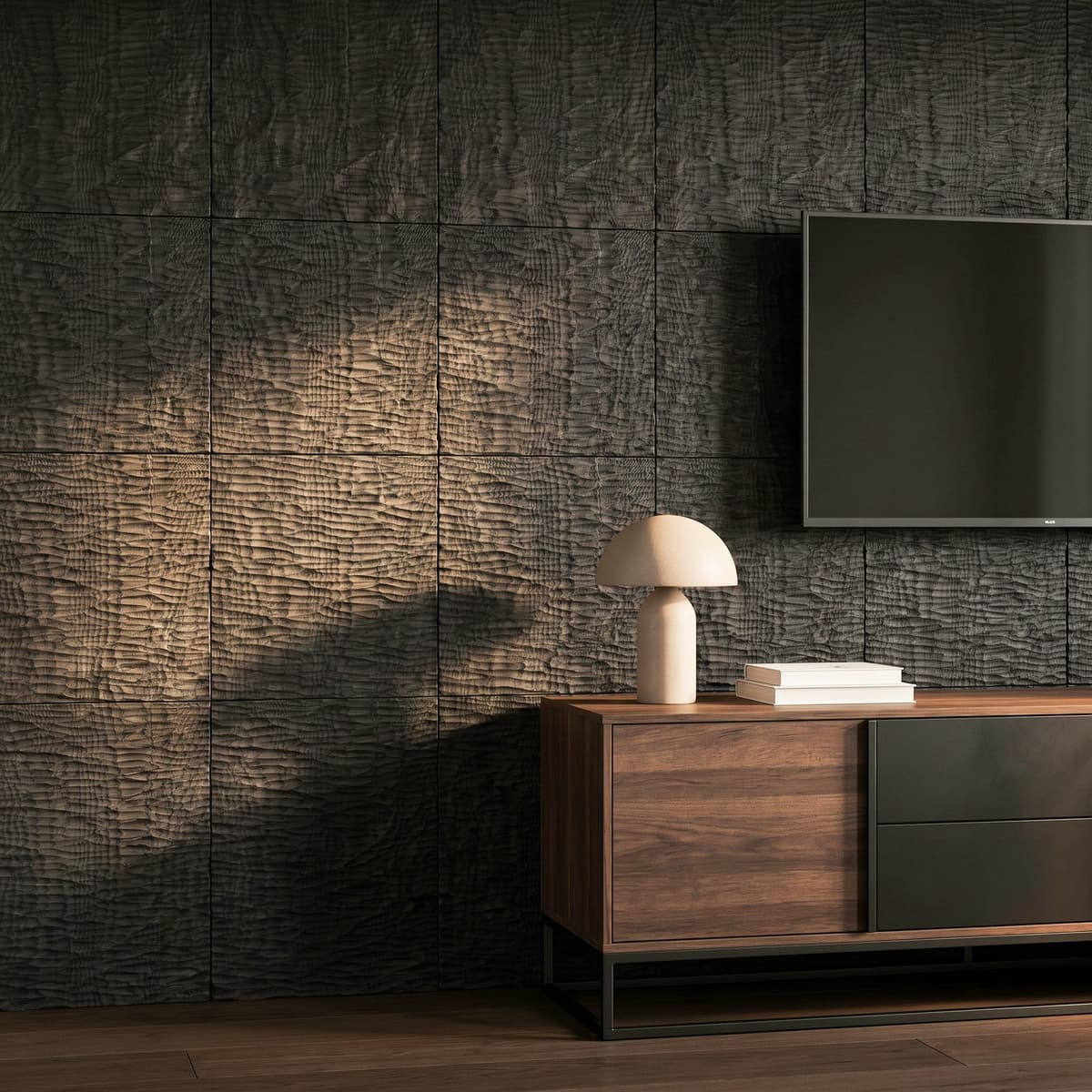
Yes — this is one area where the Japanese influence differs from the typically lighter Scandinavian approach. Darker woods like walnut or smoked oak carry the wabi-sabi reference to aged, well-used materials that Japanese interior design values. In a Japandi scheme, a single walnut panel wall can anchor the room in warmth while the remaining surfaces stay light. The contrast between dark panel and pale wall is characteristic of authentic Japandi rather than a departure from it.
What furniture best complements Japandi wall panels?
Low-profile furniture with clean lines and natural materials — solid wood with exposed joinery, linen upholstery in neutral tones, simple ceramic objects. Avoid upholstered furniture with heavy pattern or strong colour, which conflicts with the Japandi emphasis on tonal restraint. The floor-to-ceiling proportion is important in Japandi: low furniture that leaves more wall visible amplifies the panel’s visual presence and maintains the sense of considered emptiness the style depends on.
Do Japandi panels work in a contemporary new-build apartment?
Yes — and new-builds are well-suited to Japandi design because their clean architectural surfaces and large windows provide the blank canvas and natural light that both Japanese and Scandinavian design traditions require. The challenge in new-builds is often the opposite: avoiding the temptation to fill all the available surface. A single Japandi panel wall in an open-plan living space, left to breathe with minimal furniture and no competing decorative layers, is the approach most likely to succeed.