
Table of Contents
The Most Common Decision in Wood Wall Panels
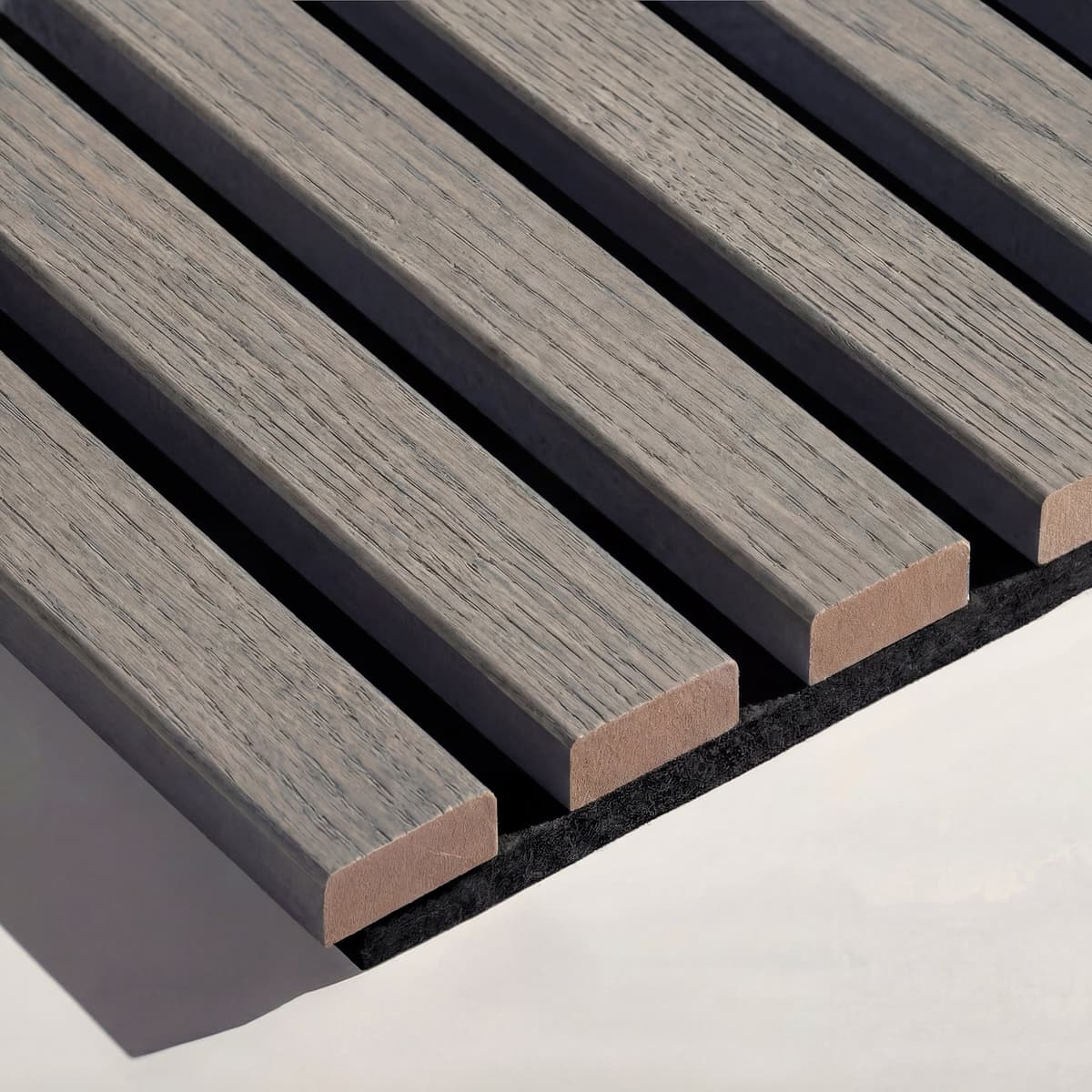
Walnut and oak are the two dominant species choices for acoustic wood slat panels. They’re both premium options with real wood veneer; both are available in full acoustic slat panel systems; both look outstanding on a wall. The choice between them isn’t about quality — it’s about which suits your specific room, existing colour palette, and aesthetic preference.
Here’s everything you need to make the right call.
Walnut: The Rich Choice
Colour range: Deep chocolate brown to warm golden brown, often with subtle purple or grey undertones depending on cut and origin. American black walnut is darker; European walnut slightly warmer.
Grain character: Straight to slightly wavy with occasional figuring. Consistent enough to look intentional, varied enough to look natural.
Visual weight: High. Walnut commands attention. In a room, a walnut panel wall is a bold design statement that other elements must work with.
Ageing: Walnut lightens slightly over time as UV exposure reduces the initial dark intensity. Often considered an improvement — the aged tone is warmer and more complex.
Walnut suits:
- Rooms with neutral or warm-toned furniture (cream, beige, warm grey, natural linen)
- Contemporary and Japandi interiors where contrast and material richness are deliberate choices
- Bedrooms where deep, enveloping warmth is the brief
- Home offices where the panel wall needs to convey authority and quality on camera
- Darker or lower-light rooms where the wood tone adds warmth without making the space feel heavy
Oak: The Versatile Choice
Colour range: Light honey to warm amber. More variable than walnut across individual boards, but generally lighter and warmer in tone.
Grain character: Pronounced open grain with distinctive ray fleck (particularly in quarter-sawn cuts). More visually active than walnut at close range.
Visual weight: Lower than walnut. Oak adds warmth without visual heaviness — it reads as a background material that enhances rather than dominates.
Ageing: Oak darkens slightly with age and UV exposure, deepening from pale honey toward warm amber. Most people find this an improvement.
Oak suits:
- Almost any interior style — the universal applicability of oak is its greatest strength
- Rooms with white, light grey, or natural-toned furniture and flooring
- Scandinavian and Japandi interiors where lightness and natural material are the brief
- Living rooms where you don’t want the panel wall to dominate the overall scheme
- First-time panel buyers unsure of their long-term aesthetic direction — oak is the “safe” choice that rarely looks wrong
How to Decide
Three questions that resolve most decisions:
- What colour is your floor? Light floors (blonde wood, white tile, light carpet) suit oak; dark floors (dark timber, charcoal stone) suit either but contrast better with oak rather than creating a uniformly dark lower half of the room.
- What’s your furniture? White or light grey furniture suits oak; natural or warm-toned furniture suits either; dark furniture suits walnut for a rich tonal range or oak for contrast.
- Do you want the panel wall to make a statement or set a mood? Statement → walnut. Mood/atmosphere → either works, but oak is more recessive.
Order Samples
Screen colour rendering is unreliable for wood. A walnut panel can appear almost black on one monitor and warm brown on another. A sample in your actual room, under your actual lighting, at different times of day, is the only reliable way to make this decision confidently.
The SoundPanel™ acoustic slat range is available in both walnut and oak — sample ordering lets you see both in your space before committing. Visit The Panel Hub to explore the full species and finish range.
How Room Lighting Affects Walnut and Oak Panels
The most common source of regret in wood panel selection is ordering without testing in the room’s actual lighting conditions. Natural wood veneer responds to light in ways that digital photography doesn’t fully capture.
American Walnut in different lighting: In warm, low-temperature artificial light (2700K–3000K — typical incandescent or warm LED), walnut reads as deep chocolate-brown with rich grain variation. Under cooler light (4000K+ — typical office or north-facing natural light), the same panel reads with more grey undertones and the grain pattern becomes more prominent. South-facing rooms with strong natural light reveal the full warmth of the veneer. Walnut that looks striking in a west-facing room with evening light may look quite different in a north-facing home office under cool overhead LEDs.
Natural Oak in different lighting: Oak is more lighting-stable than walnut — it reads consistently across a wider range of colour temperatures. The characteristic pale, straight grain reads as clean and contemporary under both warm and cool light. In rooms with warm lighting, oak takes on a slightly amber tone. In cool or grey-toned spaces, it reads as crisp and minimalist. This stability makes oak a lower-risk choice for rooms with mixed or changing light conditions.
The sample test protocol: Order a sample tile and place it on the target wall. Assess it at three different times: morning light (if applicable), afternoon, and evening with artificial lighting active. Photograph it with your phone against the existing wall colour. This 5-minute process eliminates the most common ordering mistake and is always worth the one-week delay.
Combining species: Some installations use both walnut and oak across different walls in the same room — walnut on the feature wall for richness, oak on a secondary wall for lightness. This works when the room palette already contains both warm and cool tones. It requires careful planning; the transition line between species needs to fall at a natural visual break (a corner, a doorframe) rather than mid-wall.
Frequently Asked Questions
- What’s the price difference between walnut and oak acoustic slat panels?
- American Walnut is typically priced 15–25% higher than Natural Oak due to the relative scarcity of the timber and the higher material cost in the veneer production process. Dark Oak (a stained oak product) is priced similarly to Natural Oak. The performance specification — NRC rating, panel dimensions, backing material — is identical across species.
- Which wood species is more durable for wall panels — walnut or oak?
- Both species have comparable performance as wall panel veneers. Neither will scratch or dent under normal use conditions because they’re not contact surfaces — they’re installed above the impact zone of most furniture and foot traffic. The backing material (AcuFelt) is the same for both. Durability is not a differentiating factor in the walnut vs oak decision.
- Does walnut or oak look better in a modern interior?
- Modern interiors typically suit both, but in different ways. Walnut aligns with warm contemporary and mid-century modern styles — it has visual weight and richness that suits design-forward spaces. Oak suits Scandinavian-influenced and minimalist interiors — it’s lighter, cleaner, and more neutral. Neither is objectively “more modern”; the choice depends on the room’s existing palette and intended mood.
- Can I mix walnut and oak panels in the same room?
- Yes, with planning. Mixed-species installations require the species transition to fall at a natural visual break — a corner, a structural column, a doorframe. Mid-wall transitions are rarely successful visually. A common approach is one species as a feature wall and the other on secondary walls, which creates visual hierarchy without looking mismatched.
- Are samples available before committing to a full order?
- Yes. TPH offers sample tiles in all available species and finishes. Sample ordering is strongly recommended before any full installation order — lighting conditions vary significantly between rooms and settings, and the sample is the most reliable way to confirm the choice before committing to full coverage.
Shop Walnut and Oak Acoustic Slat Panels
Compare both species side by side in the SoundPanel™ acoustic slat collection at The Panel Hub, and order samples before committing to a full order. Browse the complete wood wall panel range for every species and format available. Our interior slat wall ideas guide shows how each species reads in finished rooms across different lighting conditions and interior styles, and the acoustic panel buyer’s guide covers the performance specifications that apply equally to both species.