
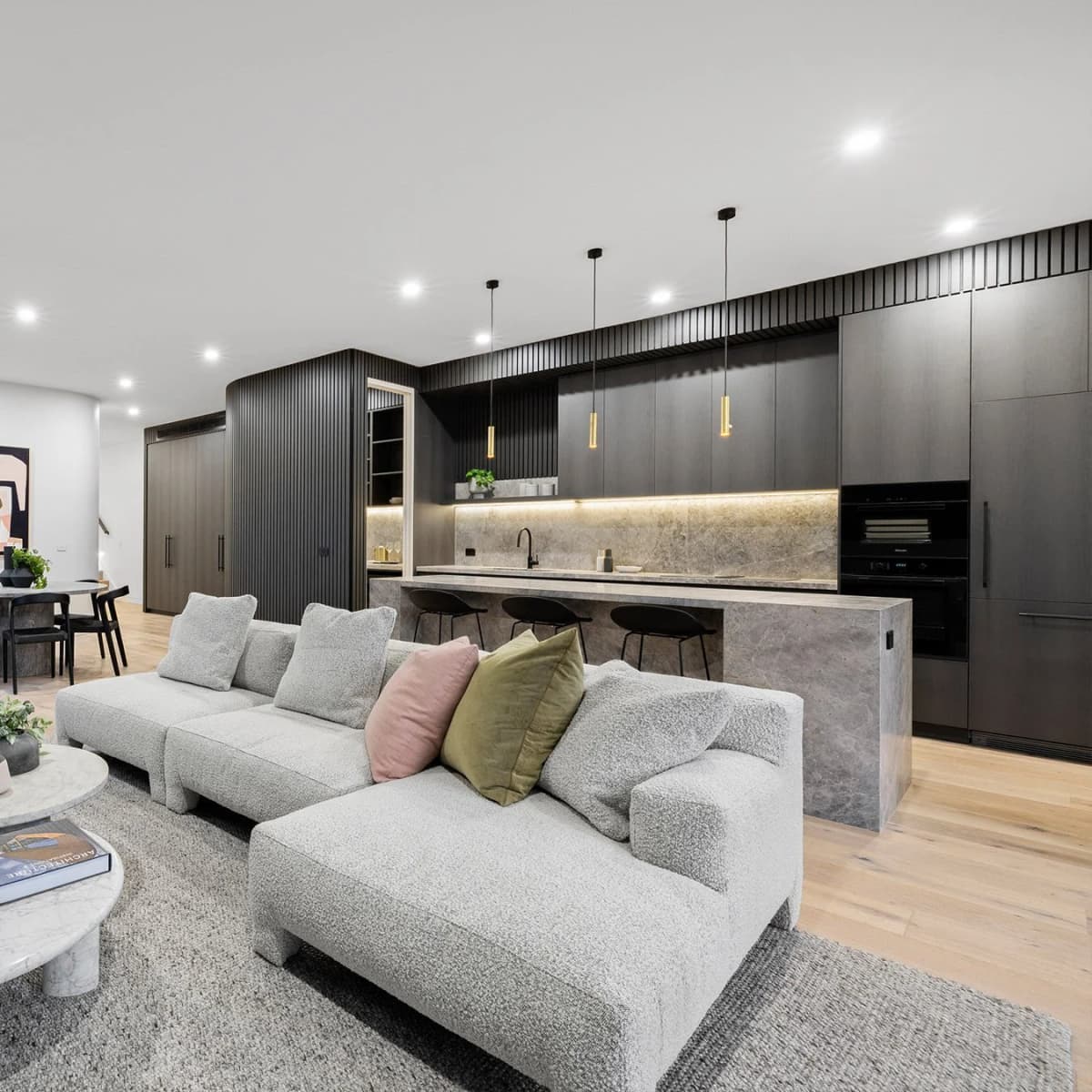
Wood in kitchens divides opinion. Done well, it adds warmth and character that no other material can replicate. Done badly, it makes a kitchen feel dark, dated, or unfinished. At The Panel Hub, we’ve helped countless homeowners use wood wall panels in kitchens in a way that feels contemporary and considered. The key is knowing where to use them, which finish to choose, and what to pair them with.
Contents
Why Wood in a Kitchen Works — When Done Right
The best kitchen designs have a quality that’s hard to pin down — they feel warm and liveable rather than clinical or showroom-like. Wood is the material most responsible for that quality. It introduces organic texture, absorbs light differently across the day, and creates a visual softness that paint, tile, and stone can’t replicate.
Contemporary wood panels — slat panels in particular — bring this quality to kitchens without the rustic or country connotations of older wood finishes. Smooth, fine-grain oak slats read as modern and refined. The result is warmth without weight.
Where to Use Wood Panels in a Kitchen
Behind open shelving
The wall behind floating kitchen shelves is one of the best locations for wood paneling. The shelves act as a frame, and the paneled wall becomes a backdrop that makes everything on the shelves look more deliberate. In kitchens with white or painted cabinetry, a natural oak panel behind open shelves introduces exactly the warmth the room needs.
The island-facing wall
In kitchens where you stand at an island facing a wall — typically the wall behind a range cooker or the main appliance run — that wall is in constant view. Paneling it creates a backdrop that makes the kitchen feel designed rather than assembled. This works well in both contemporary kitchens and more traditional or Shaker-style spaces.
The breakfast bar wall
Where a breakfast bar or peninsula faces a wall, that wall is at eye level for everyone seated there. It’s the perfect location for a panel that adds visual interest without encroaching on the workspace. Vertical slat panels in a warm oak tone work well here — they complement the view without dominating it.
The dining zone in open-plan kitchens
Open-plan kitchen-diners are where wood panels most frequently appear — and for good reason. The dining wall needs to feel warm and inviting in a way that’s different from the functional kitchen area. A paneled dining wall defines the zone, adds acoustic benefit, and creates a visual anchor for the table. Our SoundPanel™ acoustic slat panels are particularly effective here, reducing echo while adding the warmth that open-plan spaces often lack.
Which Panel Style to Choose
Slat panels are the most popular choice for kitchens — their clean, linear character suits contemporary kitchen aesthetics and pairs well with handleless cabinetry, shaker doors, and everything in between. Our GroovePanel® mosaic panels suit kitchens with a more textured or layered approach and work well alongside natural stone, concrete, or heavily grained timber elements.
For kitchens where the panel will be seen alongside cabinetry in a similar wood tone, consider contrast rather than match — a slightly darker or lighter panel finish creates depth rather than a confused single-material look.
Colour and Finish Considerations
Light oak finishes are the most versatile kitchen panel choice — they’re warm without being heavy and complement the widest range of cabinet colours and kitchen styles. Walnut works well in kitchens with strong contrast (white cabinets, dark worktops) and adds drama to spaces that can handle more visual weight. Avoid very dark finishes in smaller kitchens or rooms with limited natural light.
Common Mistakes to Avoid
The most common mistake is paneling the wrong wall — specifically, installing wood panels in areas subject to moisture or grease. Wood panels should not go directly behind a hob or above a sink. The second most common mistake is matching the panel finish too closely to the cabinetry, which creates a flat, undifferentiated look. A slight contrast in tone or texture makes both elements read more clearly.
Getting Started
Start with one wall and one finish. The dining wall or open-shelving wall is the lowest-risk starting point. Browse our full range of kitchen wall panels and the complete wood wall panel collection to find the right match for your kitchen.