
Table of Contents
- What Is an Accent Wall?
-
15 Accent Wall Ideas Worth Trying
- 1. Wood Slat Panels
- 2. Bold Paint Colour
- 3. Limewash Paint
- 4. Brick Effect Panels
- 5. Fluted Wood Panels
- 6. Shiplap
- 7. Wallpaper Mural
- 8. Stone Cladding Panels
- 9. Herringbone Wood Tiles
- 10. Geometric Tiles
- 11. Painted Arch or Panel Moulding
- 12. Wainscoting
- 13. Perforated Metal Panels
- 14. Vertical Garden
- 15. Mixed Material Wall
- How to Choose the Right Accent Wall
- Choosing Materials That Match Your Budget and Goals
- Accent Wall FAQs
- Final Thoughts
- Find Your Accent Wall Panels
What Is an Accent Wall?
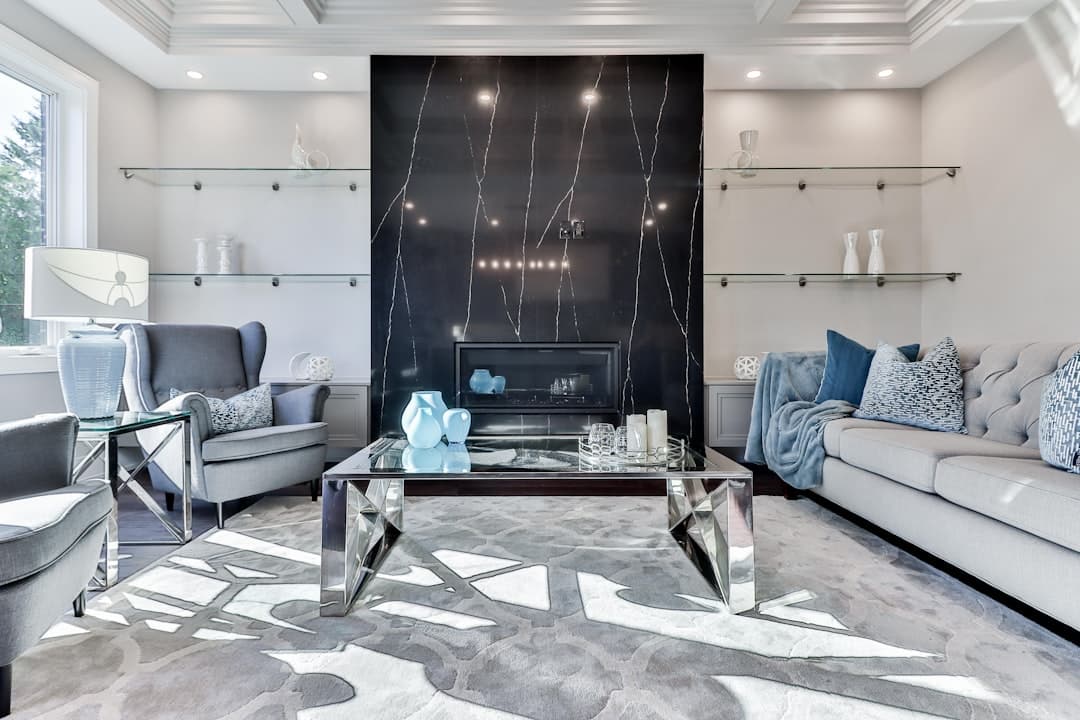
An accent wall is a single wall in a room that’s treated differently from the others — through colour, material, texture, or pattern. Done right, it anchors the room, adds depth, and gives your space a focal point without requiring a full renovation.
Whether you’re working with a blank living room, a tired bedroom, or a home office that needs personality, accent wall ideas are one of the most cost-effective upgrades in interior design.
15 Accent Wall Ideas Worth Trying
1. Wood Slat Panels
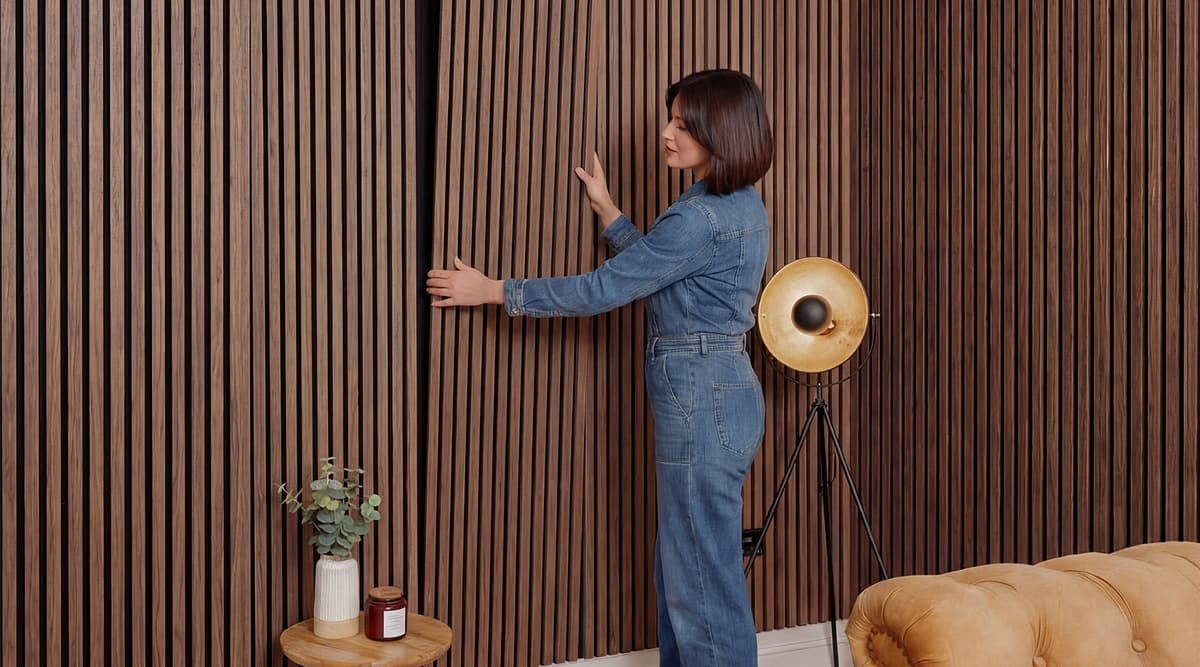
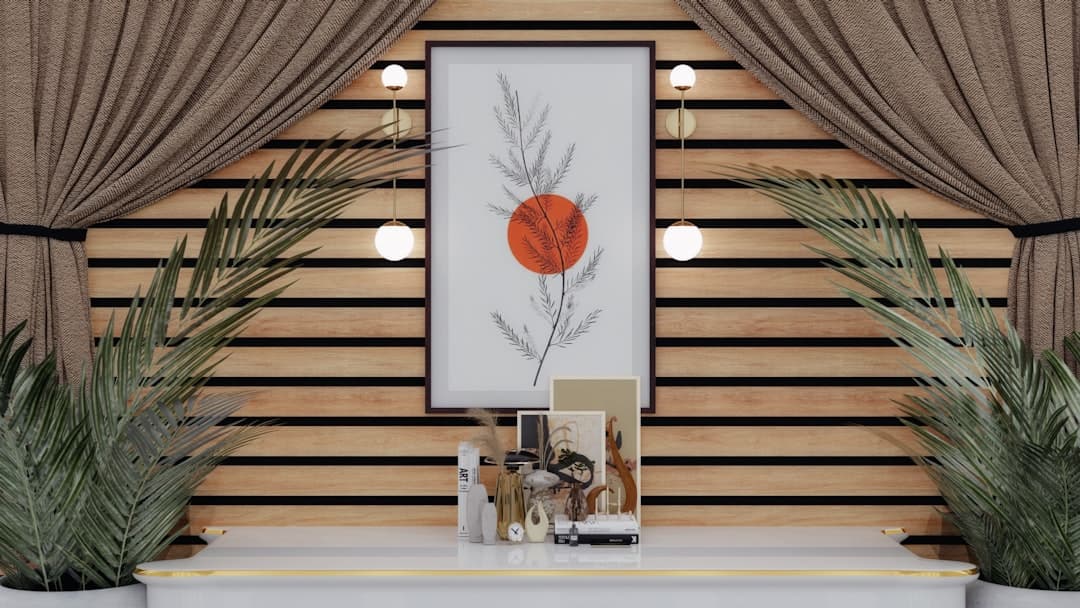
Acoustic wood slat panels have become the go-to accent wall treatment for modern and Scandinavian-inspired interiors. With vertical lines and real wood veneer, they add warmth, texture, and — if they use AcuFelt™ backing — genuine sound absorption. Perfect for living rooms, bedrooms, and home offices.
2. Bold Paint Colour
The simplest and cheapest option. A deep navy, forest green, or terracotta on one wall can dramatically change a room’s mood. Best paired with neutral furniture so the wall does the talking.
3. Limewash Paint
Limewash creates a layered, aged texture that looks expensive without being expensive. It works especially well in living rooms and bedrooms aiming for a relaxed, organic feel.
4. Brick Effect Panels
You don’t need exposed brick to get the look. Lightweight brick-effect panels or thin brick slips give the industrial aesthetic without structural work.
5. Fluted Wood Panels
Fluted panels feature repeating vertical grooves that catch light and create a sculpted effect. They’re particularly striking in hallways, behind sofas, and as TV walls.
6. Shiplap
A classic American design staple, shiplap uses horizontal planks with a small reveal gap. It suits coastal, farmhouse, and transitional interiors and works well in bathrooms and bedrooms.
7. Wallpaper Mural
A large-scale mural wallpaper — whether botanical, geometric, or abstract — turns one wall into a statement piece. Best for spaces where you want drama without texture.
8. Stone Cladding Panels
Faux stone panels offer the visual weight of natural stone without the installation complexity. Great for fireplace surrounds, entryways, and outdoor-inspired interiors.
9. Herringbone Wood Tiles
Wood panels arranged in a herringbone or chevron pattern create movement and elegance. These suit formal dining rooms and master bedrooms.
10. Geometric Tiles
Hexagonal or diamond-shaped tiles — even used just on one wall — create a modern, architectural feel. Work brilliantly in bathrooms and kitchens.
11. Painted Arch or Panel Moulding
Paint a simple arch or panel moulding shape directly onto your wall. It’s a budget way to achieve architectural detail, especially in older homes.
12. Wainscoting
Wainscoting uses panelling on the lower third of a wall, usually finished with a cap rail. It adds traditional elegance and practical protection to hallways and dining rooms.
13. Perforated Metal Panels
For truly contemporary or industrial spaces, perforated metal accent walls deliver texture and edge. Often used in home bars, garages, and studios.
14. Vertical Garden
A living wall — or a faux version — brings biophilic warmth to any room. Best used near natural light or paired with LED plant lighting.
15. Mixed Material Wall
Combine wood panels with concrete, metal, or stone effects for a layered, textural accent wall. This works especially well in open-plan spaces where you want the wall to define zones.
How to Choose the Right Accent Wall
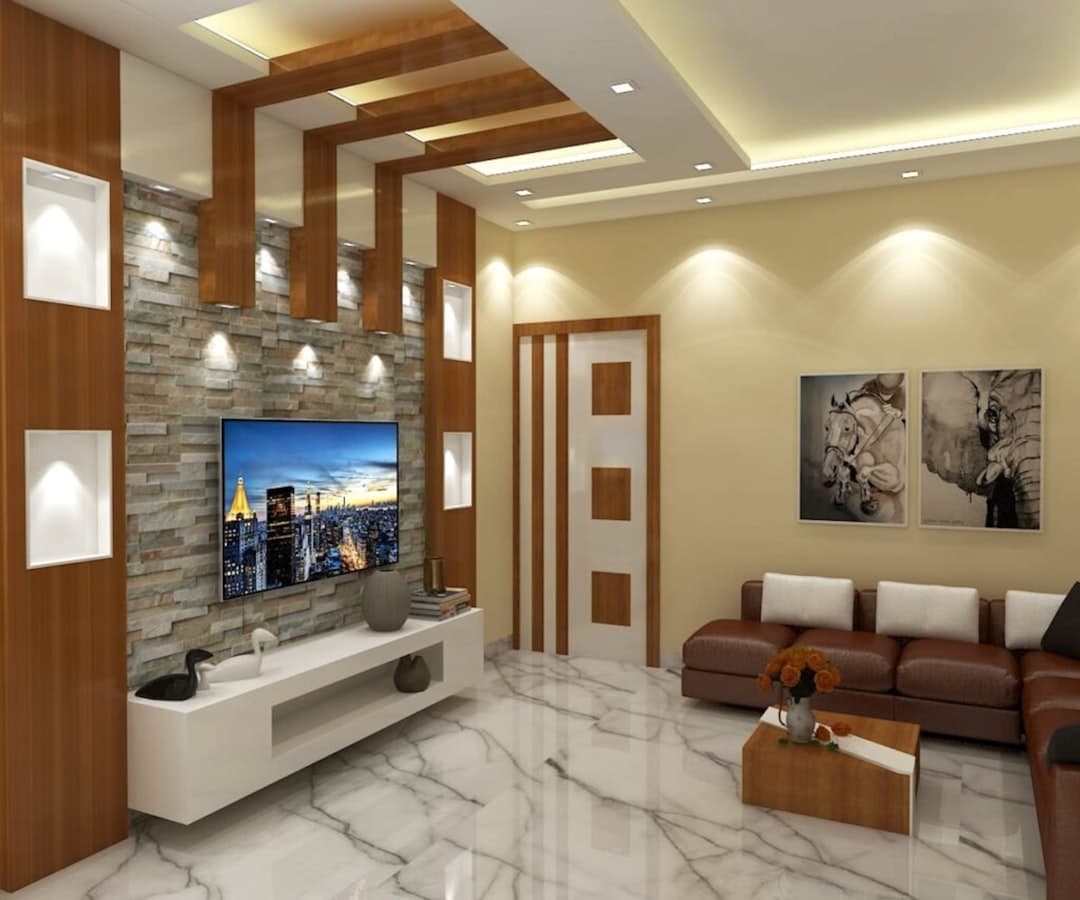
The best accent wall is the one your eye naturally falls on when entering the room. That’s usually:
- The wall behind the bed in a bedroom
- The wall behind the sofa or TV in a living room
- The wall you face when sitting at a desk in a home office
- The wall at the end of a hallway
Once you’ve identified the wall, choose a material that matches your room’s function. Acoustic wood slat panels, for example, are ideal for spaces where both aesthetics and sound quality matter — like home offices, living rooms, and media rooms.
Choosing Materials That Match Your Budget and Goals
Accent wall costs range from under £100 for a simple paint treatment to £600–£1,200 for a full-wall real wood panel installation. The most popular mid-range option is engineered wood slat panels, which deliver the look of real wood at significantly lower cost and with easier DIY installation.
For renters or anyone planning to move within a few years, adhesive-mounted panel systems are worth serious consideration. Modern adhesive panels use removable fixing systems that leave no wall damage, cost less to install, and can often be taken down and reinstalled in a new home.
For permanent installations with the highest design impact, real wood veneer panels or solid slat systems age better, develop a natural patina over time, and feel more substantial. The extra investment tends to hold its value well, particularly in living rooms, bedrooms, and entrance halls where the material is visible from the moment someone enters the room.
Whichever material you choose, the most important variable is surface preparation. Panels installed on uneven, damp, or poorly bonded walls will fail regardless of quality. Take the time to level the surface, treat any moisture issues, and prime correctly before installation — it makes more difference to the final result than the panel price.
Accent Wall FAQs
How do I choose which wall to make the accent wall?
The wall that your eye naturally goes to when entering the room is almost always the right choice. This is typically the wall opposite the door, or the wall behind the room’s main piece of furniture. Avoid making a wall an accent wall just because it’s awkward or uneven — the accent wall should be a design choice, not a workaround.
Should the accent wall be darker or lighter than the others?
Both work, but with different effects. Darker tones make the feature wall recede slightly and feel more dramatic. Lighter or highly textured treatments bring the wall forward visually and make the room feel energised. For low-ceiling rooms, a lighter accent wall treatment is generally better. For rooms with good natural light, a dark, rich material can be used confidently.
Can I have more than one accent wall?
Yes, but they need to be handled carefully to avoid visual confusion. The most successful two-wall treatments are either adjacent walls in a corner (creating an L-shaped feature) or two matching walls flanking a fireplace or architectural element. Avoid treating opposite walls with different materials — it fragments the room rather than creating focus.
How long does an accent wall take to install?
A paint accent wall takes one afternoon. Panel systems take one to two days including surface prep and drying time. Built-in shelving or joinery treatments take two to three days with a skilled installer.
Final Thoughts
Accent walls don’t have to be expensive or permanent. The right material — whether it’s a painted arch, a panel system, or real wood — can transform a room’s atmosphere in a single afternoon. If you’re ready to try wood wall panels, explore our range of acoustic and decorative options that install in under two hours with no professional help needed.
Find Your Accent Wall Panels
Ready to try one of these looks? Browse the full wood wall panel collection at The Panel Hub — including the SoundPanel™ acoustic slat range and GroovePanel® mosaic tiles. For more inspiration before you decide, our 50+ interior slat wall ideas guide covers every room and style, and the complete acoustic panel buyer’s guide explains the acoustic options in detail.