
Table of Contents
Does Wood Species Matter for Wall Panels?
Yes — but perhaps less than you’d think for most applications. Modern wood wall panels use real wood veneer over an engineered MDF core, which means the structural performance comes from the core, and the aesthetic character comes from the veneer species. The wood species determines colour, grain pattern, and character rather than structural strength.
That said, if you’re using solid wood planks or solid wood tile panels, the species matters considerably more for durability, workability, and behaviour over time.
7 Popular Wood Species for Wall Panels
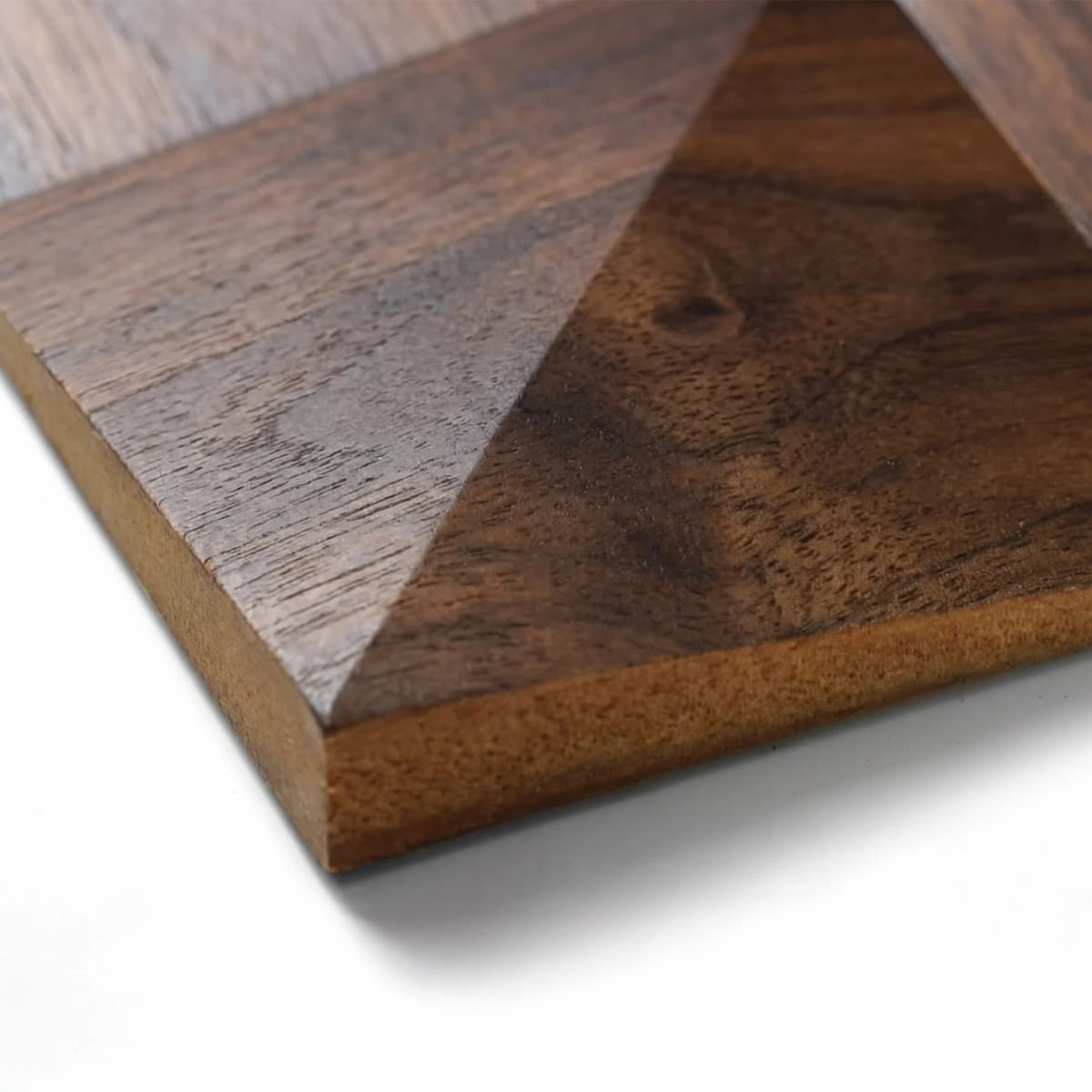
1. Walnut
Colour: Deep chocolate brown to rich golden brown, often with purple undertones.
Grain: Straight to slightly wavy with occasional figured grain. Very consistent and elegant.
Best for: Premium, modern, Japandi, and dark-toned interiors. Walnut is the most sought-after species for contemporary wood wall panels.
Cost: High
Verdict: The gold standard for premium wall panels. Rich, warm, and versatile enough for almost any modern interior.
2. Oak
Colour: Light honey to warm amber. Ages gracefully to a richer tone over time.
Grain: Pronounced, open grain with attractive ray fleck in quarter-sawn cuts.
Best for: Virtually any interior style — Scandinavian, farmhouse, contemporary, transitional.
Cost: Mid–high
Verdict: The most universally applicable wood for wall panels. If you’re unsure, oak is almost always the right choice.
3. Ash
Colour: Very pale, almost white, with subtle golden tones.
Grain: Fine and consistent with a subtle texture.
Best for: Scandinavian, minimalist, and light-toned interiors. Ideal where you want wood warmth without dark contrast.
Cost: Mid
Verdict: A lighter alternative to oak with a clean, contemporary feel. Less dramatic, more airy.
4. Pine
Colour: Pale yellow to warm amber. Knotty pine is darker with prominent character knots.
Grain: Straight with visible knots (knotty pine) or fine and clear (clear pine).
Best for: Rustic, farmhouse, cabin, and budget-conscious interiors.
Cost: Low–mid
Verdict: The most affordable solid wood option. Great character but suits specific aesthetics — less suited to sleek contemporary interiors.
5. Bamboo
Colour: Natural pale cream to carbonised dark brown depending on treatment.
Grain: Fine and regular — technically a grass, not a hardwood, but behaves similarly.
Best for: Eco-conscious interiors, biophilic design, contemporary and Asian-influenced aesthetics.
Cost: Mid
Verdict: Sustainable, fast-growing, and harder than many traditional hardwoods. A strong choice for those prioritising environmental credentials.
6. Cedar
Colour: Reddish-brown with prominent dark streaks. Weathers to silver-grey outdoors.
Grain: Straight with occasional knots. Fine texture.
Best for: Outdoor cladding, saunas, and feature walls in rustic or organic interiors. Natural oils make it resistant to moisture and insects.
Cost: Mid
Verdict: The go-to for outdoor applications. Its natural oils and weather resistance make it the best all-round choice for external cladding.
7. Teak
Colour: Golden to dark brown. Uniform and rich with subtle colour variation.
Grain: Straight, medium texture with a slightly oily surface.
Best for: High-end interior applications and outdoor settings where durability is paramount.
Cost: Very high
Verdict: Premium and extremely durable but expensive. Most relevant for wet areas and outdoor cladding where durability justifies the cost.
Which Wood Is Best for Acoustic Wall Panels?
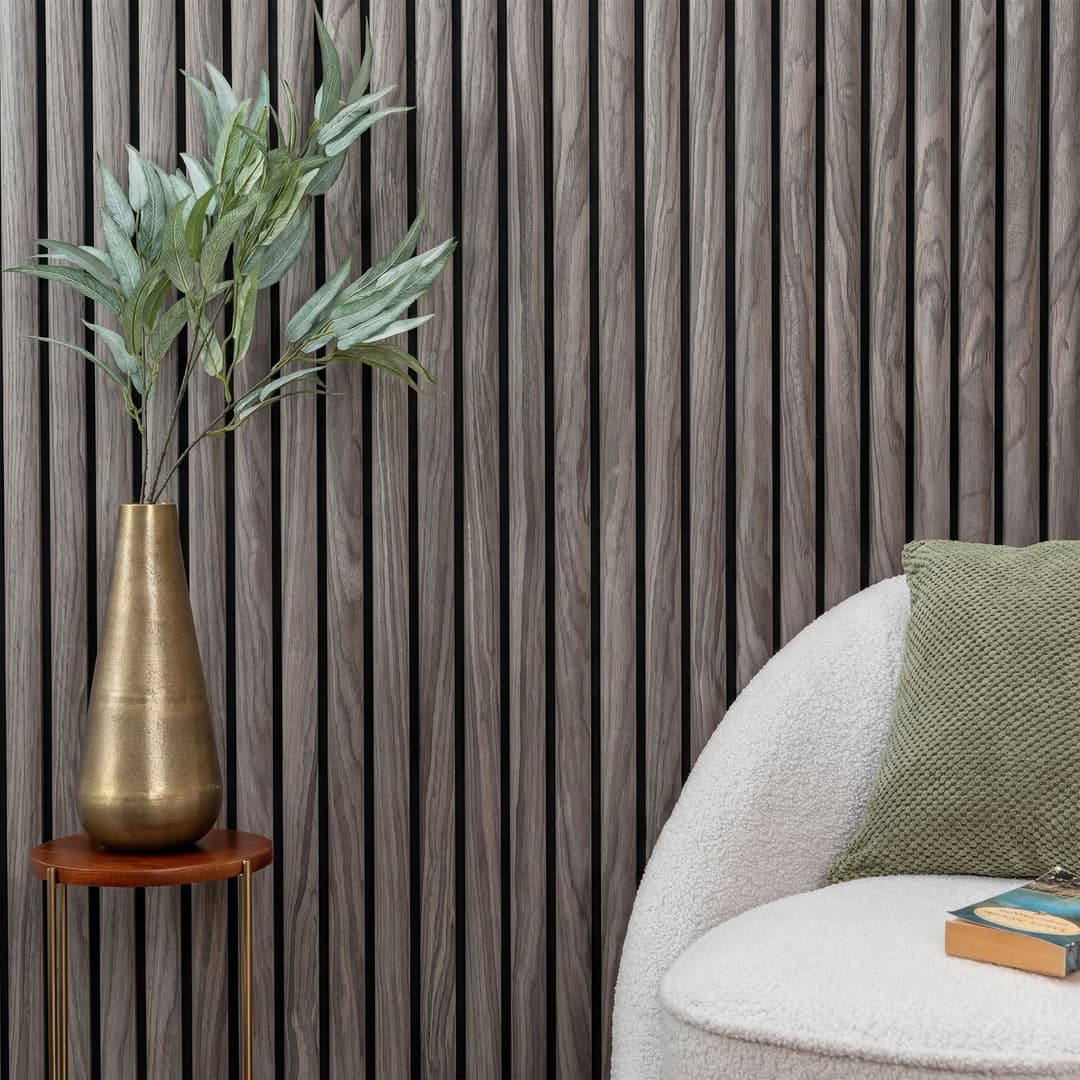
For acoustic wood slat panels, the veneer species affects aesthetics only — the acoustic performance comes from the felt backing. With this in mind:
- Walnut — best for high-end, contemporary spaces
- Oak — best all-rounder for any room
- Ash — best for light, minimalist interiors
When choosing a species, consider the room’s existing tones and furniture. A dark walnut panel wall next to dark furniture creates a cave-like feel; in a room with light floors and neutral upholstery, it creates depth without heaviness.
Wood Species FAQs for Wall Panels
Can I mix two different wood species on the same feature wall?
You can — but the result works best when the species are tonally related rather than strongly contrasting. Mixing oak and ash (both pale, fine-grained species) in alternating boards creates subtle variation without visual conflict. Mixing walnut and pine in the same panel installation creates a tonal clash that is difficult to resolve. If mixing species, do so within a warm-toned family (walnut/oak/chestnut) or a cool-toned family (ash/birch/maple) rather than across families.
Does the wood species affect acoustic performance in slat panels?
The species has minimal impact on acoustic performance compared to the density and thickness of the backing material. Acoustic slat panels absorb sound primarily through the backing (felt, foam, or mineral wool) rather than the wood face. Species with naturally higher density (hardwoods like oak or walnut) have marginally better intrinsic sound-damping properties than softwoods, but this difference is negligible compared to the backing specification. Choose species for acoustic panels based on aesthetic preference rather than expecting acoustic performance differences between species.
How long do wood veneer wall panels last compared to solid wood?
Quality veneer-faced panels typically last as long as solid wood installations in normal interior conditions — the structural stability of the engineered core (MDF or plywood) actually makes them more dimensionally stable than solid wood, particularly in rooms with humidity variation. Solid wood planks expand and contract across the grain with seasonal moisture changes; engineered panels are largely immune to this movement. For longevity, veneer-faced panels over a stable engineered core are often the superior choice.
Which species ages most gracefully without re-finishing?
Oak ages very gracefully with a clear oil finish — it deepens and enriches in colour over years of exposure to light and air in a way that reads as character rather than deterioration. Walnut is similar, developing a warm patina. Pine, by contrast, can develop an orange cast under UV exposure that many people find unappealing after several years without UV-protective finishing. Ash stays relatively stable but can develop a slight yellow tinge. If longevity with minimal maintenance is a priority, oak or walnut with a quality UV-protective hardwax oil is the most reliable specification.
Final Recommendation
For most homeowners, oak acoustic slat panels offer the best combination of versatility, availability, and value. For those seeking premium warmth and a distinctively contemporary look, walnut is the clear upgrade. Order sample panels in both species before committing — the difference in real light conditions can be significant.
Browse Panels by Species
Ready to choose? Explore the full wood wall panel collection at The Panel Hub — available in oak, walnut, ash, and more across the SoundPanel™ slat range and GroovePanel® mosaic tiles. Our interior slat wall ideas guide shows how each species reads in a finished interior. And if acoustic performance is part of the brief, the complete acoustic panel buyer’s guide covers how species choice interacts with acoustic specifications.