
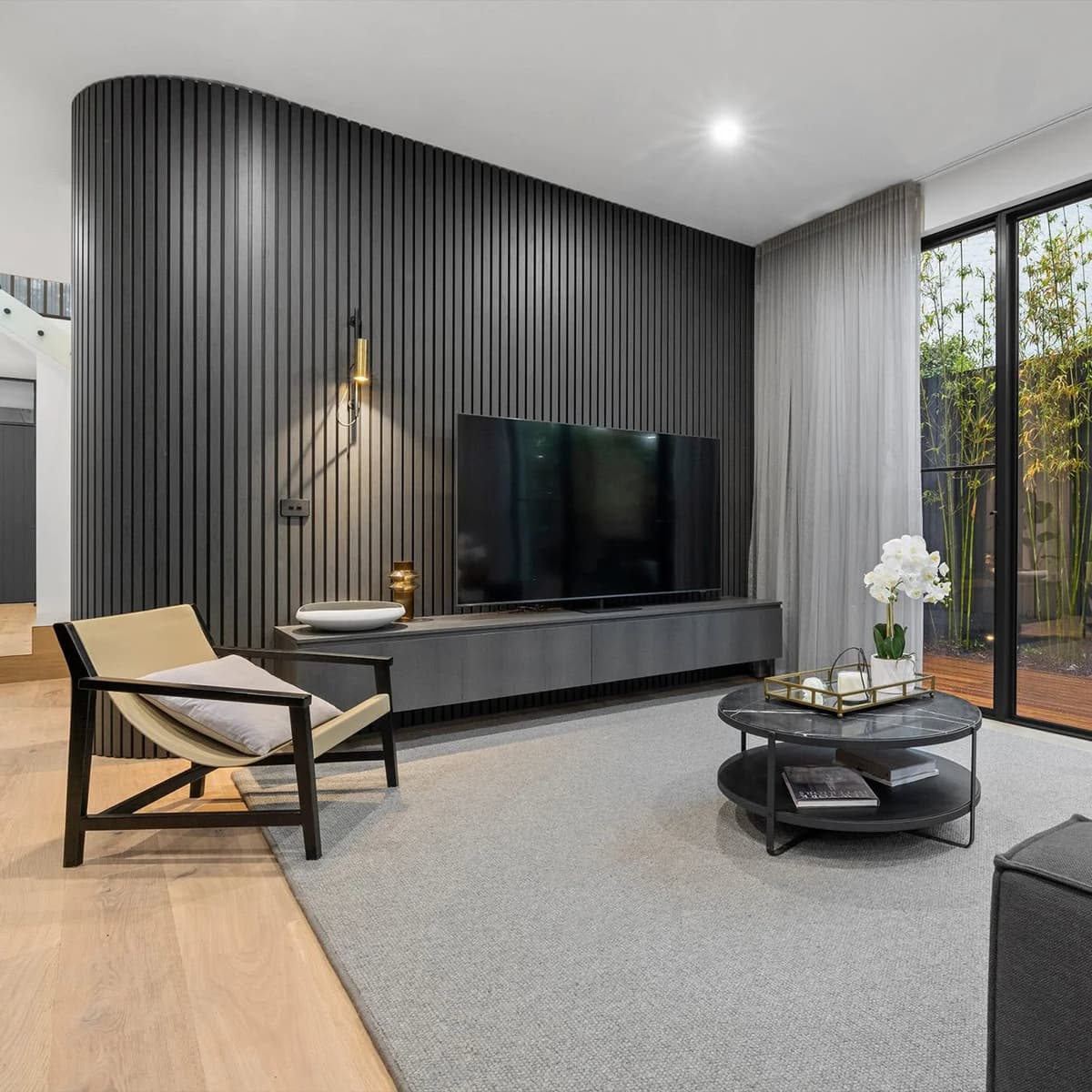
Dark wood panels in a living room are one of the most impactful design choices you can make — but also one of the easiest to get wrong. At The Panel Hub, our dark wood panels are among our most searched finishes, and the questions we hear most often are about balance: how dark is too dark, which walls should be paneled, and what to pair them with. This guide covers all of it.
Contents
- Why Dark Wood Works in Living Rooms
- Which Walls to Panel in Dark Wood
- The TV wall
- The fireplace wall
- The wall behind the sofa
- Choosing the Right Dark Wood Finish
- Walnut
- Dark oak and espresso finishes
- Wenge and near-black tones
- Balancing Dark Panels in a Living Room
- Lighting Dark Wood Panels
- What to Pair With Dark Wood Panels
- Common Mistakes to Avoid
Why Dark Wood Works in Living Rooms
Dark wood panels add depth, drama, and a quality of visual weight that lighter finishes can’t replicate. In a living room — where the goal is a space that feels rich, considered, and inviting for spending time — that weight works in your favour. A dark wood panel on a feature wall creates a sense of enclosure and intimacy that makes a large living room feel more human in scale, and gives a smaller room a purposeful, designed quality rather than just feeling small.
The key distinction is between using dark panels strategically — on one or two walls, with considered lighting and complementary materials — and using them everywhere, which creates a space that feels heavy and light-starved.
Which Walls to Panel in Dark Wood
The TV wall
The TV wall is the most common location for dark wood paneling in a living room, and for good reason. A dark background recedes behind the screen, reducing the contrast that makes a TV look like a black rectangle mounted on a white wall. Dark walnut or deep oak panels create a backdrop that makes the TV appear integrated rather than prominent, and the wall becomes part of the room’s design rather than an afterthought.
The fireplace wall
A fireplace wall in dark wood paneling creates a focal point with real visual gravity. The depth of the panel finish complements the darkened interior of a fireplace opening and creates a cohesive, rich composition. This works best when the fireplace surround is in a contrasting lighter material — white plaster, stone, or painted timber — that prevents the whole wall from reading as uniformly dark.
The wall behind the sofa
In living rooms where seating faces a window, the wall behind the sofa is often backlit and benefits from a darker, more defined treatment. A dark wood panel here creates a strong horizontal backdrop that anchors the furniture arrangement and prevents the sofa from floating in space. It’s most effective in rooms with good natural light, where the panel’s darkness is balanced by light from the opposite side of the room.
Choosing the Right Dark Wood Finish
Walnut
Walnut is the most versatile dark wood finish for living rooms — rich, warm, and with enough grain variation to feel organic rather than flat. Our walnut wall panels suit both contemporary and period living rooms and pair well with warm neutrals, deep greens, and burnt orange accent tones. Walnut reads as dark without being oppressive — it’s the right starting point if you’re unsure how much darkness the room can handle.
Dark oak and espresso finishes
Darker than walnut, espresso and dark oak finishes are for rooms where contrast is the brief. Pale walls, light upholstery, and bright lighting let these finishes perform without making the room feel closed in. In well-lit rooms with high ceilings, they create a dramatic, high-contrast result. Our dark wood panel collection includes several finishes in this range, from deep tobacco through to near-black ebony tones.
Wenge and near-black tones
The darkest finishes — wenge, ebony, very dark espresso — are for confident, deliberate interiors where the panel is clearly the dominant design statement. Limit these to a single feature wall, ensure the room has strong lighting, and pair with light or warm furnishings to prevent the room from reading as oppressive.
Balancing Dark Panels in a Living Room
The single most important rule: keep the remaining walls light. A dark feature wall and three plain light walls creates exactly the right balance — drama and depth without loss of space or light. If you panel two walls in dark wood, ensure they’re not adjacent (which creates a corner that feels closed) and keep the remaining walls very light.
Scale also matters. In a living room under 4m wide, limit dark paneling to one wall. Larger rooms can carry more. Use our wood wall panel collection sample swatches to test proportions in your space before committing.
Lighting Dark Wood Panels
Dark panels absorb light, so the lighting in a paneled living room needs to be intentional. Uplighters or wall-grazing downlights positioned to skim across the panel surface reveal the texture and grain that make dark wood interesting. Picture lights, floor lamps positioned near the panel, and warm-toned LED strips can all be used to bring the panel to life in the evening. Avoid cold-toned lighting with dark panels — it makes the wood look grey and lifeless.
What to Pair With Dark Wood Panels
Dark wood panels pair best with: warm whites and creams for the remaining walls; warm-toned textiles (caramel leather, oatmeal linen, deep wool); brass and antique gold hardware and lighting; warm-spectrum area rugs; and natural textures (stone, jute, ceramics). They clash with: cool greys, stark whites under cool lighting, chrome and silver metals, and very pale or icy accent colours.
Common Mistakes to Avoid
Don’t panel more than one wall dark in a small room. Don’t choose a very dark finish in a room with limited natural light. Don’t pair with cool-toned décor. And don’t use dark panels as a substitute for thoughtful lighting — they need more light, not less, to perform well. With the right placement and lighting, dark wood panels are one of the most rewarding choices in interior design.