
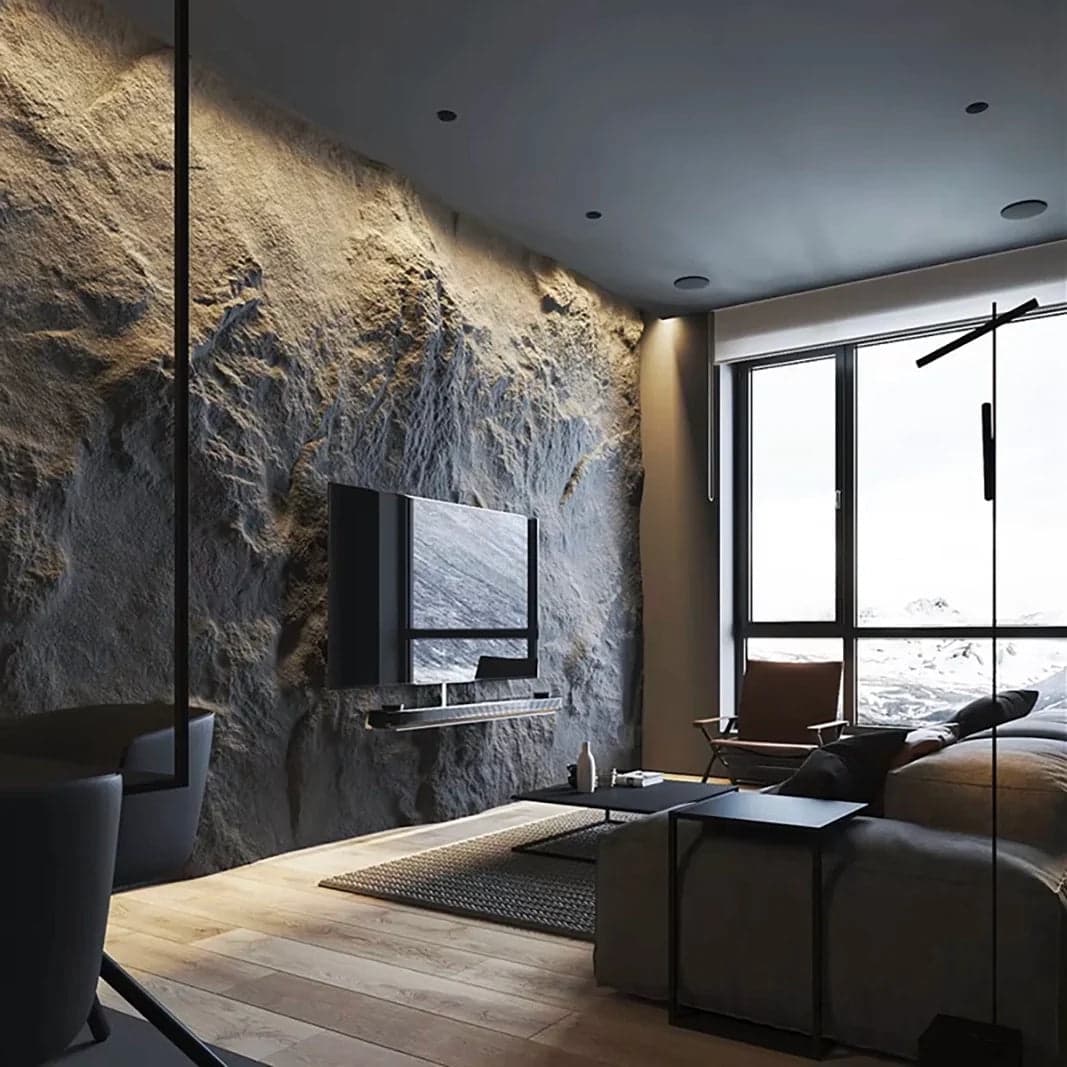
One of the underappreciated advantages of faux stone wall panels over real stone is maintenance. Natural stone — particularly porous varieties like limestone and sandstone — requires regular sealing, careful cleaning product selection, and ongoing attention to prevent staining and biological growth. Faux stone panels are significantly more forgiving.
Table of Contents
That said, “low maintenance” doesn’t mean “no maintenance.” This guide covers what routine care looks like, how to handle staining, and what to avoid to keep faux stone panels looking their best over the long term.
Routine Cleaning
- Dust regularly: Use a soft brush, vacuum with a brush attachment, or a dry microfibre cloth. The textured surface of stone panels accumulates dust more readily than flat walls.
- Wipe down periodically: A lightly damp cloth with warm water handles most marks and general cleaning. Wipe in the direction of the panel texture rather than against it.
- Mild detergent for marks: A small amount of washing-up liquid in warm water handles most household marks. Apply with a soft cloth, work gently, and rinse with clean water.
Dealing with Stains
Grease and Kitchen Splatter
In kitchen applications, a degreasing spray applied to a soft cloth — rather than directly to the panel — works effectively. Avoid spraying cleaning products directly into deep-relief textured surfaces as residue can accumulate in recesses.
Mould and Mildew
In bathrooms or humid environments, surface mould can develop in panel recesses if ventilation is poor. A solution of 1 part white vinegar to 3 parts water, applied with a soft brush and left for 10 minutes before rinsing, handles most surface mould. For persistent mould, a specialist bathroom cleaner suitable for the panel material may be required.
Scuffs and Impact Marks
The three-dimensional surface of stone-effect panels is naturally resistant to scuffing because impact is spread across the relief. Minor scuffs can often be concealed using a stone touch-up pen or paint matched to the panel colour.
What to Avoid
- Abrasive cleaners or pads: Scouring pads and abrasive cleaning powders scratch the panel surface and damage the finish permanently.
- Solvent-based cleaners: Acetone, bleach at high concentrations, and solvent-based cleaners can strip the surface finish. Test any unfamiliar product on an inconspicuous area first.
- High-pressure washing: For exterior panels, high-pressure washing can force water behind panels or damage adhesive bonds. Use a standard garden hose and soft brush instead.
- Steam cleaning: High-temperature steam can affect adhesive bonds and panel finishes.
Long-Term Care Schedule
- Weekly: Dust or wipe with a dry cloth in high-use areas such as kitchens and bathrooms
- Monthly: Damp wipe with mild detergent solution
- Annually: Inspect for any loose panels; re-seal if recommended by the manufacturer
For product-specific maintenance guidance, contact The Panel Hub directly. The team can advise on the best approach for your specific RockSurface® panels.