
Table of Contents
- Sound Absorption: How It’s Measured and What to Look For
-
Panel Types Ranked by Sound Absorption
- 1. Thick Fabric Acoustic Panels (NRC 0.85–1.00)
- 2. Acoustic Wood Slat Panels with AcuFelt™ Backing (NRC 0.65–0.85)
- 3. Perforated Acoustic Wood Panels (NRC 0.55–0.80)
- 4. Acoustic Foam Panels (NRC 0.50–0.90)
- 5. Mineral Wool/Fibre Board (NRC 0.65–0.90)
- 6. Decorative Slat Panels Without Acoustic Backing (NRC 0.05–0.20)
- How Much Coverage Do You Need?
- Room-by-Room Sound Absorption Guide
- Frequently Asked Questions
Sound Absorption: How It’s Measured and What to Look For
Sound absorption is measured by the NRC (Noise Reduction Coefficient) — a number from 0 to 1 representing the proportion of sound energy absorbed by a material. Higher is better. For domestic acoustic treatment, look for NRC 0.65 as a practical minimum and 0.80+ for spaces where acoustic quality significantly matters.
Our full guide to NRC ratings explains the measurement methodology and how to interpret product specifications.
Panel Types Ranked by Sound Absorption
1. Thick Fabric Acoustic Panels (NRC 0.85–1.00)
High-density fabric-wrapped panels with 50–100mm mineral wool or fibreglass core. The highest NRC performance available in a wall panel format. Used in recording studios, home theatres, and commercial spaces. Limited aesthetic range — typically available in fabric colours only.
Best for: Recording studios, dedicated home theatres, spaces where maximum NRC is the sole criterion.
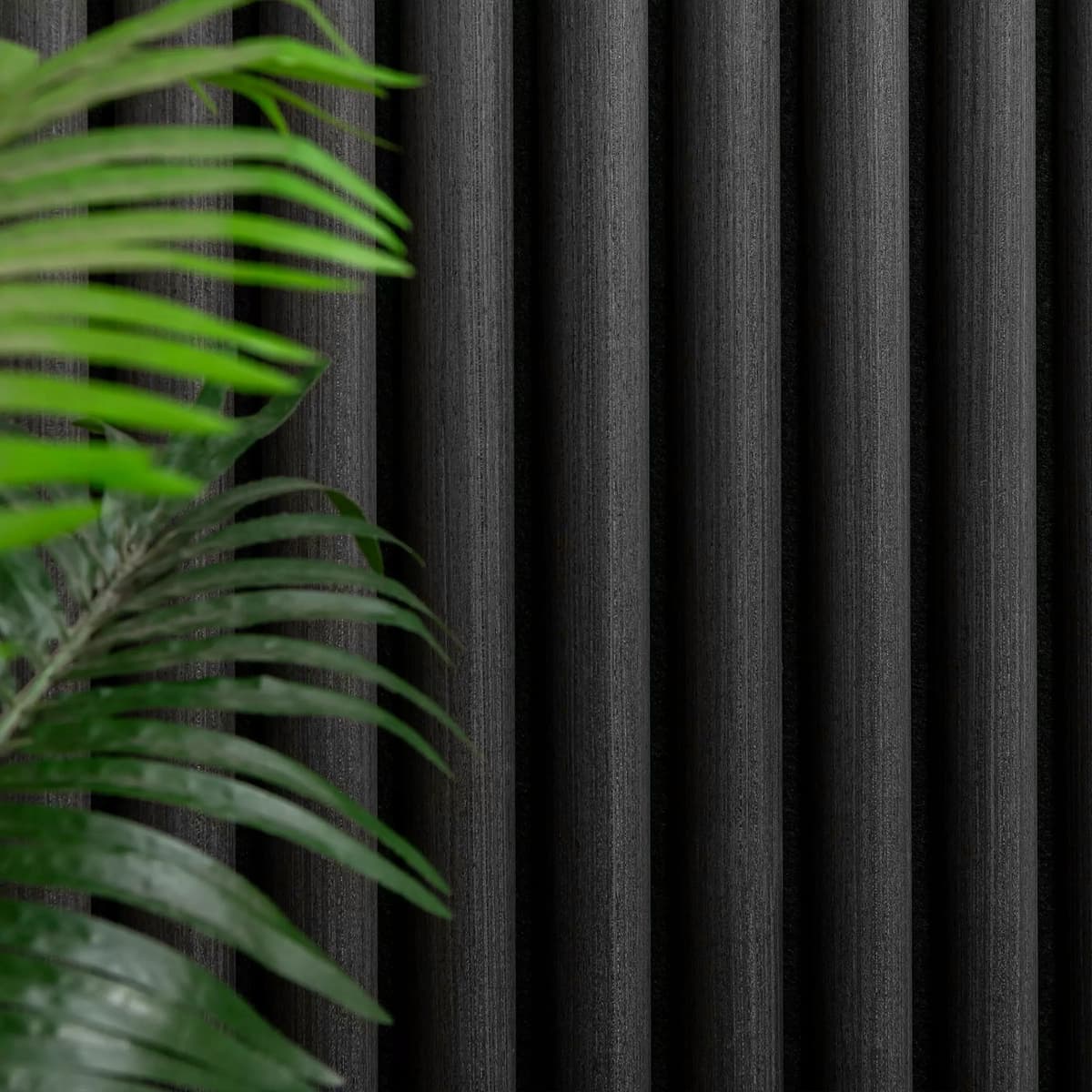
2. Acoustic Wood Slat Panels with AcuFelt™ Backing (NRC 0.65–0.85)
The best-performing aesthetically acceptable option for domestic spaces. Real wood veneer slats over engineered acoustic felt deliver NRC ratings of 0.65–0.85 depending on panel specification and coverage. The open slat profile allows sound to reach the felt backing directly without the additional resistance of a perforated face.
Best for: Living rooms, bedrooms, home offices, media rooms, any space where aesthetics and acoustic performance must coexist. The SoundPanel™ acoustic slat collection is the benchmark for this category.
3. Perforated Acoustic Wood Panels (NRC 0.55–0.80)
Solid wood face with perforations allowing sound through to felt or mineral wool backing. Lower open area than slat panels means slightly reduced sound passage to the absorbing material, but the solid face suits formal or traditional aesthetics where open slat profiles feel out of place.
Best for: Dining rooms, traditional interiors, commercial meeting rooms, ceilings. Browse the SoundPanel® Perforated Acoustic Wood Wall Panels at The Panel Hub.
4. Acoustic Foam Panels (NRC 0.50–0.90)
Variable performance depending on thickness and profile. Thin foam (25mm) has lower NRC than quality wood slat panels. Thick foam (100mm) can match or exceed them. Degrades in 5–10 years. Not suitable for domestic living spaces from an aesthetic standpoint.
Best for: Utility studios and recording booths.
5. Mineral Wool/Fibre Board (NRC 0.65–0.90)
High performance when left exposed. Usually covered in fabric for domestic applications. A core ingredient in professional fabric acoustic panels.
6. Decorative Slat Panels Without Acoustic Backing (NRC 0.05–0.20)
Essentially no acoustic value. Wood reflects sound. Paper or non-woven backing reflects sound. These are decorative products regardless of the “acoustic” label they may carry. Always verify with a published NRC rating.
How Much Coverage Do You Need?
NRC rating × coverage percentage = effective acoustic impact. For a room with NRC 0.80 panels covering 30% of wall surface:
- 0.80 × 30% = 24% of total sound energy absorbed per reflection cycle
- Over multiple reflection cycles, this compounds — reducing reverberation time by approximately 40–60% in a typical room
For living rooms and bedrooms, 25–35% wall coverage with NRC 0.75+ panels delivers clearly noticeable acoustic improvement. For home theatres and studios, target 40–60%.
Room-by-Room Sound Absorption Guide
The right level of sound absorption depends on the room’s use and how much natural absorption already exists from furnishings. These practical recommendations are based on rooms with hard floors and minimal soft furnishings — adjust down if the room has carpet, heavy curtains, or upholstered seating.
Home office (10–15 sqm): Target NRC 0.80+ panels covering 20–30% of wall area. One full wall behind the monitor is the most effective placement — it absorbs the sound bouncing off the wall your camera faces, which is the primary source of echo on calls. Expected improvement: RT60 reduction from 0.6–0.8 seconds to 0.2–0.3 seconds.
Living room (20–35 sqm): Target NRC 0.75–0.85 panels covering 25–35% of wall area. Focus on the longest bare wall and any wall directly opposite large windows. A feature wall running the full length of one side achieves both the coverage target and the visual centrepiece most clients are looking for.
Home theatre (15–25 sqm): Target NRC 0.85+ panels covering 40–55% of wall area. Side walls and rear wall are the priority — these are where the first-order reflections from the speaker array arrive. Treating the ceiling adds further control and is worth including in larger home cinema builds.
Open-plan kitchen/dining/living (40–70 sqm): This is the most challenging room type. Hard floors, high ceilings, minimal furnishings, and no acoustic breaks between zones create cumulative reverberation. Target 30–40% coverage of vertical wall surfaces, concentrating panels in the dining and living zones rather than kitchen. Ceiling baffles or floating panels can supplement wall coverage where additional treatment is needed.
Bedroom (12–18 sqm): Target NRC 0.70–0.80 panels covering 20–25% of wall area. The headboard wall and any wall that faces a window are the primary treatment zones. The goal here is general noise reduction and sleep quality — not studio-level absorption.
Frequently Asked Questions
- What type of wall panel absorbs the most sound?
- Panels with dense acoustic felt or fibreglass backing absorb the most sound, typically achieving NRC 0.85–1.00. For domestic use, wood slat panels with high-density felt backing (like TPH SoundPanel at NRC 0.85) achieve the same performance tier with a finish suitable for living spaces.
- Do thicker acoustic panels absorb more sound?
- Generally yes, especially at lower frequencies. A 25mm panel absorbs mid and high frequencies effectively. A 50mm panel extends absorption further into the bass range. For most domestic applications, 25mm panels are sufficient — true bass frequency problems require treatment beyond standard wall panels.
- How do I know if my room needs acoustic panels?
- Clap once loudly in the room. If you hear a clear flutter or decay (the echo dying slowly over 0.5+ seconds), the room has too much reverberation and will benefit from acoustic treatment. Rooms with only carpet and soft furnishings usually don’t need panels; rooms with bare walls and hard floors almost always do.
- Can acoustic panels be used on ceilings as well as walls?
- Yes. Ceiling installation is particularly effective in open-plan spaces and home theatres. The fixing method needs to account for the additional structural requirement — French cleat systems and purpose-designed ceiling brackets are the most reliable options.
- What’s the difference between sound absorption and sound insulation?
- Sound absorption reduces echo and reverberation within a room. Sound insulation (soundproofing) blocks sound from passing between rooms. Acoustic wall panels provide absorption; they do not provide meaningful insulation.
Browse the full acoustic panel range at The Panel Hub with published NRC ratings for every product — the most important number to look for when choosing panels for sound absorption. The SoundPanel™ range includes acoustic slat, rectangle, and perforated formats — each achieving NRC 0.85 with the same AcuFelt™ backing system.