
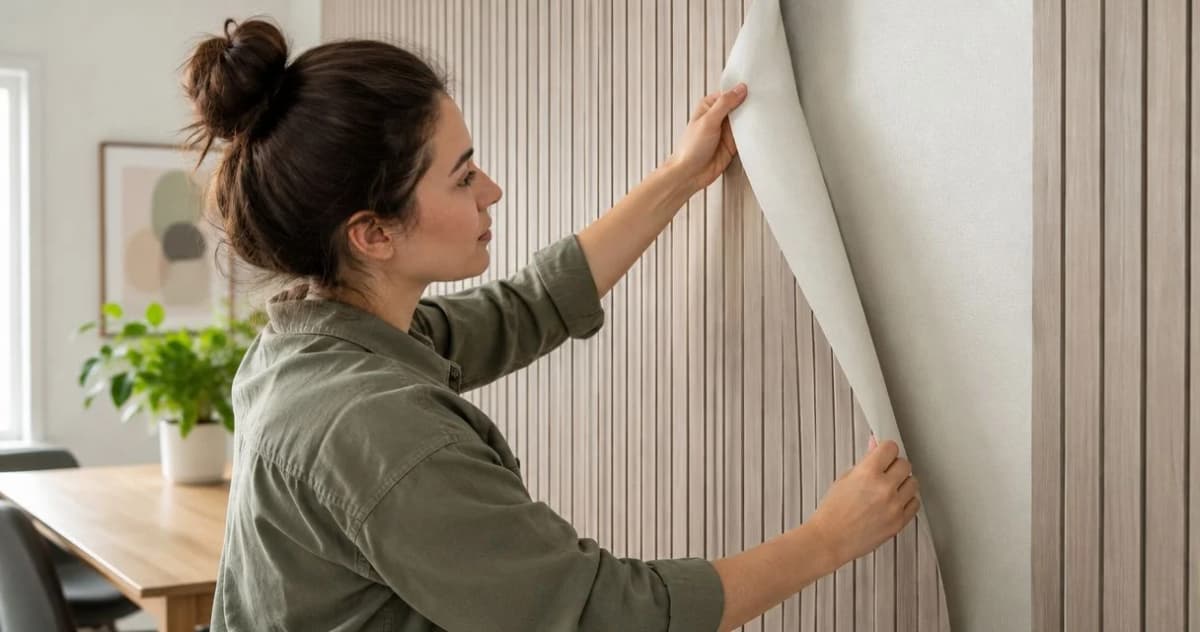
Yes, peel and stick wall panels can be removed without damage, but clean removal depends on the adhesive, the paint’s condition, and the removal method. Even when the panel comes off intact, adhesive residue or lifted paint can leave you with repairs. Treat damage-free removal as a possibility—not a promise—and test a hidden area before committing to a full wall.
- Can peel and stick wall panels be removed without damage? Yes, but paint condition and adhesive determine the outcome.
- Peel and stick wall panels are not automatically renter-safe; check surface restrictions and removal instructions.
- Stop removal immediately if paint stretches, flakes, or lifts with the adhesive.
- The Panel Hub wall panels suit homeowners planning decorative upgrades; confirm each panel’s mounting method before buying.
Can peel and stick wall panels be removed without damaging paint?
Peel and stick panels can separate cleanly when the adhesive releases before the paint loses its bond to the wall. If the adhesive holds more strongly than the paint does, the paint comes away with the panel. A removable label does not override an unsuitable surface or poorly bonded coating.
For a rental, read your lease and get permission before applying adhesive panels. The guide to installing wall panels in a rental without damaging walls covers the broader installation decision; removal instructions still need to match the exact product you choose.
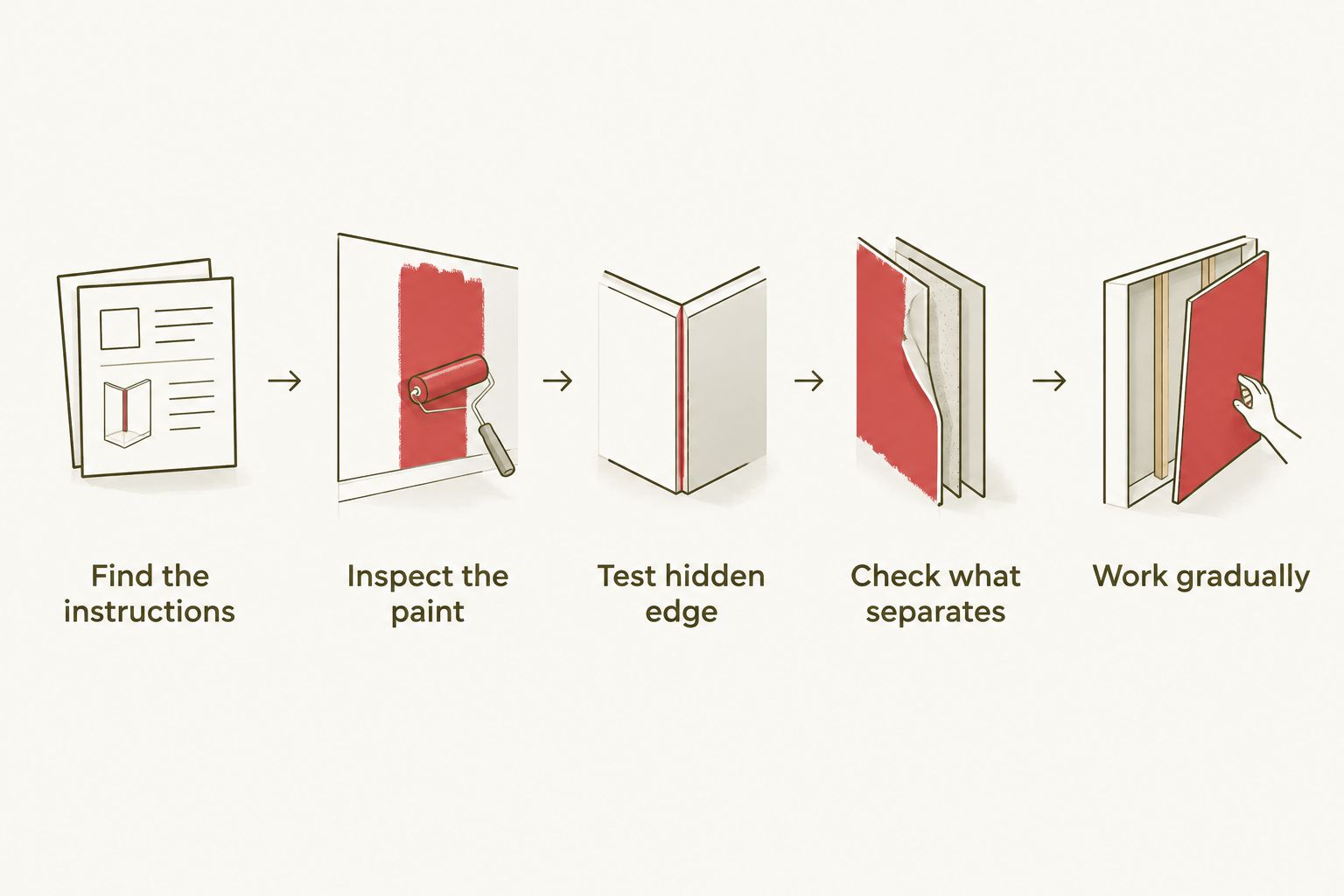
Use this sequence before taking down an entire feature wall:
- Find the instructions. Identify the panel and adhesive, then check the manufacturer’s removal method and surface restrictions.
- Inspect the paint. Look for peeling edges, bubbles, chalky residue, damp patches, and previous repairs near the panels.
- Test a hidden edge. Support the panel and release a small, inconspicuous area using the specified method.
- Check what separates. Continue only when the adhesive releases without taking paint or wall material with it.
- Work gradually. Support each released section, avoid sudden outward pulls, and stop when the wall surface starts moving.
A clean test is permission to proceed carefully, not a guarantee that the whole wall will behave identically. Different sections can have different paint layers, repairs, or adhesive coverage.
Why this matters before your 2026 room upgrade
A panel can look temporary while using an adhesive intended to stay put. Thin, lightweight construction tells you little about how that adhesive will behave on your bedroom or living-room paint.
The practical question is not just whether you can pull the panel off. It is whether the painted surface underneath will remain intact, clean, and visually consistent with the surrounding wall.
Before your 2026 project, decide which outcome you actually need: no holes, no lifted paint, no residue, or no visible change at all. Those are different requirements. An installation can avoid drilling and still require repainting after removal.
Why peel and stick removal results vary
The bond between a panel and a wall involves several layers. Failure can happen at the adhesive, within the paint, between paint coats, or at the drywall surface.
- Adhesive formulation. A permanent adhesive and an adhesive designed for removal serve different purposes. Use the product’s stated removal guidance rather than assuming all sticky backing behaves alike.
- Paint adhesion. Flaking, chalking, or poorly bonded paint gives the adhesive a weak surface to pull away.
- Paint cure. Paint that feels dry is not necessarily fully cured. Follow the paint manufacturer’s cure guidance before installing anything adhesive-backed.
- Wall condition. Dampness, damaged drywall paper, and unsound patching compound need attention before installation or removal.
- Removal technique. Sudden pulling, unsupported panels, and tools forced against the wall concentrate force on the painted surface.
- Previous installation changes. Extra glue, mounting tape, or sealant changes the removal task. The original peel and stick instructions no longer describe the entire assembly.
Do not judge suitability by paint sheen alone. Knowing that a wall is matte or satin does not establish that the coating is sound, cured, or approved for a particular adhesive.
Which removal approach should you use?
Start with the panel manufacturer’s method, not the strongest tool available. Heat, solvents, and scraping are not interchangeable fixes; each introduces a different risk to the finish.
| Approach | Best for | Practical benefit | Main limitation |
|---|---|---|---|
| Manufacturer-specified release method | Panels with identifiable removal instructions | Matches the intended adhesive system | Still depends on the wall being suitable |
| Gentle heat, when expressly permitted | Adhesives whose instructions allow warming | Can soften an adhesive for release | Excess heat can damage paint or deform panels |
| Compatible residue remover | Adhesive left on intact paint | Targets residue after panel removal | An incompatible cleaner can alter the finish |
| Controlled professional removal | Walls already showing paint or drywall failure | Allows the removal and repair to be planned together | Does not guarantee preservation of the existing paint |
Manufacturer-specified release: the first choice
Look for instructions covering removal direction, approved surfaces, and any permitted tools. Stretch-release tabs, when present, require their own specified technique; do not substitute a generic peeling motion.
If the backing is unidentified, avoid treating advice for wallpaper, decorative film, or mounting strips as proof that it applies to your panel. Similar-looking products can use different adhesives.
Gentle heat: only with permission
Use heat only when the panel and adhesive instructions permit it. Keep the heat source moving and follow the stated limits; do not invent a temperature or heating duration.
Stop if the panel distorts, the finish changes, or paint starts lifting. More heat is not the answer to a paint layer that is already separating.
Residue remover: a separate compatibility test
Once the panel is off, inspect the paint before applying any cleaner. Test a paint-compatible residue remover in a hidden area and follow its label, including ventilation and handling directions.
Avoid flooding the wall or rubbing aggressively. A clean-looking patch is not a successful result if the cleaner also changes the paint’s color or sheen.
How do you remove panels without pulling off the paint?
Support the panel and separate the adhesive gradually, using the release direction specified for that product. Pulling a large section straight toward you gives you little control over where the bond fails.
Clear nearby furniture and protect the floor before starting. Keep the released section supported so its weight does not pull on the portion still attached to the wall.
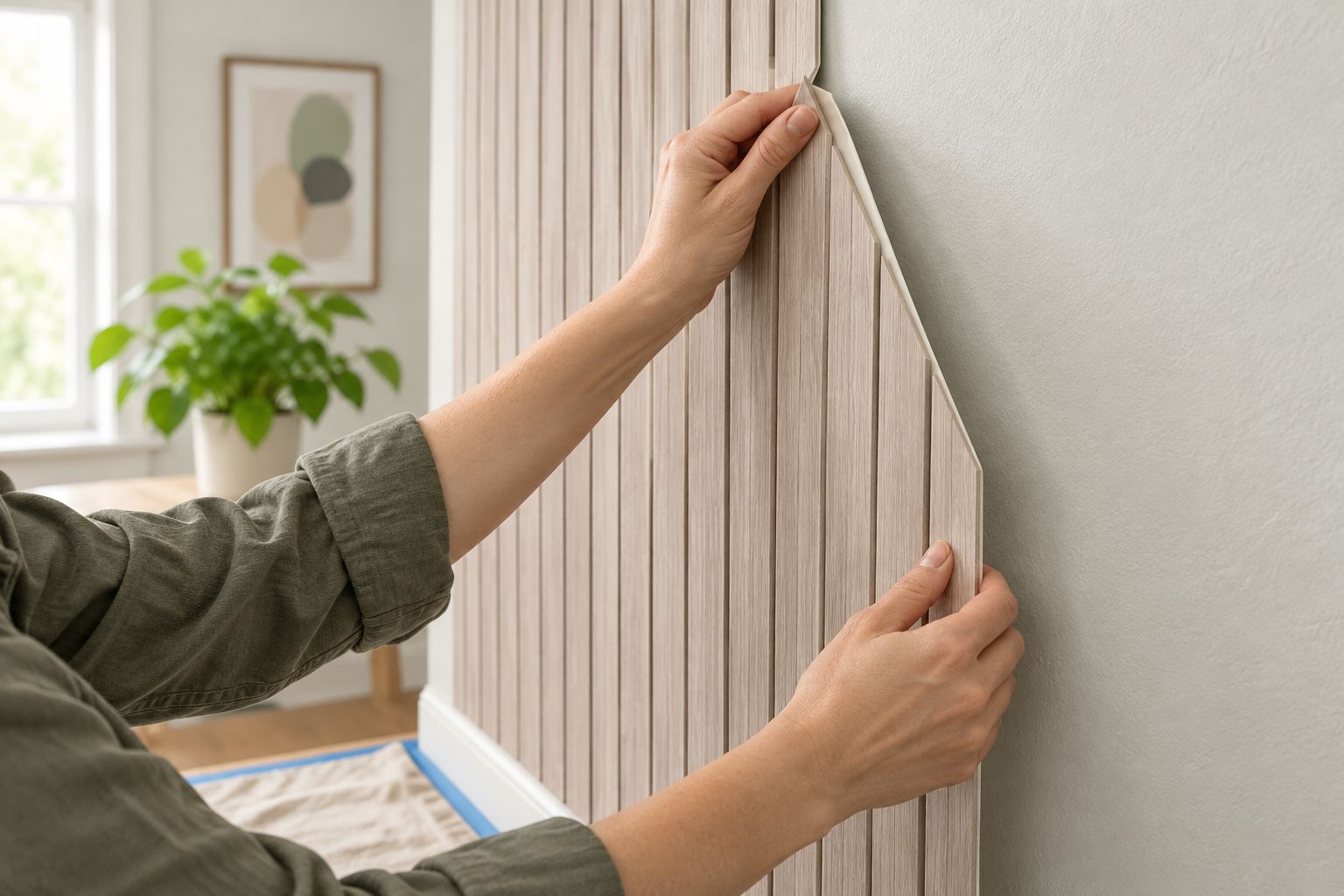
If an edge resists, pause and reassess. Do not drive a metal scraper behind the panel or use the wall as a lever point. A tool that frees the panel by gouging the paint has not preserved the finish.
Work panel by panel rather than loosening the whole installation at once. This gives you a chance to inspect each exposed section and change course before a small problem becomes a much larger repair.
What should you do when paint starts coming off?
Stop pulling as soon as paint lifts with the adhesive. Continuing the same motion can enlarge the damaged area without making the remaining panel easier to release.
Check the exposed surface to identify the problem:
- Adhesive residue: The coating remains in place, but sticky material sits on top.
- Lifted paint: A paint layer comes away, exposing an earlier coat, primer, or the underlying surface.
- Torn drywall paper: The paper facing separates or leaves a fuzzy surface.
- Raised or crumbling material: A previous repair or damaged wall surface is breaking apart.
These conditions need different repairs. Residue calls for a compatible cleaning method; loose paint needs a sound edge before refinishing; torn drywall paper needs an appropriate sealer and repair system before painting.
Do not smear filler over loose adhesive or peeling paint. Prepare a stable surface first, then follow the repair product’s directions for sealing, filling, priming, and painting.
Are peel and stick panels safe for renters in 2026?
Peel and stick panels are not automatically safe for rental paint. Written permission and a successful hidden-area test reduce uncertainty, but neither makes an unsuitable adhesive removable.
For a 2026 rental project, ask what the landlord expects at move-out. Permission to decorate does not necessarily mean permission to leave residue, patch marks, or a repainted feature wall.
If keeping the existing paint untouched is non-negotiable, do not install a panel whose manufacturer cannot confirm compatibility with that surface. Choose an approved alternative rather than relying on a renter-friendly description alone.
Photograph the wall before installation and keep the panel instructions. Those records help you distinguish existing defects from changes that appear during removal, although they do not replace the lease requirements.
What should you check before buying decorative wall panels?
Choose the mounting system alongside the appearance. Wood grain, slat spacing, and geometric patterns affect the room’s look; adhesive and fixing requirements determine what happens to the wall underneath.
The Panel Hub sells acoustic and decorative wall panels, but that category description does not establish peel and stick installation or damage-free removal. Check the instructions for the exact panel rather than transferring a claim from another product.
Before your 2026 order, confirm:
- Whether the panel uses adhesive backing, separate glue, mechanical fixings, or a combination.
- Which painted surfaces the manufacturer allows.
- Whether removal instructions are provided.
- Whether the panel needs extra adhesive at edges or joints.
- Whether removal is expected to leave holes, residue, or surface repairs.
Easy installation and easy removal are different benefits. A product that installs quickly can still be intended as a lasting wall finish.
Will repainting make the wall look unchanged?
Repainting repairs the finish only after the underlying surface is properly prepared. Painting directly over torn paper, adhesive residue, or loose edges leaves the original problem underneath the new coating.
A small touch-up can also remain visible because the existing paint has aged or the repaired area has a different texture. Assess the dry result under the room’s normal lighting before deciding whether the repair is complete.
For your 2026 removal plan, allow for the possibility of repainting the affected wall rather than assuming a small dab will disappear. If an earlier installation also used nails or screws, the separate guide to filling nail holes in wood wall paneling addresses that repair task.
FAQ
Can peel and stick wall panels be removed without damage?
Yes, peel and stick wall panels can be removed without damage when the adhesive releases without lifting the paint or underlying wall surface. Check the exact product’s removal instructions and test an inconspicuous area first.
Will peel and stick wall panels take paint off a rental wall?
Peel and stick wall panels can take paint off a rental wall if the adhesive holds more strongly than the coating. Get permission before installation and do not assume that avoiding nails means avoiding damage.
Can I put peel and stick panels on freshly painted walls?
Wait until the paint has fully cured according to the paint manufacturer’s instructions and confirm that the panel adhesive allows that surface. Paint that feels dry is not necessarily ready for adhesive-backed decoration.
Should I use a hair dryer to remove wall panels?
Use a hair dryer only if the panel and adhesive instructions permit gentle heat. Follow the specified method and stop if the panel deforms or the paint starts to lift.
How do I remove sticky residue without ruining the paint?
Use a residue remover that is compatible with the painted surface, following its label and testing a hidden spot first. Stop if the paint softens, transfers to the cloth, or changes appearance.
Can I reuse peel and stick panels after removing them?
Reuse depends on the panel’s condition and the manufacturer’s instructions. A panel coming off intact does not establish that its adhesive backing will hold safely again.
Are The Panel Hub wall panels guaranteed to come off without paint damage?
Do not assume The Panel Hub wall panels will remove without paint damage. Confirm the exact product’s mounting requirements, approved surfaces, and removal guidance before installation.
One last thing
An undamaged wall can still look different after panels come down. Covered paint can differ from the surrounding exposed finish, so successful adhesive removal does not automatically mean an invisible result.
Before decorating, decide whether you would accept repainting that wall later. That decision is more useful than any blanket promise that a sticky-backed panel is temporary.
Related guides
- Best peel and stick wall panels for renters
- Click-lock vs. adhesive wall panels compared
- Best wall panels for DIY beginners