
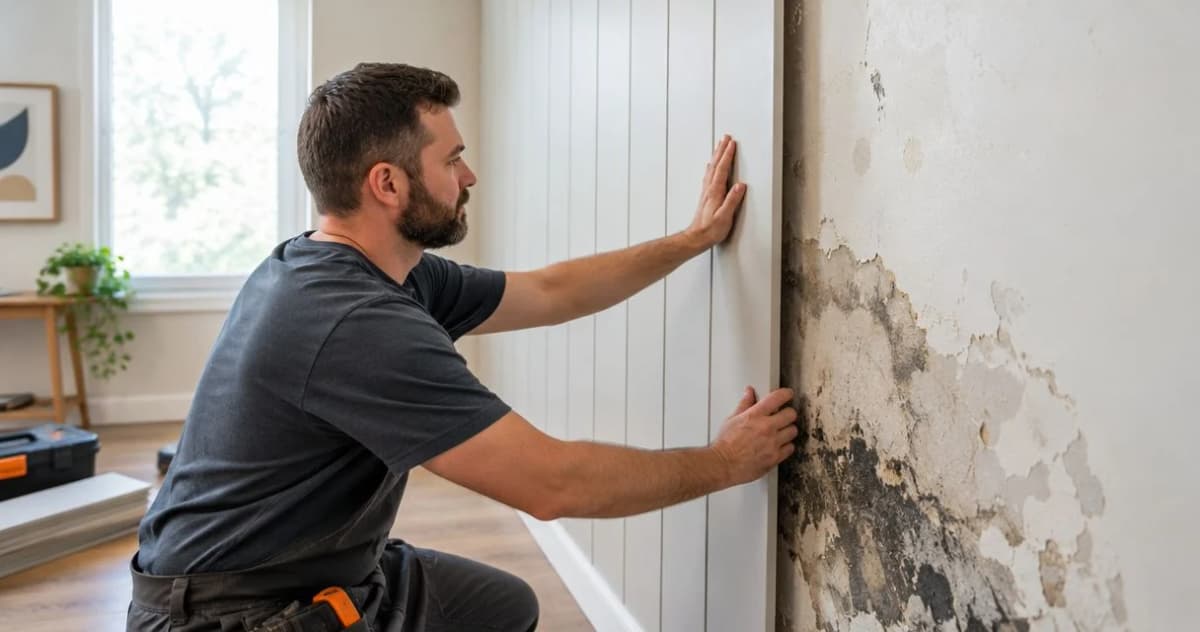
No—do not install wall panels over drywall that is still wet, moldy, swollen, soft, or deteriorating. You can panel over previously water-stained drywall only after the moisture source is fixed, the wall assembly is dry, and the drywall remains structurally sound; decorative panels do not repair water damage.
- Can you install wall panels over water damaged drywall? Only after fixing moisture and confirming a dry, sound substrate.
- The Panel Hub wall panels are best for decorating repaired walls, not hiding unresolved water damage.
- Replace softened, swollen, crumbling, or mold-damaged drywall before installing decorative wall panels.
- EPA guidance recommends drying water-damaged materials within 24–48 hours to help prevent mold growth.
Why this matters
A clean-looking feature wall can hide an unfinished repair. Once panels cover the surface, you lose easy access to inspect the stain, check for recurring dampness, or remove damaged drywall.
The adhesive connection matters, too. A panel attached to loose paint or damaged drywall paper depends on that weak layer, regardless of how firmly the adhesive grips it. Before choosing a mounting method, read the guide to using construction adhesive for wall panels.
For a 2026 renovation, treat moisture repair and decorative installation as separate jobs. Finish the repair first, then choose the wall finish.
Can you install wall panels over water-damaged drywall?
Only if the damage is historical and the remaining drywall passes inspection. A dry stain is not automatically a reason to replace an otherwise intact board, but a stain alone cannot establish that the wall is ready.
Use the condition of the wall—not the panel material—to decide what happens next.
| Wall condition | Can you panel over it? | Required next move |
|---|---|---|
| Old discoloration; leak repaired; drywall dry, firm, and intact | Yes, after inspection and preparation | Verify the wall assembly is dry and follow panel installation instructions |
| Surface feels dry, but the moisture source is unknown | Not yet | Find and correct the source; investigate concealed dampness |
| Soft, swollen, sagging, crumbling, or separating drywall | No | Remove damaged material and restore a suitable substrate |
| Visible mold or persistent musty odor | No | Address the moisture and assess the extent before closing the wall |
| Drywall exposed to sewage or contaminated floodwater | No | Obtain appropriate remediation rather than covering the material |
Do not confuse cosmetic discoloration with material failure. A firm, dry board with an old stain presents a different repair decision from a board whose paper facing has separated or whose gypsum core has softened.
The reverse also matters: an unmarked surface does not prove the cavity is dry. Check the circumstances of the leak and the surrounding assembly before covering it.
Previously stained drywall: inspect before keeping it
Previously stained drywall is the best candidate for retention when the leak is resolved, the board remains firm, and its facing and seams are intact. Keeping sound material avoids unnecessary demolition. The limitation is that surface appearance cannot show everything behind it.
Inspect the stain edges, nearby trim, seams, and the wall below the original leak. Look for bubbling paint, lifted paper, distortion, and recurring discoloration. Do not simply paint the stain and treat its disappearance as evidence of a completed repair.
A moisture meter helps assess the wall, but its reading needs context. Use the correct setting for the material and compare affected locations with a known-dry area of similar construction; do not apply a wood-moisture percentage to drywall as a universal pass mark.
Soft or swollen drywall: replace the damaged material
Replacement is the right choice when water has compromised the drywall itself. Paneling needs a suitable substrate or an approved fastening arrangement, not a decorative bridge across damaged board.
Replacement gives you access to inspect the cavity and restore the wall. It also adds demolition, drying, and finishing work. Do not skip that work merely because a thick panel would hide the unevenness.
Where drywall forms part of a fire-rated or other specified assembly, restore the required construction. Decorative paneling is not a substitute for missing gypsum board or required joint treatment.
Moldy drywall: resolve the moisture before decorating
Mold on porous drywall is not a stain to seal behind a new finish. EPA guidance explains that mold can grow into porous materials, making complete removal difficult; affected material can require disposal.
EPA's household mold-cleanup guidance uses about 10 square feet as a scope marker for a small area that homeowners can often address themselves. Larger areas, contaminated water, suspected HVAC involvement, and health concerns call for additional guidance or professional assessment. Area alone does not determine whether a job is appropriate for DIY work.
For your 2026 project, record where the damage appeared and what caused it before covering the repaired wall. That record helps you recognize a recurrence rather than treating it as a new decorating problem.
Why the repair approach varies
Water damage does not have a single repair method. These factors determine whether drywall can remain or needs removal:
- Water source: A repaired clean-water leak differs from sewage exposure or contaminated flooding.
- Exposure duration: Longer wetting gives moisture more opportunity to reach porous materials and concealed spaces.
- Drywall condition: Firm board with intact paper differs from swollen gypsum, loose facing, or failed seams.
- Concealed materials: Insulation, framing, and the back of the drywall also need assessment when affected.
- Mold extent: A localized visible patch differs from widespread growth or suspected hidden contamination.
- Recurring moisture: Condensation or an unresolved leak must be corrected before enclosing the wall.
No panel style changes those factors. Wood, PVC, and shower panel finishes each require an appropriate installation system and a suitable underlying assembly.
How do you prepare a previously water-damaged wall for panels?
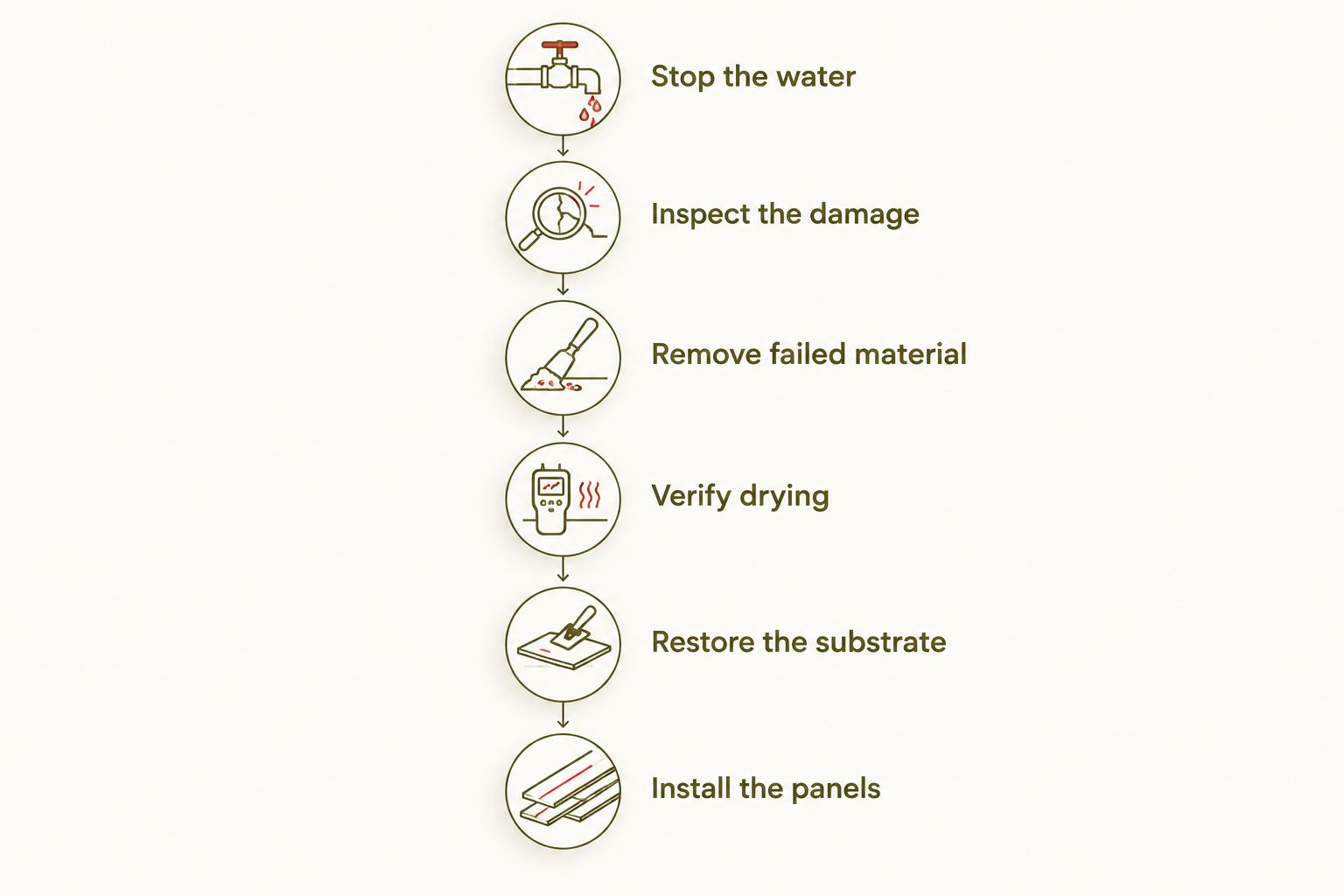
Follow this sequence before laying out your feature wall. Do not advance to panel installation while the cause or extent of the damage remains unresolved.
- Stop the water. Repair the plumbing, roof, window, or other identified source. If water has reached electrical equipment, keep clear and obtain qualified electrical help before work begins.
- Inspect the damage. Check the drywall, trim, adjoining surfaces, and accessible cavity. Seek qualified help when the source, contamination, or extent is uncertain.
- Remove failed material. Remove damaged porous materials as the remediation requires. Avoid disturbing suspected hidden mold without an appropriate cleanup plan.
- Verify drying. Dry the affected assembly and assess it with suitable methods. A dry-looking face is not proof that insulation or the back of the board has dried.
- Restore the substrate. Replace removed drywall, secure repairs, and prepare a clean, sound surface. Follow the panel and adhesive manufacturers' requirements for flatness, coatings, fastening, and curing.
- Install the panels. Begin only after the repair is complete and the substrate meets the installation requirements. Keep required access to plumbing and electrical components.
Take photographs before closing any opened wall. Include the repaired source, the exposed cavity, and the finished substrate so you have a useful record of what the decorative panels will conceal.
Check adhesion separately from moisture
A dry wall can still be unsuitable for adhesive. Peeling paint, dusty joint compound, damaged facing paper, and incompatible coatings need attention before installation.
Follow the specified surface preparation rather than adding more adhesive. Mechanical fixings also need the correct support; fastening into deteriorated drywall does not restore its strength.
How long should you wait after drywall gets wet?
The EPA recommends drying water-damaged materials within 24–48 hours to help prevent mold growth. That window is a prompt to act quickly, not a guarantee that drywall is safe to cover after the clock runs out.
There is no universal installation waiting period. Drying depends on the amount of water, wall construction, airflow, and whether insulation or concealed surfaces became wet. Verify the condition rather than scheduling panels around an assumed drying time.
For a 2026 installation schedule, leave the decorating date dependent on the repair inspection. Newly applied compounds, primers, and adhesives also have their own drying or curing instructions; those requirements remain separate from moisture remediation.
Can waterproof panels make damaged drywall safe?
No—water-resistant or waterproof panel faces do not repair damaged drywall behind them. Even a wet-area panel system needs the substrate, joints, edges, penetrations, and installation details specified by its manufacturer.
This matters especially around showers and bathroom plumbing. Covering an unresolved leak can conceal continued wetting, while a surface designed to resist water says nothing about the condition of the existing board.
Choose a bathroom wall system for the actual exposure, not just the room name. A decorative finish outside the splash area and a shower enclosure have different demands. Confirm the complete assembly before buying materials.
Should you use battens to avoid replacing damaged drywall?
No—battens are not a moisture repair. A manufacturer-approved batten arrangement can provide panel support or accommodate an installation layout, but it does not resolve mold, contaminated material, or wet insulation behind the finish.
Best for a verified, sound wall, an approved batten installation changes how panels attach. Its limitation is added wall depth and the need to resolve trim, outlets, and other junctions correctly. It must not become a way to leave failed drywall concealed.
Do not create an improvised cavity and assume it will dry itself. Any assembly change should suit the wall's moisture conditions and the panel installation instructions.
When is it time to choose the decorative finish?
Choose the finish after you know which wall materials are staying and how the repaired surface will be prepared. That order lets you plan panel edges and trim against the actual finished substrate rather than an assumed repair.
The Panel Hub wall panels are best for homeowners decorating a repaired, dry wall—not concealing water damage. Acoustic and decorative finishes serve the room's appearance or sound treatment; neither replaces moisture remediation.
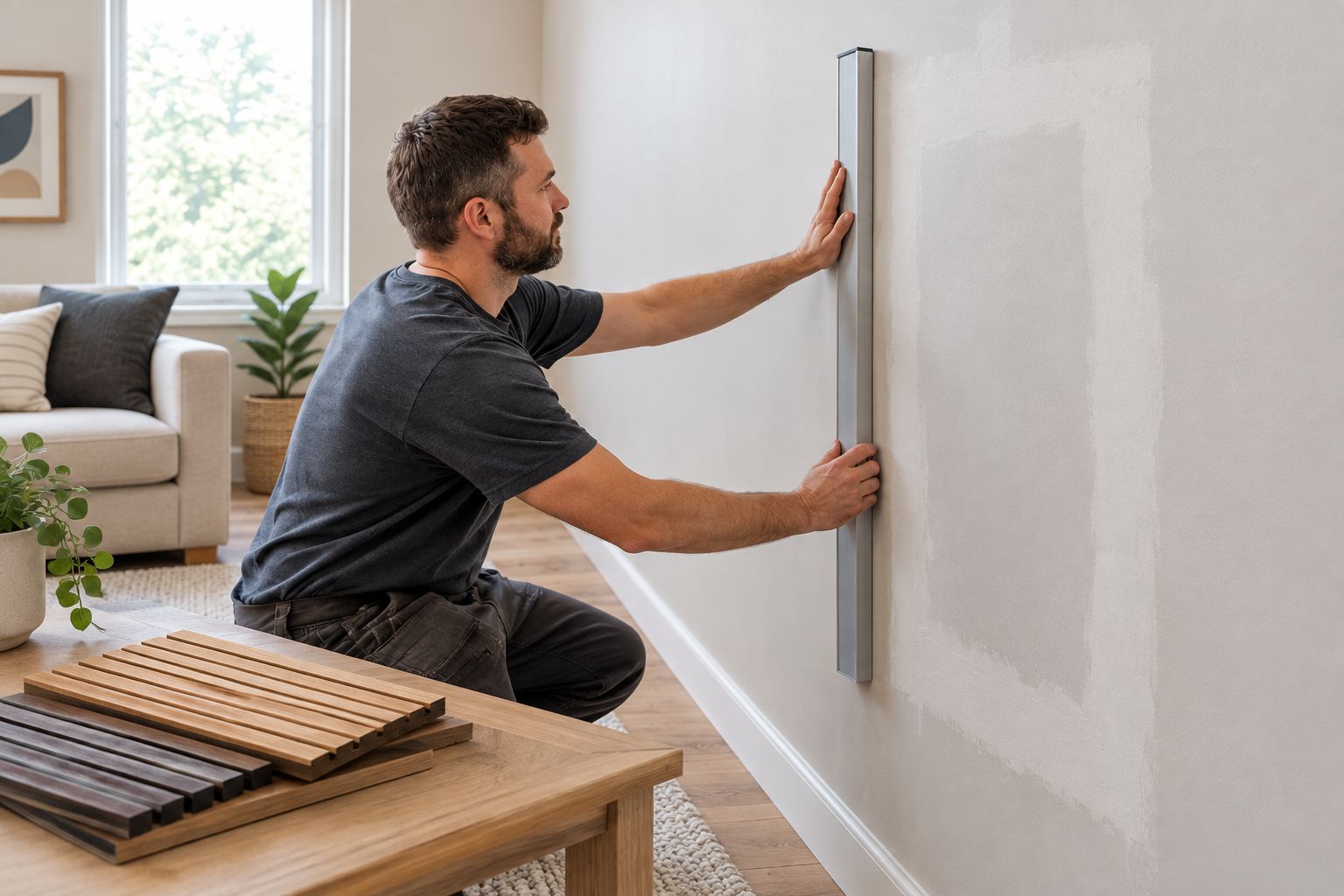
For a 2026 room refresh, separate the design decision from the repair decision. First confirm that the wall is suitable; then consider panel texture, room use, and installation details.
FAQ
Can I cover an old water stain with wall panels?
Yes, if the moisture source is repaired and the drywall is dry, firm, and intact. Inspect the affected assembly before covering it; an old stain alone does not establish that hidden materials are dry.
How quickly should I dry wet drywall?
EPA guidance recommends drying water-damaged materials within 24–48 hours to help prevent mold growth. This is not an automatic clearance to install panels; damaged board or wet concealed materials still need attention.
How much mold is too much for a DIY wall repair?
EPA guidance uses about 10 square feet as a scope marker for small household mold-cleanup areas. Larger areas, contaminated water, HVAC involvement, or health concerns warrant additional guidance or professional assessment.
Can I glue panels onto drywall that used to be wet?
Yes, only if the retained drywall is dry, sound, and suitable for the specified adhesive. Loose paint, damaged paper, or a weakened gypsum core must be addressed before installation.
Will PVC panels stop mold behind the wall?
No, PVC panels do not remove mold or correct the moisture source behind them. Repair and assess the underlying wall before installing a suitable panel system.
Can I install The Panel Hub wall panels after replacing damaged drywall?
Yes, once the replacement substrate is dry, sound, and prepared to the selected panel’s installation requirements. Complete the moisture repair and required drying or curing before decorating.
Do I need a moisture meter before installing panels?
A suitable moisture meter helps assess a previously wet wall, but readings require the correct material setting and interpretation. Combine measurements with inspection and an understanding of where the water traveled.
One last thing
The wall's painted face is only the surface you can see. Before closing a repaired wall in 2026, ask what happened to the insulation, framing, and back of the drywall—not just whether the stain disappeared.
If you cannot explain where the water came from and how the affected assembly was checked, pause the panel installation. A finished feature wall should mark the end of the repair, not hide the unfinished part.
Related guides
- Installing wall panels around bathroom plumbing fixtures
- Choosing wall panels for basement walls
- Click-lock vs. adhesive wall panels