
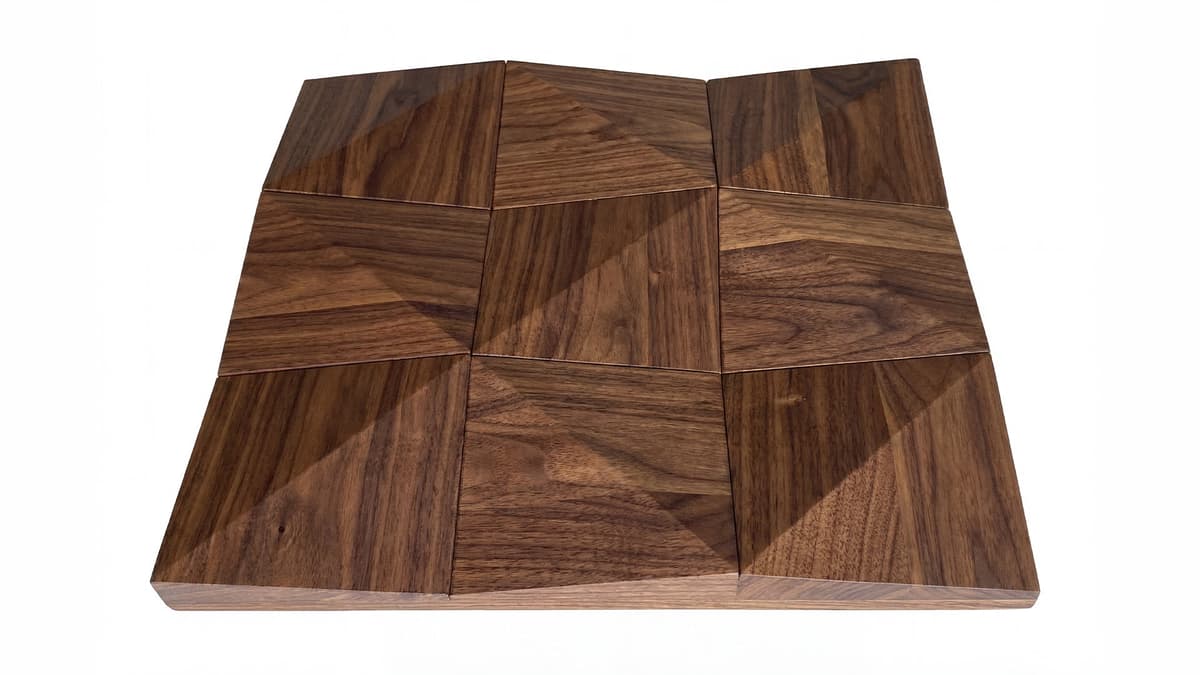
The diamond — two triangles joined at the base — is one of the oldest geometric motifs in decorative design, and one of the most versatile. In wall panels, diamond patterns create a sense of upward movement and visual expansion that few other shapes match. Whether rendered in solid wood, stone, or tile, a diamond-patterned wall is difficult to ignore.
This guide covers how to use diamond pattern wall panels, which rooms they suit, and how to choose the right scale and material for your project.
Table of Contents
What Makes the Diamond Pattern Work
The diamond has two visual properties that make it particularly effective on walls. First, its vertical axis creates upward movement — a diamond-patterned wall tends to make a room feel taller. Second, the diagonal lines of a diamond grid resist the horizontal and vertical grain of furniture and architecture, creating visual tension that keeps the eye engaged.
In wood panels specifically, the diamond shape exposes two different grain orientations within each unit (if each half of the diamond is cut from a different piece), creating subtle tonal variation across the surface.
Diamond Patterns in Wood Mosaic Panels
The most direct way to achieve a diamond wall pattern in solid wood is through mosaic tile panels where paired triangles form diamond units. Our Walnut Triangle Solid Wood Panels can be installed to create a full diamond grid — the triangles are arranged in mirrored pairs, and the opposing grain directions create the distinctive two-tone effect within each diamond.
This is a more sophisticated outcome than a printed or stamped diamond pattern because the effect comes from real timber grain, not a manufactured simulation. Every diamond looks slightly different because the wood is real.
Scale: Small Diamond vs Large Diamond Patterns
Scale matters significantly with diamond patterns:
- Small-scale diamonds (where individual units are 50–100mm across): Create an all-over texture effect rather than a bold geometric statement. Better for smaller rooms or rooms with a lot of other visual elements.
- Large-scale diamonds (150–300mm+ individual units): Make a bold, graphic statement. Better for large walls with clear sightlines — living rooms, dining rooms, hotel lobbies.
In residential interiors, a medium scale — where you can clearly count individual diamonds from the other side of the room but the pattern doesn’t fragment at close range — tends to work best.
Room-by-Room Diamond Panel Ideas
Living room
A diamond-patterned wood wall on the main feature wall (typically behind the sofa or fireplace) creates the kind of visual anchor that makes a living room feel complete. The upward movement of the diamond pattern draws the eye toward the ceiling, which emphasises ceiling height.
Bedroom
Behind a bed, a diamond pattern in dark walnut creates a dramatic, jewel-box quality — particularly effective in bedrooms with rich, layered textiles. Read our full guide to geometric wall panels for bedrooms for styling ideas.
Hallway
Diamond panels on a hallway wall make a strong first impression. The vertical movement of the diamond pattern is particularly useful in hallways where you want to suggest height in what is often a low-ceilinged space.
Dining room
A diamond pattern behind a dining table creates a backdrop that adds formality and occasion to the room. Pair with pendant lighting that highlights the texture of the wood surface.
Mixing Diamond Patterns with Other Design Elements
Diamond-patterned walls pair well with:
- Plain, unfussy furniture: The diamond pattern is doing significant visual work — furniture should be clean-lined and undecorated
- Metallic accents: Brass, bronze, or copper pick up the warmth in walnut timber tones
- Layered textiles: Deep-pile rugs and velvet cushions create a contrast of hard geometry against soft texture
Geometric Panel Formats Beyond Diamonds
If you’re drawn to the geometric vocabulary but want to explore other shapes, the GroovePanel® collection covers several distinct pattern formats: concentric squares, honey mosaic, crossing lines, and standard 3D geometric panels. Our guide to geometric wood wall panel patterns and styles compares these formats in detail.
Installation and Ordering
Diamond mosaic panels are installed using adhesive onto a flat, prepared wall surface. The key to a clean diamond grid is establishing true horizontal and vertical reference lines before placing any tiles. Starting from the centre of the wall and working outward ensures symmetrical margins at the edges.
Order a sample to see the timber tone in your lighting before committing. Then explore the full range at GroovePanel® Geometric Wood Wall Panels.