
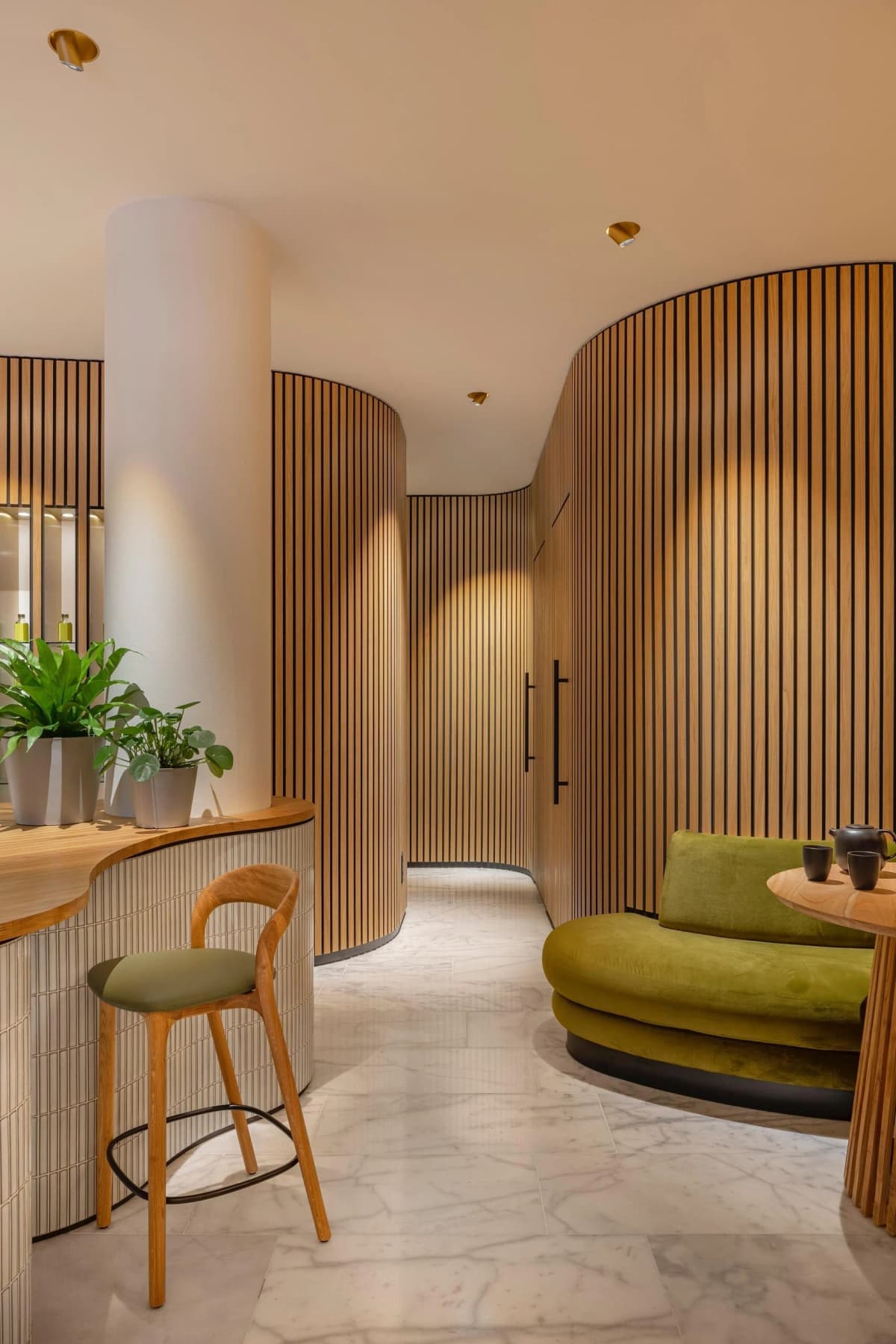
The home office got a lot of attention after 2020, but most of the upgrades focused on ergonomics and technology rather than design. The wall behind your desk — the surface that fills your field of vision for eight hours a day, and backgrounds every video call you make — usually gets painted white and forgotten. That’s a missed opportunity.
Geometric wood wall panels are one of the most effective upgrades for a home office. Here’s why they work, what patterns suit a workspace, and how to install them without disrupting the room’s function.
Table of Contents
What Your Office Wall Is Actually Doing
The wall behind your desk serves two simultaneous purposes: it’s the visual environment you spend most of your working day looking at, and it’s the background visible to everyone on your video calls. A blank white wall doesn’t do either job particularly well — it’s visually inert for you and professionally anonymous for your colleagues.
A geometric wood panel wall changes both. For you, it adds visual interest that is complex enough to be engaging at a glance but not so busy that it competes for attention while you’re working. For video calls, it immediately signals that your workspace is designed and intentional.
Which Patterns Work Best in a Home Office?
Crossing lines — the cleanest option for focus
The Crossing Lines Solid Wood Panel is the most appropriate pattern for a workspace. Its regular grid structure is calm and architectural — it reads as background rather than foreground, adding texture and warmth without demanding attention. It’s the least distracting of the geometric formats, which matters in a room where you need to concentrate.
Concentric square — best for a creative office
If your work is creative — design, writing, strategy, anything that benefits from visual stimulation — the 3D Concentric Square Panel is a more interesting choice. Its depth and shadow create a meditative focal point that can be genuinely useful when you’re thinking hard about something. It’s more demanding visually than crossing lines, but in a creative context that’s a feature rather than a bug.
Honey mosaic — best for reducing screen fatigue
The organic, irregular quality of the Honey Mosaic Panel is a good counterpoint to the hard geometry of screens and monitors. Opposite from a desk, a honey mosaic wall gives the eye a natural, restorative surface to rest on during breaks from screen work — which is linked to reduced eye fatigue over a working day.
Scale: How Much of the Wall to Panel
Full wall behind the desk: the most impactful and the best background for video calls. A full wall is also the most efficient use of panels if you’re buying a single quantity — partial installations require more cutting and waste more material.
Partial wall (the section visible above the monitor): a smaller installation that focuses the panelled area on what is visible on video rather than the full wall. This works in offices with limited wall space or where other walls have windows.
Alcove or recess: if your desk is set into an alcove, panel the three interior walls for an immersive, designed workspace.
Acoustic Benefits of Geometric Wood Panels in an Office
Solid wood wall panels add a small amount of diffusion to a room’s acoustics — the irregular surfaces of a mosaic pattern scatter sound rather than reflecting it directly. This is a marginal improvement compared to purpose-built acoustic treatment, but it’s not nothing. In home offices that double as podcast recording spaces or video call studios, the timber surface behind the desk reduces the flat, reflective acoustic quality of bare plasterboard walls.
For more significant acoustic treatment in a home office, read our guide to acoustic panels for home offices. Geometric wood panels and acoustic slat panels — such as the SoundPanel® American Acoustic Slat panel — can be combined in the same room.
Colour Temperature and Timber Species
Home offices often have strong artificial lighting — LED desk lamps and overhead lights that render cool-toned surfaces accurately but can make warm timber tones look orange. Before committing to a timber species, hold a sample under your office’s specific lighting. Walnut — the species in most of our GroovePanel® products — tends to read richer and warmer under daylight and more red-brown under LED light.
Order a sample panel and hold it behind your monitor position under your actual working light before ordering.
Setting Up Your Office Around the Geometric Panel
Once you have a geometric panel wall, the rest of the office design should support it rather than compete with it:
- Keep other walls plain — white or pale grey is fine
- Choose desk and shelving in metal or light-toned timber to contrast with dark walnut panels
- Add a directional desk lamp or wall sconce angled at the panel to create shadow definition
- Keep the desk surface clear and uncluttered — the panel wall is the room’s visual interest; the desk is the work surface
Browse the full range at GroovePanel® Geometric Wood Wall Panels. For the full 3D wall panel category, see our guide to 3D wall panels.