
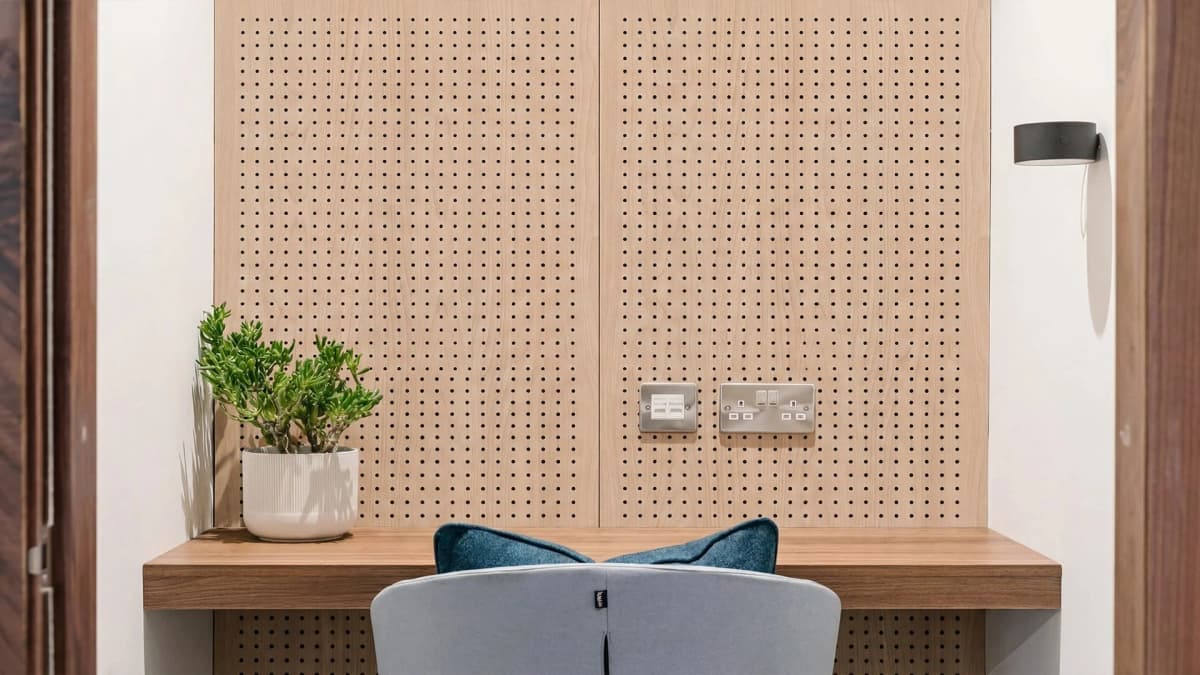
Half wall paneling — paneling the lower portion of a wall rather than the full height — is one of the most popular approaches to adding character to hallways, living rooms, and dining rooms. At The Panel Hub, it’s one of the most common projects our customers undertake, often because it’s more impactful than paint alone and far more manageable than a full-wall installation. The right height, the right panel, and clean finishing details make the difference between a result that looks designed and one that looks unfinished.
Contents
What Is Half Wall Paneling
Half wall paneling covers the lower portion of a wall — typically from the skirting board up to somewhere between 80cm and 130cm, depending on ceiling height and room proportions. It’s also called wainscoting (in traditional interpretations) or dado paneling. The panel terminates at a horizontal rail or cap, and the upper wall is left plain, painted, or treated differently.
The term ‘half wall paneling’ is slightly loose — the panel doesn’t need to cover exactly half the wall. In most residential spaces with standard 2.4m ceilings, a panel height of 90–110cm reads as the right proportion. Going higher than 120cm starts to make the upper wall feel like a narrow strip.
Why It Works So Well
Half wall paneling works because it adds architectural detail at exactly the right height — the zone most visible when you’re moving through a room. It creates a horizontal line that grounds the space, makes narrow hallways feel more intentional, and gives the eye something to rest on. It also provides a practical layer of protection for the most exposed part of the wall without covering the full surface.
Critically, it leaves the upper wall open — which preserves light and doesn’t overwhelm smaller rooms the way floor-to-ceiling paneling might.
Style Options
Classic wainscoting
Traditional wainscoting uses raised or recessed timber panels in a grid arrangement, capped with a rail and finished in paint. This suits period properties, Victorian terraces, Georgian hallways, and any home where the architectural detail already leans traditional. Painted in a strong colour — deep green, navy, or warm terracotta — it reads as confident and deliberate.
Shaker-style half panels
Shaker panel detailing — flat central panel, simple rail and stile framing — is slightly simpler than full wainscoting and suits a wider range of property types. It works in both contemporary and period settings and is usually painted rather than left as natural timber.
Modern slat half panels
Contemporary slat panels installed to dado height are the most popular current interpretation of half wall paneling. Our SoundPanel™ acoustic slat panels and GroovePanel® mosaic panels work in this format — cut to the desired height and finished at the top edge with a square timber batten or a matching cap rail. This approach suits new-builds, contemporary renovations, and any space where the aim is warmth rather than period authenticity.
Height Guide
As a starting point: for a standard 2.4m ceiling, a panel height of 90–100cm works for most hallways and living rooms. For taller ceilings (2.7m+), 110–120cm is more proportionate. For rooms that feel particularly narrow or low, err on the lower side. The key test: the upper wall should feel like a defined zone, not an afterthought — if it’s only 30–40cm high, bring the panel down or go full height instead.
Finishing the Top Edge
The top edge of a half wall panel installation is where many projects fall down. Options include: a matching timber cap rail painted or stained to complement the panel; a square-edged batten flush with the face of the panel; or a traditional moulded dado rail. The goal is a clean, deliberate horizontal line that reads as a design feature rather than a cut edge.
Colour Pairings
For natural wood panels (rather than painted), keep the upper wall in a neutral — off-white, warm stone, or light greige — so the timber tone stands out clearly. For painted half-wall paneling, the classic approach is a darker lower panel with a lighter upper wall. The colour break at the dado line creates visual interest without needing pattern or decoration above.
Where Half Wall Paneling Works Best
Hallways and stairwells are the classic location — the combination of high traffic, narrow proportions, and the need for a strong first impression makes half wall paneling almost always the right answer. Living rooms, dining rooms, and bedrooms all work well too. Kitchens can work if the panel is away from moisture and cooking zones.
Explore our hallway wall panels and the full wood wall panel range to find the right style and finish for your project.