
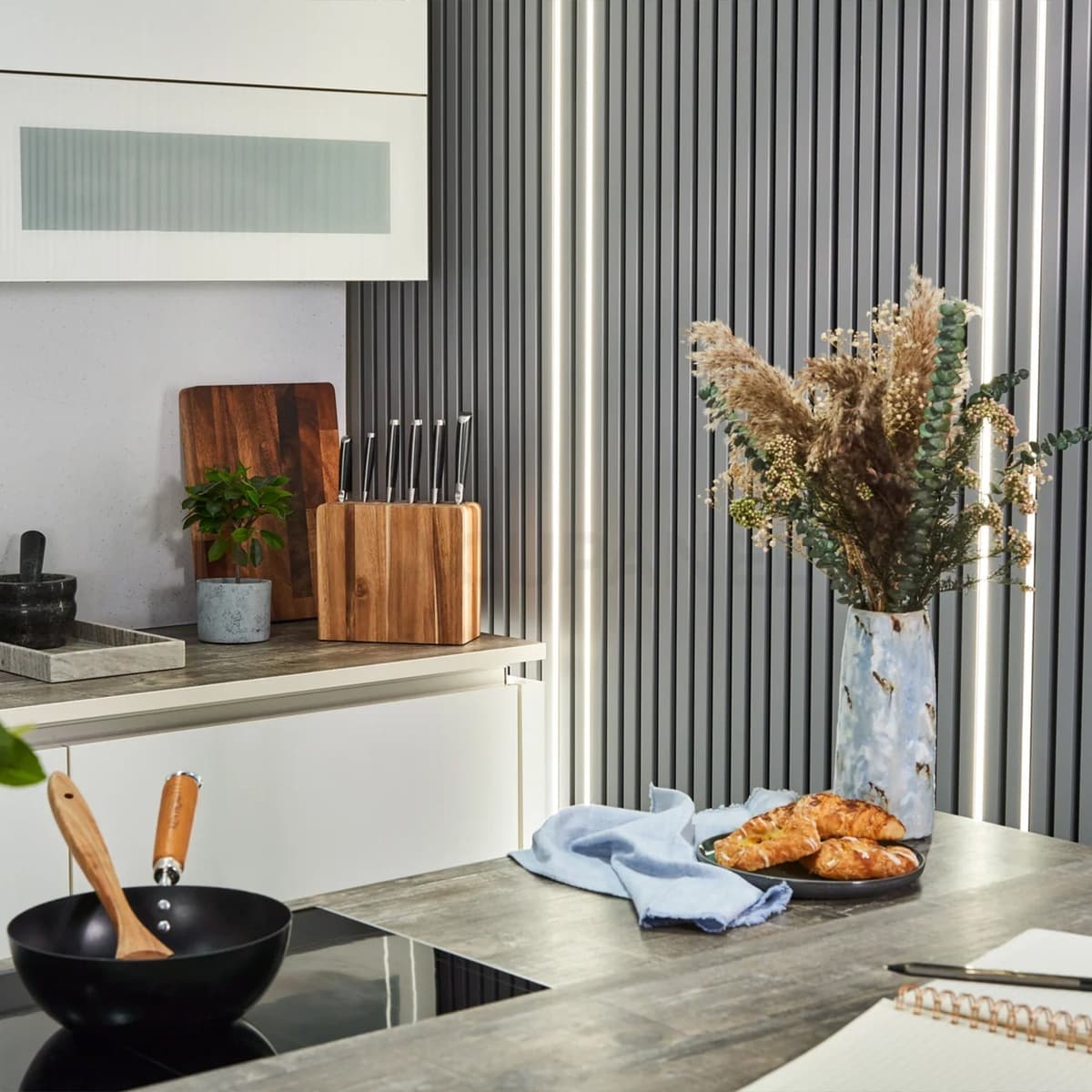
Tiles have been the default for kitchen walls for decades, but they’re no longer the only option. At The Panel Hub, we’re regularly asked about using wood wall panels in kitchens — and for certain areas of a kitchen, they’re an excellent choice. This guide covers the main alternatives to traditional tile splashbacks and helps you work out where each material performs best.
Contents
Why People Look Beyond Traditional Tiles
Tiles work well behind hobs and sinks — they’re heat-resistant, waterproof, and easy to wipe clean. But grout is a maintenance issue, tile trends date quickly, and covering an entire kitchen wall in tiles can feel busy or cold. Many homeowners are looking for materials that give a more cohesive, contemporary result, especially in open-plan spaces where the kitchen wall is visible from a living or dining area.
The Main Alternatives
Glass panels
Toughened glass splashbacks are seamless, easy to clean, and available in any colour. They work well behind hobs because they’re fully heat-resistant. The downside is cost — a bespoke glass panel can be expensive — and they can look stark without careful colour matching to the rest of the kitchen.
Stainless steel
Stainless steel is a professional kitchen staple that’s moved into domestic kitchens. It’s highly durable, heat-resistant, and hygienic. It suits industrial or contemporary kitchen styles but looks out of place in warmer, more traditional settings. Fingerprints and water marks are a constant maintenance consideration.
Solid surface and laminate sheets
Large-format laminate or solid surface sheets (Dekton, Corian, Silestone) are increasingly popular for kitchen walls. They’re seamless, available in a huge range of finishes including stone and wood effects, and easy to clean. Cost varies significantly depending on material.
Wood wall panels for kitchen feature walls
Wood panels are not suitable directly behind a hob or above a sink — the moisture, grease, and heat exposure would damage them. But for every other kitchen wall — behind open shelving, in the dining zone of an open-plan kitchen, or on the island-facing wall — they’re a highly effective choice. Our kitchen wall panels add warmth and texture to spaces that tiles or paint alone can’t achieve.
Where Wood Panels Work in Kitchens
The question isn’t whether to use wood panels in a kitchen — it’s where. The right locations are: behind open shelving where there’s no cooking activity directly below, the dining area wall in a kitchen-diner, the end wall of an island, or any wall that functions more as a visual backdrop than a cooking surface.
In these zones, wood panels outperform tiles on warmth, visual interest, and ease of installation. They require no grouting, create a seamless look, and can be installed without professional tiling skills.
How to Combine Materials in a Kitchen
The most successful modern kitchen designs often mix materials intentionally. Tile or glass behind the hob and sink, wood panels on the feature wall or dining zone. This approach solves the practical requirements of the wet and heat zones while allowing a much warmer, more interesting finish elsewhere.
The key is maintaining coherence between the materials — matching tones, keeping finishes in a similar register (all matte, or all with some sheen), and not using more than three distinct materials on the walls.
Choosing a Panel for Your Kitchen
For kitchens with white or light grey cabinetry, a natural oak or warm mid-tone panel adds contrast and warmth. For kitchens with dark or navy cabinetry, a lighter panel finish prevents the room from feeling too closed in. For timber-framed Shaker kitchens, a panel finish that echoes the timber tones creates a coherent, layered look.
Browse our kitchen wall panels or explore the full wood wall panel range to find the right match for your kitchen.