
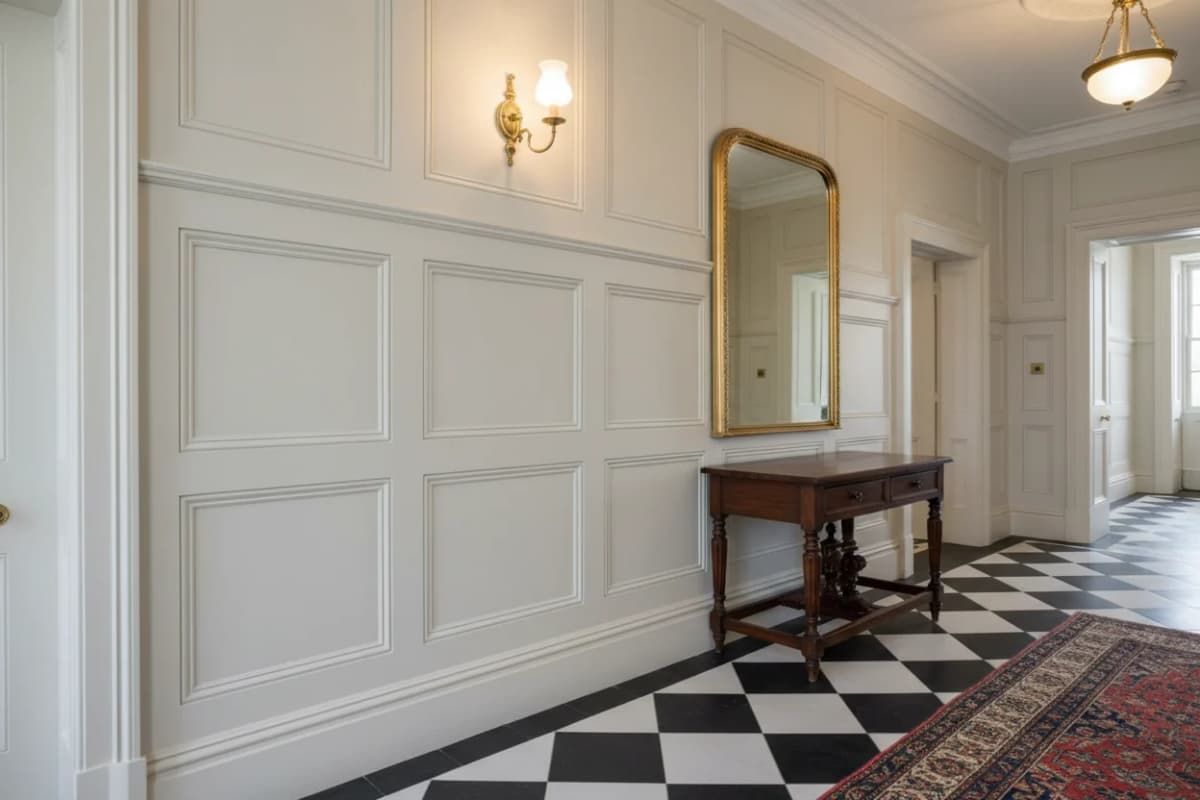
Period properties — Victorian terraces, Edwardian semis, Georgian townhouses — have hallways that were designed with paneling in mind. The original architecture often included dado rails, picture rails, cornicing, and deep skirting boards: a layered approach to the wall that created depth and detail without pattern or colour. At The Panel Hub, we work with homeowners who want to respect this architectural language while making it work for contemporary living — using wood wall panels that complement rather than overwhelm a period hallway.
Contents
The Challenge of Paneling a Period Hallway
Period hallways are often narrow, dark, and already detailed. The challenge is adding to the architectural character without creating visual noise that makes the space feel crowded. The wrong panel choice — too busy, too contemporary, or too rustic — will clash with the existing features rather than enhance them. Getting it right means understanding which elements of the original architecture should be amplified, and which should be left to do their own work.
What Looks Right in a Period Hallway
Traditional dado and picture rail paneling
The most historically accurate approach in a period hallway is to reinstate or augment the original dado rail scheme — paneling from skirting to dado height, with the upper wall treated differently. In Victorian and Edwardian properties, this often meant tongue-and-groove boarding below the dado painted in a deep, rich colour. This approach remains highly effective and is easily achieved with contemporary slat panels cut to dado height.
Full-height wall paneling
In wider period hallways — common in larger Victorian and Georgian properties — full-height paneling on the main wall (typically the longest wall or the wall facing the front door) creates a bold architectural statement that suits the scale of the space. Our SoundPanel™ slat panels in a natural oak or walnut finish work well here — they’re contemporary enough to feel intentional rather than reproduction, but warm enough to sit comfortably in a period setting.
Choosing Materials That Match the Era
Period properties benefit from natural materials — timber paneling feels appropriate in a way that PVC or heavily processed composites don’t. Real wood panels, or wood-veneered panels, read as honest and considered in a context where original materials are timber, plaster, and brick. The grain, warmth, and slight variation of natural wood are exactly what makes paneling feel right in an older property.
Our hallway wall panels use real wood veneers and solid timber elements, making them well suited to period properties.
Colour: Playing It Safe vs Making a Statement
Period hallways reward confidence in colour. Deep greens, navy blues, dark terracottas, and rich plum tones all have historical precedents and work beautifully with natural wood paneling or painted paneling. The key is to treat the panel and the wall above as a deliberate two-tone scheme — a darker panel against a lighter upper wall, or vice versa — rather than defaulting to a single neutral throughout.
For natural wood panels (rather than painted), allow the timber tone to contrast against the painted upper wall. A white or off-white upper wall above a warm oak panel creates a clean, elegant contrast that suits period and contemporary properties equally.
Mixing Old and New
Some of the most successful period hallway schemes mix original architectural features with contemporary paneling. Keeping the original cornice, picture rail, and deep skirting, but replacing the wall treatment with a clean slat panel, creates a thoughtful dialogue between old and new. The period features frame the contemporary material and give it context; the new panel brings freshness to what might otherwise feel like a preserved but static space.
Listed Buildings and Conservation Areas
If your property is listed or in a conservation area, internal alterations may require consent depending on their nature. Removable paneling fixed with adhesive rather than permanent fixings is unlikely to require consent, but it’s worth checking with your local planning authority if there’s any doubt. For listed buildings, avoid concealing or damaging original features — panels should be installed in a way that allows the original wall surface to be recovered if required.
Explore the hallway wall panel collection and the full wood wall panel range to find styles that suit your property’s character.