
Shopping for slat wall panels online can be overwhelming. Search any retailer and you’ll find dozens of options ranging from genuine solid wood to cheap laminate imitations — often described in similar language and photographed to look nearly identical. This guide breaks down exactly what to look for, which red flags to avoid, and what distinguishes panels worth buying from panels worth skipping.
Table of Contents
What Are Slat Wall Panels?
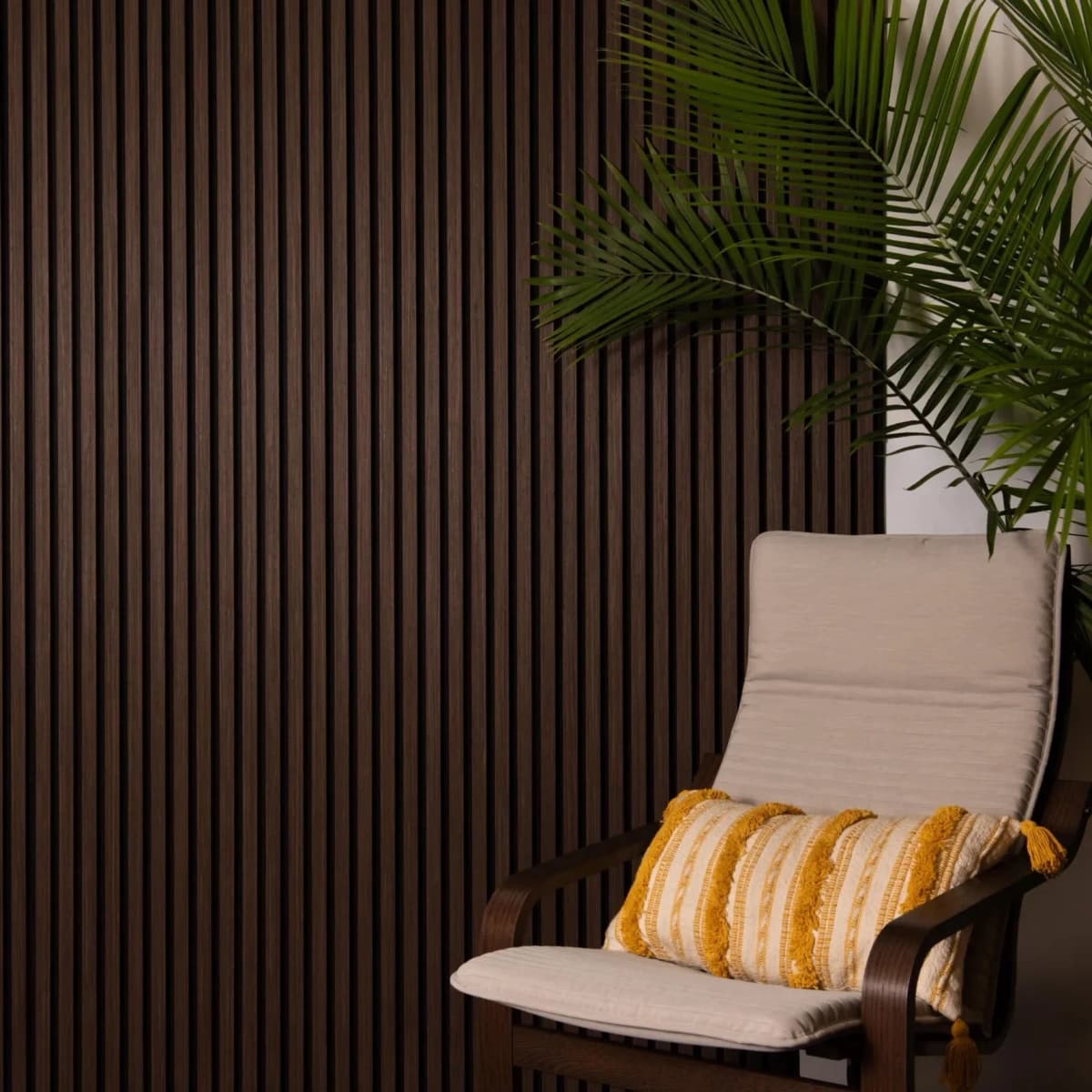
Slat wall panels are decorative wall coverings made from evenly spaced vertical or horizontal timber strips fixed to a backing board or felt substrate. The spacing between slats creates a repeating shadow line that gives the panel its distinctive depth and texture.
High-quality slat panels use real wood veneers or solid wood slats. Budget panels use MDF with a printed wood-effect finish — these look convincing in photos but feel flat in person and don’t age gracefully.
What to Look For When Buying Online
Real Wood vs. Imitation
The most important distinction when buying slat panels online is whether the slats are real wood or a printed finish on MDF. Look for:
- Material description: Phrases like “real wood veneer”, “solid wood slats”, or “natural oak” indicate genuine timber. “Wood effect”, “wood finish”, or “wood look” almost always mean printed MDF.
- Grain variation in photos: Real wood shows natural grain variation between slats. Printed finishes repeat the same pattern across every slat.
- Weight per panel: Real wood panels are heavier. If the listing doesn’t mention weight or the panel appears suspiciously light, check the spec sheet.
Backing Material
The backing affects both acoustic performance and ease of installation:
- Acoustic felt backing: Provides measurable sound absorption. Essential if acoustic benefit matters alongside aesthetics.
- MDF backing: Rigid and easy to work with, but no acoustic benefit. Fine for purely decorative installations.
Panel Dimensions and Coverage
Before ordering, calculate your wall area and check how many square metres each panel covers. Add 10–15% for cuts and wastage. Convert everything to cost per square metre for a fair comparison across different panel formats.
Check panel thickness too. Thicker panels (21mm+) look more substantial and have better acoustic properties than thinner alternatives.
Finish Durability
For high-traffic areas — hallways, commercial spaces — check whether the finish is factory-sealed or requires additional treatment. Pre-finished panels install straight from the box. Unfinished panels need oiling or sealing before installation.
Red Flags When Shopping Online
- No material specification: Reputable retailers state clearly what panels are made from. Vague descriptions like “premium quality” or “luxury finish” without material details are a warning sign.
- Overly uniform grain in photos: Real wood grain is never perfectly uniform. If every slat in the product photo looks identical, the finish is almost certainly printed.
- No returns policy: A supplier confident in their product quality offers clear returns terms or a sample service. No aftercare policy usually means no aftercare support.
- No installation guidance: Quality suppliers provide adhesive recommendations, installation instructions, and customer support. If a listing offers none of these, expect the same after purchase.
How to Measure Before You Order
- Measure wall width and height in metres
- Multiply to get total square metres
- Subtract windows, doors, and areas not being panelled
- Add 12% for wastage (15% for rooms with many corners or complex cuts)
- Check the panel listing for coverage per unit and divide accordingly
If you’re unsure about a finish or tone, order a sample first. Seeing real wood grain in your actual room under your actual lighting is worth the extra step — wood tones look very different on screen versus in person.
Shipping and Delivery
Wood panels are bulky and fragile. When buying online, check:
- Packaging: Panels should arrive in rigid cardboard with foam or bubble protection on corners and edges. Inadequate packaging causes transit damage that’s difficult to claim on.
- Lead times: In-stock panels typically ship within 1–3 business days. Confirm lead times before ordering if you have an installation deadline.
- Damaged delivery protocol: Photograph your delivery before opening. Photographic evidence of packaging damage is essential for any valid transit claim.
Our Slat Wall Panel Range
All slat wall panels at The Panel Hub are made from real wood — no printed finishes, no imitation grain.
American Acoustic Slat Wood Wall Panels | SoundPanel™

Real wood veneer slats on an acoustic felt backing. Available in multiple finishes including Golden Oak, Walnut, and Charcoal. Pre-finished and ready to install straight from the box.
Crossing Lines Solid Wood Wall Panels | GroovePanel®
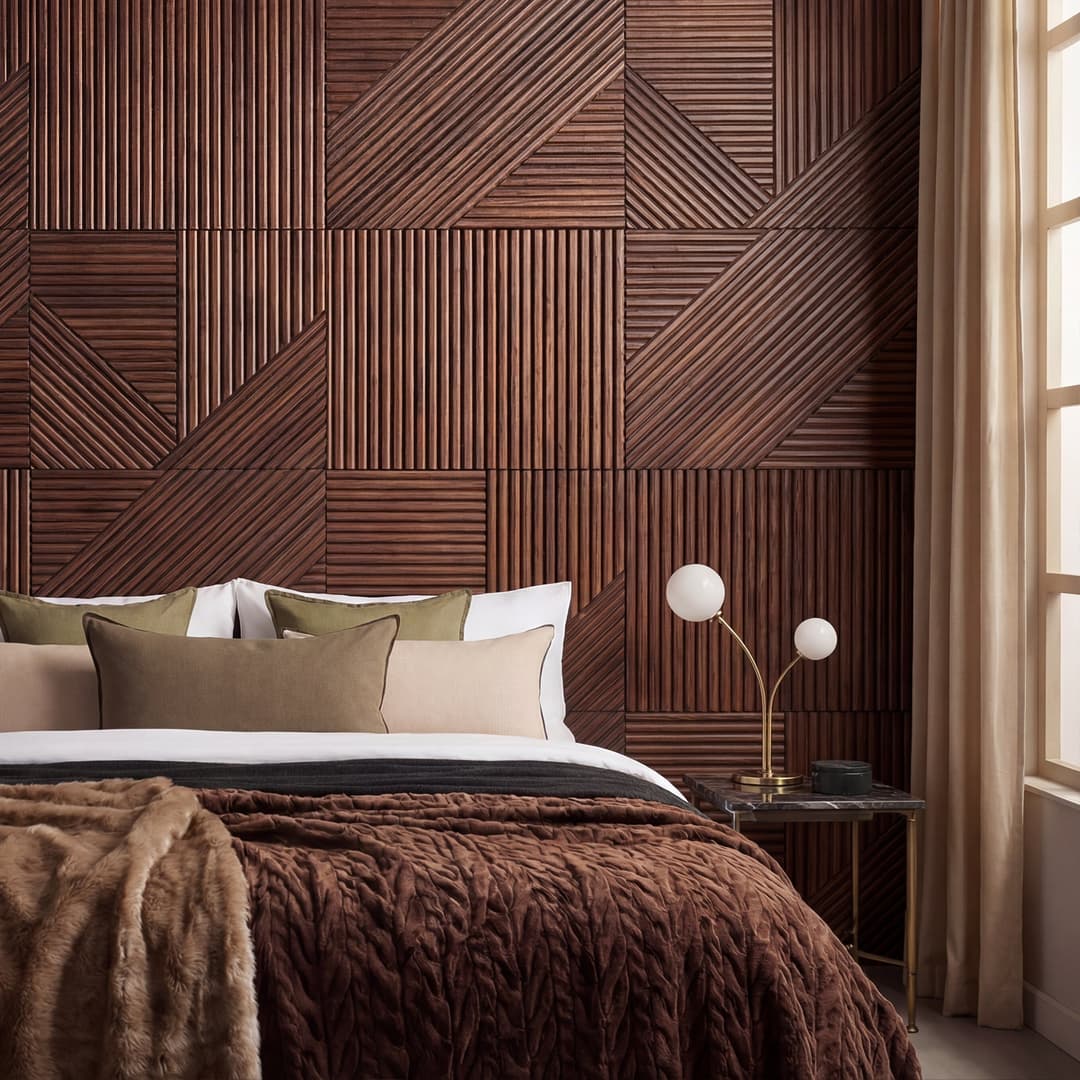
100% solid wood — not veneer — in an interlocking geometric pattern. The most authentic natural material option for buyers seeking maximum visual texture and genuine solid wood feel.
Read More: Interior Wood Slat Wall Ideas: Inspiration for Every Room
Frequently Asked Questions
Can I get samples before ordering?
Yes — and we recommend it for any large order. Seeing the real wood grain and finish in your room under your lighting is the most reliable way to confirm your choice before committing to full quantities.
What is the difference between slat panels and flat wall panels?
Slat panels have individual timber strips spaced with visible gaps, creating a dimensional, textured surface with shadow lines. Flat wall panels have a smooth, uniform surface. Slat panels are more visually dynamic and offer acoustic absorption; flat panels are easier to clean and suit moisture-prone areas better.
Are slat panels suitable for bathrooms?
Standard wood slat panels are not recommended for direct water contact or sustained high humidity. For bathroom feature walls away from the shower zone, properly sealed panels can work well. For shower walls and wet areas, our waterproof wall panel range is a better fit.
How do I install slat wall panels?
Apply panel adhesive in a serpentine pattern to the back of each panel, press firmly to a clean dry wall, and hold for 30–60 seconds. For larger installations, perimeter screw fixings add additional security. Full installation guidance is included with every order.
Conclusion
Buying slat wall panels online comes down to one core question: is this real wood or a printed imitation? Reputable suppliers are transparent about materials, offer samples, and provide installation support. Those that aren’t should be approached with caution.