
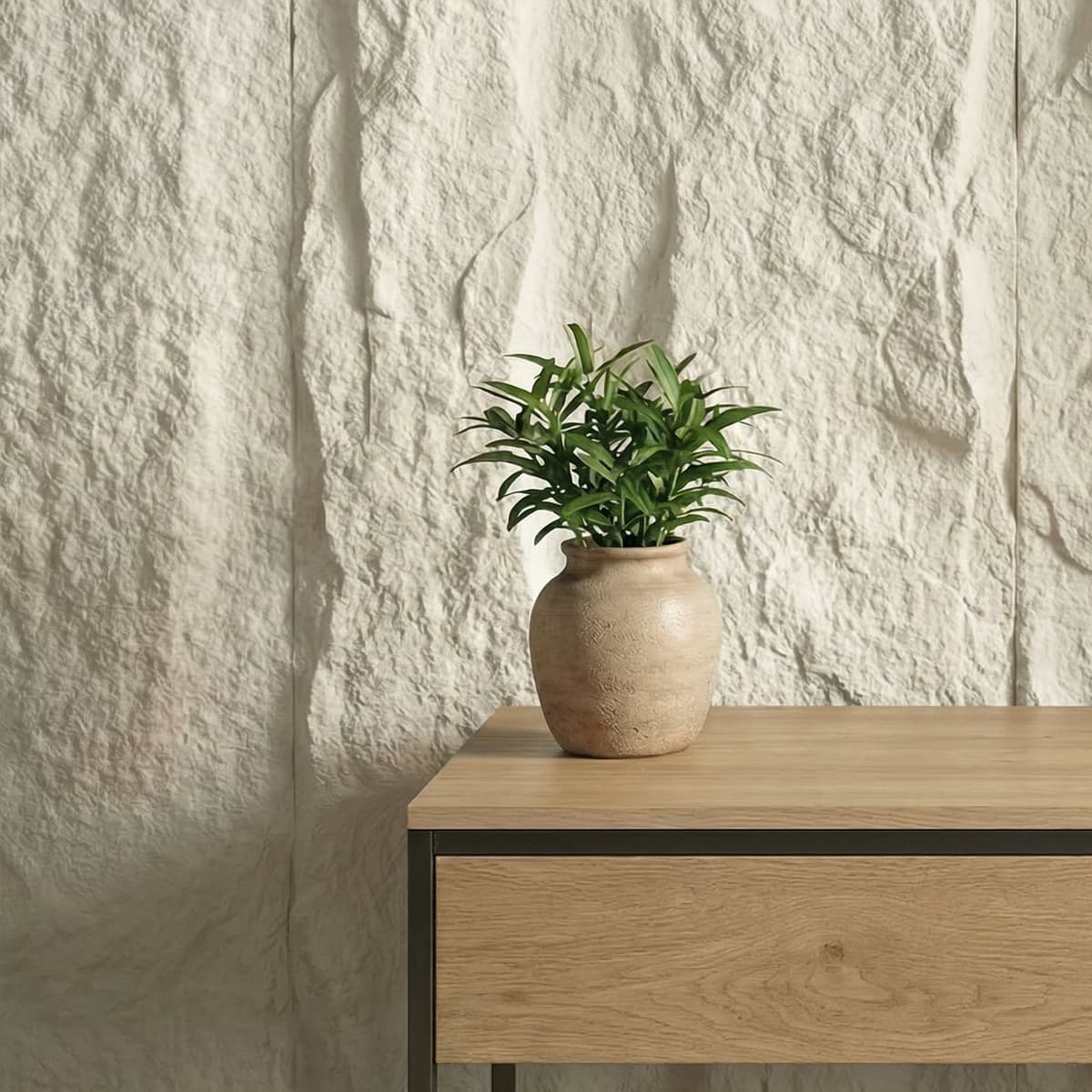
A flat stone surface is attractive. A three-dimensional stone surface is arresting. The difference is what happens when light strikes the wall — on a flat panel, light reflects uniformly. On a 3D stone effect panel, light catches the raised surfaces, falls into the recesses, and creates an ever-shifting pattern of highlight and shadow that changes as the light source moves.
Table of Contents
- The Science Behind the Effect
- Lighting 3D Stone Panels for Maximum Effect
- Grazing Light
- Warm vs Cool Light
- Avoiding Flat Overhead Lighting
- Where 3D Stone Effect Panels Work Best
- Living Rooms and Dining Rooms
- Fireplace Surrounds
- Commercial Spaces: Bars, Hotels, Restaurants
- 3D Stone Effect Panels from The Panel Hub
This is why 3D stone effect wall panels have become a feature in high-end residential and commercial interiors. The surface actively engages with the room’s lighting conditions, producing a result that cannot be achieved by any flat material, however realistic its finish.
The Science Behind the Effect
3D stone panels use moulded relief — raised and recessed elements across the surface — to create depth. The depth of this relief varies: shallow relief creates a subtle undulation that reads as texture from a distance, while deep relief creates pronounced shadow lines and a sculptural quality visible from across the room.
The most effective 3D stone panels derive their surface geometry from casts of actual stone samples. The natural irregularity of real stone — no two faces exactly the same, no perfectly straight edges — translates into a finished panel that reads as genuinely organic rather than manufactured.
Lighting 3D Stone Panels for Maximum Effect
Grazing Light
Light positioned to graze across the surface — wall-mounted luminaires, directional spots at a low angle — catches the leading edges of the relief and throws the recesses into deep shadow. This is the most dramatic lighting approach for 3D stone and works particularly well in dining rooms, bars, and bedrooms.
Warm vs Cool Light
Warm white light (2700–3000K) brings out warm undertones in natural stone finishes and creates an intimate effect. Cool white light (4000K+) emphasises the sculptural quality of the relief and creates a crisper, more contemporary result. Choose based on the atmosphere you’re creating.
Avoiding Flat Overhead Lighting
Ceiling-mounted downlights directly above a 3D stone panel are the least effective lighting choice — they illuminate from above without creating the lateral shadows that reveal the relief. Supplement downlights with wall-mounted fittings to bring out the texture.
Where 3D Stone Effect Panels Work Best
Living Rooms and Dining Rooms
The changing light conditions across a day mean a 3D stone feature wall looks different at every time of day. The surface is engaging without being distracting — it rewards close attention without demanding it.
Fireplace Surrounds
The dancing light from an open fire is particularly effective against a 3D stone surface. The irregular reflection creates a warm, organic effect that flat surfaces cannot replicate.
Commercial Spaces: Bars, Hotels, Restaurants
3D stone panels are extensively used in hospitality design. The textured surface provides acoustic benefit — broken surfaces scatter sound rather than reflecting it flatly — and creates atmosphere that flat walls cannot match. The controlled, directional lighting typical of hospitality environments brings out 3D stone at its best.
3D Stone Effect Panels from The Panel Hub
The Panel Hub stocks the RockSurface® 3D stone effect panel collection in multiple tones and relief depths. Request a sample to assess how the relief performs in your specific lighting conditions before placing your order.