
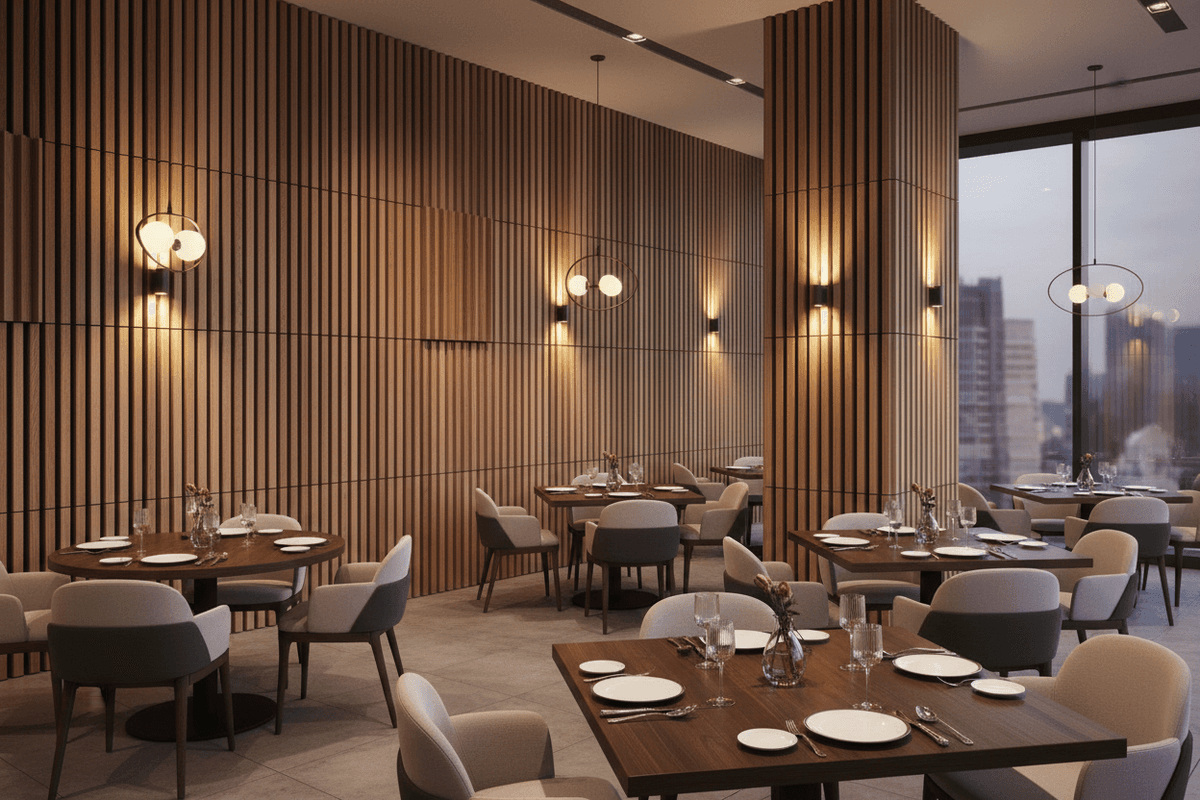
Noise is the most common complaint in restaurant and bar reviews — and one of the most fixable. The right acoustic wall treatment reduces the echo and reverb that makes spaces feel chaotic, bringing ambient sound to a level where conversation is comfortable without silencing the energy of the room. At The Panel Hub, we specify acoustic panels for hospitality environments across the full spectrum from fine dining to high-volume bars.
Contents
- Why Restaurants and Bars Are Acoustically Difficult
- How Acoustic Panels Work in Hospitality Spaces
- Best Acoustic Panels for Restaurants and Bars
- SoundPanel™ Acoustic Slat Wood Panels
- Coverage and NRC Rating
- Where to Install Acoustic Panels in a Restaurant or Bar
- Primary Dining Wall
- Bar Back Wall
- Ceiling Treatment
- What Acoustic Panels Cannot Do
- Fire Rating for Commercial Installations
- Explore Acoustic Panel Options
Why Restaurants and Bars Are Acoustically Difficult
Most commercial hospitality spaces are designed for visual impact first and acoustic performance last — or not at all. The result is a combination of hard surfaces that bounce sound between them: tiled or concrete floors, glazed walls, flat plaster ceilings, hard furniture. Each surface reflects rather than absorbs sound energy, and the cumulative effect is a room where ambient noise rises until conversation becomes an effort.
This isn’t just a comfort issue. Research consistently shows that noise levels directly affect how long customers stay and how positively they rate their experience. A quieter room — not a silent one, but a comfortable one — generates better reviews, longer dwell times, and higher average spend.
How Acoustic Panels Work in Hospitality Spaces
Acoustic panels work by absorbing sound energy that would otherwise reflect off a hard surface. The denser and thicker the absorptive material, the more energy it captures across a wider frequency range. In practical terms, this means reducing the echo and reverberation that make background noise feel louder than it actually is.
In a restaurant or bar, you don’t need to treat every surface. Treating the primary reflective wall — typically the longest unbroken wall in the room — makes a measurable difference. Adding ceiling treatment compounds the effect. The goal is not silence; it’s a room where guests can hear each other comfortably at normal conversation volume.
Best Acoustic Panels for Restaurants and Bars
SoundPanel™ Acoustic Slat Wood Panels
Our SoundPanel™ acoustic slat wood wall panels are the most practical acoustic solution for hospitality environments. The real wood veneer slats create a warm, premium finish that suits both casual and upscale dining aesthetics, while the AcuFelt acoustic backing delivers genuine NRC-rated sound absorption. They install directly onto existing wall surfaces using panel adhesive and are suitable for the humidity levels found in restaurant environments.
The slat profile also creates the shadow-play effect that photographs well — an important consideration for venues that rely on social media visibility.
Coverage and NRC Rating
As a practical guide, treating 25–40% of a room’s total wall surface area with acoustic panels will produce a noticeable improvement in ambient noise levels. For a high-volume bar, aim for the upper end of that range. For a quieter dining room, 25% is typically sufficient. SoundPanel™ panels have an NRC rating that makes them one of the most effective aesthetic acoustic solutions available for commercial interiors.
Where to Install Acoustic Panels in a Restaurant or Bar
Primary Dining Wall
The longest unbroken wall in the main dining area — typically opposite the windows — is the highest-impact installation location. Floor-to-ceiling paneling here treats the largest reflective surface and creates the room’s visual centrepiece simultaneously.
Bar Back Wall
The wall behind the bar is both the most viewed surface in the venue and a major reflective contributor to ambient noise (hard surfaces behind the bar area compound the problem). Acoustic slat paneling here treats the noise source while creating the room’s visual signature.
Ceiling Treatment
If wall space is limited, acoustic slat panels installed horizontally on the ceiling deliver excellent results. The installation method differs slightly (mechanical fixing rather than adhesive) but the acoustic performance is equivalent. A partially paneled ceiling combined with one treated wall is often the most cost-effective intervention for an existing venue.
What Acoustic Panels Cannot Do
Acoustic panels reduce echo and reverberation within a space. They do not soundproof between spaces — they will not stop noise travelling between a kitchen and dining room, or prevent street noise entering a ground-floor venue. For soundproofing applications (blocking sound transmission), structural interventions are required. If your problem is internal echo making the room feel loud, acoustic panels solve it. If your problem is noise from a neighbouring space, they do not.
Fire Rating for Commercial Installations
Any acoustic panel specified for a commercial hospitality space must meet the fire safety requirements of your local building regulations. Always confirm the fire classification of your chosen panel before installation in a public venue. Contact us through The Panel Hub for guidance on commercial specifications.
Explore Acoustic Panel Options
Browse our wall paneling for bars and restaurants and our full range of wood wall panels — including SoundPanel™ acoustic slat panels in every species and finish suited to commercial hospitality environments.