
Table of Contents
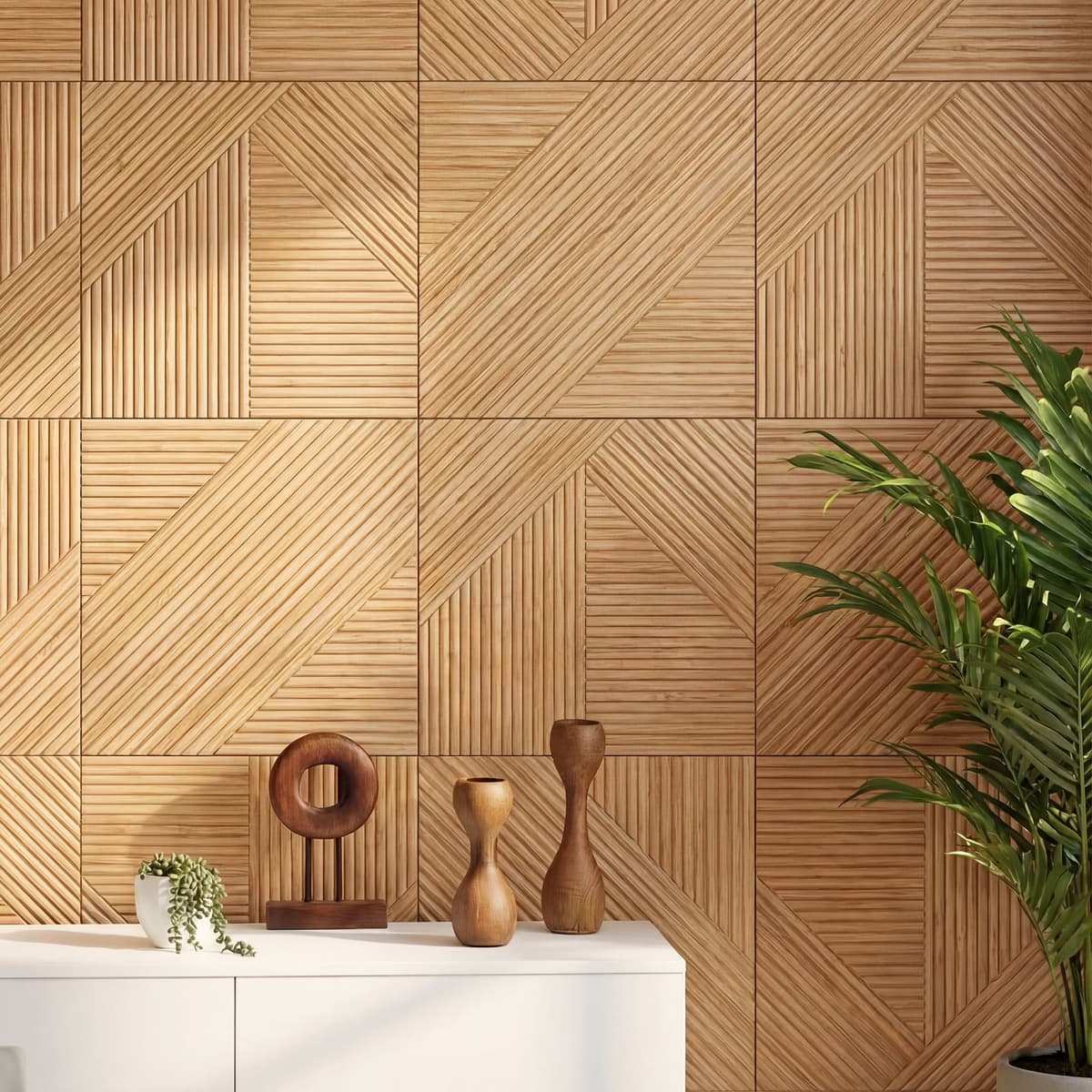
What Are Crossing Lines Wall Panels?
The result is a wall surface with architectural precision and natural material warmth simultaneously — the regularity of the grid pattern reads as designed and controlled, while the solid wood grain beneath gives the surface genuine organic character. It is one of the few wall treatments that manages to feel both modern and timeless at once.
The GroovePanel® Crossing Lines panel at The Panel Hub is machined from 100% solid wood throughout — meaning the grain runs continuously through the groove edge, not ending at a veneer boundary. This makes the groove geometry sharper, more permanent, and more visually coherent than veneer-faced equivalents.
Why Crossing Lines Patterns Are Dominant in 2026
The Shift Away from Plain Surfaces
The last decade of interior design was characterised by a move toward minimal, unadorned surfaces — white walls, smooth plaster, no mouldings. That aesthetic created a problem it was supposed to solve: rooms that felt cold, hard, and characterless. The correction has been arriving gradually since around 2022, and by 2026 it is well established: designers and homeowners are returning to surface texture, natural materials, and architectural detail — but with restraint and geometric discipline rather than the ornamental excess of previous decorative periods.
Crossing lines panels sit perfectly in this moment. They provide visual texture and depth without ornament. The pattern is geometric — not floral, not figurative, not period-specific — which means it reads as contemporary regardless of the broader design context.
Compatibility with Dominant Design Languages
Crossing lines patterns are exceptionally compatible with the design languages currently dominant in residential interiors:
- Japandi: The grid pattern echoes the shoji screen geometry and tatami mat proportions of Japanese design — translated into a Western material (solid oak or walnut) and a Western scale (full wall panels rather than sliding partitions)
- Contemporary minimalism: The grid provides texture without pattern in the conventional sense — there is no motif, only structure, which suits rooms where the goal is material quality over decorative complexity
- Transitional: The crossing lines pattern reads as neither specifically traditional nor specifically modern, which makes it an effective choice in transitional interiors that combine period architectural elements with contemporary furniture
Lighting Performance
Crossing lines panels respond exceptionally well to the directional and layered lighting approaches that have become standard in well-designed residential interiors. Under recessed downlights positioned 300–400mm from the wall face, the shadow in each groove deepens and the grid pattern reads with strong contrast. As natural light changes through the day, the shadow depth shifts and the wall surface appears different at different times — a quality that flat surfaces simply cannot offer.
Design Applications
The Living Room Sofa Wall
The sofa wall is the most viewed surface in most living rooms — the wall you face when seated. A wooden panel wall here creates a backdrop that anchors the seating group and gives the room a clear focal point without competing with art, accessories, or furniture. The grid pattern works particularly well behind sofas with clean rectangular lines — the angular geometry of the panel pattern and the sofa silhouette reinforce each other.
Bedroom Headboard Wall
A crossing lines panel wall behind the bed provides architectural structure without the visual weight of a heavy headboard piece. The grid geometry creates a calm, ordered backdrop — appropriate for a sleeping environment where visual complexity can feel agitating. In fine-scale configurations (tight grid spacing, shallow grooves), crossing lines panels are among the most restful wall treatments available for bedrooms.
Home Office Feature Wall
Behind a desk, a crossing lines panel wall reads on video calls as intentional, design-conscious, and professional — a substantial improvement over a plain painted wall or a cluttered bookshelf. The grid pattern photographs well and does not distract from the person in the foreground. It also improves the physical experience of working in the room by adding material warmth and visual interest to a surface that would otherwise be visually inert.
Hallway and Staircase
Long walls — hallways, staircase runs, landing walls — benefit from the repeating rhythm of a crossing lines pattern. The grid provides visual punctuation along surfaces that would otherwise feel monotonous, and the shadow lines create depth in spaces that often have limited natural light. Our hallway panelling guide covers this application in full.
Scale and Proportion: Getting the Grid Right
The scale of the crossing lines grid should be proportional to the room size and ceiling height:
- Small rooms and low ceilings: A tighter grid — smaller squares, narrower groove spacing — reads as refined texture rather than bold pattern. This avoids the grid feeling oversized relative to the room.
- Large rooms and tall ceilings: A wider grid — larger raised sections between grooves — can breathe at scale and creates strong shadow lines visible from across the room.
- Medium rooms: A medium-scale grid with 80–120mm raised squares between grooves is the most versatile specification — it reads well at close range and from a distance, in most ceiling heights and room volumes.
Crossing Lines vs Other Groove Patterns
Crossing lines is one of several groove configurations available in the GroovePanel® range. By comparison:
- Crossing Lines vs Concentric Squares: Crossing lines creates an even, all-over texture; concentric squares creates a focal-point pattern that radiates from the panel centre. Crossing lines suits walls where an even, non-directional texture is preferred; concentric squares suits walls where a specific visual focal point is desired. See our Concentric Squares guide.
- Crossing Lines vs 3D Relief: Crossing lines creates shadow through groove depth; 3D relief creates shadow through physical projection from the wall plane. Crossing lines is more versatile across lighting conditions; 3D relief performs more dramatically under directional light.
Our geometric wood panel pattern guide covers the complete range with room-by-room recommendations.
Browse Crossing Lines Wall Panels
The GroovePanel® collection includes Crossing Lines panels alongside the 3D Geometric Pattern panel and other formats, all in multiple wood species and groove configurations — all 100% solid wood, FSC® and EPD certified, with factory-direct pricing and free US delivery. Order a sample to see the grid scale, groove depth, and grain quality before committing to a full wall installation.