
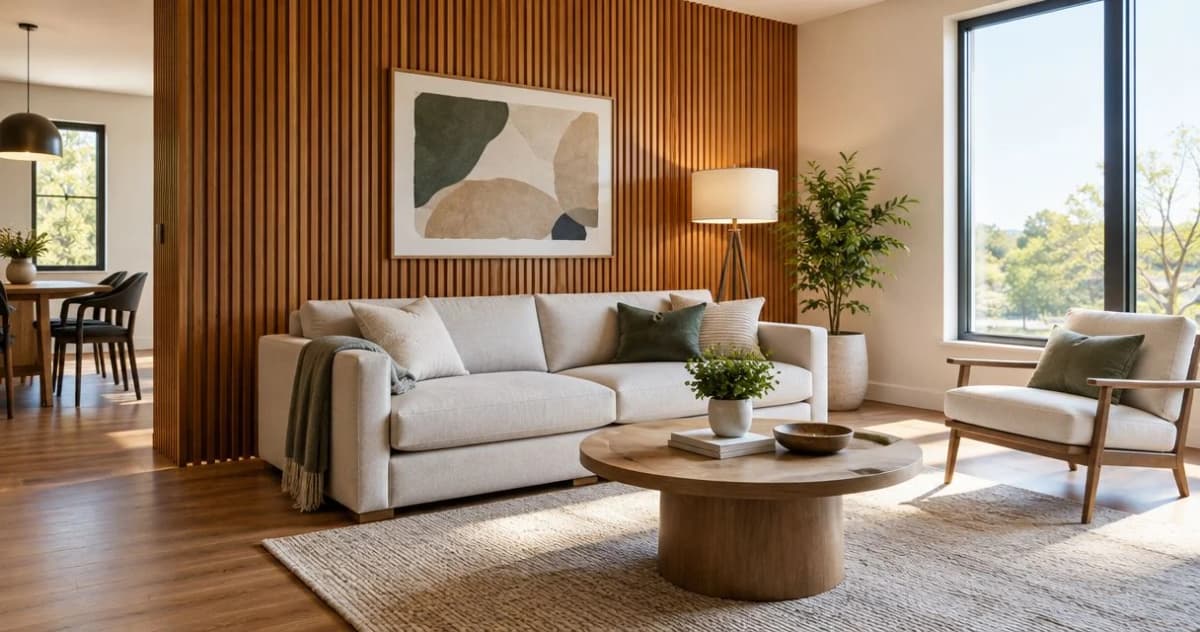
Wood accent walls can improve a room’s appearance, but do not count on them to increase your home’s resale value without evidence from comparable local sales. For a 2026 sale, treat paneling as a decorative upgrade rather than a guaranteed investment, and include wall preparation, installation, finishing, and possible removal in your decision.
- Do wood accent walls increase home resale value? A decorative upgrade does not establish a higher sale price.
- The Panel Hub wood wall panels suit homeowners seeking decorative finishes, not a guaranteed resale return.
- Compare keeping, repairing, and replacing the existing wall before choosing wood paneling.
- Ask a local listing agent for comparable sales evidence before installing an accent wall solely to sell.
Why this matters
A wall you enjoy and a renovation that earns its money back are different things. Separate those goals before you order materials or schedule installation.
If you are exploring The Panel Hub wood wall panels, start with the room’s needs: decoration, sound absorption, or an unfinished surface that needs attention. Product benefits answer those questions; they do not establish what a future buyer will pay.
For a sale-focused project, choose the work you can justify without assuming a higher offer. That keeps an attractive design idea from becoming a financial promise it cannot support.
Do wood accent walls increase home resale value?
Not automatically. A finished accent wall is a feature of the home, but its presence alone does not prove an increase in market value or establish how much of the project expense you will recover.
For your 2026 selling plan, compare the paneling proposal with the actual condition of the existing wall. A clean, finished surface presents a different decision from damaged drywall or an incomplete installation.
| Approach | Best for | Main benefit | Main drawback | Resale decision |
|---|---|---|---|---|
| Keep an existing wood accent wall | Sellers with intact paneling that fits the room | Avoids unnecessary replacement work | Keeps a finish a buyer might change | Inspect condition before deciding to remove it |
| Install new wood paneling | Homeowners who want the finish for their own use | Adds visible wood texture and a focal point | Adds installation work without an established resale return | Proceed for a clear design goal, not assumed appreciation |
| Repair and repaint the existing wall | Sellers whose priority is a finished, consistent surface | Addresses visible surface defects without adding paneling | Does not provide wood texture or acoustic treatment | Compare this scope with the paneling proposal |
The useful comparison is not simply wood versus paint. It is the finished result, the work required, and the evidence supporting your reason for doing it.
What would count as supporting evidence?
Ask a listing agent to review recent nearby sales with similar size, condition, layout, and location. Then ask whether the available evidence isolates an interior finish premium rather than a difference caused by other features.
A photograph of an attractive paneled room is a design reference, not proof of return. Likewise, a higher asking price is not evidence that a wood accent wall caused a higher completed sale price.
If the comparison cannot separate paneling from other differences, leave a resale premium out of your project budget. You can still choose the wall because you want it.
Why the resale decision varies
Use these factors to assess the project. They are decision criteria, not a formula for predicting a buyer’s offer.
- Existing condition. Inspect the current wall and any existing paneling. Loose pieces, visible damage, and unfinished edges call for repair decisions before design decisions.
- Room fit. Compare the proposed finish with the flooring, doors, trim, and furniture you intend to leave in place for showings.
- Installation scope. Include wall preparation, cuts, corners, outlets, and trim. A straightforward section of wall is a different job from a surface interrupted by fixtures.
- Purpose. Decide whether you want decoration, sound absorption, or both. Do not buy an acoustic product solely because its description sounds more technical.
- Time before selling. Separate a wall you will enjoy while living there from work undertaken only for listing photographs.
- Future alterations. Understand the attachment method and the work involved in changing the finish later. Do not assume glued panels are damage-free to remove.
For a 2026 listing, write down the reason for the project before selecting the pattern. “I want this room to look finished” is a usable brief; “this must increase the sale price” requires evidence.
Should you keep an existing wood accent wall before selling?
Keep an intact wood accent wall unless you have a specific reason to repair, alter, or remove it. Replacing a finished surface simply because it is wood adds work without establishing a better resale outcome.
Inspect the installation in daylight and with the room’s normal lighting switched on. Look at joints, exposed ends, corners, and the transitions around doors and baseboards.
Also inspect what the wall prevents you from seeing. If there are signs of moisture, movement, or another underlying problem, investigate the cause rather than adding another decorative layer.
Ask your agent to comment on the actual room, not wood paneling as a general category. Bring photographs that show the complete space rather than a close-up of the grain.
When does removal make sense?
Consider removal when the paneling is damaged, insecure, or part of work needed to investigate the wall behind it. Establish how the panels are attached before starting.
Removal is not the end of the job. Include adhesive cleanup, surface repairs, and refinishing in the scope so you can compare a completed removal project with a completed repair project.
How should you choose a wood accent wall before listing?
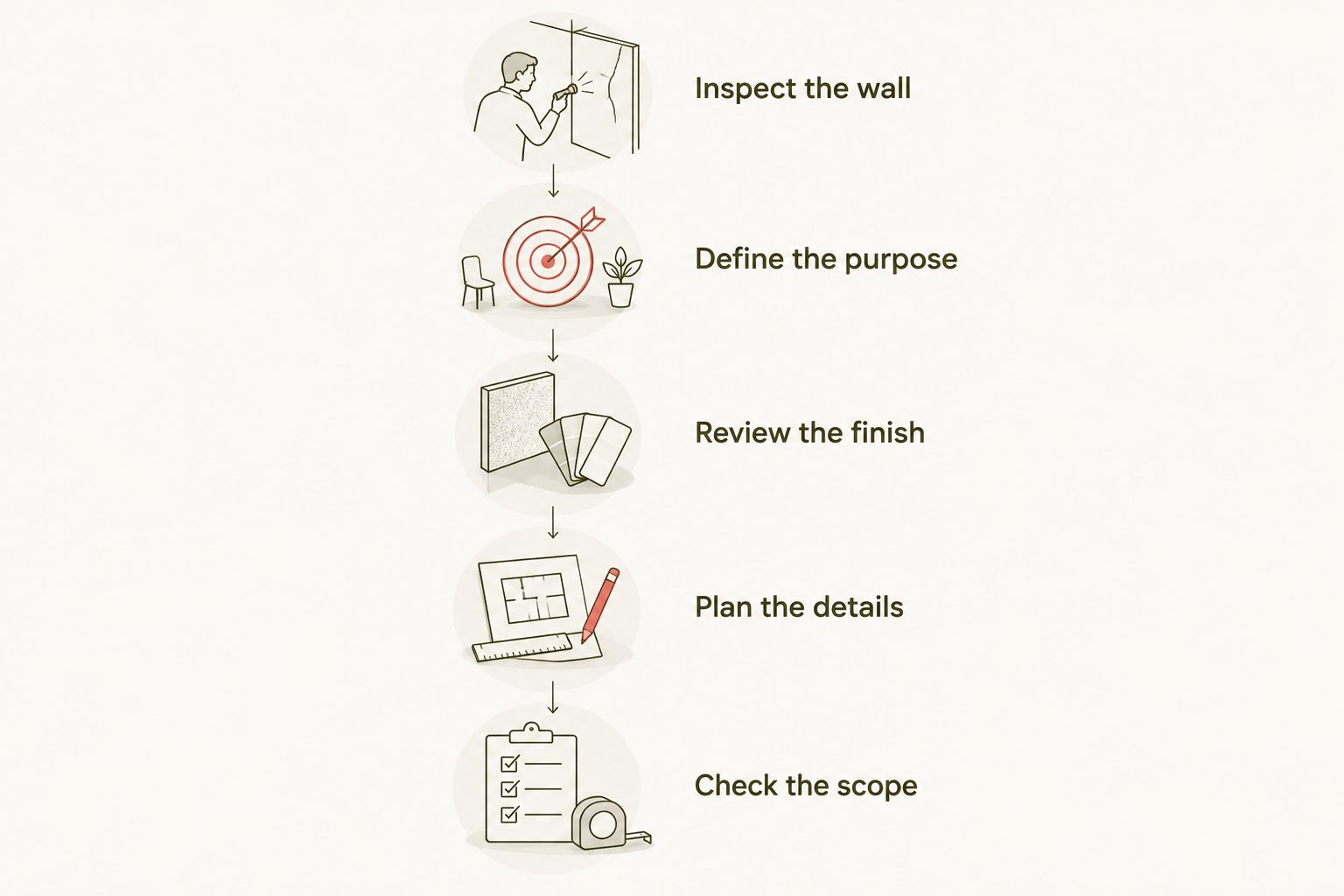
Use this sequence before committing to a new installation. The goal is a finished room and a controlled project, not an unsupported resale forecast.
- Inspect the wall. Check the surface condition and investigate dampness or damage before covering it.
- Define the purpose. Write down whether the wall is decorative or whether you also need sound absorption.
- Review the finish. Compare the wood tone and pattern with the room’s permanent finishes under its normal lighting.
- Plan the details. Resolve edges, corners, outlet access, and transitions before installation begins.
- Check the scope. Confirm preparation, attachment, finishing, cleanup, and any repair work with the installer or product instructions.
Do not let a room photograph stand in for an installation plan. A reference image does not show your wall’s condition, the outlet positions, or how the panel edges will meet your existing trim.
Before your 2026 listing photos, inspect the completed wall from the doorway as well as close up. Finish the small details rather than relying on furniture to conceal unfinished work.
Are acoustic wood panels better for resale than decorative panels?
Acoustic performance is a product benefit, not proof of a resale premium. Choose acoustic panels because you want sound absorption in the room; choose decorative panels because you want their surface pattern or texture.
Sound absorption and sound isolation are different. An acoustic finish can help manage reflected sound within a room, but that does not make the room soundproof or establish that noise will stop passing through its walls.
The Panel Hub describes its real wood acoustic wall panels as NRC 0.85 rated and FSC certified, with a 5-year warranty and installation in under 2 hours. Those are product and installation claims, not evidence of a higher home valuation; check the applicable product documentation, installation conditions, and warranty terms before choosing.
NRC 0.85 is a sound-absorption rating, not a percentage increase in property value. The advertised installation time also should not replace a project-specific plan covering wall preparation, electrical details, and finishing.
The Panel Hub is best for homeowners choosing decorative or acoustic wood wall panels for their own rooms, not for a guaranteed resale return. Its category fit is clear; the financial outcome of your home sale is a separate question.
What should you ask a real estate agent before adding paneling?
Ask for advice tied to your property and your selling schedule. Broad statements about what buyers like do not resolve whether this particular project deserves a place on your pre-listing task list.
Useful questions include:
- What visible problems in this room should be addressed before adding a decorative finish?
- Would you keep the existing wall, repair it, or change it, and why?
- Which comparable completed sales support your recommendation?
- Is the recommendation about presentation, condition, or a supported difference in value?
- What work should take priority if the paneling project delays the listing?
For a 2026 sale, ask the agent to distinguish necessary repairs from optional presentation work. That gives you a clearer basis for deciding whether paneling belongs in the plan at all.
Keep the product instructions and installation records if you proceed. They document what was installed and how to maintain it, without claiming an appraisal benefit.
How should you describe a paneled room in a listing?
Describe the installed feature accurately. “Wood accent wall” explains what is there; a statement that the wall increases property value makes a different claim and needs separate support.
If the panels have a documented acoustic rating, confirm that the rating applies to the installed product and configuration before including it. Do not describe decorative wood panels as soundproofing merely because they cover a wall.
Photograph the whole room so viewers can understand the wall’s location and scale. Leave room in the description for the home’s actual layout and condition rather than making the accent wall carry the entire sales story.
FAQ
Do wood accent walls increase home resale value in 2026?
Do not assume a wood accent wall increases home resale value in 2026. Treat it as a decorative improvement unless comparable local sales provide evidence supporting a premium.
Should I install wood paneling just before selling my house?
Install wood paneling before selling only when the project has a clear purpose you can justify without assuming a higher offer. Compare it with repairing or retaining the existing wall, and ask your listing agent to review the actual room.
Should I remove an existing wood accent wall before listing?
Do not remove an intact wood accent wall solely because it is wood. Inspect its condition, check the finishing details, and compare removal and surface repair with keeping it.
Do acoustic wood panels make a room soundproof?
Acoustic wood panels are not the same as a soundproof wall assembly. Sound absorption manages reflected sound inside a room; sound isolation addresses transmission between spaces.
Does an NRC 0.85 rating mean a higher home value?
NRC 0.85 describes sound absorption, not home value. It does not establish a resale premium or a percentage return on an installation.
Does The Panel Hub warranty guarantee a return when I sell?
The Panel Hub’s stated 5-year warranty is not a guarantee of a higher home sale price. Review the applicable warranty terms for product coverage and assess resale separately.
What should I check before covering a wall with wood panels?
Check the wall’s condition, the attachment requirements, and the details around outlets and trim before covering it. Investigate moisture or damage rather than concealing it beneath a decorative finish.
One last thing
The best pre-sale paneling decision can be to leave a good wall alone. Before ordering anything, take a photograph from the doorway and identify the specific problem you want the project to solve.
If you cannot name that problem beyond expecting a higher sale price, pause. If you want the finish for your own enjoyment, make that the reason and judge the project on those terms.
Related guides
- Wall panels for home stagers and real estate agents
- How to remove old wood paneling from walls
- Do wood wall panels need to be sealed after installation?