
Sustainability claims in the building materials market range from substantiated and independently verified to vague and essentially meaningless. “Eco-friendly,” “natural,” and “sustainable” are marketing terms that carry no legal definition. Environmental Product Declarations (EPDs) are different. They’re a standardised, independently verified documentation format — and they’re one of the most reliable tools available to buyers and specifiers who need to substantiate environmental performance claims.
This guide explains what an EPD is, what it measures, and why it matters when buying wall panels.
Table of Contents
What Is an Environmental Product Declaration?
An EPD is a document that presents the environmental impact of a product across its full life cycle, from raw material extraction through manufacturing, transport, use, and end-of-life disposal or recycling. It’s produced according to a standardised methodology (ISO 14025 and EN 15804 for construction products) and verified by an independent third party.
An EPD doesn’t say a product is “good” or “bad” for the environment. It says precisely how much environmental impact the product generates, measured across categories like:
- Global warming potential (carbon footprint, measured in kg CO₂ equivalent)
- Ozone depletion potential
- Acidification potential
- Eutrophication potential (impact on water quality)
- Primary energy consumption
- Water use
This makes it possible to compare two similar products based on verified data rather than marketing language.
EPD vs FSC: What’s the Difference?
These are two different types of certification that address different aspects of environmental performance.
FSC (Forest Stewardship Council) certification verifies that the timber used in a product comes from forests managed according to responsible forestry standards. It addresses where the wood came from and how the forest was managed — not the full life cycle of the manufactured product.
EPD certification covers the full manufacturing process, transport, use phase, and end-of-life — not just the timber sourcing. It’s a broader, more comprehensive environmental credential.
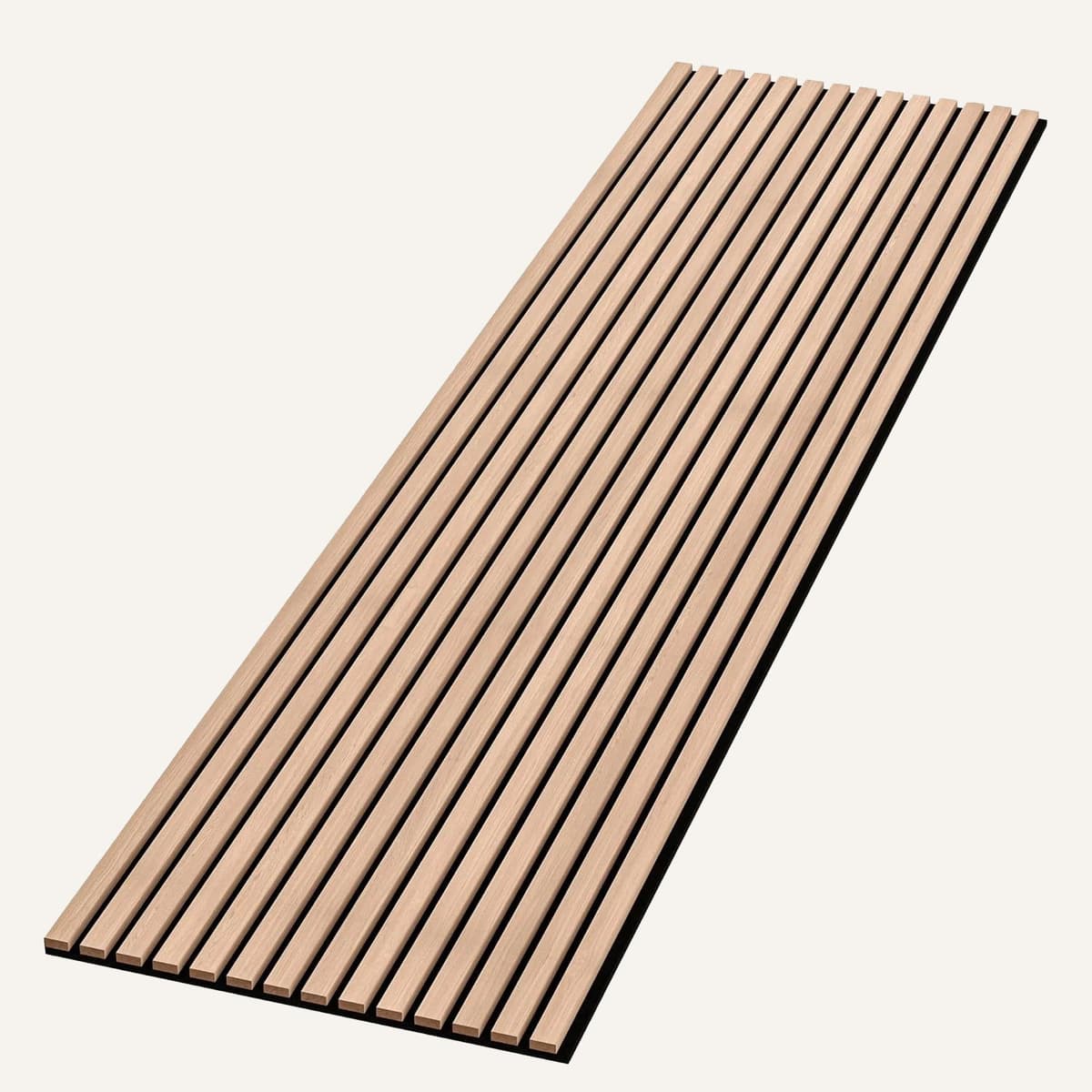
The most rigorous products carry both. Our GroovePanel® Geometric Wood Wall Panels are both FSC-certified (responsibly sourced timber) and EPD-verified (full life cycle environmental data). For buyers who need verified sustainability credentials — architects specifying for green building projects, developers pursuing BREEAM or LEED ratings, homeowners who want more than marketing claims — this combination is significant.
For more on FSC certification specifically, read our guide to what FSC certified wood means and why it matters.
Why EPDs Matter for Specifiers and Architects
Green building rating systems — BREEAM in the UK and Europe, LEED in North America, Green Star in Australia — require or incentivise the use of products with verified environmental credentials. EPDs are accepted as supporting evidence for credits in several categories of these systems, including materials transparency and low-carbon specification.
For an architect or interior designer specifying wall panelling for a client pursuing a green building certification, a product without an EPD simply cannot contribute to those credits. A product with an EPD, like GroovePanel®, can.
Why EPDs Matter for Homeowners
Most homeowners aren’t pursuing BREEAM ratings. But EPDs still matter in a practical sense:
- Indoor air quality: The EPD process involves measuring VOC emissions and other indoor air quality factors. Products that have been through EPD verification are more likely to have low emissions — relevant for bedrooms, nurseries, and rooms where you spend significant time.
- Product transparency: A manufacturer willing to produce an EPD is demonstrating a level of transparency about their product that reflects on overall quality control.
- Long-term value: Sustainable building materials are increasingly valued in property markets. Specifying EPD-verified products can contribute to a building’s environmental credentials and, in some markets, its assessed value.
What to Look for When Buying Certified Wall Panels
- Check the FSC certificate number — it should be verifiable on the FSC website
- Ask for the EPD document number — legitimate EPDs are published in programme registries and can be looked up
- Check the scope of the EPD — it should cover the full life cycle (A1–A3 at minimum, with C and D modules for end-of-life preferred)
- Confirm the independent verifier — EPDs must be verified by an accredited third party, not self-declared
Sustainable Geometric Panels
The GroovePanel® range combines aesthetic quality with verifiable environmental credentials. Browse the full collection of FSC + EPD certified solid wood geometric panels at GroovePanel® Geometric Wood Wall Panels. For design inspiration, see our guides to geometric wood wall panel patterns and styles and wood mosaic wall panels.