
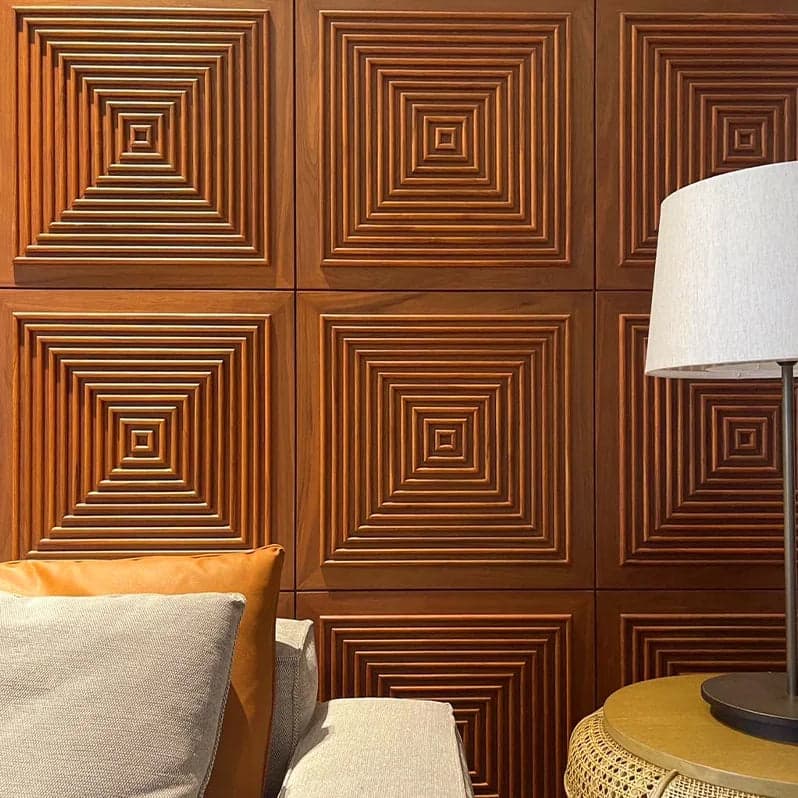
Wood mosaic wall panels bring something that flat timber boards simply cannot: visual rhythm. Each panel is a composition of small individual pieces — triangles, squares, hexagons, or diamonds — arranged into a repeating geometry that catches light differently depending on the angle you stand at. If you’ve been staring at a blank wall wondering how to add character without committing to wallpaper or paint, a wood mosaic panel is one of the most effective answers available.
This guide walks through what wood mosaic wall panels are, which patterns work best in which rooms, how to choose between solid wood and engineered options, and what to look for before buying.
Table of Contents
- What Are Wood Mosaic Wall Panels?
- The Most Popular Mosaic Patterns
- Solid Wood vs Engineered Wood Mosaic Panels: What’s the Difference?
- Which Rooms Work Best for Wood Mosaic Panels?
- How Many Panels Do You Need?
- Finish and Colour: Natural, Stained, or Painted?
- Installation: What to Know Before You Start
- Where to Buy Wood Mosaic Wall Panels
What Are Wood Mosaic Wall Panels?
A wood mosaic wall panel is a modular tile made from individual pieces of real or engineered wood, glued or fitted onto a backing sheet. Unlike a continuous plank or slat panel, the mosaic format breaks the surface into a repeated geometric unit — creating texture, pattern, and depth from a single flat installation.
The individual pieces can be cut from solid timber, engineered veneer, or MDF. The quality difference between these materials is significant, which we’ll cover in detail below.
At The Panel Hub, our GroovePanel® Geometric Wood Wall Panels are made entirely from 100% solid FSC-certified timber. That means no MDF core hidden under a veneer — every piece you see is real wood, end grain and all. The result is panels that age naturally, resist warping better than engineered alternatives, and carry a texture you can feel as well as see.
The Most Popular Mosaic Patterns
Pattern choice matters more than most buyers realise. The geometry you pick changes not only the look but how the wall behaves in different lighting conditions.
Triangle mosaics
Triangle-based mosaics create strong directional energy. Arranged in opposing pairs, triangles form diamond or chevron effects. Arranged concentrically, they build a radial focal point. The Walnut Triangle Solid Wood Panel is a favourite for headboard walls and living room feature walls where you want a clear visual anchor.
Concentric square mosaics
Concentric squares are among the most hypnotic patterns in interior design right now. Each panel contains a series of nested squares receding toward a central point, creating a sense of depth on an otherwise flat wall. Our 3D Concentric Square Wood Wall Panel achieves this with precision-cut solid wood — the shadow lines between layers change throughout the day as natural light shifts.
Honey mosaic patterns
Honeycomb-adjacent patterns built from stacked hexagonal or irregular pieces produce a warmer, more organic mosaic. Our Honey Mosaic Solid Walnut Panel uses walnut’s natural grain variation to ensure no two tiles look identical, giving large installations a handcrafted feel at scale.
Crossing lines and grid mosaics
Linear crossing patterns break the surface into a grid of negative space and solid wood. The Crossing Lines Solid Wood Panel is a cleaner, more architectural look — less traditional mosaic, more graphic composition.
Solid Wood vs Engineered Wood Mosaic Panels: What’s the Difference?
This is the question that most affects long-term satisfaction. Engineered mosaic panels — where a thin veneer is laminated to an MDF or HDF core — are cheaper upfront. But because the visible surface is only 0.6–2mm thick, they cannot be sanded or refinished if they scratch. The edges, if visible, reveal the composite core.
Solid wood panels cost more but behave like real timber. Surface scratches can be sanded out. The colour and grain run through the full depth of each piece. And because solid wood has mass, panels feel substantial on the wall rather than thin.
For a full breakdown of the material trade-offs, read our guide to MDF vs Solid Wood Wall Panels.
Which Rooms Work Best for Wood Mosaic Panels?
Mosaic patterns work in almost any room, but the scale and grain direction of the pattern should match the proportions of the wall.
- Living rooms: Large-scale mosaics like concentric squares work well on chimney breasts or walls behind sofas. The pattern creates enough visual complexity to make art optional.
- Bedrooms: A full headboard wall in triangle or honey mosaic pattern transforms a bedroom from functional to genuinely designed. Keep bedding and furniture in neutral tones so the pattern breathes.
- Hallways and entryways: Smaller panels work well in tighter spaces. A single accent wall of crossing lines or triangle mosaics greets visitors without overwhelming a narrow corridor.
- Home offices: The texture of a wood mosaic panel behind a desk is far more interesting on video calls than painted plasterboard — and it absorbs a small amount of mid-frequency sound as a bonus.
How Many Panels Do You Need?
Calculate your wall area in square metres (width × height), then check the individual panel coverage listed on the product page. Most of our wood mosaic panels cover between 0.09 m² and 0.25 m² per tile. Add 10% to your total to account for cuts at edges and corners.
For help planning your layout, our guide to creating a geometric feature wall covers grid planning, centring your pattern, and avoiding the most common layout mistakes.
Finish and Colour: Natural, Stained, or Painted?
Most wood mosaic panels are supplied unfinished or with a light factory oil. This gives you flexibility to:
- Leave natural for a warm, pale timber look
- Apply a dark walnut stain for contrast and drama
- Use a white or grey wash for a Scandinavian or coastal aesthetic
- Paint in a flat or matte finish if you want the pattern without the wood tone
Natural walnut panels — like those in our GroovePanel range — arrive with the species’ characteristic dark brown warmth already built in, which reduces the need for staining.
Installation: What to Know Before You Start
Wood mosaic panels are installed tile by tile onto a flat, primed wall. The key preparation steps are:
- Ensure the wall is flat — high spots cause gaps between tiles
- Mark a level horizontal datum line before starting
- Begin from the centre of the wall, working outward
- Use a suitable panel adhesive and allow full cure time before grouting or finishing joints
For uneven walls, read our guide on how to install wall panels on an uneven wall before you begin.
Where to Buy Wood Mosaic Wall Panels
Browse the full GroovePanel® Geometric Wood Wall Panel collection for solid wood mosaic options in walnut, oak, and mixed-species finishes. All panels are FSC-certified and EPD-verified. Samples are available through our wall panel sample service if you want to check colour and texture in your own lighting before committing to a full order.