
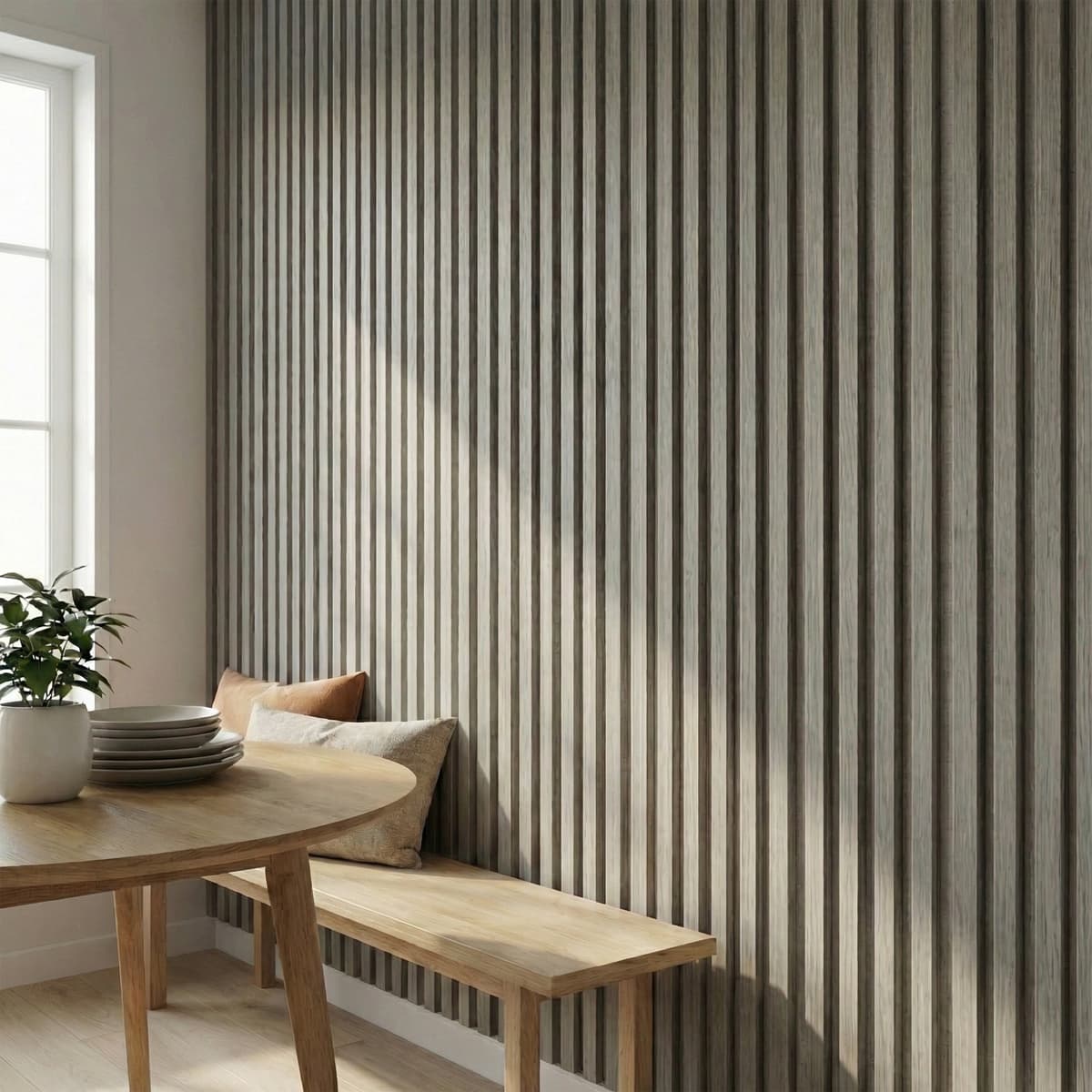
The wood wall panel market has three dominant surface formats: geometric (mosaic or 3D relief), fluted (vertical parallel channels routed into a flat panel), and slat (individual strips of timber mounted on a backing). All three are available in solid wood and engineered alternatives. All three look good in the right context. Knowing the genuine differences between them — not just how they photograph but how they perform — is what allows you to make a confident decision.
Table of Contents
The Three Formats: A Quick Definition
Geometric panels have a designed pattern geometry: triangles, squares, crossings, honeycomb shapes, concentric profiles. The pattern is formed by the arrangement of pieces (mosaic) or by routed relief (3D). Visual interest comes from the pattern and the shadows it creates. Examples: all products in the GroovePanel® Geometric wood wall panels.
Fluted panels have parallel vertical channels routed into a solid board or MDF panel, creating a ribbed surface. The channels create shadow lines and texture while the overall panel remains flat in outline. Visual interest comes from the regularity of the ribbing and the shadow lines between channels.
Slat panels are individual strips of timber — typically 10–30mm wide — mounted at regular intervals on a backing board (usually felt or MDF). The gaps between slats reveal the backing. Acoustic slat panels use felt backing to absorb sound. Visual interest comes from the rhythm of the slats and the revealed depth between them. Examples: the SoundPanel® Acoustic panels.
Visual Character: What Each Format Looks Like
Geometric panels
Bold, complex, graphic. Geometric panels create a surface that demands attention and provides sustained visual interest at close range. Different patterns convey different qualities: concentric squares feel precise and architectural; triangle mosaics feel dynamic and contemporary; honey mosaics feel organic and warm. In rooms with directional light, the shadow effects of 3D and mosaic formats create an installation that changes appearance through the day.
Fluted panels
Quieter and more linear than geometric. Fluted panels create vertical rhythm without the complexity of a multi-directional pattern. They read as refined and restrained — a texture that is present without being demanding. Better suited to rooms where other elements are already carrying visual interest. The fluted format also appears on kitchen island fronts, cabinet doors, and furniture — making it integrate well with a room that uses fluting as a broader design theme.
Slat panels
Light and airy. The gaps between slats create a sense of openness and depth — the wall appears to have layers rather than being a solid flat surface. Acoustic slat panels also perform a real acoustic function, which geometric and fluted panels don’t provide to the same degree. For rooms where sound quality matters (home offices, home theaters, living rooms in open-plan apartments), slat panels combine aesthetic and function. See our guide to acoustic wood slat wall panels for more detail.
Acoustic Performance
- Geometric panels: Minimal acoustic benefit. Solid wood surfaces scatter some sound but don’t significantly absorb it.
- Fluted panels: Slightly better than flat panels due to surface area increase, but not materially significant.
- Slat panels (with felt backing): Meaningful mid-frequency sound absorption. The felt backing absorbs sound energy passing through the slat gaps. This is a real and measurable benefit for room acoustics.
Installation Complexity
- Geometric panels: Variable. Mosaic tiles are installed piece by piece, which is slower but manageable for DIY. Large-format 3D panels are installed similarly to tiles.
- Fluted panels: Typically the easiest — large flat panels that install like standard board panels.
- Slat panels: Moderate — backing boards are large format, installation is relatively quick once the first board is levelled.
Which to Choose?
| If you want… | Choose |
|---|---|
| Bold geometric pattern, visual drama, shadow effects | Geometric (GroovePanel®) |
| Quiet linear texture, refined and restrained | Fluted |
| Warm airy texture plus real acoustic benefit | Slat (SoundPanel®) |
| A combination — pattern wall plus acoustic treatment | Geometric on feature wall, slat on return walls |
The Combination Approach
Many rooms benefit from mixing formats. A geometric panel on the main feature wall provides the pattern and shadow drama; slat panels on the adjacent walls manage acoustics and add warmth without competing. This is a common specification in home cinemas, music rooms, and home offices where both aesthetics and acoustic performance are required.
Browse geometric options at GroovePanel® Geometric Wood Wall Panels and acoustic slat options at SoundPanel® Acoustic Wood Wall Panels. For additional comparison detail, read our guides on fluted vs slat panels and 3D wall panels.