
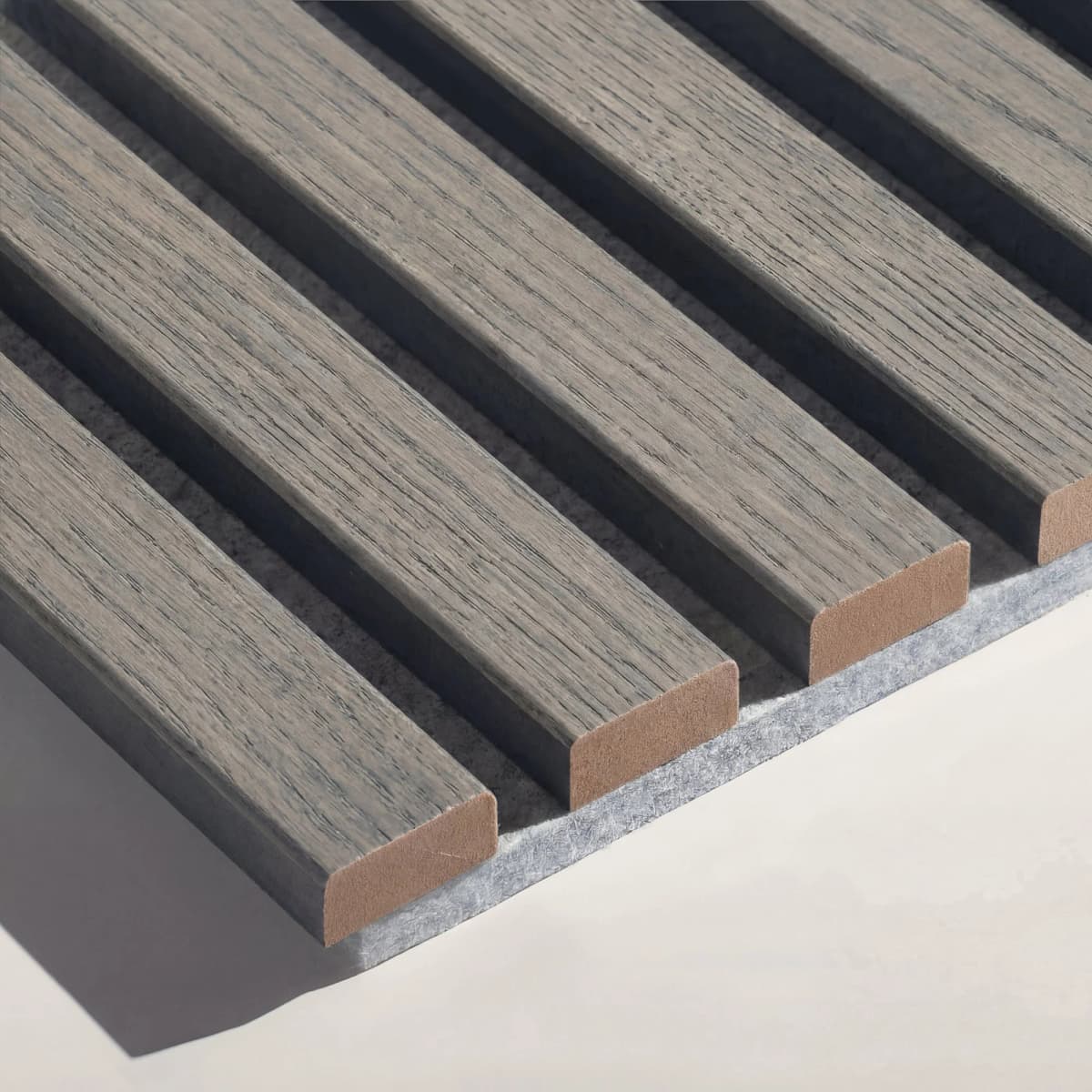
Choosing the wrong color for your wall panels is an expensive mistake — hard to fix once the panels are installed. The right color can make a room feel larger, warmer, more dramatic, or more serene. The wrong one can make it feel dark, chaotic, or flat.
This guide walks through the decisions that lead to a confident color choice: how lighting affects panel tone, how to coordinate panels with existing finishes, and which colors tend to work best room by room.
Table of Contents
How Lighting Changes Everything
Wall panels look different under different light conditions — and the difference is more dramatic than with flat paint, because the three-dimensional texture of slats creates shadow lines that shift as light changes throughout the day.
- North-facing light (cool, diffused): Warms up dark panels; can make light panels feel cold. Mid-tones like walnut and natural oak tend to read best.
- South-facing light (warm, bright): Flatters lighter panels — golden oak and pale natural finishes look rich and warm. Very dark panels can feel oppressive under intense direct sunlight.
- Warm white artificial lighting (2700–3000K): Emphasises warm tones in wood grain. Golden Oak deepens to a rich amber; Walnut reads as deep burnished brown.
- Cool white artificial lighting (4000K+): Brings out grey undertones. Works well with charcoal; can make warm oak tones appear greenish.
Always view a sample in your actual room at different times of day before committing to a full order. Wood tones look significantly different on screen versus in person and under different light conditions.
Coordinating Panels with Existing Finishes
Flooring
- Matching tones: Floor and wall panel in the same wood family creates cohesive warmth — popular in Scandinavian and Japandi interiors. Risk: the room can feel monochromatic without contrast elsewhere.
- Contrasting tones: Dark panels with light floor (or vice versa) creates definition between surfaces. The room feels grounded and the feature wall reads clearly.
- Matching undertones: A floor with warm golden undertones pairs naturally with warm golden oak panels. A floor with cool grey undertones pairs better with charcoal or cooler-toned wood.
Furniture
You don’t need an exact match between panel tone and furniture — in fact, exact matches can look staged. Aim for tonal coordination (same warm or cool family) with a clear difference in shade depth, bridged by an accent — a cushion, rug, or artwork that picks up both the panel and furniture finish.
Wall Paint
- White or very light painted walls make dark panels more dramatic — high contrast, modern feel
- Mid-tone complementary walls (sage green, warm grey, terracotta) create a richer, layered look alongside warm wood panels
- Matching dark walls to dark panels creates an enveloping, moody aesthetic — popular in media rooms and bedrooms, but requires confident lighting to avoid feeling oppressive
The Most Popular Wall Panel Colors
Golden Oak — The Most Versatile
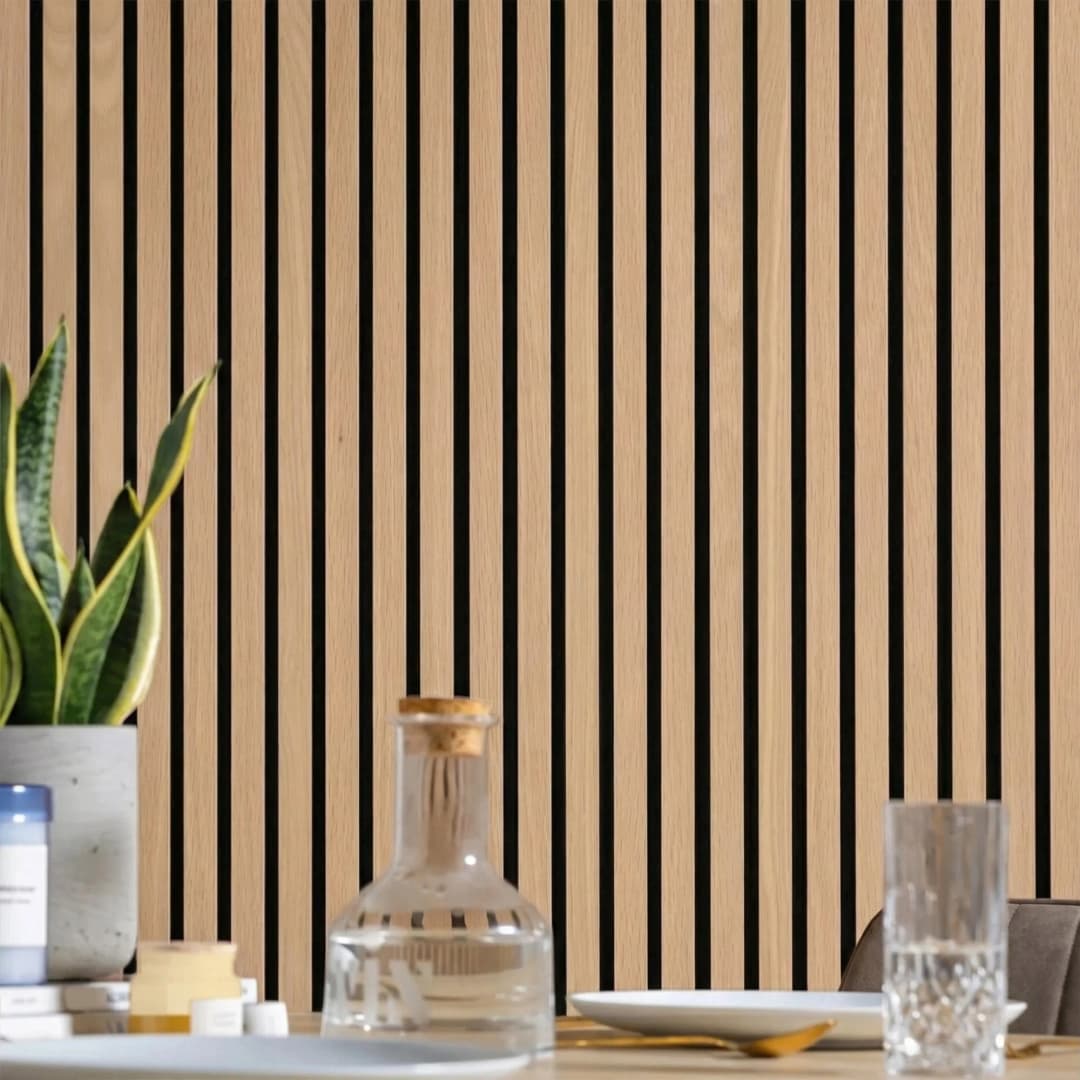
Golden Oak’s warm mid-amber tone sits comfortably with almost any interior palette. It works equally well in bright, airy spaces and warmer, more intimate rooms. It’s forgiving of mismatched furniture tones and photographs beautifully under both natural and artificial light. The most popular starting point for first-time panel installations.
Best for: Living rooms, bedrooms, Scandinavian and transitional interiors.
Walnut — Premium and Dramatic
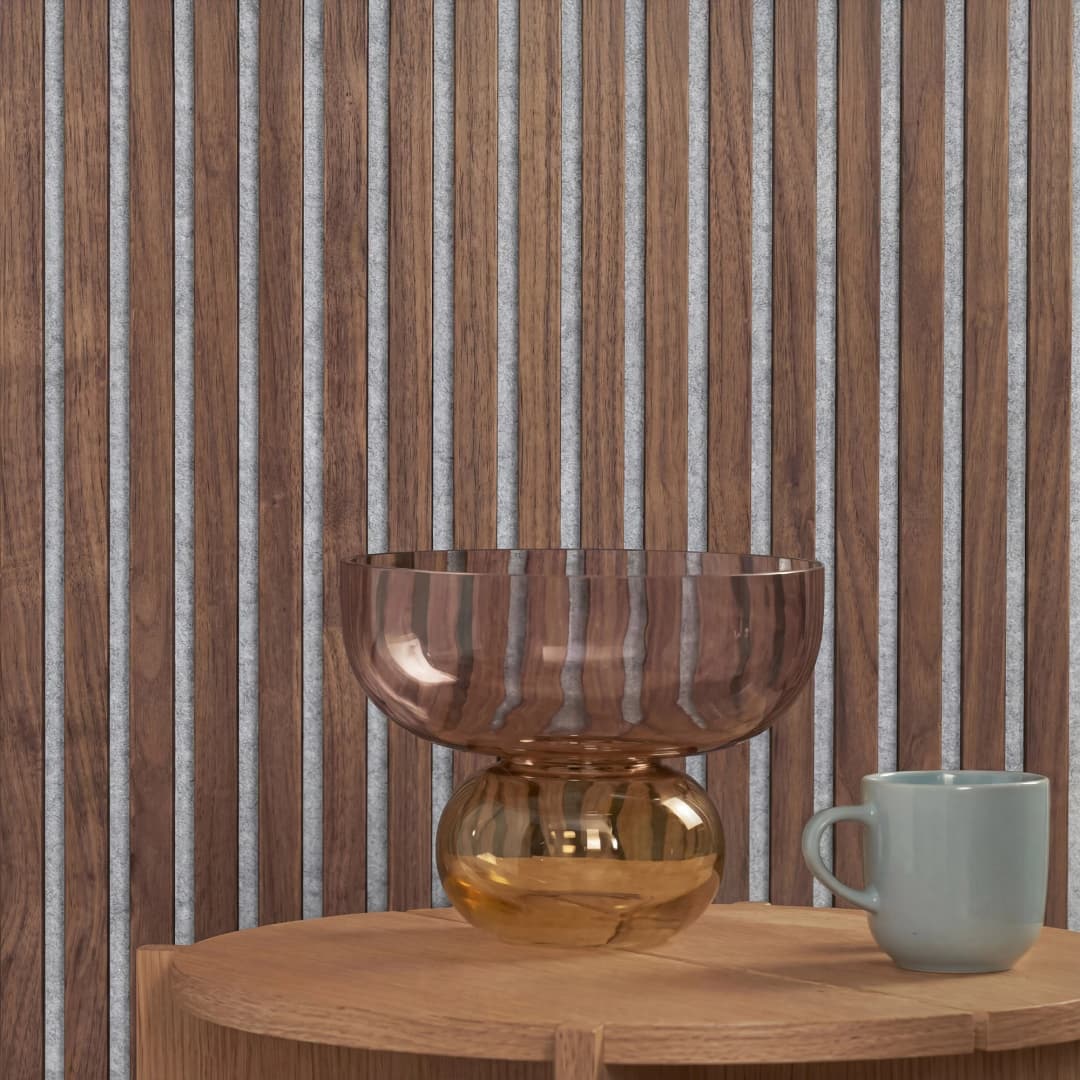
Walnut’s deep rich brown creates striking contrast against light walls and pale furniture. In a well-lit room, walnut panels feel luxurious and enveloping — the natural grain variation adds depth without losing warmth. Under cool or bright light, the grain becomes more visible and detailed.
Best for: Media walls, home offices, dining rooms, contemporary and high-end interiors.
Charcoal / Dark Grey — Cinematic and Architectural
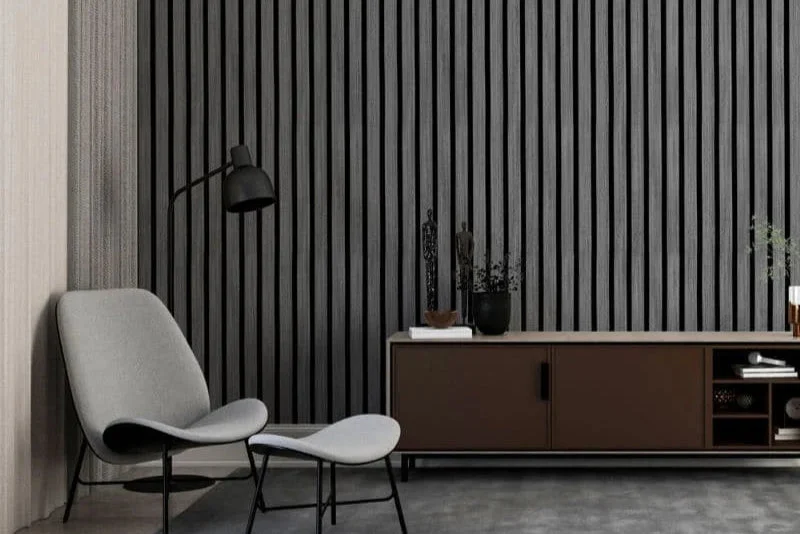
Charcoal panels deliver an almost architectural feel — they recede from the room and create a dark, dramatic backdrop. Unlike black, charcoal retains wood grain texture and warmth. Combined with warm lighting, charcoal slat panels create one of the most cinematic wall effects achievable with a decorative panel.
Best for: Media rooms, feature walls in neutral interiors, spaces that want drama without strong warmth.
Natural / Light — Minimal and Japandi
For interiors leaning pale, minimal, and Japandi-inspired, natural or light ash finishes deliver delicate wood texture that adds warmth without weight. Particularly effective in small rooms where darker finishes might feel heavy.
Best for: Small rooms, bedrooms, Japandi and Scandinavian interiors, spaces with limited natural light.
Room-by-Room Color Guide
Living Room
Golden Oak and Walnut are the most popular choices — Oak for warmer, more relaxed living rooms; Walnut for more modern, styled spaces. For a media wall with a TV, Walnut or Charcoal create the best visual contrast with the screen. Read our TV wall paneling guide for more specific advice.
Bedroom
Warm tones (Golden Oak, natural) create the most relaxing sleep environment for headboard feature walls. Dark tones (Walnut, Charcoal) work beautifully in bedrooms if the room is large enough and well-lit — avoid dark panels in bedrooms with minimal natural light.
Home Office
Medium to dark tones work well. Walnut panels on the wall behind a desk create a professional, premium backdrop for video calls. Avoid very light panels immediately behind a screen — the contrast can cause eye fatigue over long sessions.
Hallway
Narrow hallways benefit from lighter tones and vertical panel orientations, both of which create an impression of height and width. If the hallway has good lighting, a single dark feature wall at the far end creates a dramatic arrival moment. Read our full hallway paneling guide for more specific ideas.
Dining Room
Rich warm tones suit dining rooms well. For formal dining, darker panels create an intimate, restaurant-like atmosphere. For casual dining, lighter oak tones keep the space feeling open and sociable.
Mixing Panel Colors
Mixing tones intentionally is increasingly popular. The most common approach: a darker tone on the main feature wall (behind the TV or the sofa) transitioning to a lighter tone on adjacent walls. Keep the same panel profile and texture consistent — using the same slat format in different tones gives cohesion while adding depth.
Frequently Asked Questions
How do I know if a panel color will work in my room?
Order a sample. It’s the single most reliable step — seeing the real panel in your room under your lighting next to your existing finishes eliminates virtually all color-choice risk. Photos and screen representations of wood tones vary significantly between monitors.
Should my wall panels match my flooring?
They don’t need to match — and in many cases it’s better if they don’t. Aim for tonal coordination (same warm or cool family) rather than exact matching. A mid-tone walnut panel with a lighter oak floor, or a golden oak panel with a darker walnut floor, creates natural contrast that gives the room depth.
Are darker panels harder to keep clean?
Darker panels can show dust more readily than lighter ones. Regular dusting with a dry or lightly damp cloth is all that’s needed — the factory-sealed finish on our panels resists dust buildup and cleans easily without specialist products.
Can I mix different panel colors in the same room?
Yes — and this is increasingly popular. Keep the same panel profile consistent and vary only the tone. This gives the room depth and intention rather than a chaotic multi-material feel.
Conclusion
The right wall panel color comes down to three filters: your room’s light, your existing material palette, and the mood you want to create. When in doubt — order a sample, view it in your room at different times of day, and trust what you see in the real space over anything on screen.
- American Acoustic Slat Wood Wall Panels | SoundPanel™ — Golden Oak, Walnut, Charcoal and more
- Crossing Lines Solid Wood Wall Panels | GroovePanel® — solid wood in natural and dark finishes
- Honey Mosaic Wood Wall Panels | GroovePanel® — warm natural walnut