
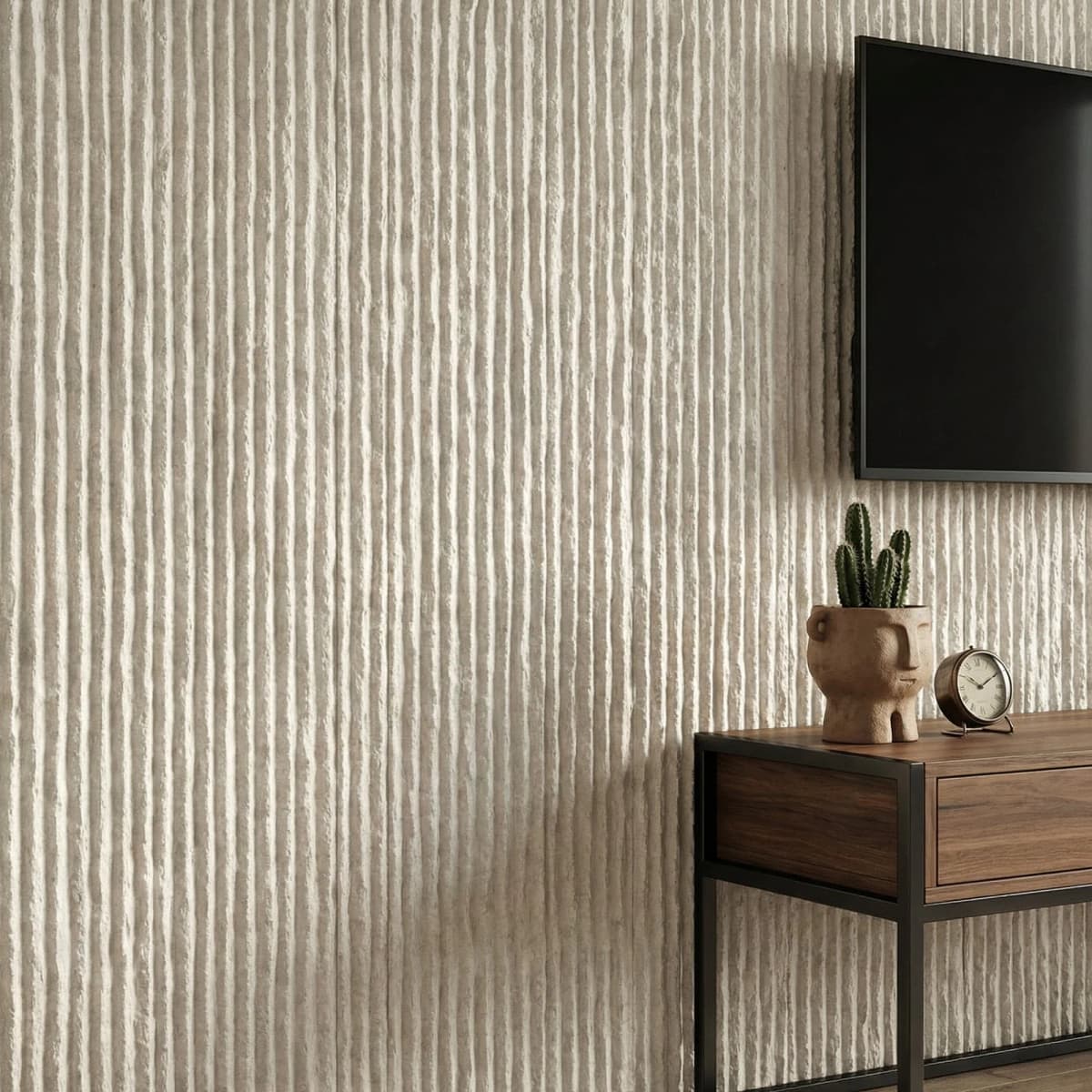
A TV mounted on a bare white wall is functional. A TV mounted on a wood-panelled feature wall is a design statement. The difference is remarkable — and it’s one of the most achievable upgrades in a living room, requiring no structural work and no trade skills beyond a drill and a spirit level.
This guide covers the best TV wall paneling approaches for different interior styles, how to choose the right panel and finish, and how to use lighting to take a TV wall from good to exceptional.
Read More: How to Build a Media Wall: Full Step-by-Step Guide
Table of Contents
Why Panel the Wall Behind Your TV?
Three reasons make a panelled TV wall worth doing:
- Aesthetics: A panel backdrop frames the TV as a considered design feature rather than a floating black rectangle mounted on white plasterboard.
- Acoustics: Acoustic slat panels behind and around a TV reduce the echo that makes dialogue harder to follow and bass frequencies muddier.
- Cable management: A panel installation creates a natural system for concealing cables — fed behind the panels rather than visible against the wall surface.
TV Wall Panel Styles by Interior
Modern Minimalist — Walnut Slat Panels
For clean-line contemporary interiors, a full-width run of vertical walnut acoustic slat panels creates a striking backdrop. The regular rhythm of the slats complements the rectangular geometry of the TV without visual competition. Keep surrounding decor minimal. Finish with a recessed LED strip behind the TV for bias lighting — it reduces eye strain and casts a warm glow along the slat profile.
Warm Transitional — Golden Oak with Floating Shelves
Golden oak slat panels create a warmer, more inviting backdrop for transitional interiors. Combine the panel wall with floating timber shelves on either side of the TV for a built-in look that adds storage and display space without requiring joinery work.
Bold Statement — Geometric Solid Wood
For living rooms that lean maximalist or eclectic, a wall of geometric mosaic panels behind the TV creates a genuinely dramatic feature. The interlocking pattern of Crossing Lines Solid Wood Wall Panels | GroovePanel® frames the TV like a work of art.
Industrial Loft — Stone-Effect Panels
For spaces with exposed brick, concrete floors, or industrial-style furniture, a stone-effect panel backdrop creates a cohesive material language. The Highland Rock Wall Panel | RockSurface® delivers the look of natural stone at a fraction of the weight — ideal for feature walls where full stone cladding isn’t structurally feasible.
How to Choose the Right Panel for Your TV Wall
Tone and Contrast
- Dark panels (walnut, charcoal) create maximum contrast against light walls — the TV reads as intentionally framed
- Light panels (golden oak, natural) create a softer, more blended look — the wall feels warm rather than dramatic
- Match the panel tone to existing timber elements — flooring, furniture, door frames — within the same tonal family rather than as an exact match
Panel Orientation
- Vertical slats draw the eye upward, making ceilings feel higher — better for rooms with standard ceiling heights
- Horizontal slats emphasise wall width and create a grounded contemporary look — better for rooms with very high ceilings
Coverage Width
- Full wall (edge to edge): Maximum impact — the TV becomes part of a complete feature wall
- Wide panel, partial height: Panels run full width but stop at a consistent height — works in rooms where full-height would feel overwhelming
- TV zone only: Panels cover the section directly behind and around the TV — the most subtle approach, adds framing without committing to a full feature wall
As a minimum, extend panels at least 400–600mm each side of the TV edge. Panels that stop less than 300mm from the TV edge can look like an afterthought rather than a deliberate design choice.
Lighting Your TV Wall
Lighting is what elevates a good TV wall to an exceptional one. The right position reveals panel texture in a way that ambient room lighting rarely achieves.
- Bias lighting (behind the TV): An LED strip behind the TV creates a soft glow around the screen that reduces eye strain and adds a premium, immersive viewing feel. Use warm white (2700K–3000K) for a cinematic effect.
- Top-down grazing light: A recessed LED strip along the top of the panel installation, angled to wash light down the wall, reveals every slat and texture detail dramatically. The most common approach in hospitality and high-end residential installations.
- Integrated strip between rows: LED strips recessed into the gap between panel rows create a floating light effect — striking with acoustic slat panels.
Shop: LED Light Strip Kit — designed to integrate seamlessly with SoundPanel™ and GroovePanel® installations.
Our Top TV Wall Panel Picks
American Acoustic Slat Wood Wall Panels | SoundPanel™
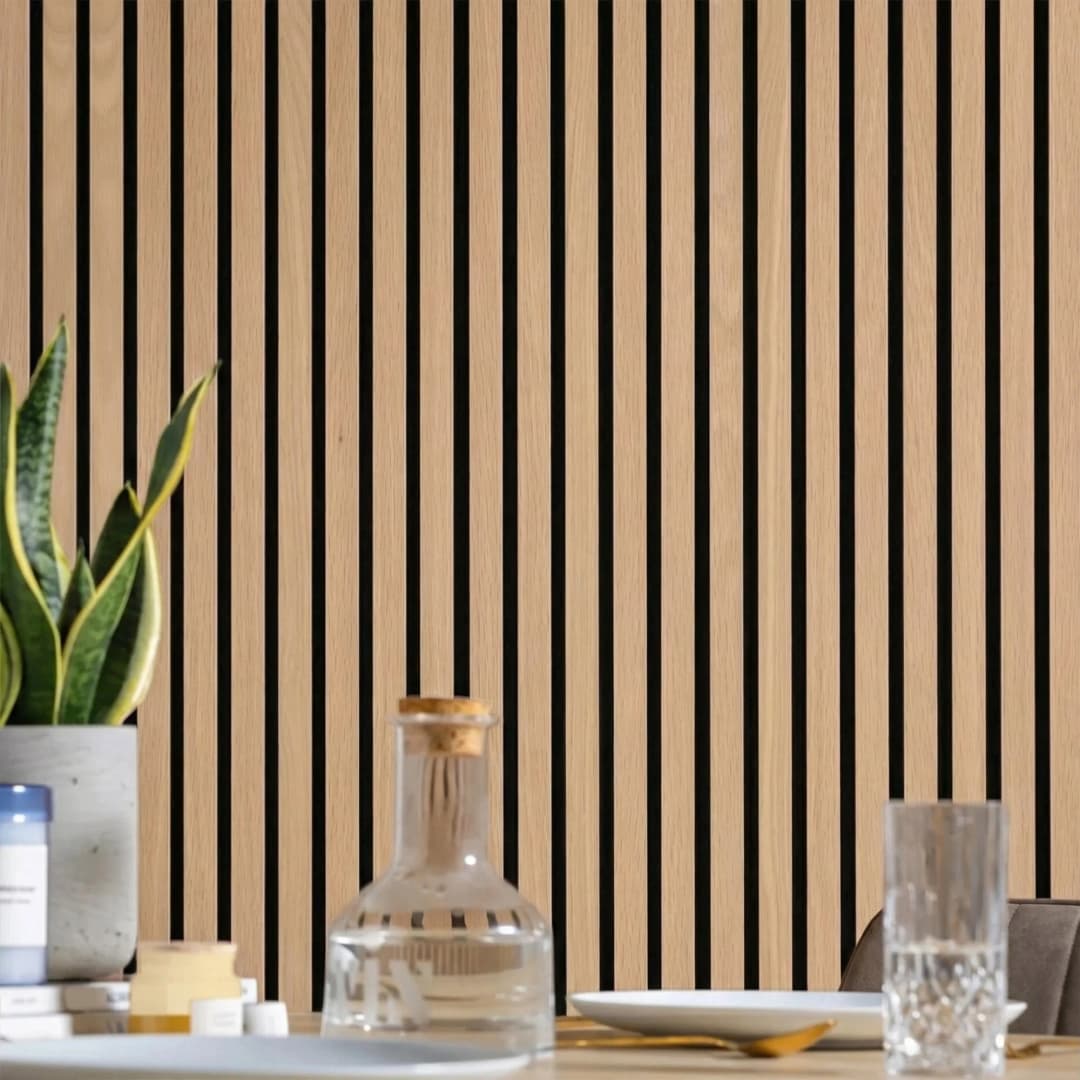
Our top recommendation for TV walls. The acoustic backing improves dialogue clarity and reduces echo that makes TV audio muddy in hard-surfaced rooms. The slat profile catches backlighting beautifully, creating a premium cinematic effect.
Crossing Lines Solid Wood Wall Panels | GroovePanel®
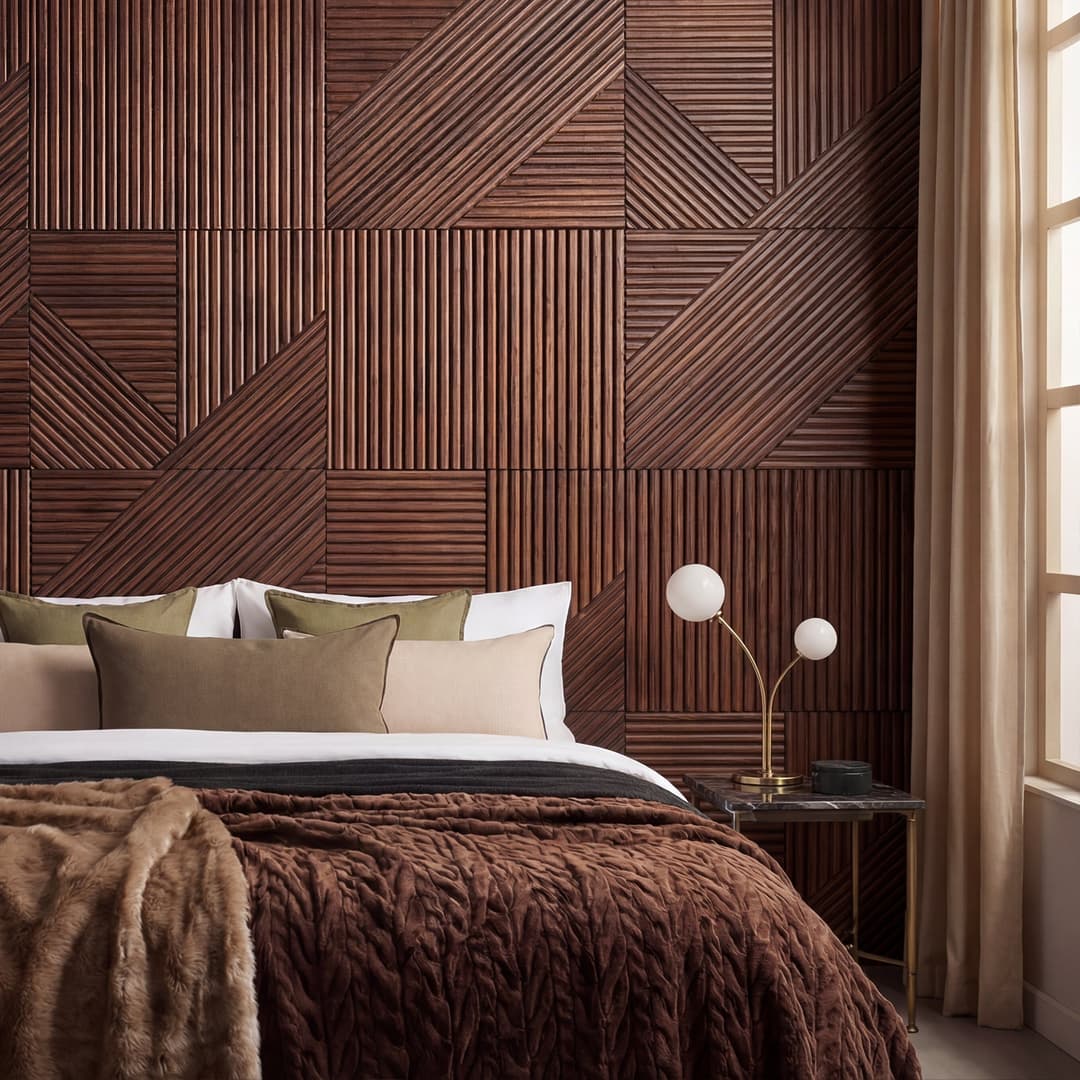
For living rooms where the design statement matters most. The interlocking solid wood geometry creates a striking backdrop that makes the TV feel deliberately placed rather than incidentally mounted.
Frequently Asked Questions
Can I mount my TV directly on wood wall panels?
The TV bracket must be fixed to the structural wall behind the panels — not to the panels themselves. Use a stud finder to locate wall studs and drill the bracket through the panel surface directly into them. The panels provide the visual frame; the wall carries the weight.
What panel tone works best with a black TV?
Dark TVs recede visually against dark panel backgrounds — the screen blends into the wall. For the TV to read clearly, lighter or mid-tone panels (golden oak, natural walnut) create better visual contrast. If you prefer dark panels, differentiate with finish — matte panel, satin TV frame — to maintain visual separation.
Do I need to remove panels to reposition the TV bracket later?
If future repositioning is likely, use a tilting or articulated bracket from the outset — it gives range of movement without panel removal. Otherwise, plan the bracket position carefully at the start and add additional stud fixings in a new location if needed, patching the old holes before reinstalling panels.
Conclusion
A panelled TV wall is one of the fastest, highest-impact upgrades a living room can receive — and with the right panel choice, it improves both the look and sound of your viewing experience. SoundPanel™ is the go-to where acoustic improvement matters alongside aesthetics; GroovePanel® is the choice when visual drama is the primary brief.