
Table of Contents
- Can You Use Rock Wall Panels in a Bedroom?
- Why Rock Panels Work in a Bedroom
- The Best Placement: The Headboard Wall
- Profile Selection for Bedrooms
- Scale and Coverage: How Much Stone Is Right?
- Colour and Tone: Warm, Not Cool
- Lighting the Bedroom Stone Wall
- Pairing Rock Panels with Other Bedroom Materials
- Browse RockSurface® Panels for Bedrooms
Can You Use Rock Wall Panels in a Bedroom?
Yes — and when done well, a rock or stone panel wall in a bedroom is one of the most striking and character-defining design choices available. The challenge is that bedrooms are intimate spaces with specific visual and atmospheric requirements that differ from living rooms and commercial environments. Stone panels that would look commanding in a living room can feel cold, heavy, or aggressive in a bedroom if applied without care.
This guide covers the approaches that work, the profiles that suit bedroom use, and the mistakes most commonly made when specifying stone panels in sleeping spaces.
Why Rock Panels Work in a Bedroom
The bedroom is the most personal room in the home — the space where the design of the environment directly influences mood, relaxation, and sleep quality. Natural material surfaces — stone, wood, linen, organic textures — contribute to a sense of warmth and groundedness that synthetic and industrial materials undermine. Rock wall panels in a bedroom introduce the weight and permanence of natural stone into what is often the most important room in terms of daily wellbeing.
Products like the RockSurface® faux stone collection — with their genuine dimensional depth and organic texture variation — create the material presence of real stone without the weight, cost, or installation complexity. In a bedroom context, this matters: the installation can be completed without the disruption of structural work or specialist trades.
The Best Placement: The Headboard Wall
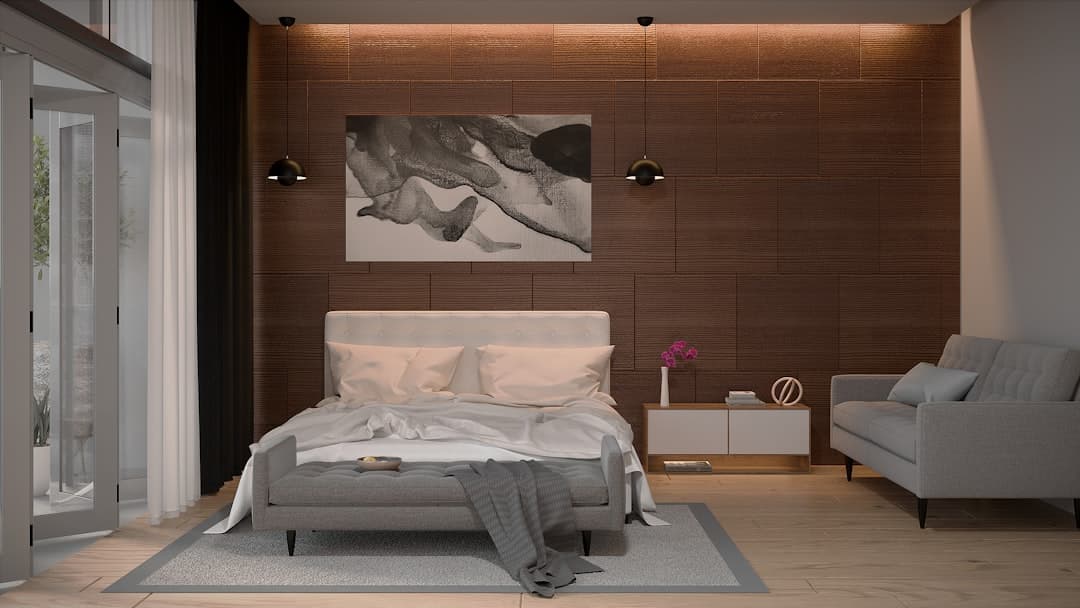
The wall directly behind the bed is the ideal location for a bedroom rock panel treatment. This placement works for several reasons:
- It is viewed from the room’s natural orientation: From the doorway, the bed is the first thing you see, and the headboard wall behind it is the room’s primary visual backdrop.
- It frames the bed architecturally: A stone panel wall behind the bed functions as a designed element that gives the sleeping position gravitas and structure — an architectural headboard at room scale.
- It is not the surface you sleep facing: Lying in bed, you typically face the wall opposite — not the headboard wall. This means the stone texture is a backdrop rather than a surface you stare at for extended periods, which avoids the potential visual agitation of a busy texture directly in your line of sight at rest.
Profile Selection for Bedrooms
Not all stone profiles suit a bedroom environment equally:
Ridge Rock — Best for Bedrooms
The Ridge Rock profile’s horizontal layered texture has a composed, ordered quality that suits the bedroom environment well. The horizontal direction of the stone layers echoes the horizontal orientation of the bed and sleeping body, creating a subtle visual harmony. The profile reads as strong but calm — it adds character without visual agitation.
Highland Rock — Use with Restraint
The irregular, organic field stone texture of the Highland Rock profile is more visually complex and random. In a bedroom, this reads as rustic and natural — appropriate in a cabin-style, farmhouse, or organic-modern bedroom. In a more refined or contemporary bedroom, the irregularity of the surface can feel disordered. If using Highland Rock in a bedroom, keep the stone treatment contained to the headboard wall only and ensure surrounding surfaces are calm and simple.
Stone Rock — For Formal Bedrooms
The ashlar-style Stone Rock profile with its consistent face dimensions and clean joints suits formal, high-end, and hotel-inspired bedrooms. It reads as refined and architectural — appropriate for master bedrooms where a luxury aesthetic is the goal.
Scale and Coverage: How Much Stone Is Right?
Headboard Wall Only (Recommended Starting Point)
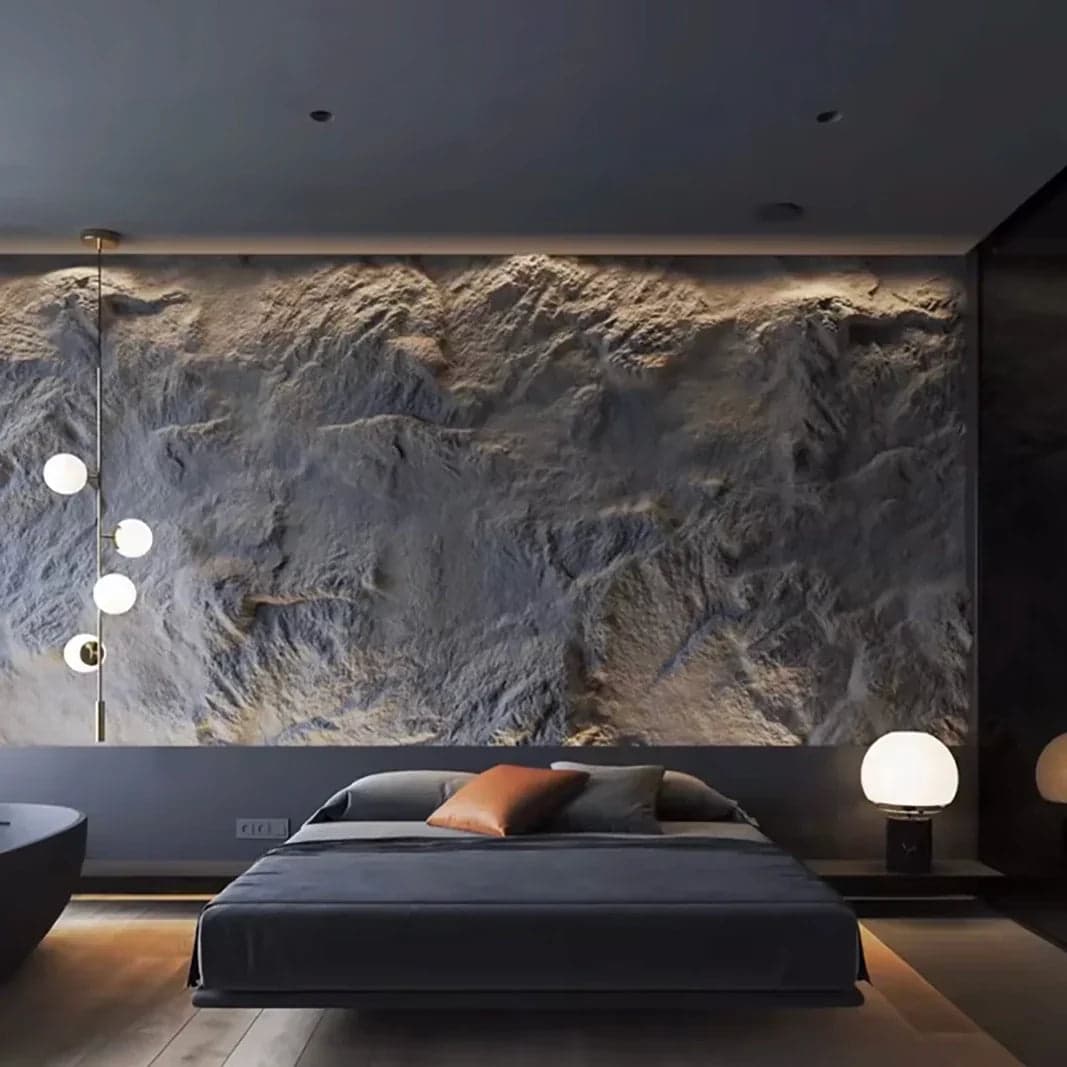
For most bedrooms, panelling the headboard wall only — from floor to ceiling or from the bed height upward — is the most controlled and successful approach. This contains the stone treatment to a single surface where it provides maximum impact (framing the bed) without overwhelming the room’s other walls. Pair the stone headboard wall with simple, plain-painted side walls and ceiling to let the stone be the room’s singular material statement.
Headboard Wall + Bed Alcove
If the bed sits in an alcove — a recessed section with flanking walls — extending the stone treatment across all three surfaces of the alcove (back wall and both side walls) creates an immersive, hotel-suite quality environment. The enclosure of the alcove contains the stone and prevents it from dominating the full room.
Avoid: Stone on Multiple Walls
Applying stone panels to two or more walls in a bedroom typically creates an environment that feels cold, cave-like, and oppressive rather than warm and characterful. The bedroom requires balance — one wall of stone impact, three walls of calm. Breaking this balance by extending stone panels to the ceiling, side walls, or the wall you face from bed reliably produces a result that feels designed for effect rather than for human comfort.
Colour and Tone: Warm, Not Cool
Stone wall panels span a significant colour range — from cool grey and blue-grey tones to warm sandy, ochre, and brown tones. In a bedroom, warm stone tones are almost universally more successful than cool ones. Cool grey stone in a bedroom can read as cold and clinical — the opposite of the warmth and comfort the room should convey. Warm sandstone, warm brown field stone, and honey-toned ashlar profiles create the material warmth that makes a bedroom stone wall feel enveloping rather than austere.
Consider the room’s existing colour palette. Stone panels with warm undertones pair naturally with natural linen, warm white paint, timber furniture, and organic textiles. Stone with cool undertones works in rooms with a deliberate cool, contemporary palette — but requires more careful surrounding material choices to avoid feeling cold.
Lighting the Bedroom Stone Wall
Stone panel walls in bedrooms benefit from warm, low-level lighting that emphasises the texture and depth of the surface without creating harsh shadows that might disturb sleep. Consider:
- Bedside table lamps: The warm, low, directional light of table lamps rakes across the stone surface at bed height, creating beautiful shadow depth in the stone texture.
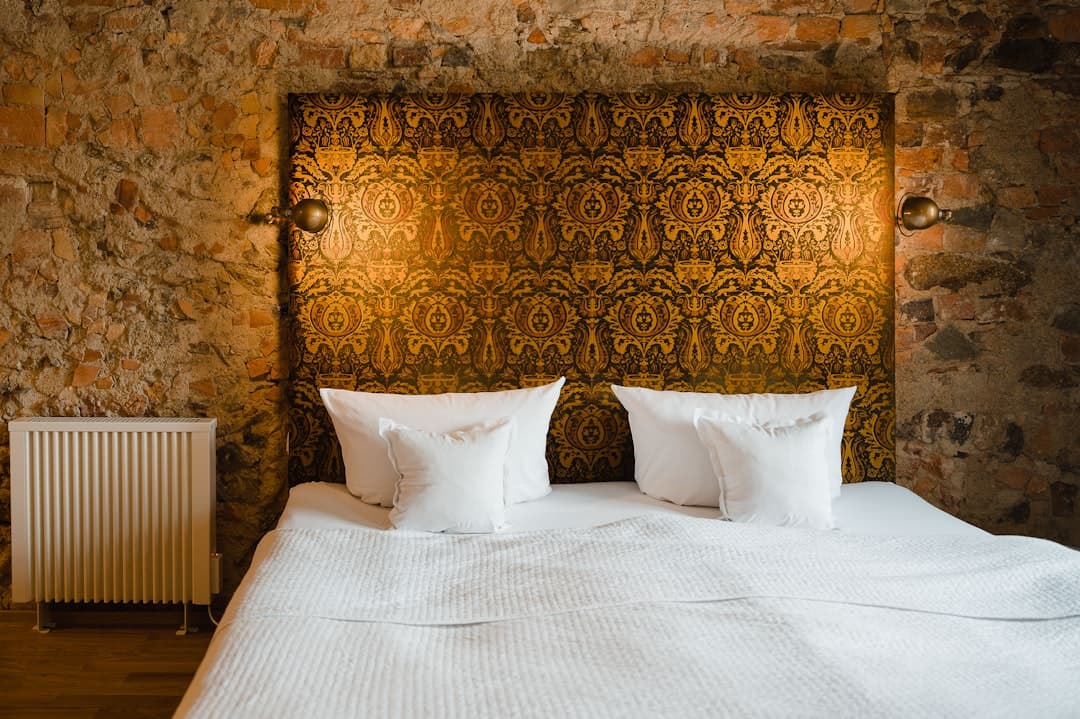
- Wall-mounted reading lights: Swing-arm or fixed reading lights positioned at either side of the headboard cast angled light across the stone surface that reveals the panel’s relief depth.
- Avoid harsh overhead downlights aimed directly at the stone wall — recessed spots directly above a stone headboard wall create flat-on illumination that removes the shadow-play and flattens the texture the panel is designed to create.
Pairing Rock Panels with Other Bedroom Materials
The stone headboard wall works best when the surrounding materials are chosen to complement rather than compete:
- Natural wood: Timber bed frames, wooden floors, and wood side tables pair naturally with stone — the two organic materials reinforce each other’s warmth. Consider pairing a RockSurface® stone wall with GroovePanel® geometric wood panels on the opposite wall for a material-rich, balanced bedroom environment.
- Soft textiles: Linen bedding, wool throws, and fabric-upholstered headboards all contrast well against stone’s hard texture.
- Warm paint colours: Warm whites, off-whites, and warm greiges on surrounding walls complement stone panel walls without competing for attention.
Browse RockSurface® Panels for Bedrooms
The RockSurface® collection includes stone panel profiles suitable for bedroom feature walls — lightweight, DIY-compatible, and designed to deliver the visual character of real stone in a domestic scale application. 5-year warranty, free US delivery, 60-day returns, and 24/7 support. Order a sample to see how the texture and tone look in your bedroom space before committing to a full wall.