
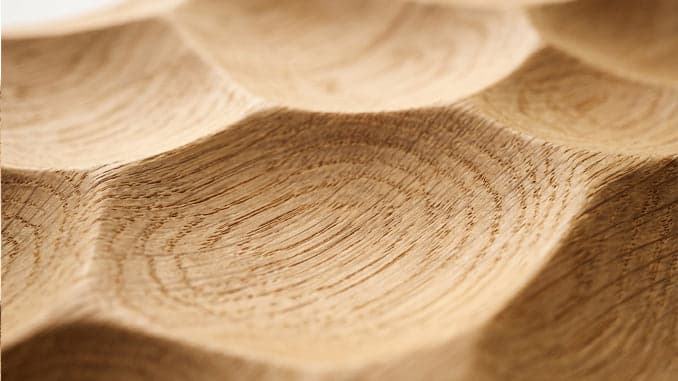
The wall panel market is full of options that sound like solid wood but aren’t. Veneer panels, MDF-core panels, HDF panels, PVC panels with wood-effect printing — all of these are sold alongside genuine solid wood products, often at similar price points. For buyers who haven’t navigated the category before, it’s genuinely confusing.
This article explains what 100% solid wood wall panels actually are, how they differ from every engineered alternative, and why — for feature walls where quality and longevity matter — they’re consistently worth paying more for.
Table of Contents
What Counts as 100% Solid Wood?
A solid wood panel is made entirely from cut timber with no composite core. Every millimetre of depth is real wood. The grain runs through the full thickness of the piece. If you cut a corner off, what you see at the cut face is identical to the front face — uniform grain, no layers, no adhesive core.
This distinguishes solid wood from:
- Veneer panels: A thin slice of real timber (0.6–3mm) bonded to an MDF, HDF, or plywood core
- Laminate panels: A photographic print of wood grain under a clear protective layer, bonded to a composite core
- Engineered wood panels: Multiple thin plies of timber bonded in alternating grain directions, similar to plywood
All of these are legitimate products with valid applications. But they are not solid wood, and they don’t behave like solid wood over time.
The Practical Differences That Matter
Surface repair
Solid wood panels can be sanded, refinished, and oiled if they’re scratched or dented. Because the material is uniform throughout, removing 0.5mm of surface restores it. Veneer panels cannot be sanded — the veneer layer is too thin. Laminate panels cannot be repaired at all; a deep scratch exposes the composite core underneath.
Ageing
Solid wood develops a natural patina over years. Walnut lightens slightly; oak deepens. The character of the wood increases with time. Veneer panels fade more uniformly, and laminates can yellow or delaminate with age and UV exposure.
Edge quality
In geometric mosaic panels, the cut edges are highly visible — they form the boundary lines between pieces. Solid wood shows clean grain at every edge. MDF-core veneer panels show the grey composite core at cut edges, which requires painting or masking.
Environmental credentials
Solid wood wall panels can be genuinely FSC-certified, meaning the timber supply chain is verified. Some composite panels carry partial certifications, but the adhesive binders and composite fillers complicate the environmental picture. Solid wood is simpler: it’s timber, and it came from a tree.
Where Solid Wood Panels Make the Most Difference
Not every application requires solid wood. For utility spaces or short-term installations, engineered alternatives may be the pragmatic choice. But for:
- Geometric mosaic panels where cut edges are visible
- Feature walls in main living areas or master bedrooms
- Long-term installations where refinishing is a realistic expectation
- Design projects where material authenticity matters to the brief
…solid wood is the right answer.
GroovePanel®: Solid Wood Geometric Panels
Our GroovePanel® Geometric Wood Wall Panels are 100% solid timber throughout. The range includes triangle mosaics, concentric square patterns, crossing lines, and honey mosaic formats — all cut from FSC-certified solid wood with EPD verification.
The 3D Geometric Pattern Wooden Panel is one of the clearest demonstrations of why solid wood matters for this product type. The three-dimensional relief is formed by routing and carving actual timber — the depth and shadow lines that give the pattern its visual impact come from physical material, not printed effect. You can’t replicate that with veneer.
Similarly, the Walnut Triangle Panel shows rich end grain at every triangle boundary — something only possible with full-depth solid timber.
Solid Wood vs MDF: The Full Comparison
For a detailed breakdown of how solid wood and MDF compare across strength, moisture resistance, workability, and cost, read our guide to MDF vs Solid Wood Wall Panels.
What to Look for When Buying
When a product claims to be solid wood, check:
- Species specification: Genuine solid wood panels specify the timber species (oak, walnut, pine, etc.), not just “wood”
- FSC certification: Look for a verifiable FSC licence number on the product listing
- Edge photos: Ask for photos of the panel edge — MDF core shows as a different colour and texture
- Weight: Solid wood panels are heavier per square metre than composite alternatives
- Country of manufacture: Solid wood milling requires more skilled production than composite lamination
Styling Solid Wood Geometric Panels
The warmth and grain variation of solid timber means it works across a wide range of interior styles. For contemporary and Japandi aesthetics, the natural grain is left unfinished. For a more dramatic or Art Deco-influenced space, a dark walnut stain deepens the contrast between pattern elements.
For styling inspiration, see our guide to geometric wood wall panel patterns and styles, which covers placement, pattern selection, and room-by-room recommendations.
Browse the full solid wood collection at GroovePanel® Geometric Wood Wall Panels, or order a sample to check grain and colour in your own space before ordering.