
Table of Contents
Stained vs Natural vs Painted: The Finish Spectrum
These are wood wall panel finishes sit on a spectrum:
- Natural oil or hardwax: Protects and enhances without altering the wood’s inherent colour. Shows the wood exactly as it is.
- Stained: Alters the wood’s colour while retaining the grain pattern. You choose the tone; the material provides the texture.
- Painted: Completely covers the wood surface. Colour is the only statement; the grain disappears.
Staining sits in the most versatile middle ground. You can make pale ash read darker and richer; you can make mid-tone oak lean toward walnut; you can grey-wash naturally warm wood for a Nordic aesthetic. The grain remains visible throughout, providing depth and warmth that painted finishes cannot match.
Types of Wood Stain for Panels
Oil-Based Stain
Penetrates the wood deeply, producing rich, even colour and enhancing the natural figure. Slow drying (12–24 hours per coat) but produces the most beautiful results on real wood veneer. The standard choice for staining quality panel products.
Water-Based Stain
Faster drying (2–4 hours), lower odour, easier cleanup. Slightly less depth of penetration than oil-based but more consistent colour from batch to batch. Better for veneer panels where deep penetration is less critical (the veneer layer is thin).
Gel Stain
A thicker, more controllable stain that doesn’t penetrate as deeply. Best for wood panels where you want even colour coverage without grain-variance issues. Useful for difficult species or for panels where consistency across many boards matters more than maximum depth of colour.
Popular Stain Directions and the Rooms They Suit
Dark Walnut Stain on Oak
The most popular customisation: taking natural oak panels and staining to walnut tone. Produces the warmth and richness of walnut at a cost point below natural walnut veneer. Works beautifully in living rooms, bedrooms, and dining rooms. Best in rooms with natural light (see our dark wood panel guide for lighting requirements).
Grey Wash / Ash Stain
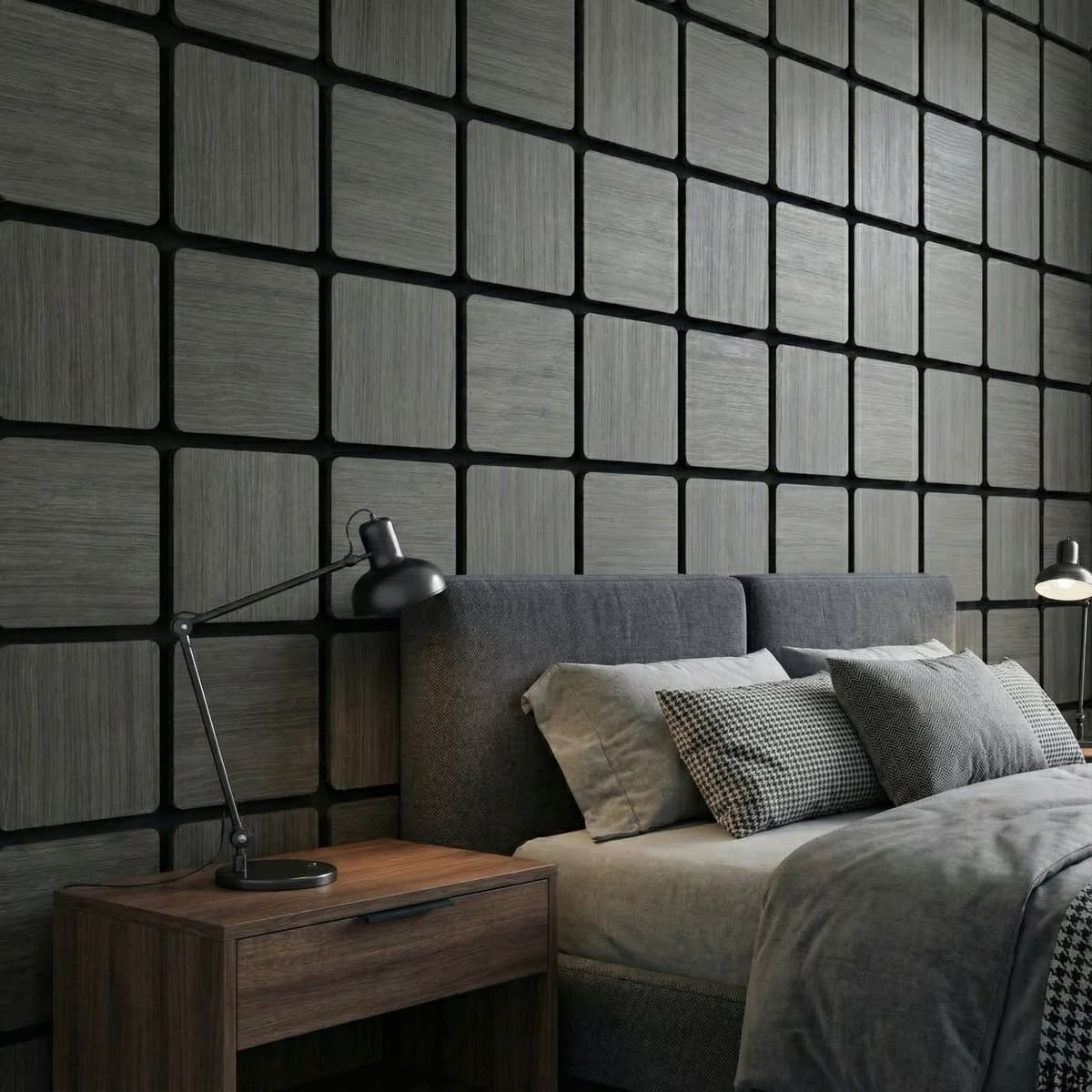
Pushes warm-toned oak toward a cool grey. Creates a Scandinavian, coastal, or contemporary-neutral character. Works particularly well in bedrooms, bathrooms (on moisture-resistant panels), and open-plan living spaces where a neutral backdrop is preferred.
White Wash / Limed Effect
White or near-white pigment wiped onto the wood grain, leaving colour in the open grain while the surface shows the lighter white tone. Creates a bleached, coastal, or French-country aesthetic. Works best on species with open, pronounced grain (oak, elm) where the liming effect is most visible.
Ebonised
Near-black stain — usually iron acetate (tea and steel wool solution) on tannic species like oak, or black pigment stain. Creates dramatic, high-contrast results. Best reserved for single feature walls with significant natural or artificial lighting compensation.
Maintenance of Stained Panels
Stained panels require periodic maintenance to keep the colour consistent and the surface protected. Oil-based stains in particular benefit from a maintenance coat of matching oil every 2–3 years in high-traffic rooms. Our wood panel maintenance guide covers the cleaning and refreshing process for different finish types.
When choosing a stained panel product, confirm with the manufacturer whether the stain is UV-stable — some pigments fade significantly in direct sunlight, which can affect panels near south-facing windows.