
Table of Contents
The Case for Dark Wood Panels
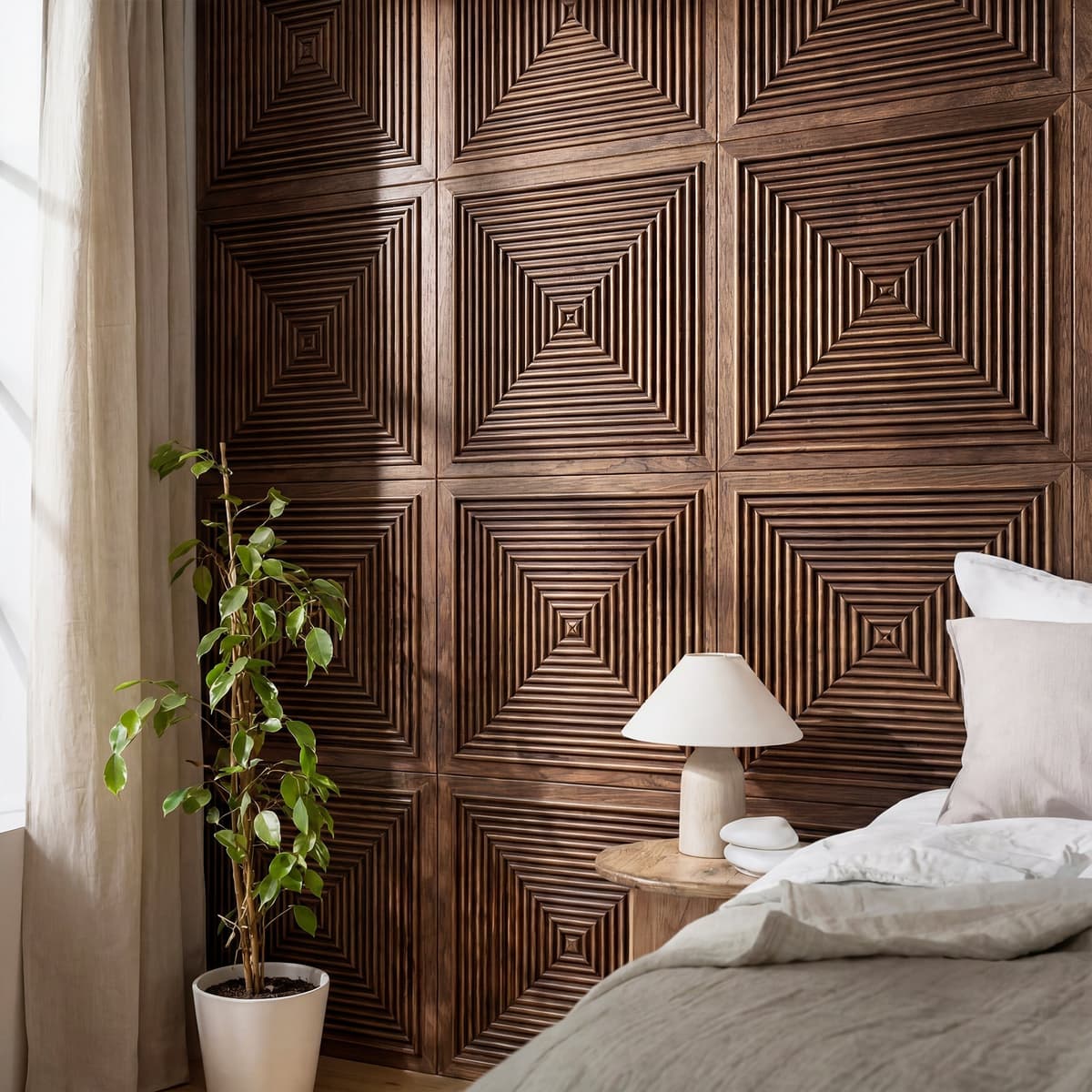
Dark wood — walnut, ebonised oak, dark-stained ash — is one of the most striking materials available for wall panels. The deep, rich tones create a sense of gravitas and warmth that lighter materials rarely achieve. A walnut slat panel wall reads as premium, sophisticated, and deliberately considered in a way that pale oak cannot quite match.
The common concern is light: will a dark panel wall make the room feel smaller and darker? The answer depends entirely on how you use it. Done correctly, dark panels create atmosphere without sacrificing comfort. Done incorrectly, they make rooms feel cave-like. Here’s how to get it right.
The Rules for Dark Panel Walls
Rule 1: One Wall, Maximum
In almost every domestic room, dark wood wall panels work on one wall only. Two or more dark panel walls in a room below 25m² will feel oppressive regardless of lighting. Choose the primary feature wall — the one you face from the main seating position — and leave the remaining walls in a lighter tone that bounces light back into the space.
Rule 2: Compensate with Artificial Lighting
Dark surfaces absorb rather than reflect light, which means you need to plan your artificial lighting before — not after — installing dark panels. The solutions:
- Wall-grazing spotlights: Ceiling-mounted spots angled to graze the panel surface create shadow play in the slat gaps that looks spectacular on dark wood and draws the eye upward.
- LED strip lighting integrated into the panel: Light strips at the base or top of a wood paneling create a floating effect and add indirect ambient light that compensates for the panel’s light absorption.
- Uplighting from floor level: Floor-standing uplights aimed at the dark panel wall add dimension and create warm, flattering indirect light that bounces off the ceiling.
Rule 3: Keep the Opposite Surfaces Light
The ceiling, the floor, and the opposing walls need to work hard to compensate. Light-coloured ceiling, pale or natural flooring, and light walls on the other three sides create a bright room with one dramatic focal point — rather than a uniformly dark space.
Rule 4: Choose Rooms with Natural Light
Deep brown panels work best in rooms with natural light — a south or west-facing room, a room with large windows or glazed doors. In a north-facing room with a single small window, dark panels will make the light problem worse. If your room is naturally light, dark panels add drama without sacrificing comfort. If it’s already dark, choose a mid-tone instead.
Best Rooms for Dark Wood Panel Walls
- Living rooms: The primary feature wall behind the sofa or facing the sofa, in a naturally lit room, is the ideal dark panel location. Our living room slat panel guide covers how to position panels for maximum impact.
- Bedrooms: A walnut slat panel headboard wall creates a luxurious, hotel-quality backdrop. See our bedroom wood panel guide for the full approach.
- Home offices: A dark panel wall behind the desk creates a serious, professional environment for video calls and focused work.
- Home cinema rooms: Darkness is a feature in cinema rooms, not a problem. Our home theater panel guide explains why dark panels are the correct choice here.
Species for Dark Panel Walls
Our walnut vs oak comparison covers this in depth, but briefly: walnut is the premium choice for dark panels — rich chocolate tones with warm undertones that prevent the wall from reading as black. Ebonised oak gives a near-black result with visible grain. Dark-stained ash is a more affordable option that can match walnut tone. Our guide to wood species for wall panels covers every option.
Styling Dark Wood Panels: Light, Contrast, and Material Pairings
Dark wood panels work best when the rest of the room actively counterbalances their weight. The simplest strategy is to keep ceilings and adjacent walls in a bright, warm white. This creates a horizontal band of dark material against lighter surfaces, which reads as bold and curated rather than heavy.
Flooring choice matters more with dark wall panels than with any other wall treatment. Light oak, pale stone, or cream carpet creates maximum contrast against dark-panelled walls. If your flooring is already dark, dark wood panels need stronger ambient lighting to prevent the room from feeling closed-in.
Reflective surfaces help. Mirrors, glass-front furniture, lacquered side tables, and metallic light fittings all catch and distribute light in rooms with dark wall materials. A single large mirror on the opposite wall from a dark panel feature can make a significant difference to how spacious the room feels.
For textiles, mid-tone or warm neutrals work better than very pale or very dark fabrics alongside dark wood. Cream, warm stone, terracotta, and forest green all complement dark wood tones without either disappearing into them or competing against them.
Dark Wood Wall Panel FAQs
Will dark wood panels make a small room feel smaller?
Yes — but only if used on the wrong wall. In a small room, dark panels on the wall you face as you enter can feel oppressive. On a side or rear wall, dark panels create depth without reducing the perceived length of the room. Keep ceilings and flooring as light as possible to maintain a sense of vertical space.
Which wood species give the darkest natural tones?
Walnut, Smoked Oak (thermally modified), and Wenge provide the deepest natural dark tones without stain. American Black Walnut has warm brown undertones. Smoked Oak has cooler grey-brown tones. Both work well as wall panel materials.
Do dark wood panels require more maintenance than light ones?
Not more maintenance, but different visibility. Dust shows less on dark wood. Smudges and grease marks are more visible. Regular dry dusting and an occasional wipe with a barely damp microfibre cloth keeps dark panels looking sharp.
Can I combine dark wood panels with other dark elements?
Yes. Dark panels, dark furniture, dark flooring, and deep colour palettes can create a luxurious, enveloping room that feels rich rather than oppressive, provided there are enough light sources and reflective surfaces to prevent the space from feeling flat. The key is layering different dark tones and textures rather than repeating the same shade everywhere.