
Table of Contents
Why Wood Wall Panels Work So Well in Bedrooms
The bedroom has one primary function: rest. And yet most bedrooms are acoustically harsh — painted drywall, glass windows, hard floors — all surfaces that reflect sound rather than absorbing it. Wood wall panels address this directly. The warmth of real timber calms the visual environment; the acoustic backing reduces the subtle but fatiguing background of reflected noise that makes a room feel less restful than it should.
Beyond acoustics, the visual effect of a wood panel wall behind the bed is one of the most transformative bedroom upgrades available. It frames the bed, eliminates the need for a traditional headboard, and creates a sense of designed intention that painted walls rarely achieve.
Best Panel Styles for Bedrooms
Acoustic Slat Panels (Top Recommendation)
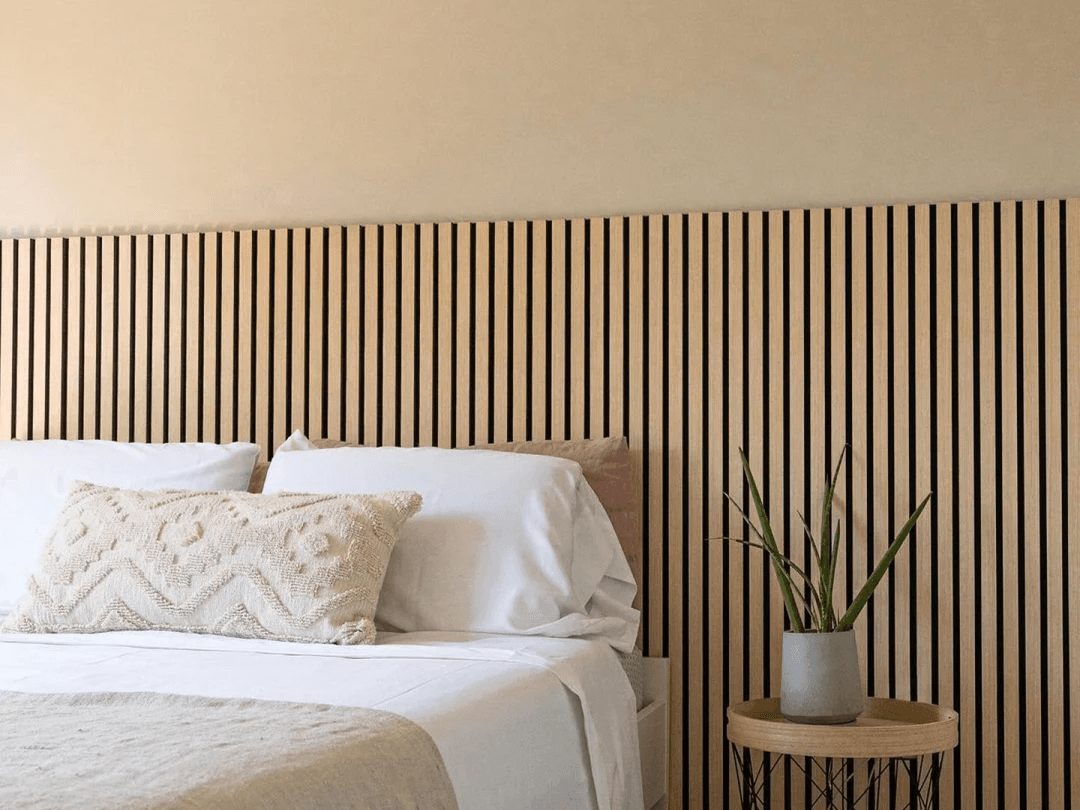
Floor-to-ceiling acoustic slat panels on the headboard wall are the highest-impact, most versatile bedroom panel choice. The vertical lines elongate the room visually; the felt backing absorbs sound. In walnut for warmth, or oak for a lighter, more Scandinavian feel. Install from floor to ceiling for maximum effect — stopping at headboard height creates a more contained, graphic statement.
Fluted Panels
Fluted panels — with their solid face and vertical grooves — create an architectural, sculptural effect that suits contemporary and formal bedroom aesthetics. Less acoustic performance than slat panels, but the fully-covered surface gives a more substantial, complete feel.
Reeded Panels
Reeded panels with their soft, convex ridges suit the warmth and tactility appropriate to a bedroom. The rounded profile feels less sharp and industrial than fluted channels — better suited to the restful character a bedroom requires.
Geometric Wood Tile Panels
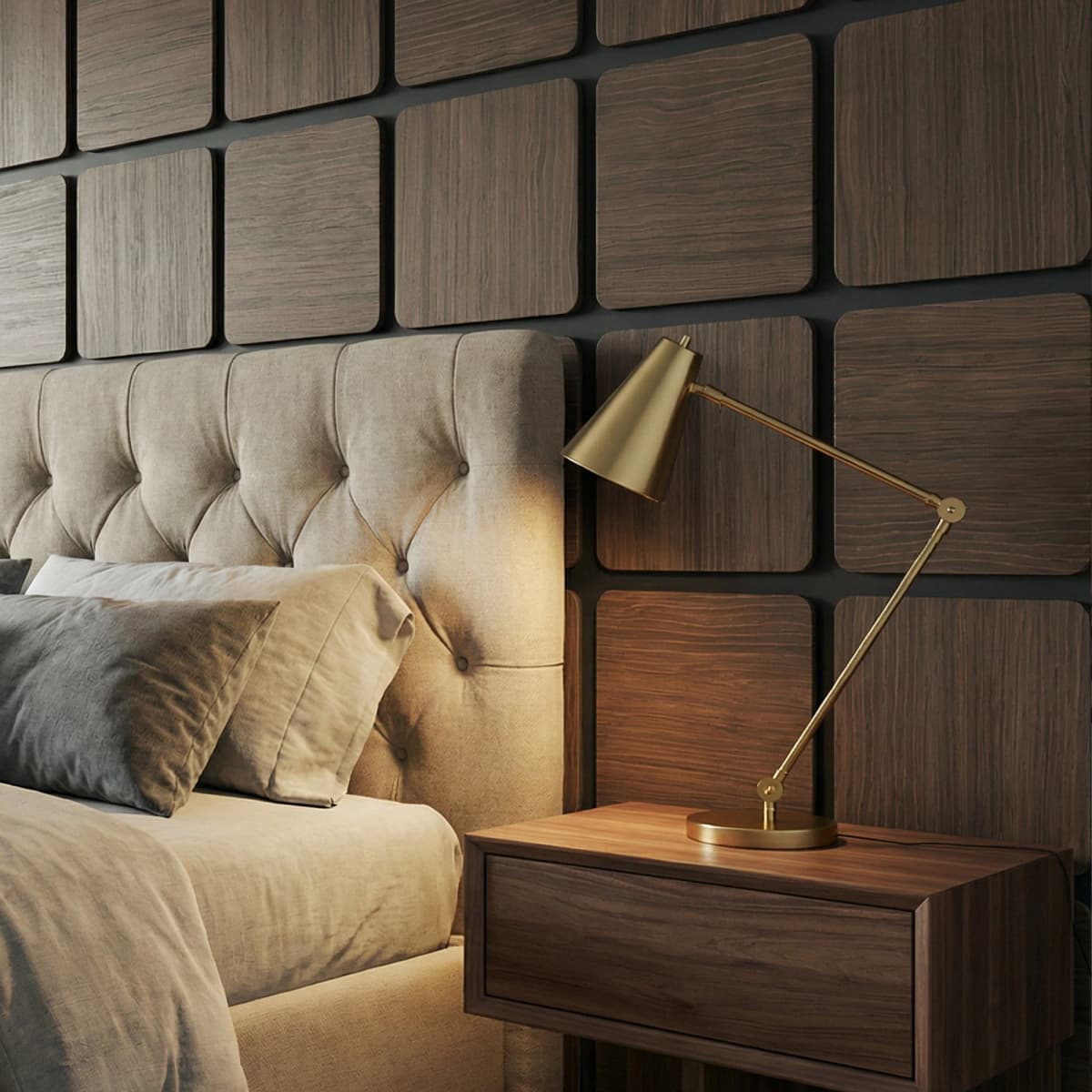
Solid wood tile panels in herringbone, concentric square, or mosaic patterns are a premium alternative to slat-format panels. More expensive but unmatched in the authenticity and craftsmanship they convey.
Placement Strategy
The Full Headboard Wall
The most popular bedroom panel installation. Cover the wall behind the bed from floor to ceiling, wall to wall. Works in any bedroom size; particularly effective in rooms where the ceiling height allows the vertical lines to read fully.
Headboard-Height Panel
Panel the wall from the floor (or just above the skirting board) up to approximately 150–180cm — the top of a typical headboard. Leave the upper wall in a complementary paint colour. Creates a more contained, graphic effect and suits rooms where floor-to-ceiling paneling might feel heavy.
Behind-Headboard Only
If you want panels as a backdrop rather than a dominant feature, install them at headboard width only — behind the bed rather than wall-to-wall. Frame this with a painted or plastered border for a more formal result.
Colour and Species Choices
- Walnut: Rich, warm, deeply restful. Best for bedrooms with neutral or warm-toned soft furnishings.
- Oak: Versatile and light. Works with almost any bedroom colour scheme.
- Ash: Pale and fine-grained — best for very light, airy Scandinavian bedroom aesthetics.
- Charcoal or ebonised finishes: Dramatic and moody — suited to dark, immersive bedroom aesthetics.
Lighting the Panel Wall
Good lighting transforms a panel wall from attractive to exceptional:
- Wall sconces flanking the bed: Cast warm light across the panel surface, creating shadow depth in the slat gaps or flute channels.
- LED strip at the top of the panel: Indirect uplighting creates a warm glow above the panel and emphasises the ceiling height.
- Floor uplighting: Grazing light from below dramatically increases texture depth in slat and fluted profiles.
For more bedroom panel inspiration, our guide on bedroom accent wall ideas covers 10 different design approaches with practical guidance. And for help choosing between slat, fluted, and reeded profiles, our fluted vs reeded panels guide makes the distinction clear.
Installation in a Bedroom
Bedroom panel installations are typically straightforward because headboard walls are usually uninterrupted — no doors, windows, or sockets to work around. Standard adhesive installation takes under two hours for most single walls. Allow 24–48 hours for panels to acclimatise to the bedroom’s temperature before installing.
Full installation guidance is in our step-by-step wall panel installation guide.
Common Mistakes to Avoid in Bedroom Panel Design
The bedroom is the most personal room in the house — which means panel mistakes are both more visible and more expensive to undo. These are the pitfalls worth avoiding.
Panelling all four walls: A full-room panel treatment in a bedroom typically reduces the sense of space and can feel claustrophobic rather than restful. The exception is a very large master bedroom where the scale absorbs the texture. In standard-sized bedrooms, one feature wall — almost always the bed head wall — is the right scope.
Mismatched species with existing furniture: Bedroom furniture typically has a strong timber character — bed frames, wardrobes, chests of drawers. Installing wall panels in a species or finish that clashes with the existing furniture creates visual dissonance. Match the panel tone to the furniture’s undertone: cool grey furniture suits ash or light oak panels; warm brown furniture suits walnut or oiled oak.
Ignoring panel height relative to bed height: A panel wall behind a bed needs to work with the bed’s visual height, not against it. For beds with low platform frames (bed height 300–400mm), floor-to-ceiling panels read well and give the wall full height. For beds with high upholstered headboards (600mm+), running panels behind and above the headboard looks awkward. In this case, start the panel above the headboard height, or choose a profile that complements rather than competes.
Choosing panels before confirming lighting: Wall panels in bedrooms are often experienced primarily by lamplight and bedside lighting — not overhead light. The shadow-line quality that makes slat and fluted panels so appealing requires directional light to show properly. If the room has only a central pendant and no directional lighting, the panel’s three-dimensional quality won’t read. Confirm the lighting plan before finalising panel selection.
FAQs: Wood Wall Panels for Bedroom
Are wood wall panels suitable for a bedroom?
Yes — bedrooms are one of the best applications for wood wall panels. The warm, natural character of timber suits the restorative function of a bedroom. Acoustic slat panels actively improve the room’s sound quality. The installation process is clean and creates no dust or wet trades once the adhesive is applied. All advantages align for bedroom use.
What wood species works best for a bedroom wall?
Oak is the most versatile choice — it suits both contemporary and transitional bedrooms and is available in a wide range of finish tones from natural to dark-stained. Walnut creates a richer, more dramatic effect suited to larger bedrooms and darker palettes. Ash and birch are lighter options that suit Scandinavian-influenced interiors. The choice should be led by the existing furniture and flooring species to ensure tonal coherence.
How long do bedroom wood wall panels last?
Quality panels installed correctly in a bedroom environment should last 20+ years without degradation. Bedrooms are low-humidity, low-traffic environments — the most benign conditions for timber panels. The main factors affecting longevity are UV exposure from windows (use UV-filtering window film on south-facing windows), physical impact, and whether the initial installation was done correctly.
Can I remove bedroom wall panels if I change my mind?
Construction adhesive creates a permanent bond. Removal is possible but typically causes some damage to the underlying plasterboard and is labour-intensive. If there’s a realistic chance you’ll want to remove the panels — renting, planning to renovate — consider a panel system that uses a concealed clip-and-rail fixing method, which allows panels to be removed and re-installed without adhesive.
Shop Bedroom Wall Panels
Browse the bedroom wall panel collection at The Panel Hub, or explore the full wood wall panel range to compare every option available. For further design inspiration across bedroom panel styles and species, our interior slat wall ideas guide covers headboard walls, full-room treatments, and complementary pairings in detail. And if you want to understand the acoustic benefits of slat panels in a bedroom before buying — reduced echo, a softer ambient sound that supports sleep — the complete acoustic panel buyer’s guide explains what different panel types actually deliver.