
Table of Contents
What Is Wainscoting?
Wainscoting is a form of wall panelling that covers the lower portion of a wall — typically the bottom third to half — leaving the upper section finished separately in paint, wallpaper, or plain plaster. The term originally referred to oak panelling used in high-status rooms, but today it encompasses a broad range of panel styles from raised-and-fielded traditional designs to sleek contemporary flat panels.
Beyond aesthetics, wainscoting provides practical protection for walls in high-traffic areas like hallways, dining rooms, and children’s rooms, where scuffs and marks are inevitable.
Types of Wainscoting
Raised Panel Wainscoting
The most traditional style, featuring panels with a raised centre section set within a framed surround. Common in Georgian, Victorian, and Colonial-style homes. Usually painted white or a light tone and finished with a cap rail at chair height.
Flat Panel (Shaker) Wainscoting
A simplified version with flat-recessed panels within a framed surround. Associated with Shaker and Arts & Crafts interiors, flat panel wainscoting translates beautifully into modern and transitional homes. Cleaner and less ornate than raised panel, it suits contemporary interiors without looking out of place.
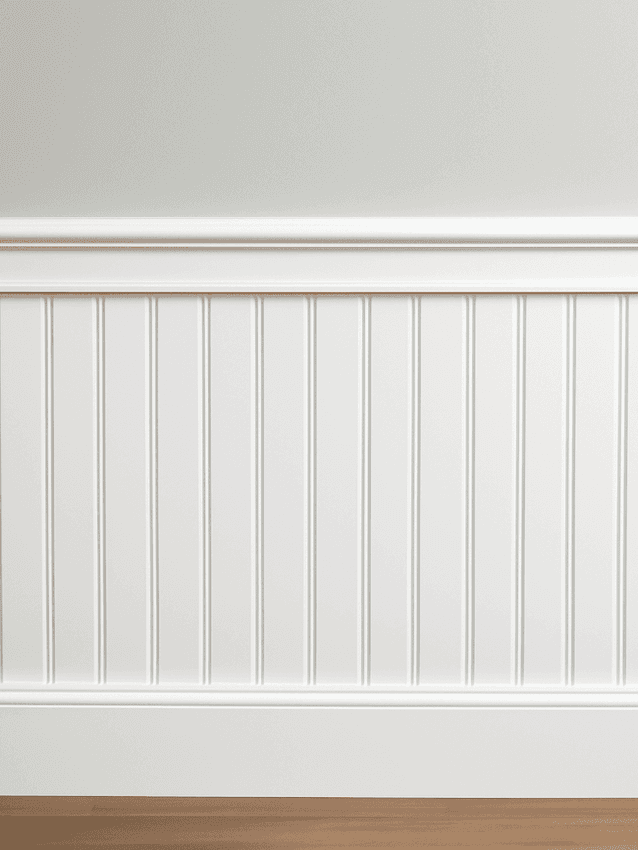
Beadboard
Vertical planks with a small bead between each plank. Classic in farmhouse, coastal, and cottage interiors. Available in real wood, MDF, and PVC — with PVC being the most moisture-resistant for bathroom and kitchen applications.
Board and Batten
Wide vertical boards with narrow batten strips covering the joints. Creates a bold, graphic, farmhouse-inspired look. Works equally well at full wall height (as an accent wall treatment) or as traditional wainscoting on the lower wall.
Modern Flat Rail Wainscoting
A contemporary take that uses a simple horizontal rail at two-thirds height with flat paint or wallpaper above, and a contrasting tone below. No panels at all — purely architectural by use of colour blocking and a trim rail.
Wainscoting Ideas by Room
Hallway Wainscoting
Hallways take the most daily wear of any space in the home — doors, bags, children, pets. Wainscoting in a hallway protects the lower wall and creates a composed, architectural welcome. Keep it classic: white raised panel or Shaker flat panel with a dark paint above for drama in a narrow space.
Dining Room Wainscoting
Traditional wainscoting at chair-rail height (approx. 36 inches) in a dining room is one of the most enduringly elegant combinations in interior design. Pair with a bold wallpaper or strong paint colour above the rail for impact.
Bedroom Wainscoting
In a bedroom, wainscoting behind the bed can replace a traditional headboard. Board and batten or flat-panel wainscoting running the full height of the headboard wall creates a tailored, built-in look. Paint in the same colour as the wall for a tone-on-tone effect.
Bathroom Wainscoting
Beadboard or PVC-based flat panels are the most practical choices for bathrooms — moisture-resistant and easy to clean. Combine with hexagonal or penny-round floor tiles for a classic period bathroom feel.
Living Room Wainscoting
In living rooms, full-height picture-frame moulding (sometimes called board-and-frame) creates a formal, architectural effect without committing to full wainscoting. Alternatively, use wood wall panels from floor to ceiling on the feature wall for a modern take on the same principle.
Modern Alternatives to Traditional Wainscoting
If traditional wainscoting feels too formal for your interior, consider these modern alternatives:
- Wood slat panels at lower wall height — the same horizontal division as wainscoting, but with the warmth and texture of acoustic wood panels.
- Lime plaster lower panel — smooth lime plaster in a contrasting tone below the rail, painted plaster above.
- Fluted panels as half-height feature — fluted wood panels from floor to chair-rail height create a modern, architectural version of traditional wainscoting.
Whatever style you choose, the principle behind wainscoting remains the same: use the lower wall as a practical, design-forward space that protects, frames, and elevates everything above it.
How to Choose the Right Wainscoting Height for Your Space
One of the most important decisions when installing wainscoting is choosing the correct height. The traditional rule is to set the top rail at chair height — approximately 32 to 36 inches from the floor — which gives the classic proportions seen in Georgian and Victorian interiors. However, modern spaces benefit from bespoke heights that relate to the room’s own proportions rather than a fixed measurement.
In rooms with standard 8-foot ceilings, wainscoting at one-third wall height looks balanced and keeps the upper portion feeling open and airy. For rooms with higher ceilings (9 feet or more), pushing the wainscoting to half-height — or even two-thirds — fills the space more confidently and prevents the wall treatment from looking lost in a tall room. In hallways where verticality is already emphasised by narrow widths, full-height board and batten panelling is an increasingly popular choice, turning the entire wall into a design feature rather than a protective lower panel.
Always consider what sits above the wainscoting line. If you plan to hang art, keep the cap rail low enough that frames clear it with ease. If the upper wall will be papered in a strong pattern, a higher wainscoting line that leaves less pattern exposed will feel less busy. Sketch the proportions on paper before committing — a simple line drawn in pencil on the wall can transform an uncertain decision into a confident one.
Wainscoting FAQs
Is wainscoting only suitable for period-style homes?
Not at all. While wainscoting originated in traditional architecture, contemporary interpretations — such as minimal flat-panel designs, simple horizontal rail dividers, and full-height board and batten — sit comfortably in modern and Scandinavian-inspired interiors. The key is matching the panel profile and finish to the room’s existing character.
Can I install wainscoting over existing wallpaper?
It is generally better to remove wallpaper before installing wainscoting panels, particularly if using adhesive-fixed MDF or wood panels. Wallpaper surfaces are often uneven and may lift over time, taking your new panels with them. For rooms where removal is impractical, use mechanical fixings (screws and plugs) in addition to adhesive to ensure panels stay firmly in place.
What is the best paint finish to use on wainscoting?
Eggshell and satin finishes are the most popular choices for wainscoting. They are more durable than matt emulsions, wipe clean easily, and offer a subtle sheen that picks up light without becoming glossy. High-gloss finishes are reserved for dramatic period-style rooms where the lacquered look is intentional.
How long does it take to install wainscoting in a typical room?
For an experienced DIYer fitting pre-made panels in a standard bedroom, expect a full day’s work including measuring, cutting, fitting, and caulking. A professional installer will complete the same job in a morning. Rooms with alcoves, chimney breasts, or radiator pipework will take longer due to the need for precise templating around obstacles.
Shop Wainscoting Panels
Browse the complete wood wall panel collection at The Panel Hub for panels suited to wainscoting applications — from smooth-face MDF systems to real wood veneer profiles. For design inspiration beyond wainscoting, our interior slat wall ideas guide covers full-wall and feature treatments across every room. If sound absorption is also a priority, the acoustic panel buyer’s guide explains how acoustic slat panels compare on performance as well as looks.