
Table of Contents
- Why Home Theater Acoustics Matter More Than You Think
- What Panel Coverage Do You Need?
- Best Panel Positions in a Home Theater
- Acoustic Slat Panels vs Fabric Acoustic Panels for Home Theater
- Don’t Forget Bass Traps
- How to Treat a Home Theater Room: A Step-by-Step Approach
- Choosing the Right Panel Finish for a Home Theater
- Shop Home Theater Acoustic Panels
Why Home Theater Acoustics Matter More Than You Think
Most home theater discussions focus on screens and speakers. But the room itself — specifically its acoustic properties — has at least as much impact on what you hear as the speaker system. A premium sound system in an untreated room sounds worse than a mid-range system in a well-treated space. This isn’t marketing copy; it’s acoustics physics.
Untreated home theater rooms suffer from:
- Flutter echo: Rapid bouncing of sound between parallel reflective walls, creating a smearing effect on dialogue and music
- Comb filtering: Interaction between direct and reflected sound that causes some frequencies to cancel and others to reinforce, producing uneven tonal response
- Excessive reverberation: Sound sustaining too long after the source has stopped, muddying transients and reducing clarity
- Bass buildup in corners: Low-frequency energy accumulates in room corners, creating boomy, uncontrolled bass response
Acoustic wall panels address the first three directly. Bass traps in corners address the fourth. Together, they transform the room from a liability into an asset.
What Panel Coverage Do You Need?
If you’re still in the planning stage — layout, seating, screen placement — start with our small home theater room design guide before settling on panel quantities. Once the layout is set, use the coverage guidelines below.
For a dedicated home theater, the general guideline is:
- Minimum treatment: First reflection points (the wall positions where sound from each speaker first reflects before reaching your seat) — typically one point on each side wall and one on the ceiling.
- Standard treatment: 40–50% of all wall surfaces, plus ceiling panels at first reflection points.
- Full treatment: 60–70% of all wall surfaces, rear wall absorption, ceiling cloud, and corner bass traps.
For most home theaters that double as media rooms (rather than dedicated black-box cinemas), 40–50% coverage on two or three walls delivers excellent results without making the room feel over-treated or visually oppressive.
Best Panel Positions in a Home Theater
- Front wall (behind the screen): If your screen doesn’t fill the entire front wall, panel the exposed wall area on either side and above. This absorbs early reflections from the front speakers and reduces the impression of sound coming from the wall rather than the speakers.
- Side walls at first reflection points: Sit in the primary viewing seat and have someone walk along each side wall holding a mirror flat against the surface. Where you can see the speakers reflected in the mirror, that’s the first reflection point — your highest-priority acoustic treatment location.
- Rear wall: Absorb the sound from surround and Atmos speakers that reflects back toward the primary listening position. Full-width rear wall panel treatment creates the cleanest surround imaging.
- Ceiling cloud: A panel or group of panels on the ceiling above the primary seating position reduces ceiling reflections that arrive slightly after the direct speaker sound, causing time-domain smearing.
Acoustic Slat Panels vs Fabric Acoustic Panels for Home Theater
- Acoustic slat wood panels: NRC 0.65–0.85, premium aesthetics, real wood character. Best for media rooms that double as living spaces or need to look good in daytime use. Slightly less acoustic coverage per dollar than fabric panels.
- Fabric acoustic panels: NRC 0.80–0.95+ depending on thickness. Maximum acoustic performance per dollar. Best for dedicated black-box home theaters where aesthetics are secondary to performance.
For most home media rooms, acoustic slat panels offer the best balance — they perform well acoustically while creating a space that’s visually comfortable for extended watching.
Don’t Forget Bass Traps
Acoustic wall panels absorb mid-to-high frequencies effectively. They do not absorb low bass (below ~100Hz). For controlled bass response, add corner bass traps — typically thick blocks of broadband absorber placed in room corners, particularly front corners. This is less important in smaller rooms but increasingly critical as room size increases and bass resonances become more pronounced.
For the full picture on acoustic panel performance, how NRC ratings work, and how much panel coverage you need, our complete acoustic wall panel buyers’ guide has everything in one place. And for the specific acoustic treatment approach for home cinema spaces, the home theater acoustic treatment guide goes deeper on speaker placement and room calibration.
How to Treat a Home Theater Room: A Step-by-Step Approach
Rather than treating acoustic treatment as a single purchase, approach it as a layered plan. Each step targets a specific acoustic problem, and each step compounds the previous one.
Step 1: Front wall
Panel the exposed wall area on either side of the screen, and above it if the screen doesn’t reach the ceiling. This absorbs early reflections from your front speakers before they reach the listening position, tightening dialogue focus and stereo imaging significantly.
Step 2: Side wall first reflection points
Sit in the primary viewing seat. Have someone walk along each side wall holding a mirror flat against the surface. Where you can see the speaker reflected, that’s your first reflection point — your highest acoustic treatment priority after the front wall. Two panels at these positions, one per side, produce the largest measurable improvement per dollar spent on the entire treatment plan.
Step 3: Rear wall
The rear wall handles surround sound reflections. Full-width panel coverage on the rear wall — or a distributed arrangement covering at least 50% of its area — produces the cleanest surround imaging and reduces the delayed reflections that smear Atmos height effects.
Step 4: Ceiling cloud
A ceiling cloud — a floating panel or group of panels positioned above the primary seating area — addresses the last significant reflection source in most treated rooms. For most media rooms, a single 4×8 ft panel cloud makes a clearly audible improvement in dialogue clarity.
Step 5: Corner bass traps
Bass traps in room corners — particularly the two front corners — address low-frequency buildup that acoustic wall panels cannot absorb. This is the step most home theater owners skip, and it’s why many treated rooms still sound boomy on bass-heavy content. In smaller rooms it’s less critical; in rooms larger than 200 sq ft, corner treatment becomes increasingly important.
Choosing the Right Panel Finish for a Home Theater
The aesthetic of your home theater acoustic treatment matters more than most guides acknowledge. A room you enjoy being in — visually as well as sonically — is one you’ll actually invest in and maintain over time.
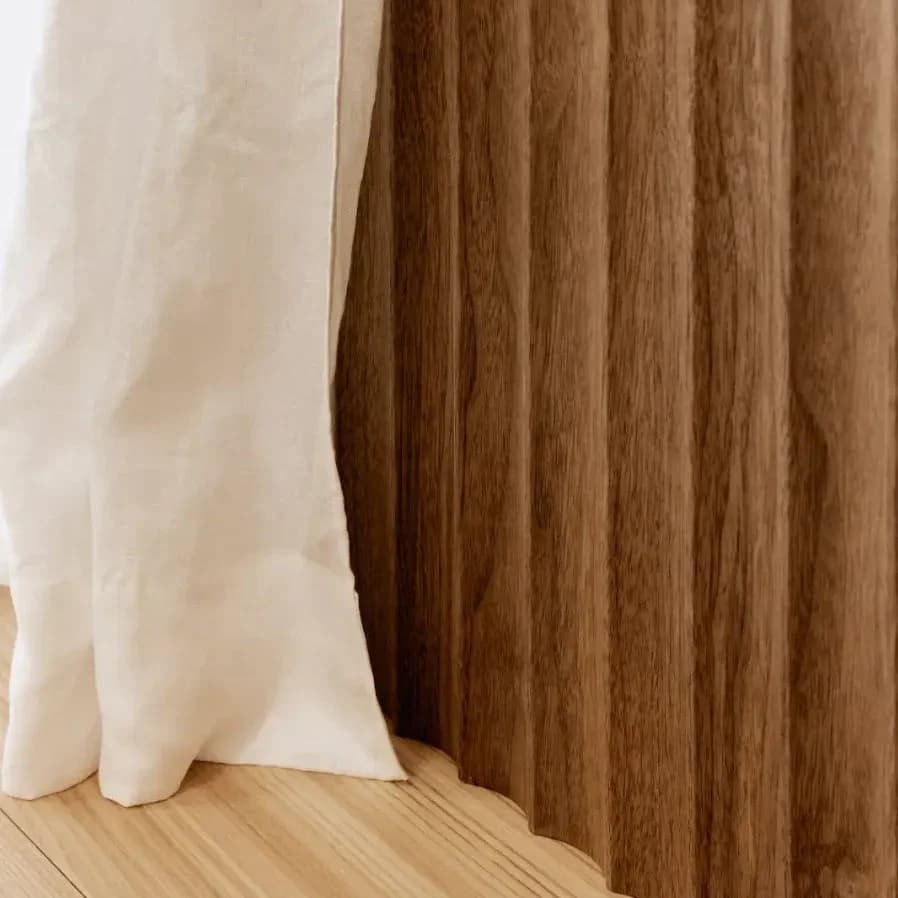
- Dedicated dark cinemas: Dark-finish acoustic slat panels in walnut, ebony-stained oak, or charcoal absorb ambient light and prevent screen glare. They create a cinema atmosphere that makes the viewing experience feel intentional and immersive before the film even starts.
- Media rooms that double as living spaces: Choose a species and finish that functions in daylight. Natural oak or ash panels integrate with daytime natural light and work with living room furniture, so the room doesn’t need to be darkened to look good. These spaces benefit from panels that are neutral enough to suit both film nights and afternoon use.
- Modern high-contrast media rooms: White-oiled ash or lightly finished pale oak acoustic panels create a clean, contemporary aesthetic. Pair with dark upholstery and concealed equipment for a striking result that photographs well and feels genuinely designed.
One technical note on finish and acoustics: fully sealed or high-gloss surfaces reflect slightly more mid-range sound than natural oil or matte lacquer finishes. For critical-listening applications, specify natural oil or matte lacquer over semi-gloss. The difference is modest, but measurable in dedicated cinema rooms.
Shop Home Theater Acoustic Panels
The SoundPanel™ acoustic slat range at The Panel Hub is purpose-built for cinema room acoustic treatment — combining high NRC absorption with a visual quality that suits a dedicated theater space. Browse the full wall panel collection for every option, explore our interior slat wall ideas guide for theater and media room inspiration, and read the complete acoustic panel buyer’s guide for NRC rating guidance before specifying your panel coverage.