
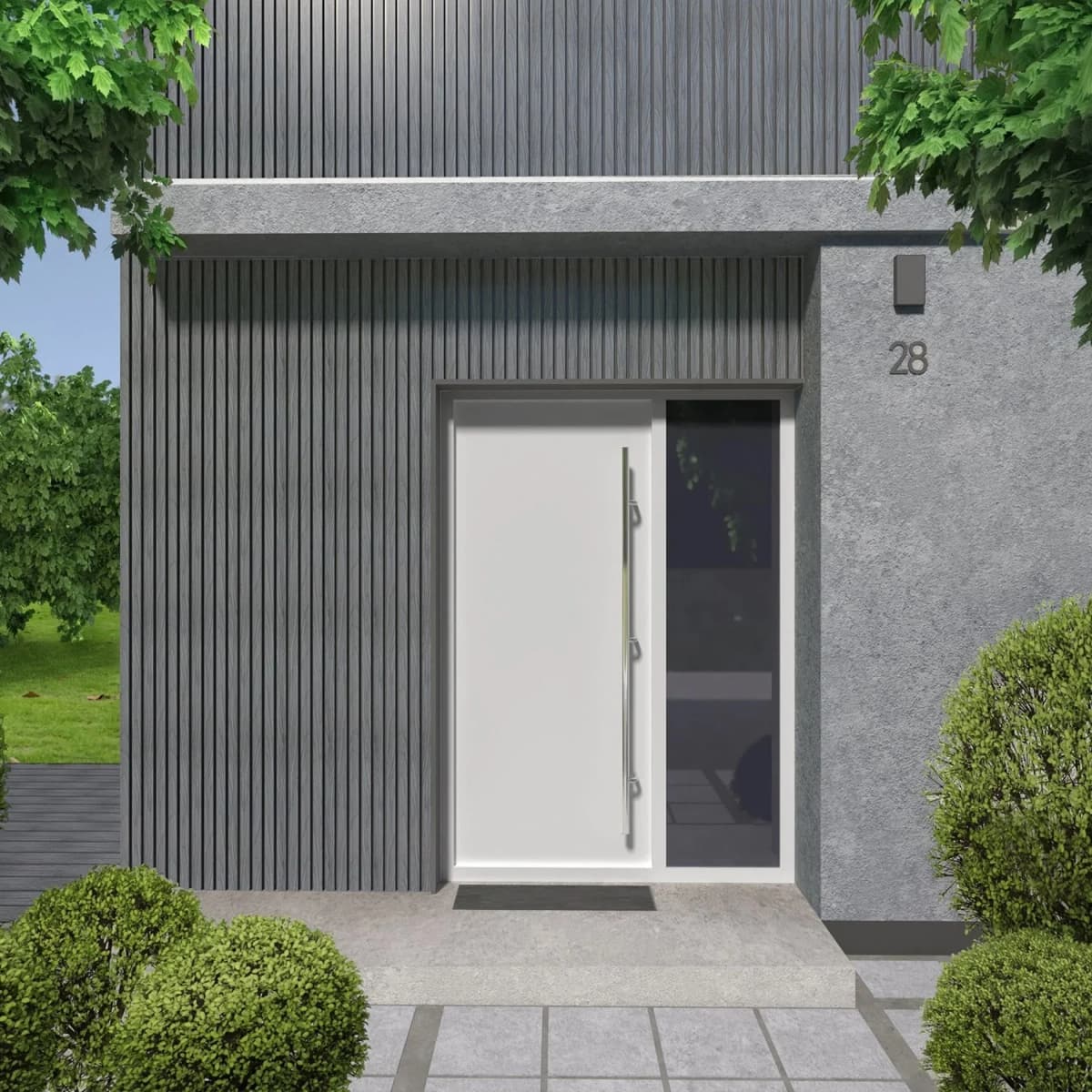
The most common mistake in exterior wall panel installations is treating outdoor exposure as a detail rather than a fundamental specification requirement. Standard indoor panels — including many sold as ‘decorative’ outdoor options — will deteriorate rapidly under the combination of UV exposure, rain, temperature cycling, and frost. The result is panels that warp, delaminate, or fade within a season. At The Panel Hub, our outdoor wall panel collection is specified specifically for exposure — here is what that means in practice.
Contents
- What Makes a Wall Panel Genuinely Waterproof?
- Core Material
- Surface Treatment and Facing
- Joint and Edge Sealing
- Where Waterproof Outdoor Panels Are Used
- Garden and Boundary Walls
- Alfresco and Covered Outdoor Areas
- Garden Rooms and Outbuildings
- House Rear Elevation and Extensions
- How to Install Outdoor Panels for Maximum Longevity
- Maintenance Schedule
- Specify with Confidence
What Makes a Wall Panel Genuinely Waterproof?
Core Material
The core material of a panel determines how it responds to moisture. Natural wood cores absorb moisture and expand; when they dry, they contract. This cycle causes warping, splitting, and joint failure over time in exposed conditions. Panels designed for outdoor use either a composite core (wood-plastic composite) that resists moisture absorption, or a naturally moisture-resistant substrate with an exterior-grade surface treatment.
Surface Treatment and Facing
The surface of an outdoor panel must resist UV degradation, which causes fading and surface breakdown, as well as moisture penetration. Exterior-rated surface finishes are categorically different from indoor finishes — they are thicker, UV-stabilised, and tested to withstand repeated wet-dry and freeze-thaw cycles without failure.
Joint and Edge Sealing
Even the most waterproof panel will admit water at unsealed joints and exposed edges. In any exterior installation, all panel joints, cut edges, and terminations must be sealed with an exterior-grade flexible sealant. This is the most commonly skipped step in DIY exterior installations — and the most commonly regretted one.
Where Waterproof Outdoor Panels Are Used
Garden and Boundary Walls
The most common residential application. Stone effect or composite panels clad brick or block boundary walls, transforming them from utilitarian barriers into feature surfaces. Our RockSurface® stone effect panels are particularly well suited to this application — the natural stone aesthetic integrates with outdoor settings and the panel construction handles full outdoor exposure.
Alfresco and Covered Outdoor Areas
Covered outdoor areas — pergolas, verandas, and covered entertaining zones — experience moderate exposure: sheltered from direct rain but subject to humidity, condensation, and temperature variation. Outdoor-rated panels handle this environment without the risk profile of standard indoor panels used in a semi-exposed setting.
Garden Rooms and Outbuildings
External elevations of garden rooms, studios, and outbuildings face full weather exposure. Exterior-rated cladding panels provide weather protection, improve the visual quality of the structure, and require significantly less maintenance than painted or stained timber boarding.
House Rear Elevation and Extensions
Exterior cladding on a house elevation or extension must meet building regulation requirements in addition to weather resistance specifications. Always confirm compliance with your local building control office before specifying panels for a structural wall application.
How to Install Outdoor Panels for Maximum Longevity
- Prepare the substrate: Ensure the wall is sound, dry, and free of organic growth. Address any damp issues before installation — cladding over damp masonry traps moisture.
- Install on battens: A 25–40mm batten system creates a ventilation and drainage gap behind the panel face. This is the most important installation detail for long-term exterior performance.
- Use exterior-grade fixings: All mechanical fixings must be stainless steel or otherwise corrosion-resistant. Standard steel fixings will rust and stain the panel face within months of outdoor exposure.
- Seal all joints: Apply exterior-grade flexible sealant to all panel-to-panel joints, panel edges, and terminations at windows, doors, soffits, and ground level.
- Check drainage at base: Ensure water can drain freely at the bottom of the installation. Standing water at the panel base is the most common cause of premature deterioration.
Maintenance Schedule
Properly installed outdoor wall panels require minimal ongoing maintenance:
- Annual wash-down with a low-pressure hose to remove dirt and organic matter
- Inspect and re-seal any joints that show signs of sealant deterioration every 3–5 years
- Stone effect panels: check for any algae or moss growth and treat with an appropriate exterior biocide if needed
Specify with Confidence
Browse our waterproof outdoor wall panel collection and our full range of wall panels at The Panel Hub — every outdoor panel we stock is tested for the exposure demands of UK and European climates.