
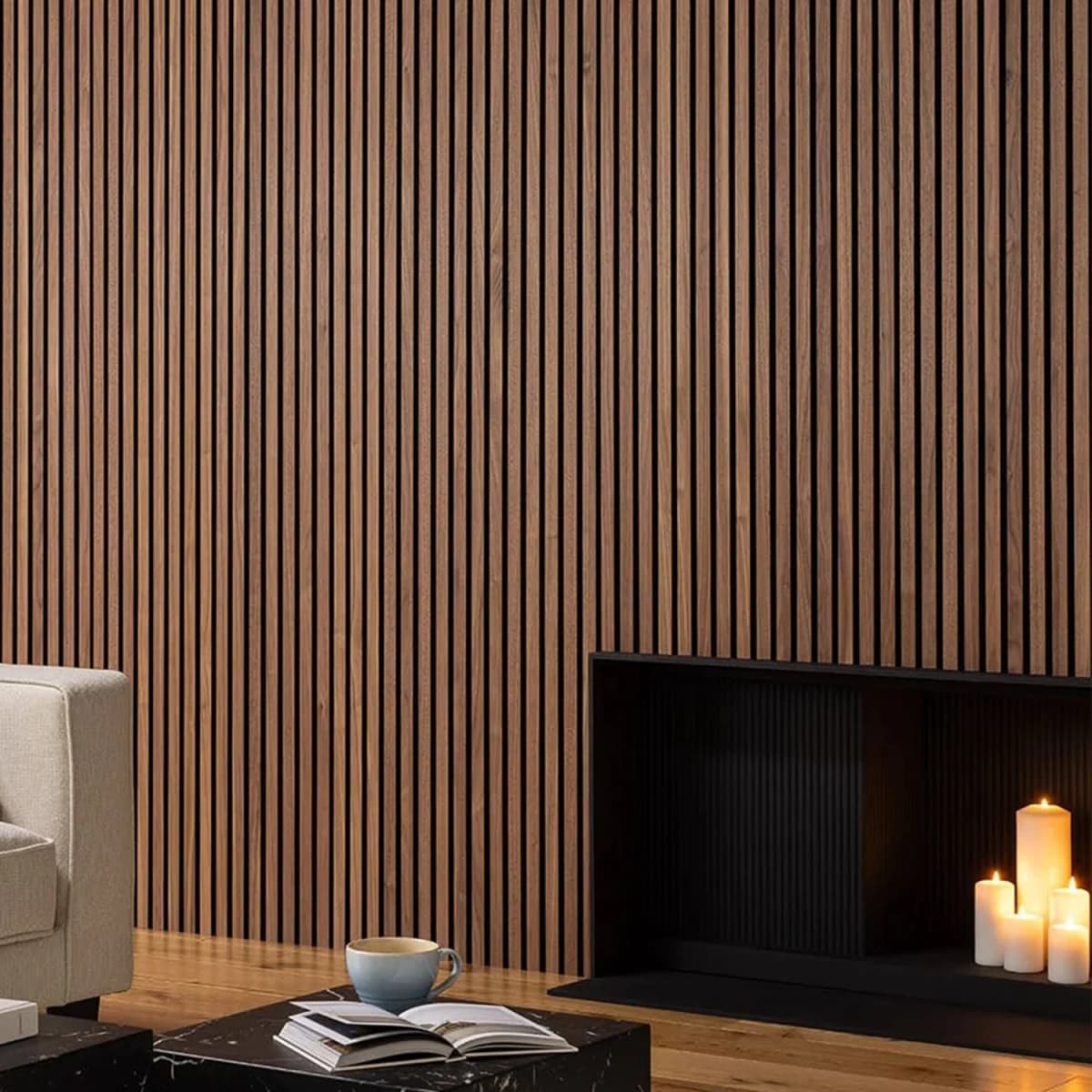
There’s a difference between a patterned wall and a three-dimensional wall. A printed or painted geometric pattern adds visual interest. A 3D geometric wood panel adds physical depth — the shadows it casts are real, and they change as the light in the room changes. This is what separates a truly dynamic feature wall from one that looks impressive in photos but flat in person.
This guide covers how 3D geometric wood panels work, what makes them effective, and how to use them to transform a room.
Table of Contents
What Makes a Panel “3D”?
A 3D wood panel has relief — the surface isn’t flat. Individual elements are raised, recessed, or angled relative to each other, creating physical depth. In the 3D Geometric Pattern Wooden Panel from our GroovePanel® range, the geometric elements are routed and shaped from solid timber, creating distinct planes that produce shadow lines across the surface.
The 3D Concentric Square Panel takes this further: the nested squares are stepped at different heights, so the innermost square is the highest point and the outer ring is the lowest. The result is a panel that looks like a topographic map or an architectural model — and it casts different shadows at different times of day as the sun angle changes.
This is fundamentally different from a flat mosaic panel with surface pattern. The depth is structural, not visual — it exists in the physical object, not as a trick of print or finish.
How Shadow Works on a 3D Panel
Shadow is what gives 3D panels their character. Without directional light, a 3D panel loses most of its impact. This has direct implications for where you install one:
- Walls receiving natural side-lighting (windows to one side of the wall) are ideal — morning and afternoon light rakes across the surface and maximises shadow definition.
- Walls with directional artificial lighting — a wall sconce or track light at an angle — maintain the 3D effect in the evening.
- Avoid flat, overhead-only lighting for a 3D panel wall. Overhead light fills in shadow and flattens the effect. If you have only overhead lights, add a wall sconce or an angled floor lamp to create directional light across the panel surface.
Room-by-Room: Where 3D Geometric Panels Have the Most Impact
Living rooms
A chimney breast or the wall behind a sofa are the most effective locations. The panel becomes a focal point that you see from across the room and appreciate up close. In a living room that has natural light entering from the side, the shadow lines on a 3D panel shift through the day — it’s effectively an installation that changes appearance without changing physically.
Hallways and entryways
3D panels are particularly effective in hallways where the main light source is a single pendant or wall sconce. The raking light across the panel surface creates a striking first impression at the entrance to a home.
Behind a TV or media wall
Mounting a 3D geometric panel on a media wall, surrounding a TV, is a contemporary alternative to built-in media units. When the TV is off, the panel reads as a decorative surface. When the TV is on, the panel adds texture and depth to a functional zone. For ideas on media wall design, see our article on how to decorate the wall behind a TV stand.
Solid Wood vs MDF for 3D Geometric Panels
3D geometric panels are available in solid wood and MDF. For flat panels, MDF can be an acceptable substrate. For 3D relief panels, solid wood is significantly better:
- Routed edges in solid wood are crisp and clean; in MDF, they can chip or fray, especially at fine geometric details
- Solid wood panel edges show natural grain; MDF shows a grey composite
- Solid wood holds screws and mounting hardware better in high-relief areas
- MDF is more susceptible to moisture damage in the fine channels and recesses of a 3D pattern
All panels in the GroovePanel® range are 100% solid FSC-certified timber. For a full material comparison, read our guide to MDF vs Solid Wood Wall Panels.
Combining 3D Panels with Lighting
The relationship between 3D panels and lighting is worth planning in advance rather than after installation. Options include:
- LED strip lighting mounted in a channel above or to the side of the panel — creates continuous raking light across the entire surface
- Wall sconces with directional shades — places a pool of angled light on a section of the panel
- Adjustable track lighting — allows you to change the light angle seasonally
For more on integrating lighting with wall panels, see our guide to wall panels with LED lighting.
Getting Started
Browse the 3D geometric formats in the GroovePanel® collection. Order a sample of wood wall panels of your choice to hold the panel in your room under your actual lighting — this is the only reliable way to judge the shadow effect before buying.
For broader context on 3D wall panels across all material types, read our pillar guide to 3D wall panels.