
Table of Contents
Why Lighting Transforms Wall Panels
Wall panels in daylight look good. Wall panels with integrated or directed LED lighting look extraordinary. The combination of warm wood grain and carefully placed light creates depth, drama, and a layered quality that no other interior element achieves as efficiently. It’s also one of the most searched-for interior looks of recent years — the walnut slat panel wall glowing against a dark room has become a signature of premium residential design.
Method 1: Recessed LED Strip at the Base of the Panel (Floating Effect)
The most popular technique: an LED strip light fitted into a recessed channel at the base of the panel installation, pointing downward toward the floor. The panel itself appears to float away from the wall, with a warm glow emanating from underneath. The effect is dramatic in low-light conditions and subtle in full daylight.
How to achieve it: Install the panel with a 20–30mm gap at the base (no contact with skirting board) using a batten system. Fix an LED strip to the wall or floor within this gap, directed toward the floor. Warm white (2700K) is the correct temperature — cool white destroys the effect.
Method 2: LED Strip Along the Top Edge (Ceiling Wash)
An LED strip at the top of the panel wall, directed upward toward the ceiling, creates an indirect ceiling wash that floods the room with soft ambient light. This technique works particularly well in rooms where the ceiling is used as the primary light source — bedrooms, living rooms, cinema rooms.
Best combined with: A dark ceiling in the same room dramatically increases the visual impact of a ceiling wash — the contrast between the lit ceiling and the dark surfaces below creates a depth that daylight cannot replicate.
Method 3: In-Slot LED (Within the Slat Gaps)
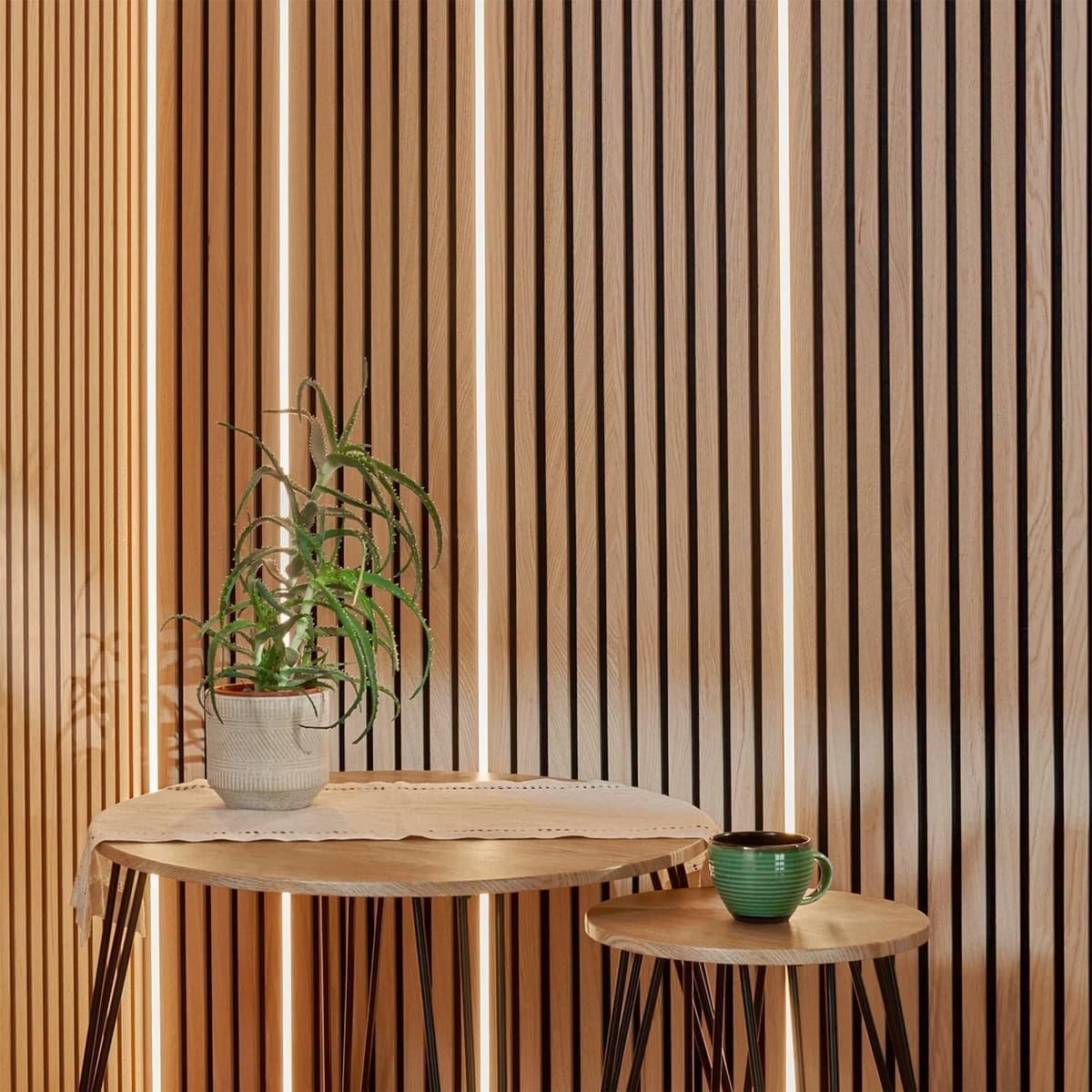
For acoustic slat panels, ultra-slim LED strips (COB LED strips as narrow as 8mm) can be fitted within the gaps between slats, directed outward. This creates a panel that appears to emit light through its own structure — a highly distinctive effect that photographs exceptionally well.
Technical requirements: The slat gap must be wide enough to accommodate the strip and its heat dissipation (typically a gap of at least 12mm). The strip should not touch the acoustic felt backing, which is flammable. Low-heat LED strips only — no halogen or incandescent alternatives.
Method 4: Spotlights Directed at the Panel (Wall Grazing)
Ceiling-mounted spotlights angled to graze the panel surface — hitting at a shallow angle rather than straight on — create shadow play within the slat gaps and panel texture. This technique reveals the three-dimensional quality of slat panels — and solid wood geometric relief panels — in a way that ambient room lighting cannot. The 3D Geometric Pattern panel is particularly responsive to wall-grazing light: the solid wood relief elements cast defined shadow lines that shift visibly as the light angle changes through the day. The shadows in the gaps deepen; the tops of the slats catch light; the overall effect suggests depth and craftsmanship.
Positioning: Spotlights should be positioned 300–600mm from the wall surface to achieve a grazing angle. Too close and the effect is patchy; too far and the grazing angle is lost.
LED Temperature: Getting It Right
The colour temperature of your LED strip is as important as the method:
- 2700K (warm white): The correct choice for wood wall panels. Enhances the amber and honey tones of oak, walnut, and ash. Creates an inviting, residential quality.
- 3000K (soft white): Acceptable with darker species. Slightly cooler than 2700K but still warm enough to complement natural wood.
- 4000K+ (cool white): Incorrect for almost all wood panel applications. Makes warm-toned wood look yellow and cheap; destroys the warmth that is the primary visual appeal of natural wood panels.
For the broader context of planning a panel installation — where lighting infrastructure needs to be considered before panels go up — our step-by-step panel installation guide covers the sequencing. And for design inspiration on how panels with lighting translate in specific rooms, our bedroom panel guide and home theater panel guide show the technique in context.