
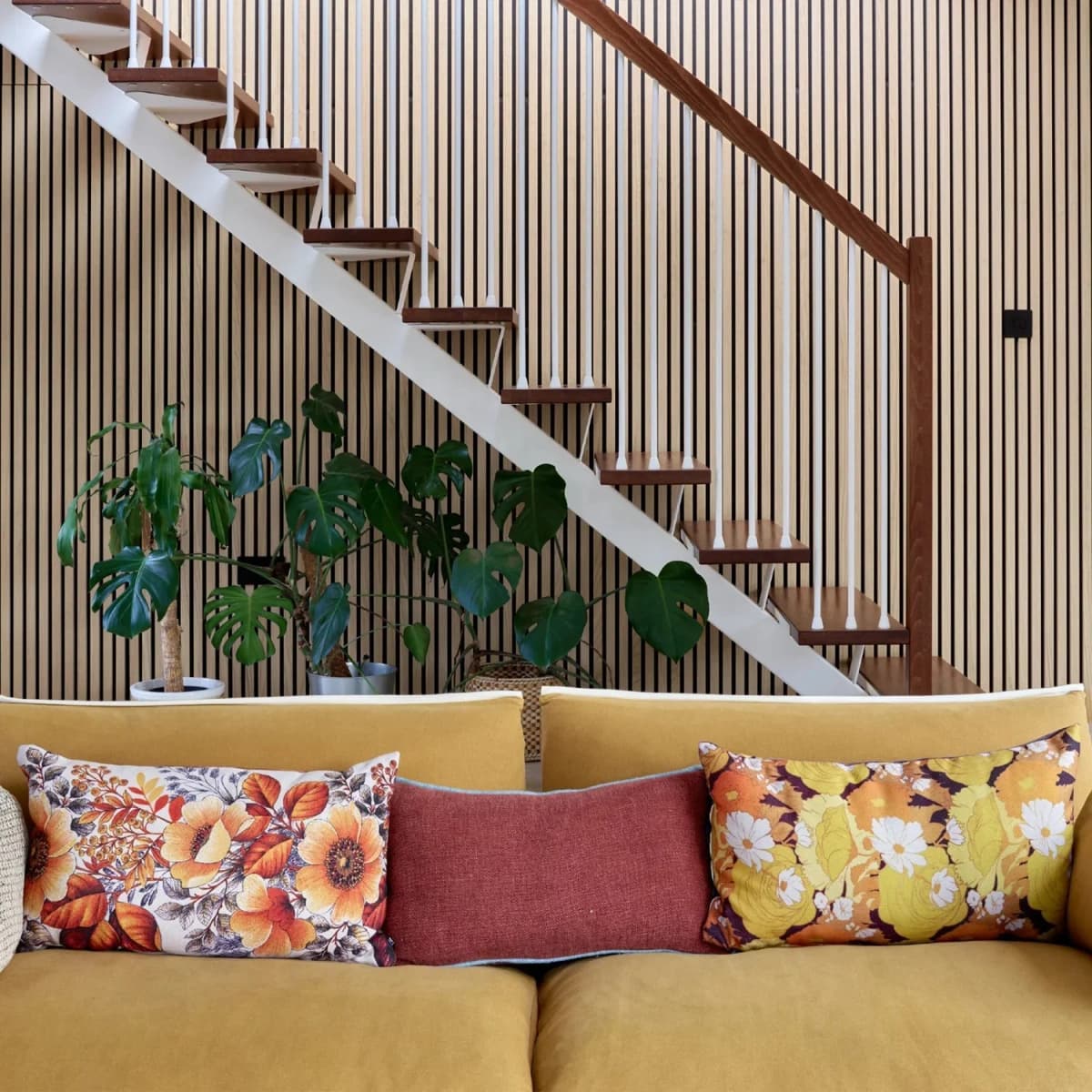
The staircase wall is one of the most visible and least utilised surfaces in a home. It travels the full height between floors, typically in a high-traffic circulation route that everyone passes multiple times a day. Yet most staircase walls are painted white and treated as background — a missed opportunity in a space that is physically prominent and visually important.
3D wood wall panels on a staircase wall are among the most dramatic applications of the format. Here’s how to plan and execute it.
Table of Contents
Why 3D Panels Work Especially Well on Staircase Walls
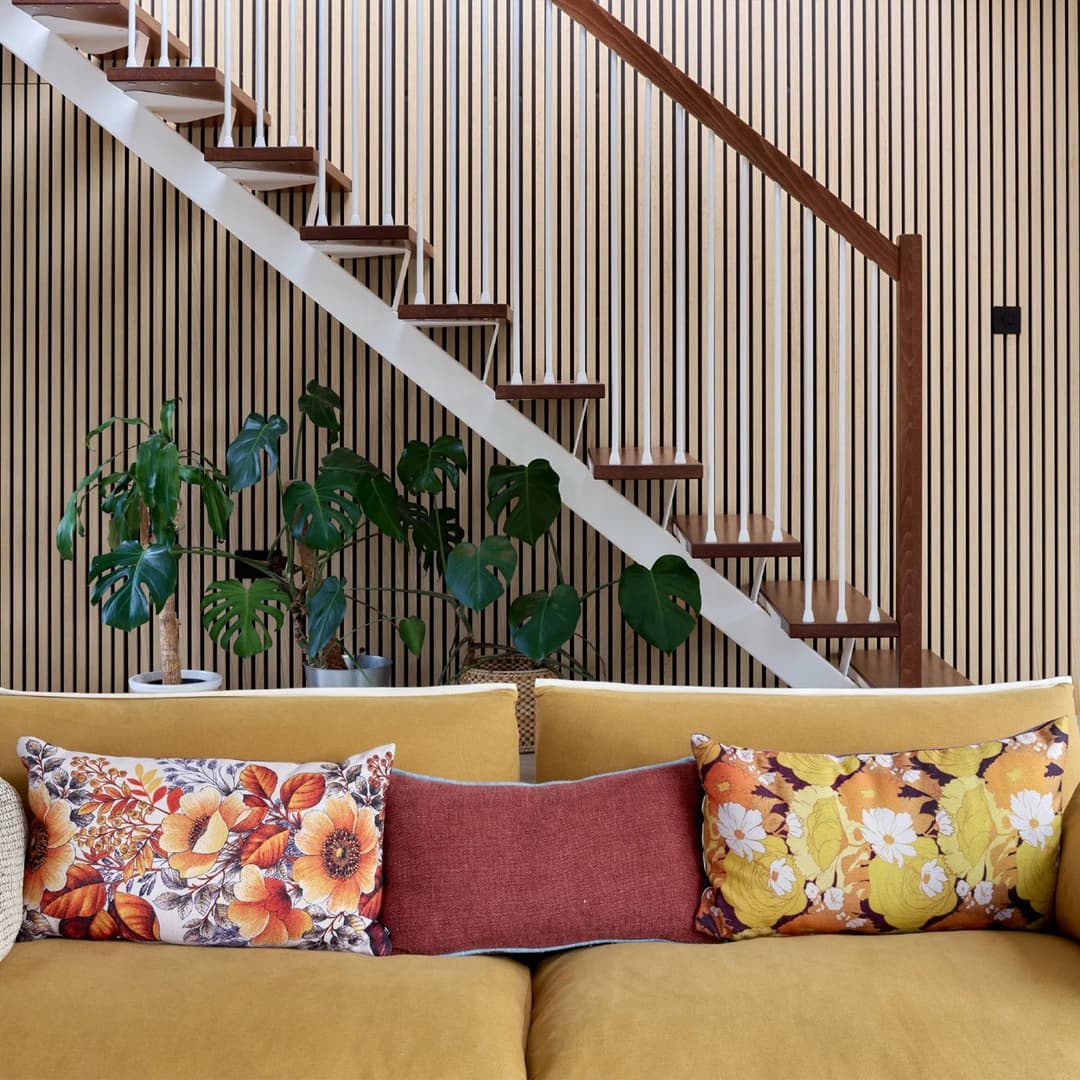
Three characteristics of staircase spaces make them particularly suited to 3D geometric wood panels:
Raking light from above
Staircases often have a skylight, clerestory window, or upper-floor window at the top of the flight. This means natural light travels down and across the staircase wall at a raking angle — exactly the lighting condition that maximises the shadow definition on a 3D panel. The shadow lines on a concentric square or geometric relief panel change as you move up or down the stairs, making the installation dynamic rather than static.
Height provides full-panel scale
A staircase wall typically runs from ground floor to first floor level — 2.5 to 4 metres of continuous height. This scale allows a 3D panel installation to read at its intended proportion. Single-storey rooms often feel too confined for the full height potential of geometric panels; a staircase wall gives you the height to treat the panels as true architectural elements.
It’s a viewing experience with movement
You don’t stand stationary in front of a staircase wall — you move alongside it as you ascend or descend. This motion creates a parallax effect with 3D panels: the shadow lines and depth cues of the panel appear to shift as your viewpoint changes. It’s an experience you can’t replicate with flat panels or painted finishes.
Pattern Options for Staircase Walls
3D Geometric Pattern Panel — the most versatile
The 3D Geometric Pattern Wooden Panel is the most broadly applicable choice for a staircase. Its relief geometry creates strong shadow definition across the full wall height without requiring the precise centring that concentric square patterns demand.
3D Concentric Square — best on a landing or feature section
The 3D Concentric Square Panel works best when you can view it from a fixed vantage point. On a staircase, this makes it ideal for the landing wall — the vertical surface at the top or bottom of the flight where you arrive and pause — rather than the sloped wall running alongside the stairs. The concentric pattern works as a focal point when viewed straight-on.
Crossing Lines — for a cleaner, contemporary staircase
The Crossing Lines Panel is the most architectural choice — a regular grid that creates a strong pattern without the directional movement of triangle mosaics or the dramatic depth of the concentric square. In a contemporary house with a floating staircase and minimal balustrade, crossing lines panels on the staircase wall continue the architectural language of the space.
Planning a Staircase Panel Installation
Decide on the full wall vs accent sections
You can panel the entire staircase wall from floor to ceiling (most impactful), or create a banded installation — for example, panelling only the section between dado and ceiling, or creating a rectangular feature panel on the landing wall. Full-wall installations are more cohesive; partial installations can feel indecisive if not carefully bounded.
Handle the raked ceiling junction
On a sloped staircase wall, the top edge of the panel installation needs to follow either the slope of the staircase or a horizontal line. Following the horizontal ceiling is typically cleaner architecturally; following the slope requires additional cuts at the top edge of each panel row. Decide this in advance — it affects panel quantity calculations and cutting time.
Cutting around balustrade posts
If your staircase has a balustrade with fixed posts or newels, you’ll need to cut panels to fit around them. For solid wood mosaic tiles, this requires a jigsaw or oscillating multi-tool. For the 3D geometric format, it requires careful marking and routing to maintain the relief profile at cut edges.
Quantity and Ordering
Staircase walls are often trapezoidal or irregular in shape. Measure the total wall area in square metres and add at least 15% for cuts and waste — more if the wall is significantly irregular. Use our guide to how many wall panels you need for a systematic calculation method.
For broader staircase design ideas including non-3D formats, read our guide to wall paneling ideas for staircase.
Browse the 3D Range
All 3D geometric formats are in the GroovePanel® Geometric Wood Wall Panels collection. Order a sample to hold against your staircase wall and check how the shadow effect reads in your specific lighting before ordering. For general 3D panel guidance, see our pillar guide to 3D wall panels.