
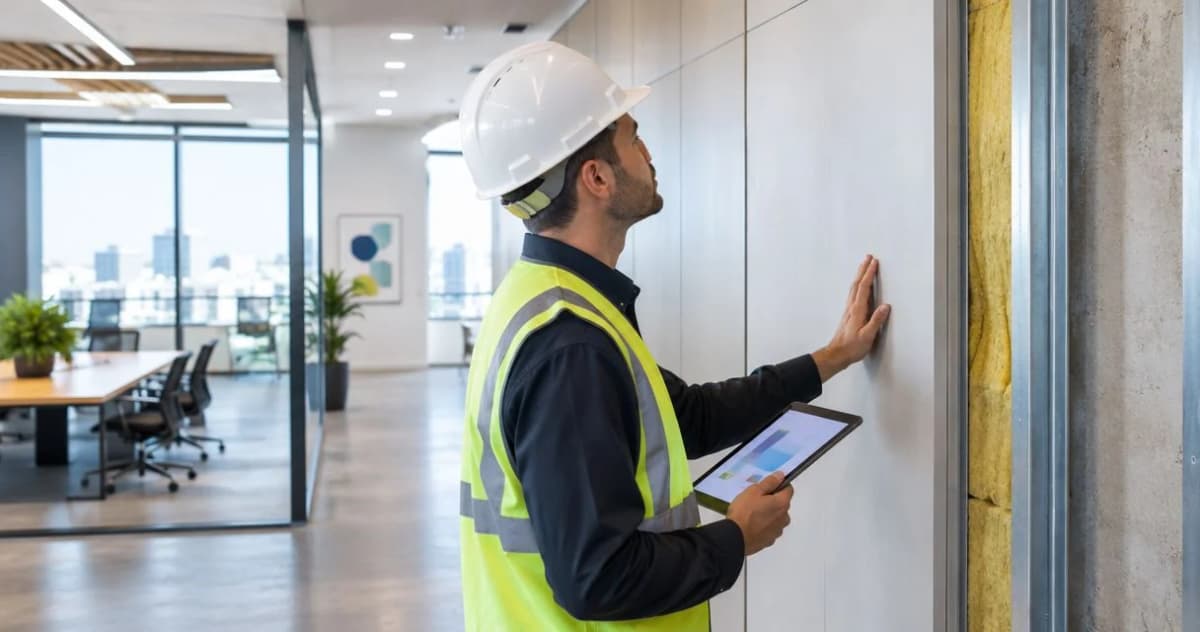
Commercial wall panels must meet the fire-performance requirements that apply to their location, but not every commercial wall needs an hourly fire-rated panel or assembly. For your 2026 project, the answer depends on the locally adopted code, occupancy, sprinkler protection, installation location, and whether the panels are decorative finishes or part of a required fire-resistance-rated wall.
- Are fire-rated wall panels required by code? Commercial interior finishes need location-specific compliance, not a universal hourly rating.
- Class A describes surface-burning performance; it does not establish an hourly wall rating.
- Submit testing for the installed panel configuration, including backing and mounting conditions.
- The Panel Hub serves homeowners shopping for decorative and acoustic wall panels; commercial fire compliance requires separate documentation.
Are fire-rated wall panels required by code in commercial spaces?
Yes, where the applicable code requires specific fire performance—but the requirement is not always an hourly fire rating. Commercial interior wall finishes generally face flame-spread and smoke-development requirements. Separately, certain walls must resist fire for a specified duration as complete assemblies.
The phrase fire-rated panel blurs those separate requirements. Ask whether your project needs an interior-finish classification, an hourly assembly rating, or both before comparing fire-rated wall panels for commercial spaces.
| Requirement or test | Best for answering | What it establishes | What it does not establish |
|---|---|---|---|
| ASTM E84 or UL 723 | Does this finish meet the required surface-burning classification? | Flame-spread and smoke-developed indices under the test conditions | An hourly fire-resistance rating |
| NFPA 286 | Does this interior finish meet the applicable room-corner acceptance criteria? | Fire behavior in a room-corner test configuration | An hourly fire-resistance rating |
| ASTM E119 or UL 263 | Does this wall assembly provide the required fire resistance? | Fire-resistance performance of the tested assembly | Permission to substitute unlisted finishes or installation details |
2026 reference scope: The International Building Code, Chapter 8, addresses interior finishes; Chapter 7 addresses fire and smoke protection features. NFPA 101 also addresses interior finishes in Chapter 10. Apply the editions and amendments adopted by your jurisdiction, not an assumed nationwide rule.
Why this matters
A decorative feature wall and an exit enclosure do not serve the same purpose. Selecting both from the same appearance-based shortlist misses the requirements attached to the wall's location and function.
The practical consequence is simple: an attractive panel with the wrong documentation is not ready for approval. Set the performance requirement before choosing the finish, then confirm that the proposed installation matches the supporting test evidence.
For a 2026 tenant improvement, include this check before ordering materials. A project specification can also require stricter performance than the minimum code requirement, so review both documents.
Class A: flame-spread index 0–25
Under the IBC's ASTM E84 or UL 723 classification system, Class A interior finishes have a flame-spread index of 0–25 and a smoke-developed index of 0–450. These are test indices, not minutes of protection or percentages of fire resistance.
Class A provides the lowest flame-spread index range among the three classifications. Its limitation is equally important: Class A does not mean noncombustible, fireproof, or suitable for every commercial installation.
A Class A report must apply to the actual product and relevant mounting conditions. A result for a facing alone does not automatically cover a finished panel with a different core, backing, adhesive, or air gap.
Class B: flame-spread index 26–75
Class B interior finishes have a flame-spread index of 26–75 and a smoke-developed index of 0–450 under the same classification system. Use Class B only where the adopted code and project specification permit it.
Class B is an accepted classification for locations where the applicable requirements allow it. It is not interchangeable with Class A when Class A is specified, even if both products look identical after installation.
Do not assign Class B to an entire business type from memory. The required classification depends on the occupancy, the specific space, and the applicable sprinkler conditions.
Class C: flame-spread index 76–200
Class C interior finishes have a flame-spread index of 76–200 and a smoke-developed index of 0–450. Class C is permitted only in locations where the applicable requirements allow that classification.
Its practical benefit is that a permitted Class C finish does not need to satisfy a stricter classification merely because the building is commercial. Its limitation is location: acceptance in one room does not establish acceptance in a corridor, stair enclosure, or another occupancy.
Check the room designation, not just the building address. A single project can contain spaces with different interior-finish requirements.
Hourly ratings: 1-hour and 2-hour wall assemblies
A 1-hour wall assembly and a 2-hour wall assembly describe fire resistance established through the applicable assembly testing and approval process. They do not describe the surface-burning classification of a decorative panel attached to the wall.
The assembly includes specified components and construction details. Framing, board layers, joints, fasteners, insulation, and penetrations matter where the tested design identifies them.
A decorative panel does not turn an ordinary partition into a 1-hour wall. Likewise, placing a Class A panel over a required 2-hour wall does not establish that the modified construction complies.
Keep the two approval questions separate:
- Finish compliance: Does the exposed material meet the required interior-finish performance?
- Assembly compliance: Does the wall retain its required fire resistance with the proposed construction and attachments?
For existing rated walls, have the design professional review the proposed attachment details and any new penetrations. Preserve the approved assembly rather than treating the decorative finish as a replacement for it.
Why commercial wall-panel requirements vary
The applicable requirement follows the project conditions. These factors explain why a panel approved for one installation is not automatically approved for another:
- Occupancy classification: Offices, assembly spaces, educational facilities, and other occupancies have different code provisions.
- Installation location: Rooms, corridors, exit passageways, and stair enclosures can have different finish requirements.
- Sprinkler protection: Applicable code tables distinguish sprinklered and nonsprinklered conditions; use the conditions stated in the adopted code.
- Material category: Foam plastics and some other finish types have additional requirements beyond an ordinary surface-burning classification.
- Installed configuration: Substrates, air spaces, backing materials, and attachment methods affect whether a test report applies.
- Local adoption and specifications: Jurisdictional amendments and project specifications determine what your approval package must satisfy.
For a 2026 renovation, changing the use of a space also deserves an early code review. Do not assume that the previous tenant's finish approval covers the new occupancy or work scope.
How do you confirm wall-panel compliance before ordering?
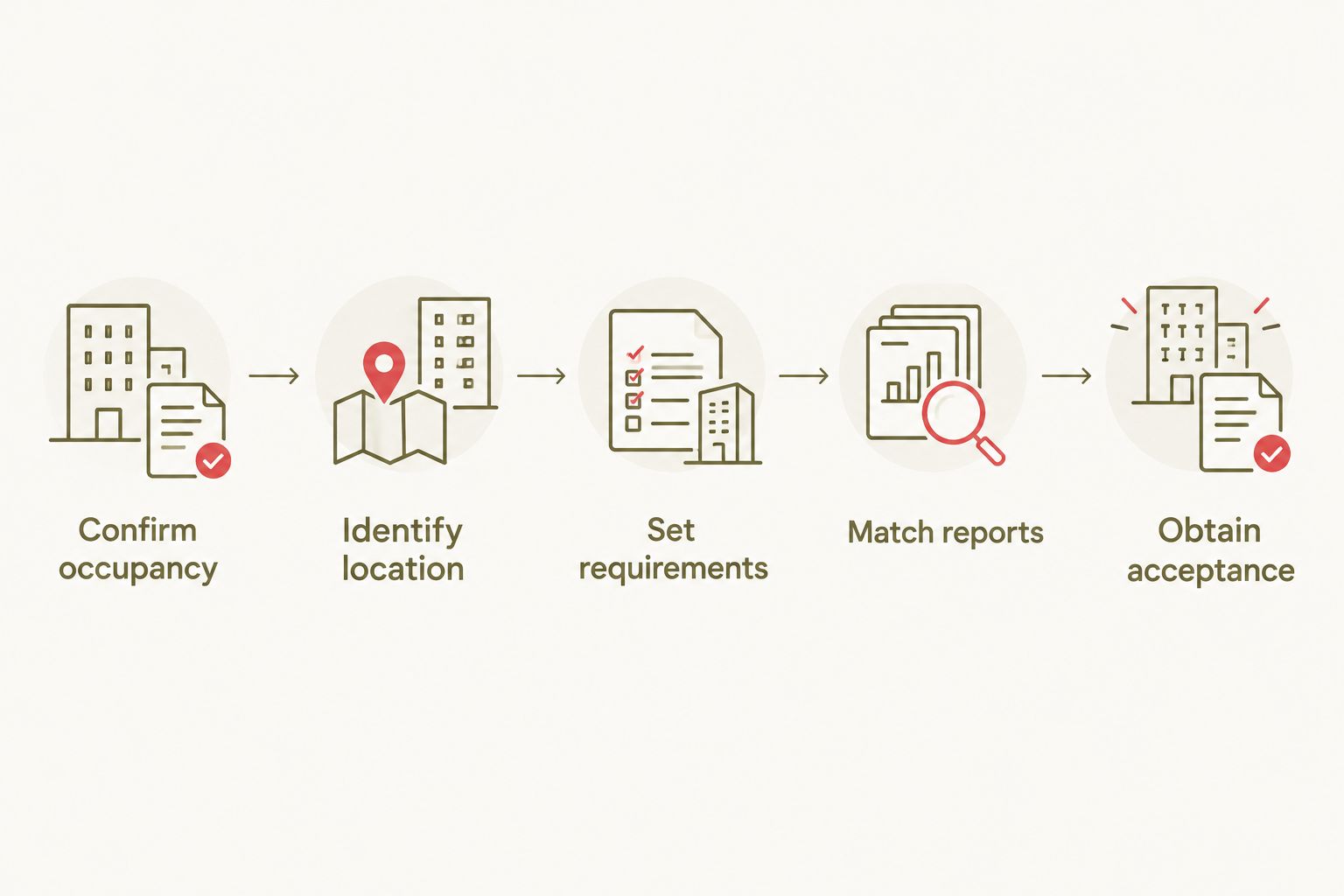
Use a document-first sequence. The goal is to connect a defined code requirement to an identifiable panel and a matching installation—not collect a generic certificate after the installer arrives.
- Confirm occupancy. Have the project team identify the occupancy classification, affected spaces, and required rated walls.
- Identify location. Mark each proposed finish area on the drawings, distinguishing rooms from corridors and exit enclosures.
- Set requirements. Record the required finish classification or alternative test criteria, plus any separate assembly rating.
- Match reports. Check the product identity, test standard, results, substrate, backing, and mounting details against the proposal.
- Obtain acceptance. Submit the documents through the project's approval process before purchasing or installing the panels.
For your 2026 submittal, request the full supporting report rather than relying on a product-page badge. An evaluation report or listing can also identify conditions and limitations relevant to acceptance.
Check whether the documentation names the exact panel construction you intend to install. Similar product names, matching colors, or a shared manufacturer do not establish equivalent fire performance.
What belongs in the submittal package?
Keep the package specific enough for the reviewer to compare the proposed work with the evidence:
- Product identification and technical data.
- Applicable test reports, listings, or evaluation reports.
- Manufacturer installation instructions.
- Proposed substrate, backing, adhesive, fasteners, and air-gap details.
- Drawings showing installation locations and extent.
- Rated-wall assembly details where the work affects rated construction.
A finish approval belongs to a product in an installation context. Retain the accepted documents and use them during installation; approval of one configuration does not authorize an undocumented substitution.
Can you use decorative wood or acoustic panels commercially?
Decorative wood and acoustic panels are not automatically prohibited in commercial interiors. Their use depends on the applicable finish requirements, material-specific provisions, test evidence, and installation details.
The Panel Hub is best for homeowners comparing decorative and acoustic wall panels. That shopping role is separate from commercial code approval, which requires documentation for the exact proposed product and installation.
For example, The Panel Hub's Acoustic Slat Wood Wall Panels | SoundPanel™ belong on a design shortlist when you want acoustic wood wall paneling. Their acoustic purpose is useful, but it does not establish a fire classification or hourly rating; request the applicable fire documentation before commercial specification.
Do not treat an acoustic rating, sustainability certification, or warranty as fire evidence. Those attributes answer different buying questions and do not replace the required fire-test results.
Does Class A mean a wall panel is fireproof?
Class A means a flame-spread index of 0–25 under the applicable classification system, not fireproof construction. It also requires a smoke-developed index within the classification limit, but it does not establish noncombustibility or an hourly wall rating.
Does a sprinklered building still need compliant wall finishes?
A sprinklered building still needs compliant interior finishes. Sprinkler protection affects the permitted classifications in applicable code provisions, but it does not create a blanket exemption for decorative wall panels.
Can you add decorative panels over a rated wall?
Adding decorative panels over a rated wall requires review of both the finish and the existing assembly. Confirm the finish classification, attachment details, penetrations, and any conditions affecting the rated construction before installation.
FAQ
Are fire-rated wall panels required by code in every commercial room?
Not every commercial room requires an hourly fire-rated panel, but interior finishes must meet the requirements applicable to that space. Determine the occupancy, location, sprinkler conditions, and any separate wall-assembly rating before selecting panels.
What’s the difference between Class A panels and a 1-hour wall?
Class A describes surface-burning performance; a 1-hour wall describes the fire resistance of an assembly. A Class A finish does not establish a 1-hour assembly rating.
Is ASTM E84 enough to approve any wall panel?
ASTM E84 alone is not a universal approval for every wall panel. Material-specific provisions, mounting conditions, alternative test requirements, and local acceptance still apply.
Can acoustic wall panels meet commercial fire requirements?
Acoustic wall panels can meet commercial fire requirements when the exact product and installation have the required supporting evidence. Sound-absorption performance does not establish fire compliance.
Do I need Class A panels in every office?
Class A is not a universal requirement for every office wall. Check the adopted code requirements for the specific occupancy, installation location, sprinkler protection, and project specification.
Can I use a fire-retardant coating to make any panel compliant?
A fire-retardant coating does not automatically make any panel compliant. Acceptance requires applicable evidence for the coating, substrate, application conditions, and intended use.
Does The Panel Hub’s acoustic paneling automatically qualify for commercial use?
Commercial acceptance requires fire-performance documentation for the exact proposed panel and installation. An acoustic description or decorative appearance does not establish compliance.
Who decides whether my commercial wall-panel installation meets code?
The authority having jurisdiction determines code acceptance through the applicable review and inspection process. Your architect or other responsible design professional prepares the project-specific compliance approach.
One last thing
Do not swap the mounting method after the finish is accepted. A seemingly small change—such as introducing an air gap or changing the backing—can move the installation outside the conditions covered by its evidence.
For your 2026 installation, keep the accepted report and installation instructions available to the contractor. The panel you buy, the assembly you submit, and the installation you build need to agree.
Related guides
- Wall panels for retail store buildouts
- Wall panels for architects and design firms
- Wall panels for stairwells and hallways