
Table of Contents
- Why Adhesive Choice Matters More Than Most People Think
- 1. Hybrid Polymer Adhesive (Recommended)
- 2. Polyurethane (PU) Adhesive
- 3. Grab Adhesive (Panel Adhesive)
- 4. Contact Adhesive
- 5. Silicone Sealant (Not Recommended as Primary Adhesive)
- Application Best Practices
- Application Technique: Getting the Most from Your Adhesive
- Wall Panel Adhesive FAQs
- Find the Right Panels for Your Project
Why Adhesive Choice Matters More Than Most People Think
The adhesive is the only thing holding your wall panels up. Choose incorrectly and panels slip during installation, fail to bond properly, or damage the wall surface or panel veneer when you eventually need to remove or adjust them. Choose correctly and the installation is clean, permanent, and trouble-free.
There are five main adhesive types used for wood wall panel installation. Here’s a clear comparison of each.
1. Hybrid Polymer Adhesive (Recommended)
Hybrid polymer adhesives — sold under names like Stixall, CT1, Fix All, and others — are the current gold standard for wood wall panel installation. They combine the strength of polyurethane with the flexibility of silicone, resulting in a bond that is:
- Extremely strong (tensile strength typically 2–5 N/mm²)
- Flexible — accommodates minor wood movement without cracking
- Solvent-free — safe for use with MDF, veneer, and acoustic felt backing
- Paintable when cured
- Resistant to water and temperature variation
Best for: All wood slat panel types, acoustic panels, engineered wood panels on drywall or plaster. The safest all-round choice for any residential panel installation.
Application: Zigzag bead across panel back; press and hold 60 seconds; full cure 24 hours.
2. Polyurethane (PU) Adhesive
Polyurethane adhesives (Gorilla Glue and equivalents) are extremely strong and expand slightly as they cure, filling minor surface irregularities. They bond well to wood, MDF, and most substrates.
Cautions:
- Expansion during cure can cause panels to bow away from the wall if insufficient pressure is applied during curing
- Foams aggressively if too much is applied — use sparingly
- Very difficult to remove from surfaces once cured
Best for: Situations where gap-filling is needed; solid timber panels to masonry substrate.
3. Grab Adhesive (Panel Adhesive)
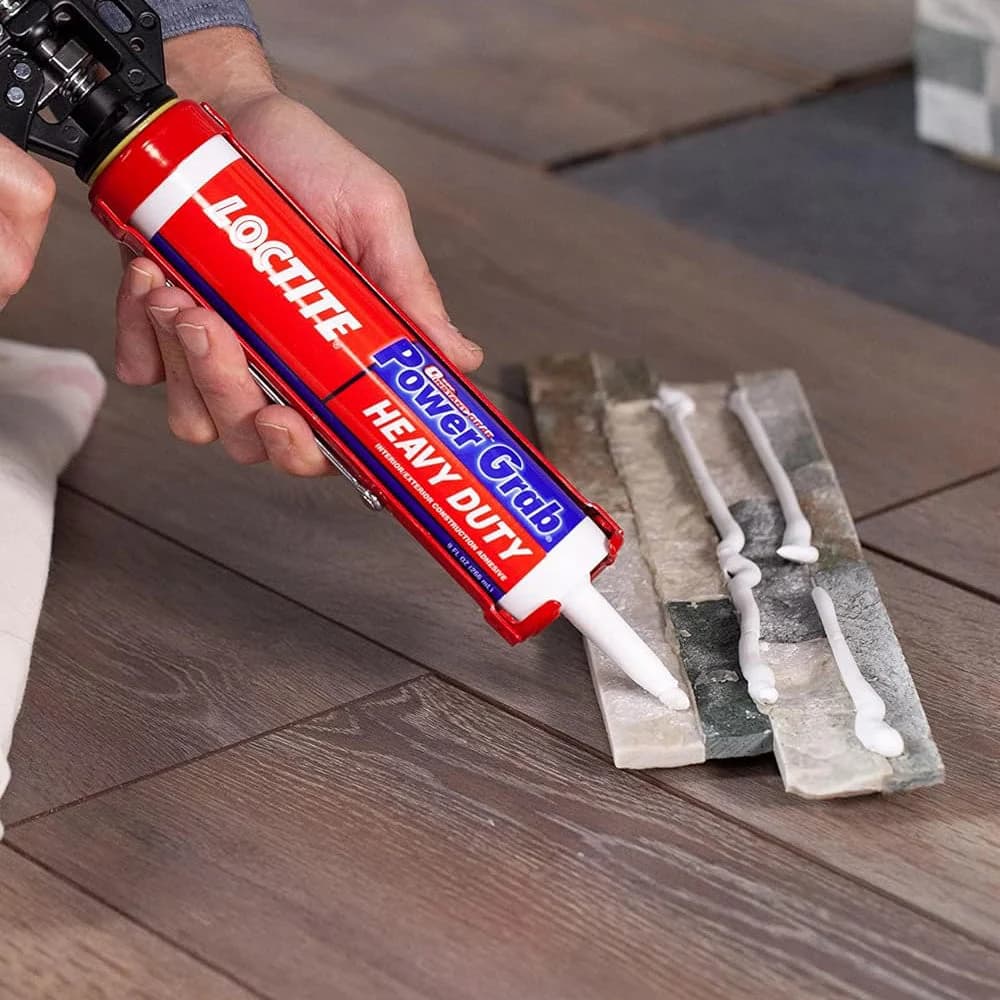
Solvent-based grab adhesives (No More Nails, Liquid Nails, and similar) are widely available and affordable. They provide fast initial grab and strong final bond.
Critical warning: Many solvent-based panel adhesives damage or dissolve MDF cores, veneer adhesive layers, and acoustic felt backing. Always check the product label for MDF and veneer compatibility before use. If in doubt, use a hybrid polymer adhesive instead.
Best for: Solid timber planks and boards where solvent compatibility isn’t a concern. Avoid on veneer-faced engineered panels unless explicitly confirmed compatible.
4. Contact Adhesive
Contact adhesive is applied to both surfaces, allowed to partially dry, then the surfaces are pressed together — bonding instantly on contact. Used professionally for laminate and veneer work.
Limitations for wall panel installation: The instant-bond characteristic means panel positioning must be perfect first time — there is no adjustment window once the surfaces touch. Not recommended for DIY installation of large panels.
5. Silicone Sealant (Not Recommended as Primary Adhesive)
Silicone is flexible and moisture-resistant, but its tensile strength is lower than purpose-made panel adhesives. It also remains flexible when cured rather than forming a rigid bond — panels can creep over time under their own weight.
Best use: Edge sealing and gap filling after installation; not as the primary adhesive for panel fixing.
Application Best Practices
- Clean both surfaces: Dust, grease, or old paint significantly reduces bond strength. Wipe the wall with a damp cloth and allow to dry before applying adhesive.
- Don’t apply to the edges: Leave 2–3cm clear at all panel edges to avoid squeeze-out. Adhesive pressed out at the slat gaps is very difficult to clean.
- Apply enough: Insufficient adhesive is a common failure mode. Use a continuous zigzag bead, not spots — spots create pressure points that can cause panels to bow.
- Hold during initial cure: Most adhesives need 30–90 seconds of firm contact pressure. Use painters’ tape to hold panels in position while adhesive develops initial grab.
For the full installation sequence that adhesive fits into, see our complete wall panel installation guide. For specific installation challenges like working without nails on rental properties, our wall panels for renters guide covers damage-free adhesive options in detail.
Application Technique: Getting the Most from Your Adhesive
Choosing the right adhesive is only half the equation — how you apply it determines the actual bond quality. The most common mistake is applying too little adhesive and then pressing the panel flat without allowing the adhesive to build any tack.
For most construction adhesives and hybrid polymers, the correct application is a serpentine bead (S-shape) across the back of the panel, starting 10 cm from each edge and running through the centre. Press the panel firmly into position, then pull it away from the wall for 5–10 minutes to allow the solvent or water to flash off. This step — called “open time” — is what builds the adhesive’s tack before the final bond. Re-pressing the panel after open time produces a much stronger initial grip than pressing immediately.
For panels on drywall, avoid applying adhesive right to the edges of the panel. Leave 5 cm clear at the top and bottom edges to prevent squeeze-out that can stain the wall surface around the panel joints. The adhesive bead should also be kept 3–4 cm back from any panel grooves or slats where squeeze-out would be visible between the slats.
Temperature affects working time significantly. Below 10°C, most adhesives slow down considerably — both initial tack and final cure. In cold conditions, warm the adhesive to room temperature before use and ensure the wall surface is not cold to the touch. Applying adhesive to a cold wall surface delays tack and can result in panels slipping before they hold.
Wall Panel Adhesive FAQs
How long does panel adhesive take to cure fully?
Initial grab typically occurs within 30–60 minutes for most construction adhesives. Full cure — the point at which the bond reaches its maximum strength — takes 24–48 hours for most solvent-based adhesives and up to 72 hours for water-based formulations in cooler conditions. Panels should not be subjected to impact, weight, or moisture during the curing period.
Can I use no-nails adhesive for wall panels?
Yes — “no-nails” type adhesives (like Evo-Stik No More Nails or similar) work well for lighter panel systems such as thin slat panels and MDF panels under 6 mm thick. For heavier or thicker panels, use a purpose-made construction adhesive with a higher grab strength. Always check the manufacturer’s weight recommendation for the adhesive against your panel weight per square metre.
What removes wall panel adhesive if I need to take a panel down?
For hybrid polymer adhesives, a heat gun softened the adhesive, and a wide plastic scraper helps remove the panel without damaging the wall. Solvent-based adhesives can be softened with acetone or panel adhesive remover, then scraped off. Always test any solvent on an inconspicuous area of the wall surface before applying widely.
Do I need primer before using panel adhesive?
On new, unpainted plasterboard — yes. New plasterboard absorbs adhesive into the paper surface, reducing the effective bond. A coat of diluted PVA or a purpose-made bonding primer seals the surface and gives the adhesive a consistent bonding substrate. On already-painted walls, primer is typically not needed unless the paint is flaking or powdery.
Find the Right Panels for Your Project
Once you’ve confirmed your adhesive, browse the complete wood wall panel collection at The Panel Hub — all products include guidance on the recommended adhesive type for each substrate. The SoundPanel™ acoustic slat range is designed for hybrid polymer adhesive installation on standard drywall and plaster. For design inspiration, our interior slat wall ideas guide covers 50+ room applications. The acoustic panel buyer’s guide is useful if you’re still deciding between panel systems before placing an order.