
Table of Contents
- Why Your Living Room Needs a Feature Wall
-
12 Feature Wall Ideas for Living Rooms
- 1. Acoustic Wood Slat Panels Behind the Sofa
- 2. TV Wall with Wood Panels
- 3. Painted Arch Feature
- 4. Limewash or Textured Paint
- 5. Full-Height Stone Panel Wall
- 6. Fluted Wood Panel Wall
- 7. Bookshelf Wall
- 8. Wallpaper Mural
- 9. Wainscoting with Paint Above
- 10. Brick Effect Panels
- 11. Vertical Garden Wall
- 12. Mirror Panel Wall
- How to Choose a Feature Wall in Your Living Room
- Budget Guide
- How to Style Your Living Room Around a Feature Wall
- Common Feature Wall Mistakes to Avoid
- Shop Living Room Wall Panels
Why Your Living Room Needs a Feature Wall
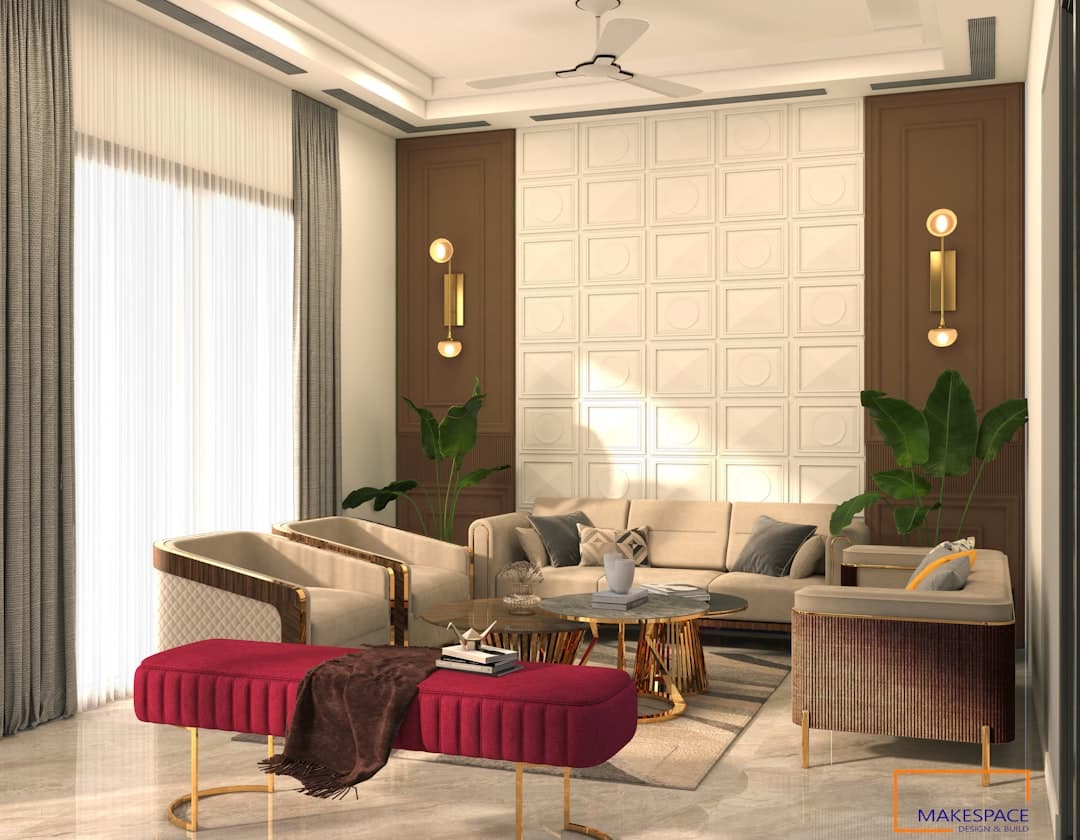
A feature wall turns a plain room into a designed space. In the living room — typically the largest, most-used room in the home — a well-chosen feature wall creates a focal point, frames your furniture, and gives the room a sense of intention. Without one, even a well-furnished living room can feel unfinished.
The good news: feature wall ideas for living rooms range from a single afternoon’s work (paint, panels) to more involved projects (stone cladding, built-in shelving) — so there’s a budget-appropriate option for everyone.
12 Feature Wall Ideas for Living Rooms
1. Acoustic Wood Slat Panels Behind the Sofa
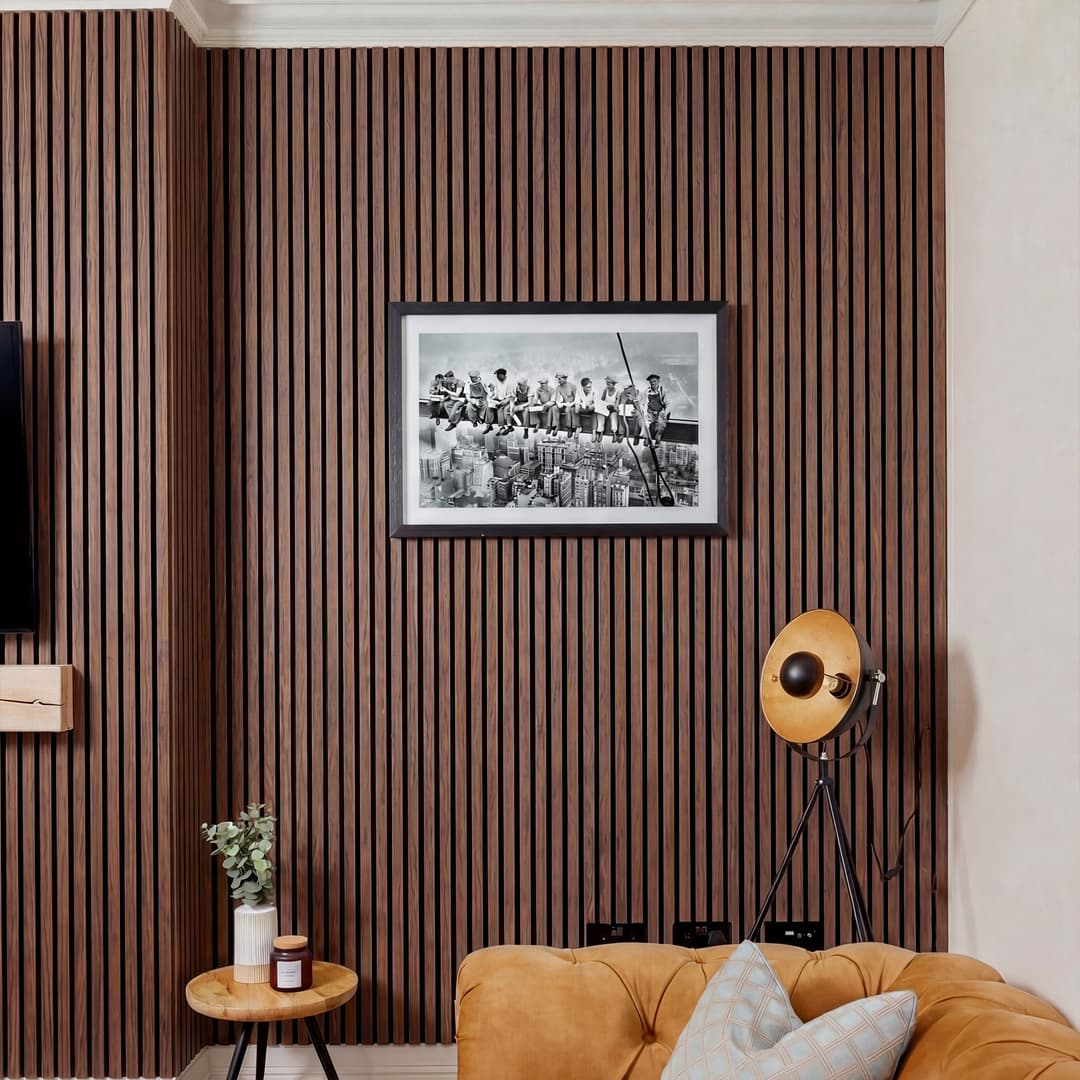
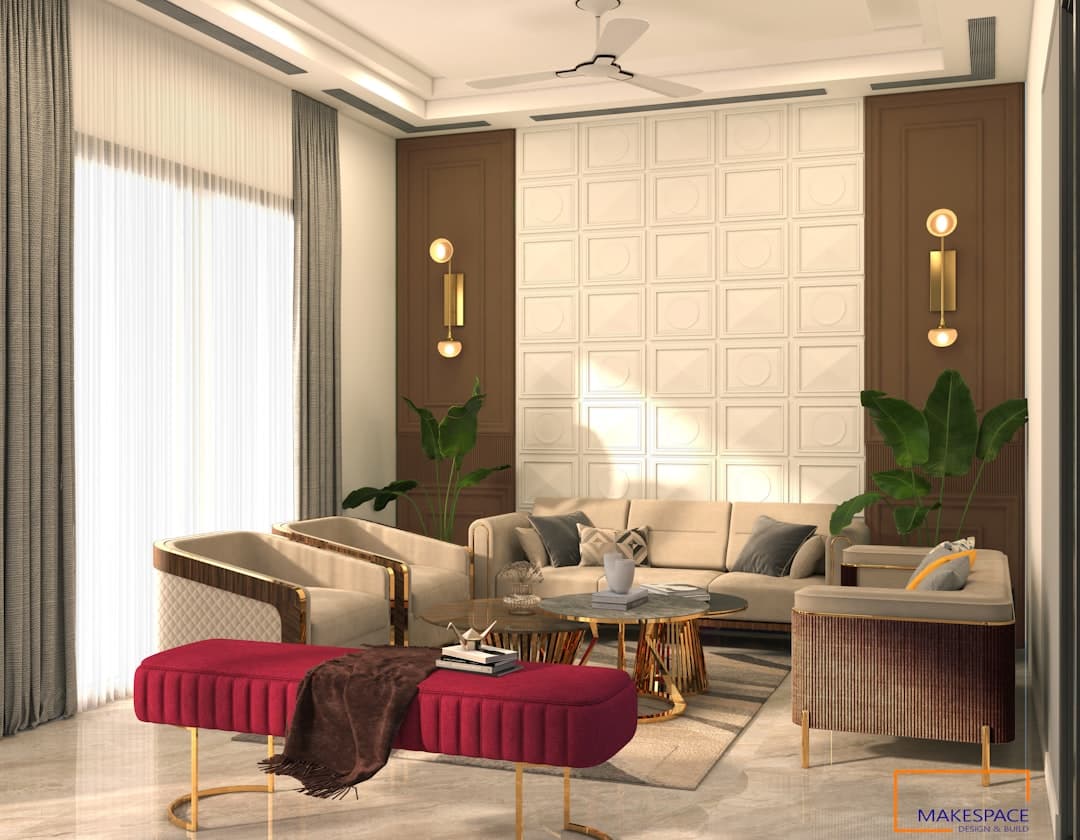
The most sought-after living room feature wall right now. A full wall of vertical wood slat panels behind the sofa creates instant architectural character, adds warmth, and — thanks to felt-backed acoustic technology — reduces the echo that plagues hard-surfaced living rooms. Pair with warm lighting for a cosy, hotel-lobby feel.
2. TV Wall with Wood Panels
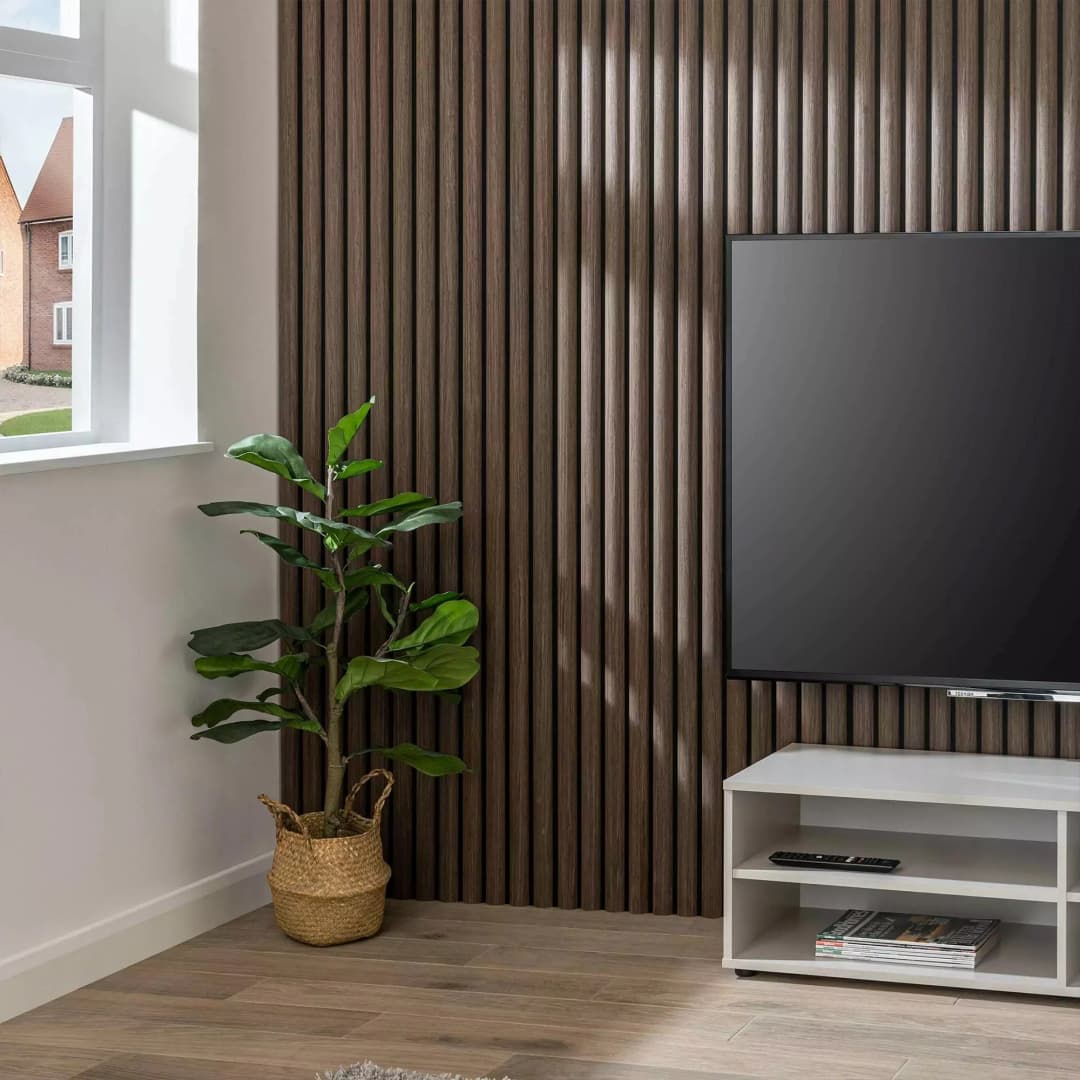
Frame your TV in wood panels rather than leaving it floating on a painted wall. Floor-to-ceiling wood slat panels with the TV recessed or surface-mounted transforms the media wall from an afterthought into a design feature. Add LED strip lighting behind the panels for ambient depth.
3. Painted Arch Feature
Paint a large arch shape in a contrasting colour on one wall. It costs almost nothing, requires no materials beyond paint, and creates a bold, graphic statement. Works especially well in minimal or Bauhaus-inspired living rooms.
4. Limewash or Textured Paint
Limewash paint builds up layers of chalky texture that absorb light differently at different times of day. It suits earthy, organic, and Mediterranean-inspired interiors and adds texture without any 3D materials.
5. Full-Height Stone Panel Wall
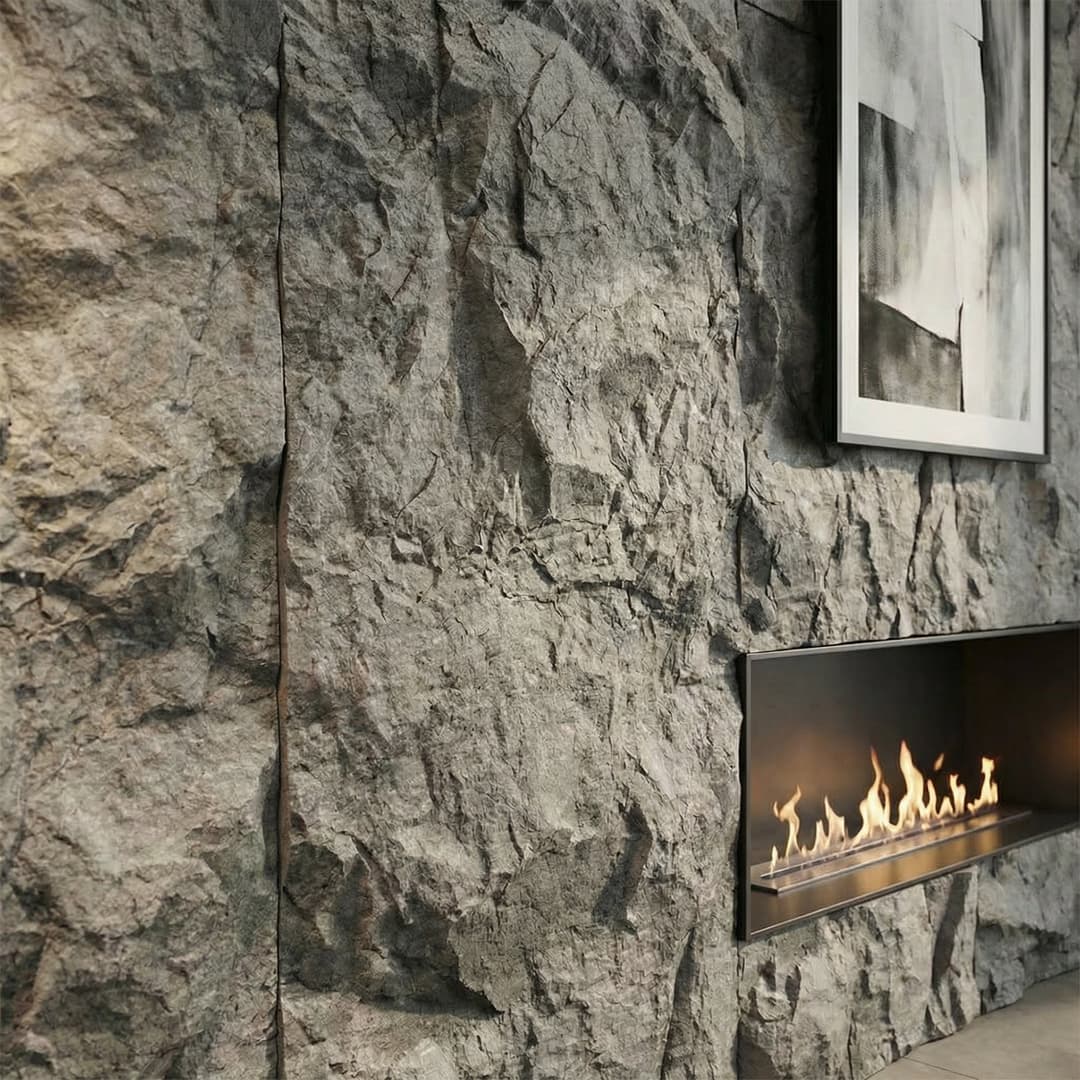
Faux stone panels — like RockSurface® cladding — bring natural stone aesthetics without the structural demands or cost of real stone. Ideal for fireplace walls or living room feature walls with an outdoor or industrial edge.
6. Fluted Wood Panel Wall
Fluted panels with their vertical grooves create a sculpted, light-catching texture that adds architectural drama. Popular in contemporary and transitional living rooms, especially in walnut or oak finishes.
7. Bookshelf Wall
Built-in bookshelves that span an entire wall make a room feel curated and lived-in. Combine with a contrasting back-panel colour for added depth — or use wood panels as the backboard behind the shelves.
8. Wallpaper Mural
A botanical, landscape, or abstract mural wallpaper on a single wall is a dramatic option that requires no structural work. Best for bold personalities and rooms with simple, clean furniture so the wall isn’t competing.
9. Wainscoting with Paint Above
Wainscoting covers the lower third of the wall in panels, with a contrasting paint colour above. It’s traditional, practical, and works beautifully in formal or transitional living rooms.
10. Brick Effect Panels
Industrial, loft-style living rooms benefit from the warmth and texture of exposed brick — but you don’t need the real thing. Lightweight brick-effect panels give the look without the mess or cost.
11. Vertical Garden Wall
A living plant wall brings biophilic design into the living room. Even a modular faux-plant version creates warmth, colour, and an organic focal point that photographs beautifully.
12. Mirror Panel Wall
Mirrored or partially mirrored panels expand the perceived size of the room and bounce natural light. Best in smaller living rooms or dark spaces that need visual breathing room.
How to Choose a Feature Wall in Your Living Room
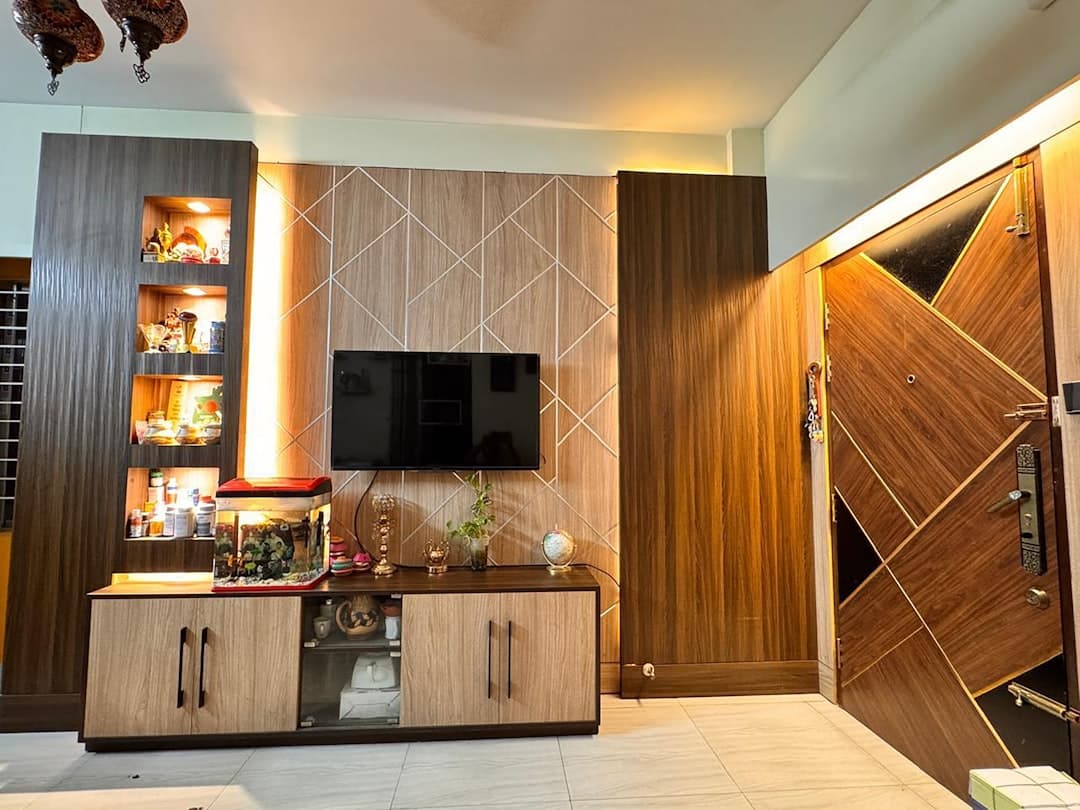
Always choose the wall your eye falls on first when entering the room. In most living room layouts, that’s either:
- The wall behind the main sofa
- The wall the TV sits on
- The chimney breast wall
For acoustic comfort, choose a textured material — wood slat panels are the most practical because they combine aesthetics with real sound performance.
Budget Guide
- Under $100: Limewash paint, painted arch
- $100–$500: Wallpaper mural, wainscoting with moulding
- $500–$1,500: Acoustic slat panels, faux stone cladding
- $1,500+: Built-in shelving, solid wood feature walls
For the best value-to-impact ratio, acoustic wood slat panels remain the single most transformative living room upgrade available. They’re tangible, tactile, and deliver both visual and functional benefits in a single installation.
For styling advice that goes beyond the feature wall — furniture placement, colour, lighting, and panel combinations throughout the full room — read how to decorate a living room with wood paneling.
How to Style Your Living Room Around a Feature Wall
A feature wall only works when the rest of the room responds to it. Once you commit to a bold or textured wall treatment, every other decision — furniture, lighting, colour — should reinforce it rather than compete.
- Keep the opposite wall quiet. If your feature wall uses stone cladding, dark wood panels, or a mural, the wall directly opposite should be plain and neutral. Two competing feature walls cancel each other out.
- Float the sofa slightly away from the wall. Pulling the sofa 6–10 inches forward from a panelled feature wall creates visual breathing room between the furniture and the material, making both read better.
- Match the material’s undertone. Walnut slat panels carry warm, reddish-brown undertones — pair them with camel, burnt orange, or deep green textiles. Cool-toned stone panels call for grey, dusty blue, or sage soft furnishings. Undertone harmony is what separates a designed room from an assembled one.
- Light the wall deliberately. Without directional lighting, a textured feature wall disappears at night. A floor lamp with uplighting placed in front of the panel wall grazes the surface and creates dramatic shadow depth in the slat gaps or stone texture. Even a single well-placed lamp transforms how the room reads after dark.
- Let the feature wall set the room’s accent colour. Pull one tone from the wall material and use it as the accent colour in cushions, artwork, or a throw. This creates visual continuity without making the room feel monotonous.
Common Feature Wall Mistakes to Avoid
Feature walls fail for predictable reasons. Knowing these in advance saves an expensive or time-consuming reversal.
- Choosing the TV wall instead of the sofa wall. The wall behind the TV competes visually with the screen every evening. The feature wall should be the one your guests face and you look toward — typically the wall behind the main sofa.
- Stopping below the ceiling. Panels or wallpaper that stop a foot below the cornice look unresolved and make ceilings feel lower. Go floor to ceiling, or at minimum to the top of the door frame height. Half-height feature walls only work on walls with deliberate dado rail or wainscoting detailing.
- Overloading a textured wall with accessories. The wall itself is the feature. Adding fifteen frames, shelves, and decorative objects to a stone or slat panel wall turns a statement into clutter. Let the material do the work.
- Ignoring the acoustic consequences. Hard feature wall materials — stone panels, brick effect, mirrored tiles — increase the echo and reverberation in the room. If you choose a hard-surface feature wall, balance it with an acoustic treatment elsewhere: soft furnishings, rugs, curtains, or acoustic slat panels on an adjacent wall.
- Mismatching scale to room size. Fine-grain textures and small-scale patterns disappear on a wall viewed from 12 feet away. Choose materials with a scale — slat width, stone block size, pattern repeat — that reads clearly at the viewing distance of your room.
Shop Living Room Wall Panels
Explore the living room panel collection — for geometric and 3D relief options, the GroovePanel® geometric wood wall panel collection covers solid wood mosaic, crossing lines, and concentric square formats that work especially well as living room statement walls. at The Panel Hub, or browse the full wood wall panel range for every option. For more living room ideas, our interior slat wall ideas guide shows 50+ looks across styles and budgets. If you’re considering a panel with acoustic properties, the acoustic panel buyer’s guide explains what to look for.