
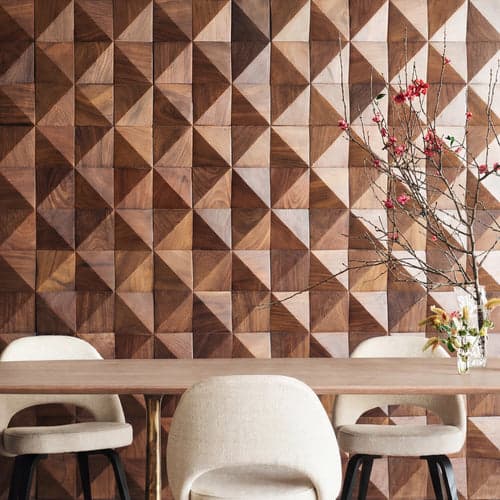
The dining room’s main wall — typically behind the table and chairs — is one of the most photographed surfaces in a home. It’s the backdrop for every dinner party, family gathering, and Sunday lunch. Getting it right matters not just for daily living but for how the whole room reads to anyone entering it.
A geometric wood panel feature wall is one of the strongest choices for this surface. It adds warmth, texture, and a clear design intention without requiring art, wallpaper, or ongoing maintenance. Here’s how to plan and execute it.
Table of Contents
Why the Dining Room Works So Well for Geometric Panels
Dining rooms typically have:
- One clear wall that functions as a visual backdrop
- Pendant or chandelier lighting that creates directional shadow across a textured wall
- A natural gathering function where guests face the feature wall
- Fewer competing visual elements than kitchens or living rooms
These conditions are almost ideal for a geometric panel installation. The pendant light above the table naturally rakes across the wall, maximising the shadow and texture effect of a 3D or relief pattern. Guests seated at the table face the wall and have time to appreciate the detail. And unlike a living room, the dining room wall isn’t interrupted by sofas, TVs, or console tables that compete for attention.
Pattern Options for the Dining Room
3D Concentric Square — formal and architectural
The 3D Concentric Square Panel creates a pattern that references both Art Deco geometry and contemporary architectural detail. In a dining room with a long table and formal seating, the precision of the concentric square pattern reads as intentional and considered — an appropriate backdrop for an occasion room.
Walnut Triangle Mosaic — bold and contemporary
A full wall of Walnut Triangle Panels is one of the bolder choices for a dining room, but in rooms where the aesthetic is contemporary and the brief is to impress, it delivers. The dark walnut tone deepens under pendant lighting, creating a rich, jewel-box quality.
Crossing Lines — clean and graphic
The Crossing Lines Panel is the most restrained option — a grid of intersecting lines that reads as architectural precision rather than organic warmth. It works in dining rooms where the existing material palette is already warm (timber floors, rattan chairs) and the wall needs to add structure without more of the same texture.
Honey Mosaic — warm and tactile
For dining rooms in warmer, more organic interior styles — terracotta tiles, linen curtains, ceramic dinnerware — the Honey Mosaic Panel adds tactile richness without sharp geometry. It’s the most approachable pattern in the GroovePanel® range.
How High to Take the Panels
Three main options for a dining room feature wall:
- Floor to ceiling: Maximum impact. Makes the wall feel like a room-defining architectural element rather than decor. Works best with high ceilings (2.7m+).
- Dado height to ceiling: Apply panels above a picture rail or dado height (typically around 900–1100mm from floor), with a different treatment below. Creates a layered effect.
- Behind-chair height: Panel only the section of wall visible above the chairs — roughly from 750mm to 2000mm. Frames the seating area specifically.
Lighting the Geometric Feature Wall
In a dining room, the pendant light above the table will create some ambient light on the wall — but it may not be angled enough to create meaningful shadow on a textured panel. Consider adding:
- A wall sconce on each side of the feature wall
- Picture lights mounted at the top edge of the panel installation, angled downward
- LED strip lighting recessed in a channel above the panel
For full guidance on integrating lighting with panel installations, see wall panels with LED lighting.
Styling the Dining Room Around a Geometric Feature Wall
Let the geometric panel wall anchor the room and keep everything else secondary. Recommendations:
- Table: choose a simple form — no heavily carved legs or decorative detail competing with the wall
- Chairs: upholstered in a single solid tone rather than a pattern
- Pendant: a form with strong presence but no surface decoration — raw concrete, simple brass, or ceramic
- Table accessories: natural materials (linen runners, ceramic bowls, glass candleholders) that reinforce the organic warmth of the timber wall
For more dining room wall ideas across different material types, read our guide to dining room wood panel wall ideas.
Order and Plan
Browse the full geometric pattern range at GroovePanel® Geometric Wood Wall Panels. For a step-by-step guide to planning your layout, read our how to create a geometric feature wall article. Order a sample before committing to check timber tone under your dining room’s specific lighting.