
Table of Contents
Shiplap vs Wood Wall Panels: The Short Answer
Shiplap is a specific plank profile — individual boards with a rabbet cut on each edge that allows planks to overlap slightly and lie flush. Wood wall panels are a broader category: pre-engineered panel systems, typically sold in larger format sheets or modular tiles, that can include slat panels, geometric panels, acoustic panels, and more. The two products serve different design intentions and perform differently on a wall.
What Is Shiplap?
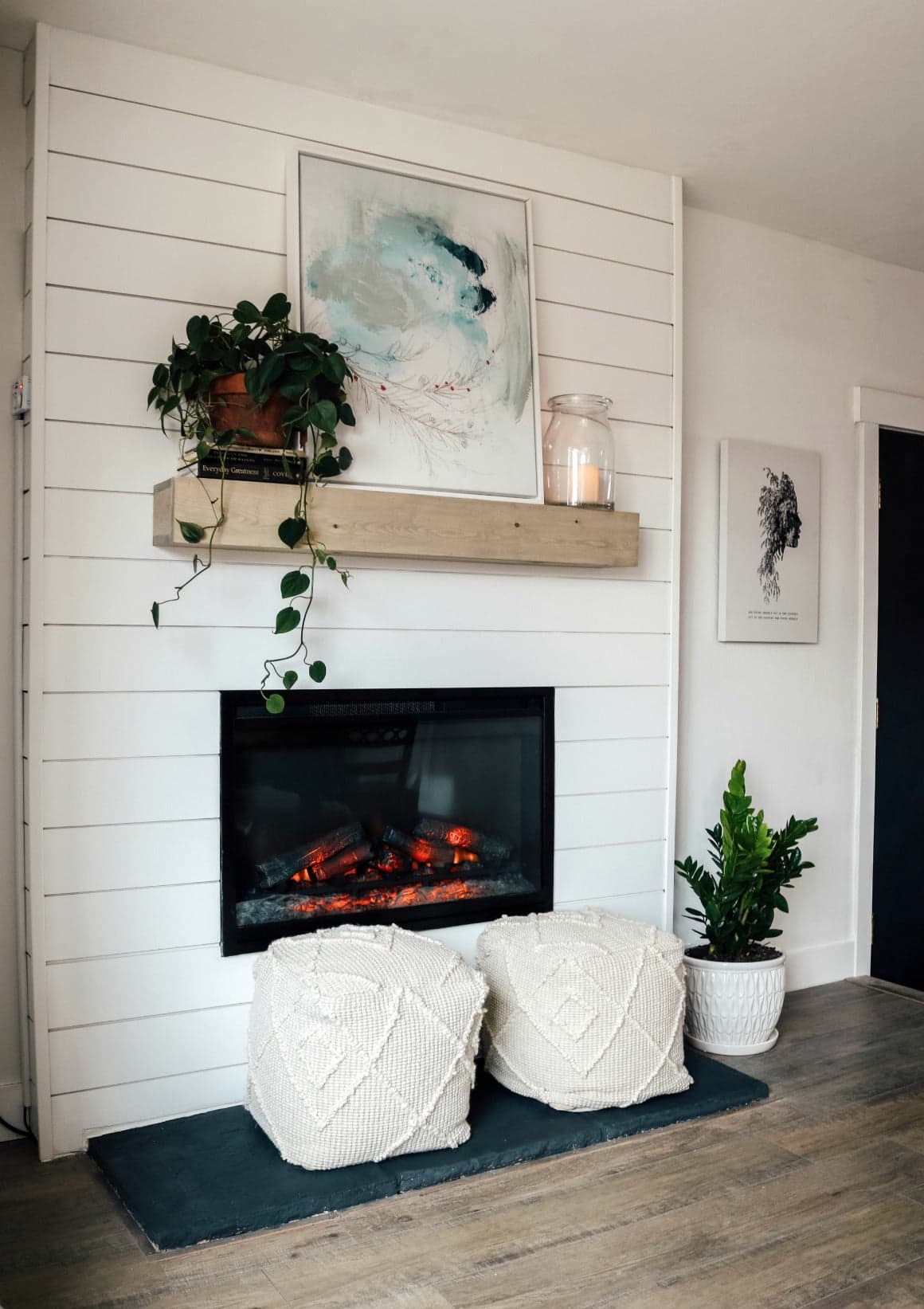
Shiplap originated as an exterior cladding material. The overlapping rabbet joint between boards creates a weather-resistant profile that sheds water. Used on interior walls, shiplap produces a characteristic horizontal-line aesthetic — evenly spaced parallel planks running across the wall surface.
The modern interior shiplap trend owes much to the farmhouse and coastal interior styles popularised in the 2010s. White-painted pine shiplap became a design signature of a particular aesthetic. That association is now so strong that shiplap has become somewhat style-specific — it signals a rustic, casual, or coastal character that may or may not be what you want.
Shiplap Characteristics
- Profile: Individual planks, typically 100–150mm wide, with overlapping rabbet joints
- Material: Usually pine or MDF, sometimes cedar for exterior use
- Finish: Most often painted white; natural wood stain is less common
- Aesthetic: Horizontal, linear, rustic, farmhouse, coastal
- Installation: Board by board, nailed to studs; time-consuming on large walls
- Gap consistency: Requires care to maintain even spacing and level lines across the wall
What Are Modern Wood Wall Panels?
Modern wood wall panel systems — like the GroovePanel® collection at The Panel Hub — are engineered as complete wall systems rather than individual boards. Panels are manufactured to precise dimensions, with pre-engineered edges that butt together cleanly and patterns that align panel-to-panel without careful on-site measurement and adjustment.
The category is wide: geometric panels, acoustic slat panels, fluted panels, reeded panels, mosaic wood panels — each with its own visual character and performance characteristics. Unlike shiplap, which is strongly associated with a single aesthetic, wood wall panels span multiple design languages from contemporary minimalist to mid-century modern to Japandi.
Wood Wall Panel Characteristics
- Format: Panel sheets or tiles, typically 600mm–1200mm wide, installed in fewer pieces than individual plank systems
- Material: Solid wood, real wood veneer on engineered core, or MDF — depending on the manufacturer
- Finish: Natural wood tones (oak, walnut, pine), stained finishes, or paintable surfaces
- Aesthetic: Spans contemporary, minimalist, Japandi, mid-century, traditional — depending on panel type
- Installation: Adhesive and nails; larger format means fewer joints and faster installation
- Pattern alignment: Engineered panel-to-panel alignment built into the product design
Key Differences Side by Side
Aesthetic Flexibility
Shiplap is style-specific. Its horizontal plank profile reads as farmhouse, coastal, or rustic regardless of how it is finished. If that is the aesthetic you want, shiplap delivers it efficiently. If you want a contemporary, Japandi, minimalist, or architectural result, shiplap works against you — its associations are too strong.
Modern wood wall panels are style-flexible. A geometric GroovePanel® with deep-cut crossing lines reads as contemporary and architectural. A fine oak slat panel reads as Japandi or Scandinavian. The panel format itself does not carry a single strong style association the way shiplap does.
Installation Speed and Precision
Individual shiplap planks require precise levelling of each course, particularly on longer walls where small angle errors compound over multiple boards. On a full 4m wall, keeping twenty individual planks level, spaced evenly, and terminated cleanly at corners and obstacles is a skilled job that takes time. Modern panel systems install faster because each panel covers more area and alignment is built into the panel design. Our installation guide walks through the full process.
Material Quality
Most shiplap available at building merchants and home improvement stores is pine or MDF — functional materials but not premium ones. At the premium end, shiplap in cedar, oak, or hardwood species is available but less common and significantly more expensive. Modern wood wall panels span a wider quality range from affordable MDF-core options through to 100% solid hardwood panels like GroovePanel® — all solid wood throughout, FSC® certified, and built for longevity. See our MDF vs solid wood comparison for detail on what the difference means in practice.
Acoustic Performance
Flat shiplap boards with tight joints provide no meaningful acoustic benefit. Modern acoustic wood panel systems — slat panels with felt backing, for example — do provide measurable sound absorption. If reducing echo or improving room acoustics is part of your goal, wood wall panels are the appropriate category; shiplap is not.
Which Is Right for Your Home?
Choose shiplap if:
- You specifically want a farmhouse, coastal, or rustic interior aesthetic
- You are happy with the standard painted-plank look
- Budget is a priority and you are comfortable with the installation labour involved
Choose modern wood wall panels if:
- You want a contemporary, Japandi, minimalist, or architectural result
- You want design flexibility — geometric patterns, acoustic performance, natural wood grain
- You want a premium material (solid wood, real veneer, FSC certified)
- You want faster, cleaner installation with engineered panel-to-panel alignment
Where Each Approach Works Best: Room-by-Room
The decision between shiplap and modern wood wall panels is partly about aesthetics and partly about the specific spatial context. Here’s how the two approaches tend to play out by room type.
Hallways and entryways: Both treatments work well in hallways. Shiplap’s horizontal lines can make a narrow hallway feel slightly wider (horizontal lines optically expand a space). Vertical slat or fluted panels draw the eye upward, making a low ceiling feel taller. The choice depends on whether width or height is the more constraining dimension.
Living rooms: Modern wood wall panels are the dominant choice for living room feature walls — the acoustic benefit in slat panel versions is particularly relevant for rooms where television and conversation compete. Shiplap in a living room reads as country-house or coastal in character, which suits some aesthetics but limits others.
Bedrooms: Both approaches work as headboard wall treatments. Modern panels — particularly slat panels in warm timber tones — are the more common current choice for bedrooms. Shiplap in a bedroom reads as relaxed and informal, which suits a countryside or cottage aesthetic well.
Home offices: Modern acoustic slat panels are practically significant in home offices: they address the reverberation that makes video calls uncomfortable. Shiplap provides no acoustic benefit. For a home office that also appears on screen regularly, modern panels offer both the aesthetic and the functional improvement.
Kitchens and bathrooms: Shiplap in moisture-prone environments requires careful species selection and finishing — untreated pine shiplap will fail in high-humidity conditions. Modern composite-core panels rated for damp environments are more predictably moisture-resistant. In both rooms, the panel specification must match the environmental conditions.
FAQs: Shiplap vs Wood Wall Panels
Is shiplap the same as tongue-and-groove cladding?
No. Shiplap boards have a rabbet (stepped overlap) cut into the top and bottom edges so adjacent boards overlap without a gap. Tongue-and-groove boards have a tongue on one edge and a groove on the other, creating an interlocking join. Both create a similar horizontal board look, but the join detail and shadow line are different. Tongue-and-groove creates a flat, flush surface; shiplap creates a visible shadow line at each board overlap.
Can modern wood wall panels look like shiplap?
Yes. Some modern wall panel products include a horizontal channel or groove profile that replicates the shadow line of shiplap boards in a single panel format. These products install more quickly than individual shiplap boards while achieving a similar visual result. The difference from genuine shiplap is visible on close inspection but not from normal room distances.
What timber is shiplap typically made from?
Traditionally, shiplap uses pine, cedar, or spruce — softwoods that are relatively easy to mill, paint, and maintain. For interior applications, MDF shiplap is available in primed and paint-ready formats. For exterior shiplap cladding, durable species like cedar, larch, or Siberian spruce are standard choices. Hardwood shiplap is less common due to cost and milling difficulty.
How long does shiplap last compared to modern wall panels?
Both can last 20+ years in appropriate conditions. Shiplap’s longevity depends on regular painting or staining (exterior shiplap every 5–7 years; interior every 7–10 years). Modern wood wall panels with factory-applied hard-wax oil or lacquer finishes require less frequent maintenance. In exterior applications, both require ongoing maintenance; modern composite panels are generally lower-maintenance than natural timber shiplap.
Browse Wood Wall Panel Collections
Explore the full range at The Panel Hub: the GroovePanel® geometric collection for contemporary and architectural interiors, the SoundPanel® acoustic slat collection for rooms where sound quality matters, and the full wood wall panel range for every style and budget. Order a sample to compare materials in your own space before deciding.