
Table of Contents
- The Apartment Renter’s Specific Challenges
- The Open-Plan Apartment Problem
- Scale: Getting It Right in a Small Space
- Apartment-Specific Panel Choices
- Managing Expectations with Management Companies
- The Acoustic Argument for Apartment Panels
- Find Panels Suited to Apartment Living
- The Rental Apartment Panel Checklist: Before You Install
- Renter Panel FAQs
The Apartment Renter’s Specific Challenges
Rental apartment paneling presents different constraints than general renter paneling. Apartments are typically smaller than houses, which means every design decision has a larger proportional impact — both for good and ill. They’re also more likely to have open-plan layouts, lower ceilings, and strict management rules about alterations than standalone rental houses.
This guide is specifically about apartments — the space constraints, the management company considerations, and the design approaches that work best at a smaller scale. For the broader principles of damage-free renter installation, our wall panels for renters guide covers the full range of installation methods.
The Open-Plan Apartment Problem
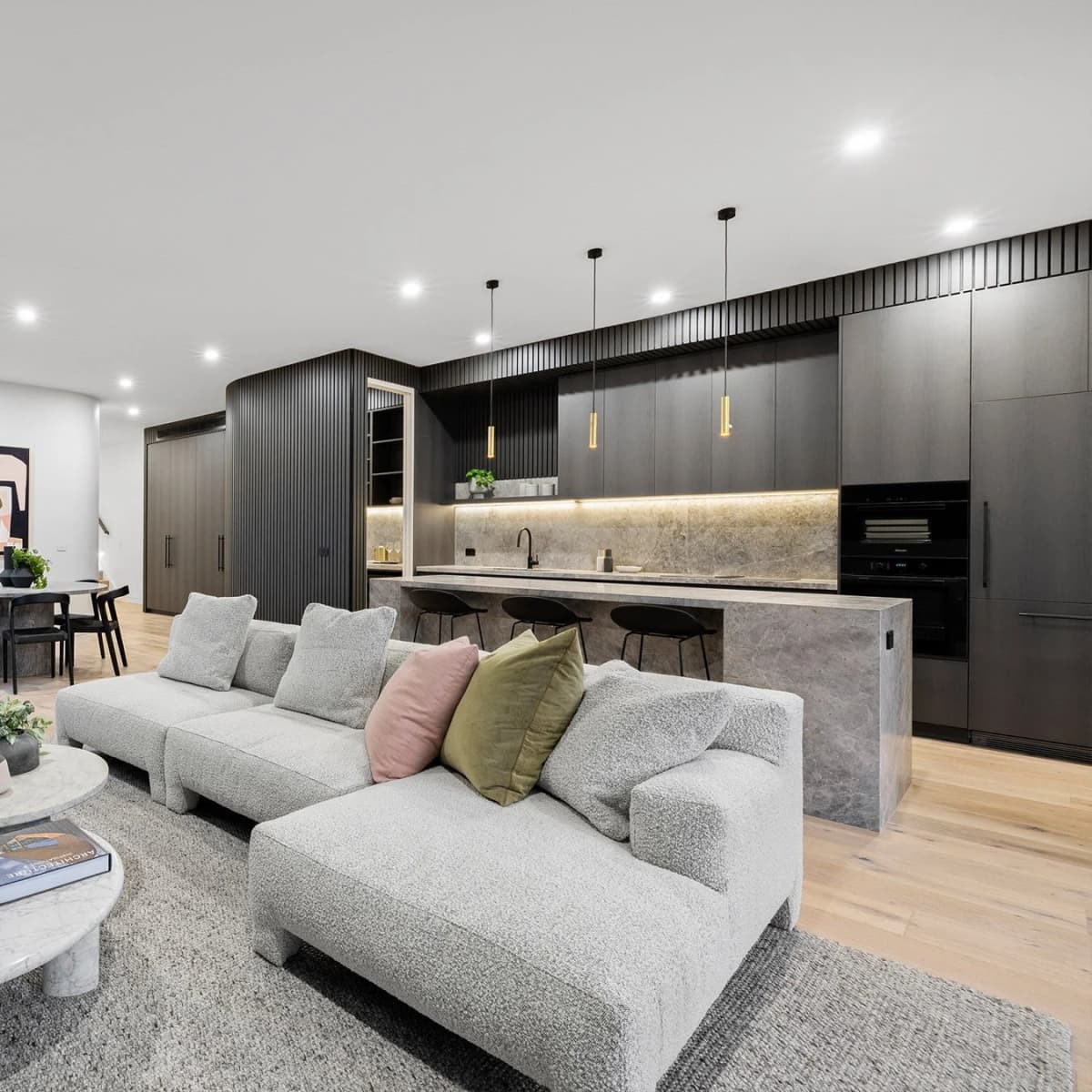
Many apartments combine kitchen, dining, and living in a single open-plan space. Without walls to define zones, these rooms can feel directionless and acoustically chaotic. A wood panel feature wall in the living zone serves two functions simultaneously: it defines the space visually — telling you where “the living room” is even without physical walls — and it provides acoustic treatment that makes the whole open-plan area feel less echoey and more comfortable.
This is one of the most impactful single upgrades available in an apartment: one panel wall, one afternoon, transformative result.
Scale: Getting It Right in a Small Space
The instinct in small apartments is to go small with feature walls — partial height, narrow panels, restrained treatments. Often this is wrong. A half-hearted accent treatment on one wall in a small room looks tentative and can actually make the space feel more cluttered, not less. Counter-intuitively, floor-to-ceiling panel treatments often work better in smaller apartments because they:
- Draw the eye upward, creating the impression of height
- Create clean, uninterrupted vertical lines that expand the perceived size of the room
- Look deliberate rather than accidental
Acoustic slat panels are particularly good here: the fine vertical lines and open profile are visually lighter than solid panel systems, making them less imposing in smaller rooms.
Apartment-Specific Panel Choices
Peel-and-Stick Wood Veneer Panels
Some brands now offer genuine wood veneer panels with pressure-sensitive adhesive backing specifically designed for renter-friendly installation. Quality varies — always test on a small area first and verify the removal characteristics before committing to a full wall.
Lightweight Fabric Acoustic Panels
Lightweight framed fabric panels can be mounted with Command strips rated for the panel weight. High acoustic performance (NRC 0.80+), fully removable, available in colours that suit apartment aesthetics. Best for home office or bedroom acoustic treatment where the visual character of wood isn’t the primary brief.
Freestanding Slat Panel Screens
Floor-standing panel screens that lean against the wall or use a tension system require no wall contact at all. Limited coverage area but zero deposit risk and completely portable when you move.
Managing Expectations with Management Companies
Many apartment management companies are more flexible than tenants assume — particularly for high-quality, long-term improvements. The key is communication before installation:
- Put the request in writing and describe the installation method specifically
- Offer a photographic record of the wall condition before and after
- For longer tenancies (2+ years), some landlords will agree to a proper installation as a semi-permanent improvement that adds value to their property
A professionally installed acoustic wood slat panel wall is genuinely an upgrade to the property — most landlords recognise this when it’s presented clearly.
The Acoustic Argument for Apartment Panels
Apartment living is acoustically challenging: hard floors, shared walls, and open-plan layouts all create environments where sound accumulates. Acoustic wall panels reduce this meaningfully. For apartment dwellers working from home, the improvement in call quality and concentration environment is often the most persuasive argument for getting panels up — deposit risk or not.
For the acoustic panel specifics, see our guide to acoustic wall panel performance and our acoustic panels for home office guide, which covers exactly the scenarios most apartment renters are dealing with.
Find Panels Suited to Apartment Living
Browse the full wood wall panel collection at The Panel Hub — including lightweight options suited to adhesive installation in rental properties. The SoundPanel™ acoustic slat range is the most popular choice for apartment installations, particularly for open-plan living spaces where both visual and acoustic improvement are priorities. Our interior slat wall ideas guide shows 50+ apartment-applicable panel looks. The acoustic panel buyer’s guide explains the acoustic improvement achievable with a single feature wall — often the most persuasive argument for getting panels up in a rental space.
The Rental Apartment Panel Checklist: Before You Install
Before installing any panel system in a rental apartment, work through this checklist to avoid losing your deposit and ensure the installation performs as intended.
First, read your tenancy agreement. Most agreements prohibit permanent fixings but are silent on reversible adhesive systems. If the agreement is ambiguous, get written permission from your landlord or agent before proceeding. A brief email confirming that adhesive-mounted panels are acceptable gives you a record to refer to.
Second, test the wall surface. Adhesive panel systems perform best on fully painted, non-powdery plasterboard or plaster. Run a piece of tape across the intended installation area and pull it away sharply. If paint pulls off with it, the surface bond is insufficient for adhesive panels and you will need to find a mechanical fixing solution or accept the risk of adhesion failure.
Third, measure for acclimatisation. Real wood panels need 24–48 hours in the room they will be installed in. This is especially important in apartments, which can have very different humidity levels from a typical house, particularly if the apartment is in a high-rise or has limited air circulation.
Fourth, document before and after. Photographs of the wall before installation and after removal give you evidence that no damage was done — essential if there is any dispute about the deposit at the end of tenancy.
Renter Panel FAQs
Can I take wall panels with me when I move?
Yes — most adhesive-mounted panel systems are designed to be removed and reinstalled. The panels themselves are reusable; you will need new adhesive for the second installation. Some slat panel systems use a rail-mounted approach that makes removal and reinstallation even simpler.
Will adhesive wall panels damage the wall when removed?
Properly installed and correctly removed, most modern panel adhesives leave no damage on well-painted plasterboard. The key is removal technique: score any edges, apply warmth (a hairdryer works well) to soften the adhesive, and pull slowly and evenly rather than yanking. The most damage occurs when panels are installed on poorly bonded paint or on surfaces that weren’t designed to carry the adhesive load.
What is the best panel system for renters?
Adhesive-backed slat panel kits and peel-and-mount mosaic panel systems are both widely available in formats designed for renter installation. Rail-mounted systems (where a horizontal batten supports panels that slide or clip in) are particularly good for renters because they use minimal fixings and allow the panels to be removed as a unit without touching the wall surface.
How much do renter-friendly wall panels cost?
Peel-and-stick options start from around £150–£250 for a standard feature wall. Mid-range adhesive slat panel kits for a full wall run £300–£600. Premium renter-specific systems with reversible fixing rail technology typically cost £500–£900 for a 3 m x 2.4 m wall, including the fixing system.